It’s almost strange how I’ve fallen into this. I’ve been leery of AI for the last few years, but this year in particular I started to use it in earnest. This started with practical things: it was helpful when I tackled my Advanced Data Mining course for my grad degree a few months back. The course was a mess with far too much going on and no real teaching, so I turned to AI to help answer questions and get me through coding. I learned a lot, but only because I used the AI “wisely.” I had it help me understand why code didn’t work, or help me to identify modern solutions that our 15-year-old textbook didn’t provide. The third time you’re pointed to an abandoned repository, you start to get a little tired.
At the same time, I started using AI to build list builders for my own games. It started with Death by Plasma Strike (DPS), which I built with my son. I found that the AI could build the app but struggled to keep things consistent. We did the same for Desiderium, and then I applied it heavily in the design of Frigates and Fireballs!, while also using it to build a ton of list builders. More than I’ve released here on the blog.
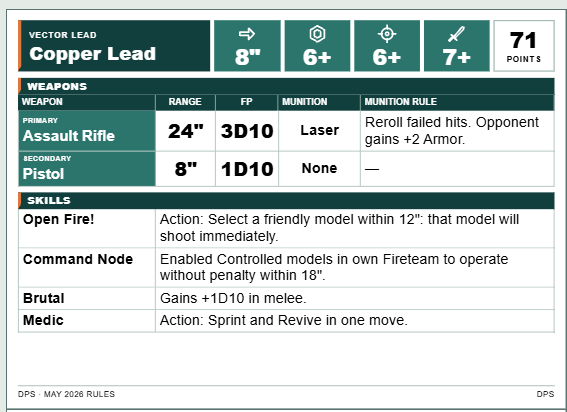
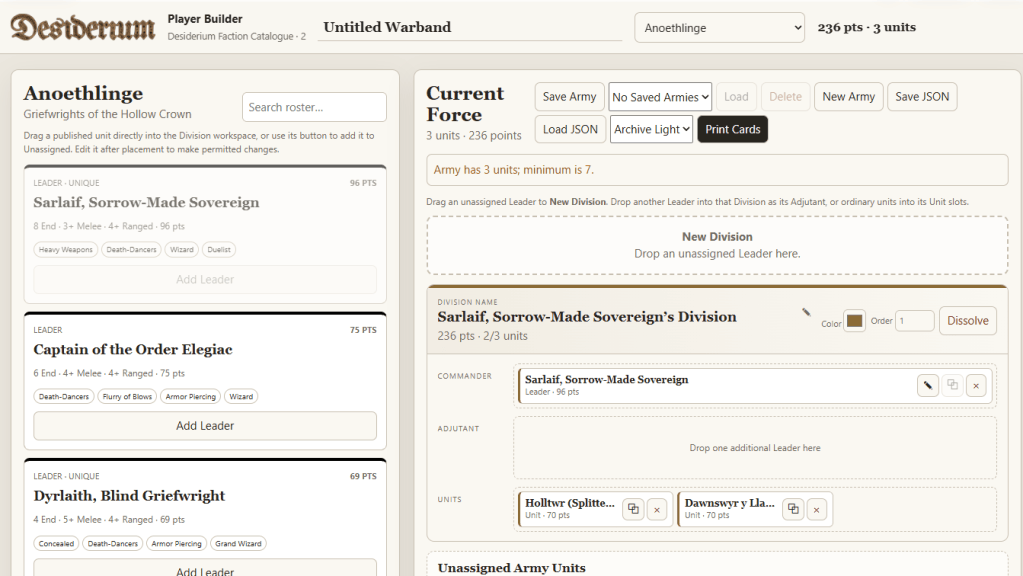
The defining moment was the release of ChatGPT 6.0 – Astra, which genuinely changed the game. It’s significantly better and fixed almost all of my prior complaints with its ability to build simple list builders, campaign trackers, or anything else I might want as a digital game aid.
I think it’s fine to use AI responsibly. “Responsibly,” for me, means checking the output, being honest about how I made it, and taking responsibility for what I release. I don’t like that AI is cheapening the value of human art, or reducing paid work for artists and other creative professionals. I also don’t see a way to stop it, so conversely I do like how accessible it has made a lot of things that were previously inaccessible to most people. List builders are an example: I used to spend hours building them in Excel, so I only really built a handful every year. Now, I build one for every game I play and enjoy having them on hand.
Again, I’m not saying that’s good. I’m actually saying it’s scary. It still takes effort to do this reasonably, but sooner or later these tools will be almost impossible to differentiate.
In sum: it’s a scary world and I admit that I’ve made the decision to embrace this and understand how I can make it work for me as a hobbyist.
Let’s go through what I think is the most common use case: the list builder.
The Tool I’m Using: ChatGPT
Real quick: this is confusing. I know it. The AI companies know it. Here’s a brief guide to what I’m using, as of October 2026.
I’m using the GPT-6 family of models, primarily Astra and Sol. Astra is OpenAI’s most capable model for demanding work. GPT-6.1 Sol is designed to get close to Astra’s performance at a lower cost, which makes it a reasonable option for building these tools. There’s also Luna, which is the lower end version for small tasks. What you can select depends on your plan and what’s available to your account.
Then there’s usage. You’ll hear about “tokens,” which are chunks of text and other information the AI processes (thank you, Advanced Data Mining). Your subscription includes a usage allowance. Different models, settings, and tasks burn through that allowance at different rates. If you hit your limits, you can buy credits for additional usage. You don’t need to understand all the accounting to get started, but you should keep an eye on your usage. It’s in your settings, which you can access by clicking on your account icon in the bottom left-hand corner of the page.
I’m on the $100-per-month Pro subscription, but the $20-per-month Plus plan includes GPT-6.1 Sol and would likely work well enough to bang out a few smaller tools across a month. That’s an estimate: building something complicated and repeatedly revising it will eat through more of your allowance. It’s where I started, and I was readily able to make 8+ tools in my first month of experimentation.
The next wrinkle is “modes.” There’s Chat and Work. Chat is good for brainstorming, asking questions, and talking through ideas. Work can carry out tasks with multiple steps, including writing code and creating files—which is why I do 95% of my stuff there. Everything below was done using GPT-6 Astra or GPT-6.1 Sol in Work mode.
The List Builder
This one is simple: you’ve got a game with a bunch of special rules and list building more complex than just selecting a prebuilt force. You’d like a list builder that allows you to build out your army list and explains the rules of all of the units. How do you make it happen? Well, I’d open up an instance of ChatGPT 6.0 – Astra or 6.1 – Sol (on work mode) and drop the rules in there, then ask it to do the following:
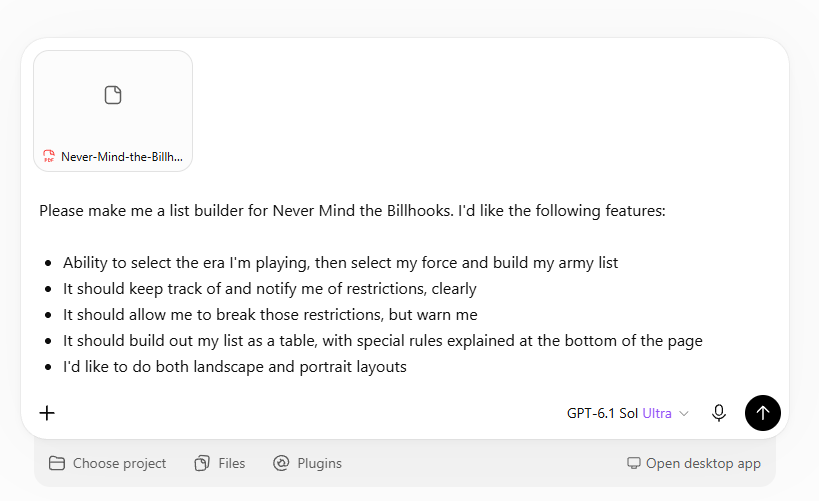
Now, notably, I’ve made a bunch of list builders with ChatGPT, so my instance has learned context from me. For example: I didn’t even think to ask it to add importing and exporting lists, but it will do so anyway because it knows I consider those features basic.
Your results may vary, but this should get you to a reasonable, workable product. Normally, I’d also request it make unit cards or a table list, but Never Mind the Billhooks is a simple enough game that that idea feels silly. Here’s the list builder and a list:

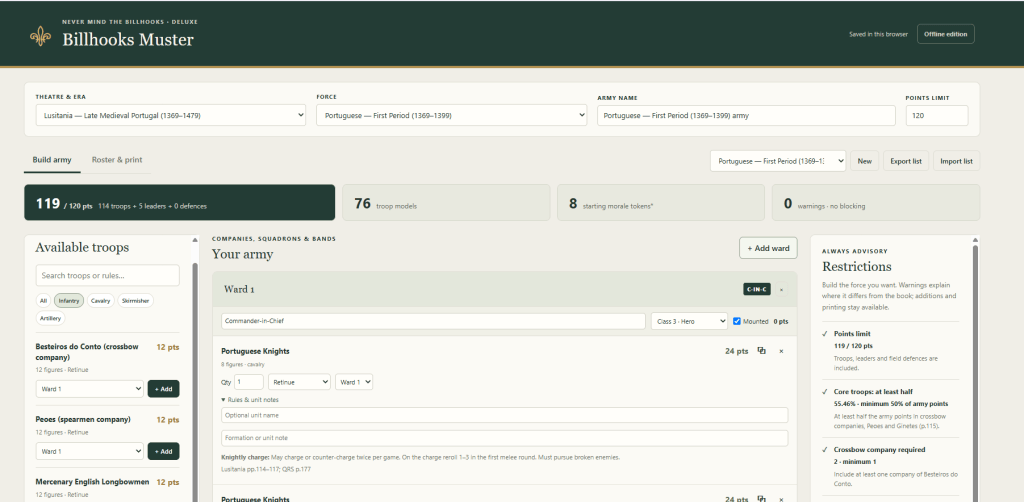
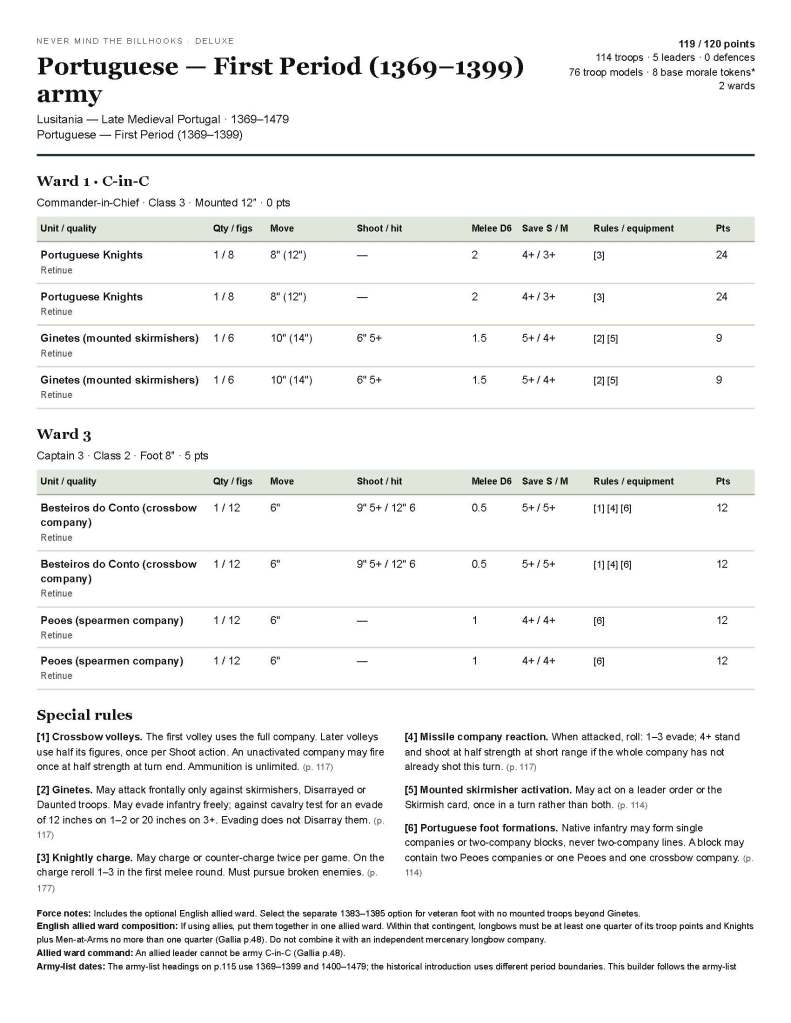
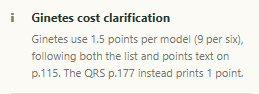
Next, I’d have to start examining it. It’s really important to validate that it got the data right. I have not had any issues recently, but it’s tempting to be lazy. I’d also spend time building a few lists and think about the workflow: does it feel natural? Is it inefficient? This refinement process is key in making a worthwhile list builder, but I won’t lie: the product it made in its first swing will absolutely suffice for my purposes.

It took 21 minutes. I think I’ve got some time on my hands to improve it, but at a glance it looks good. Here’s a download link to check it out:
https://drive.google.com/file/d/1nCnKRujwnQTzlBJtxKklkcbsfYFbai-m/view
A caveat: I’ve only checked that the Portuguese list I built above was accurate. There may be issues in other lists. Feel free to feed this tool to your own AI for refinement, and let me know if you find anything wrong.
You’ll need to download it and open it as a webpage in a browser. On iOS, you need an HTML viewer app because iOS will not run javascript elements on locally stored web pages. I’m not sure if that’s true across all iOS devices, so your mileage may vary.
You can see the potential. I bounced off Lion Rampant and Xenos Rampant until I built my own Excel-based list builders. Now? Kick the rules to an AI and let it make the rules accessible. List building in the older editions of 40k (which I love) can be hard and cumbersome, but if you handed GPT the digitized scan of the rules and a codex, you could have your own list builder with a very accessible bit of effort.
As you design a game, I’d actually encourage you, the designer, to build the app yourself. You know your rules. You can ensure it’s executing them correctly and release a free list builder alongside your game that only increases the value you’re delivering.
I reach the end of this piece now and I realize I still have a lot more to say. How can you leverage AI in game design, again, responsibly? Where are the pitfalls? Is it any good at building quick reference sheets? What if I want custom STL files to fit my vision?
I’m slapping a big ol’ “Part 1” on the title as I write this. More to come. I’m far from done on this topic.




Leave a Reply