You know, I ask myself that sometimes. Okay, all the time. Every time I play, in fact. It’s a question that oddly haunts me. It’s so hard, when designing a game, to keep from wanting to do one more thing and then realizing that thing deviates a little too far from the intended design. So, what is Desiderium?
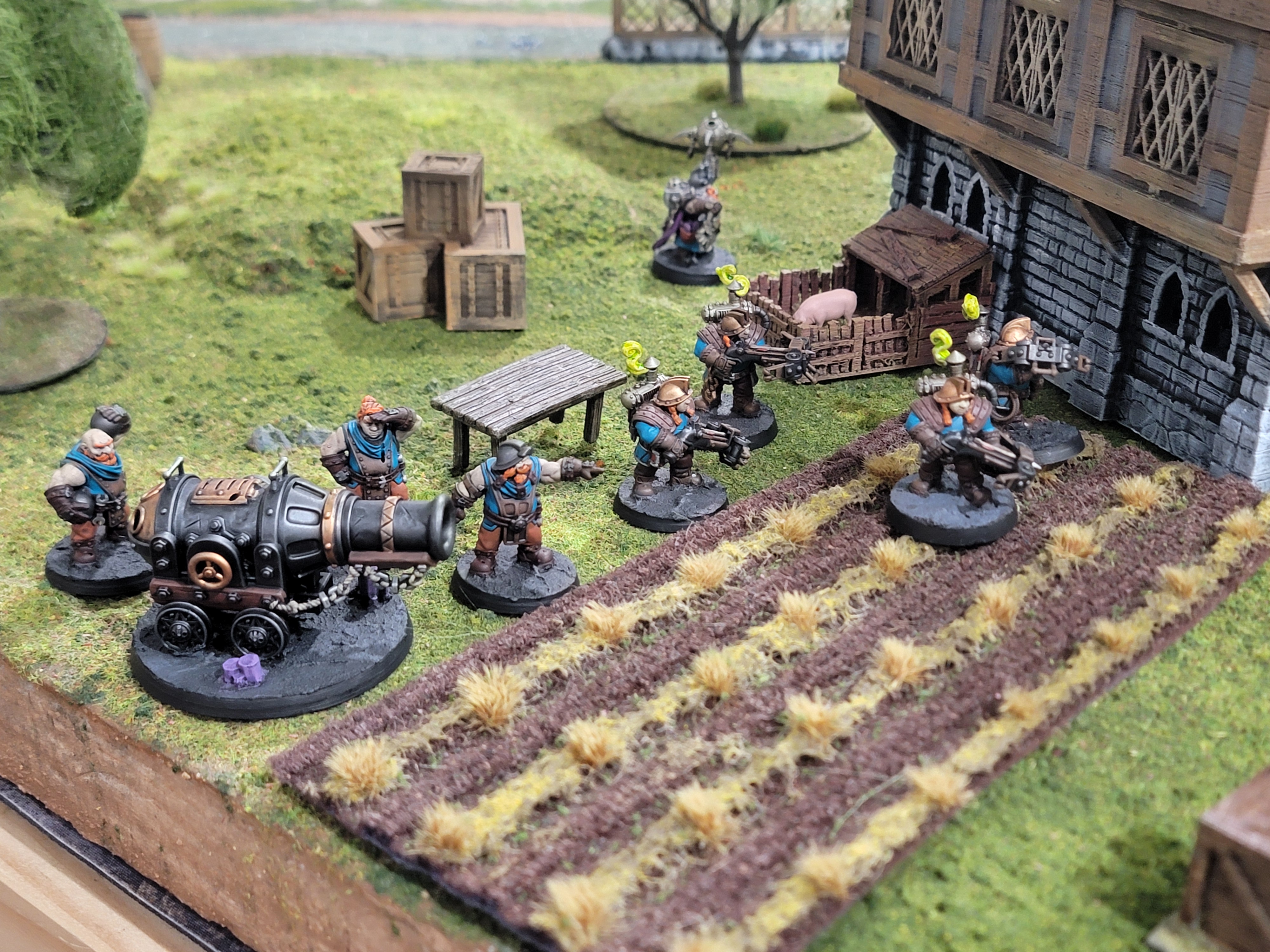
In short: it’s a narrative-focused fantasy miniatures game set in a serious fantasy world, where magic is dramatic but difficult to pull off. We answered the question of “Why would you have armies in a world where you can drop meteors on things?” with “Because the other side can use the same magic system to stop it.” I’m grossly simplifying, but that’s similar to why infantry and armor remain relevant on a modern battlefield where missiles exist.
Desiderium’s world is serious. By that, I mean that it is a fantasy world that takes itself seriously and seeks consistency in its world model. The rules reflect this. When we talk about adding a new mechanic that resembles magic, it sparks a debate about just what magic even is. My murren (rats) originally had a way of sidestepping magic to use void… er… spells. They were spells. Why would they side step the magic system? That doesn’t make sense. So they don’t. Instead, they’re the only ones with access to void magic (at this time). It doesn’t require a whole new system. Magic already works and fits the world model.
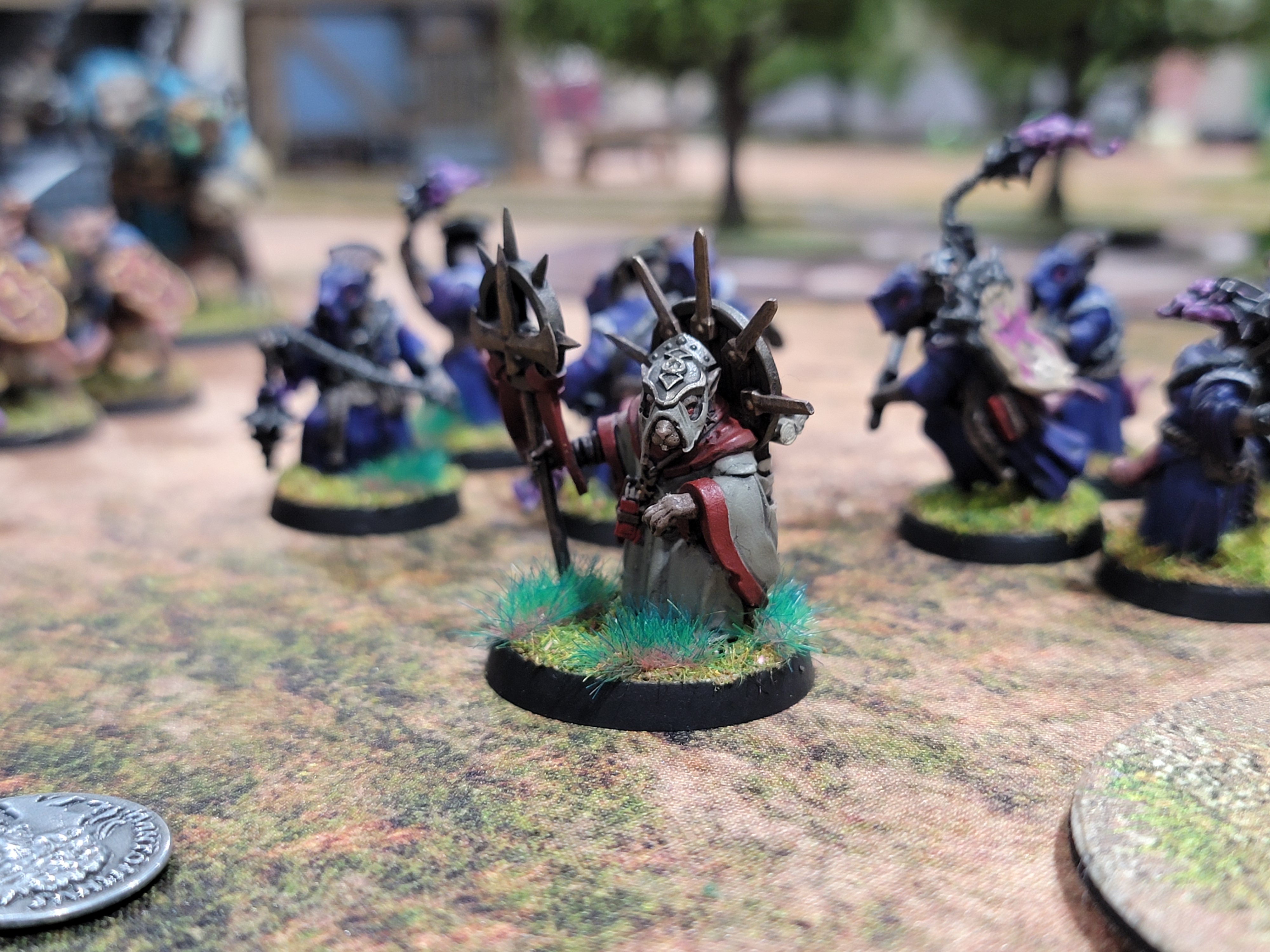
What else can we say about the system? Well, it’s a warband sized game, by which I mean there are around 30-60 models per side depending on your faction. It’s a game where leadership is extremely important and classic battlefield tactics matter. An elite unit, outnumbered, might hold its ground but will be unlikely to beat back the normal soldiers outnumbering it. Rescuing that elite unit will depend on leaders being able to get the right men into position to do so.
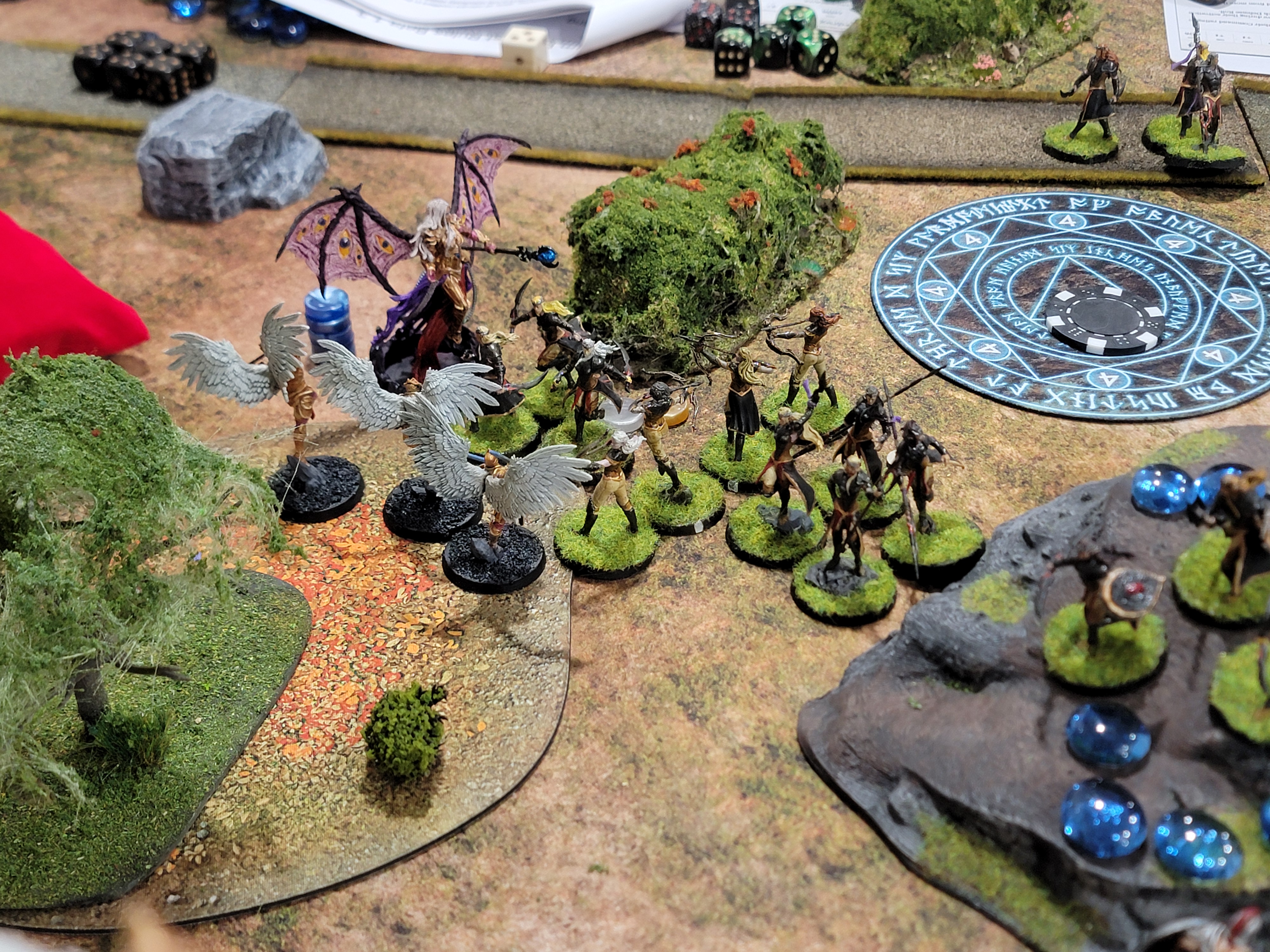
Mechanically, I think the defining characteristics of the game really come down to the following:
- Magic is a contest between both sides, with spellcasters generating and spending magic points to both launch spells and parry them. This forces a constant decision process and keeps magic top of mind, but means most spells fizzle by design. It’s a game of cat-and-mouse where the right spell in the right place makes a big difference, if you can get it off.
- Leadership is represented both by the command roll that dictates when divisions will activate and by the effects of stress on the units on the battlefield. Each turn starts with an initiative step where leaders roll 2D6 each and manipulate those rolls, then reveal them to their opponent. Activation is then executed from 12 down to 2 based on the results. This makes commanders with high command value (and thus dice manipulation) very valuable for their ability to decide when they want to go. Meanwhile, nearly every attack adds stress, pushing units closer to breaking and running. This means the rally ability of each leader is really important to staying in the fight.
- The emphasis on leadership and battlefield tactics means we avoid units that simply smash their way through the opposition unabated. There’s no “Man, I need to dedicate everything to stopping THAT guy” and instead battles play out a touch more like early medieval battles, where the flow of battle is more about clever positioning and judicious application of forces and less about riding lightning down from the sky to eliminate a key unit.
Thus far in playtesting, the game has delivered a tense match nearly every time, and I am exceptionally pleased with it as a result.
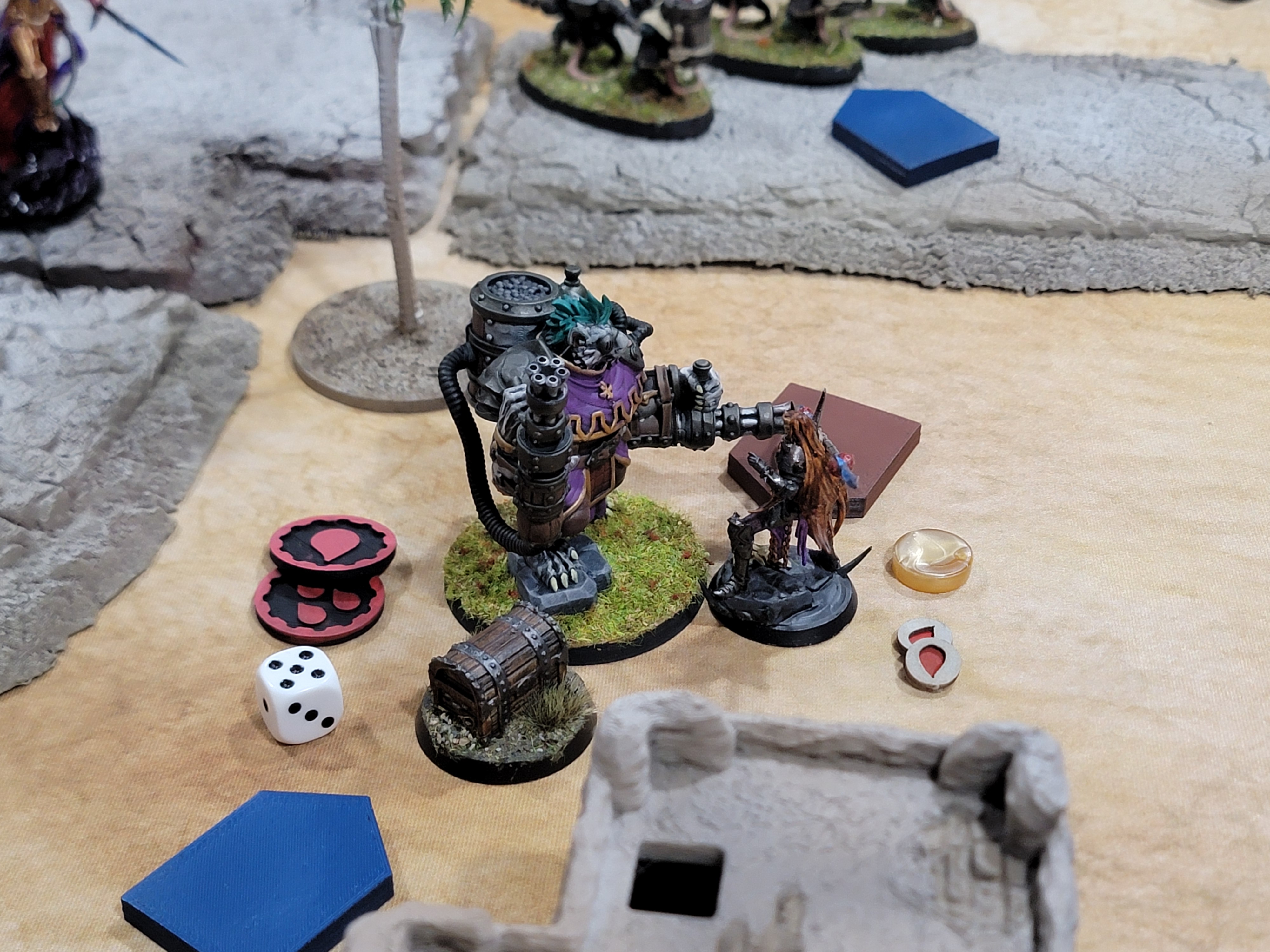
And yet, every time I play I question if I should change something. Is that faction rule too much? Are faction rules too much? Should I add more ways to get spells through? Should I reduce the impact of spells? Is this too swingy?
This is why the identity of the game is so important. I have to keep in mind, constantly, that this is a game that has a clear identity. It’s built on a world that exists in the shared imagination of myself and Paul. Each faction we dream up, each mechanic we debate—it all has to connect back to that underlying vision.
I’m excited. Very much so. I love what we’ve built and I look forward to the day we can truly release it upon the world.
Anyway, this fluff post brought to you because I appeared on a podcast, which recorded tonight. More info on that another time. Next week, I’m hoping to do a design overview of my Dwarves and I should have a few worms to show off.
…that’s… I swear that’s not a threat.



Leave a Reply