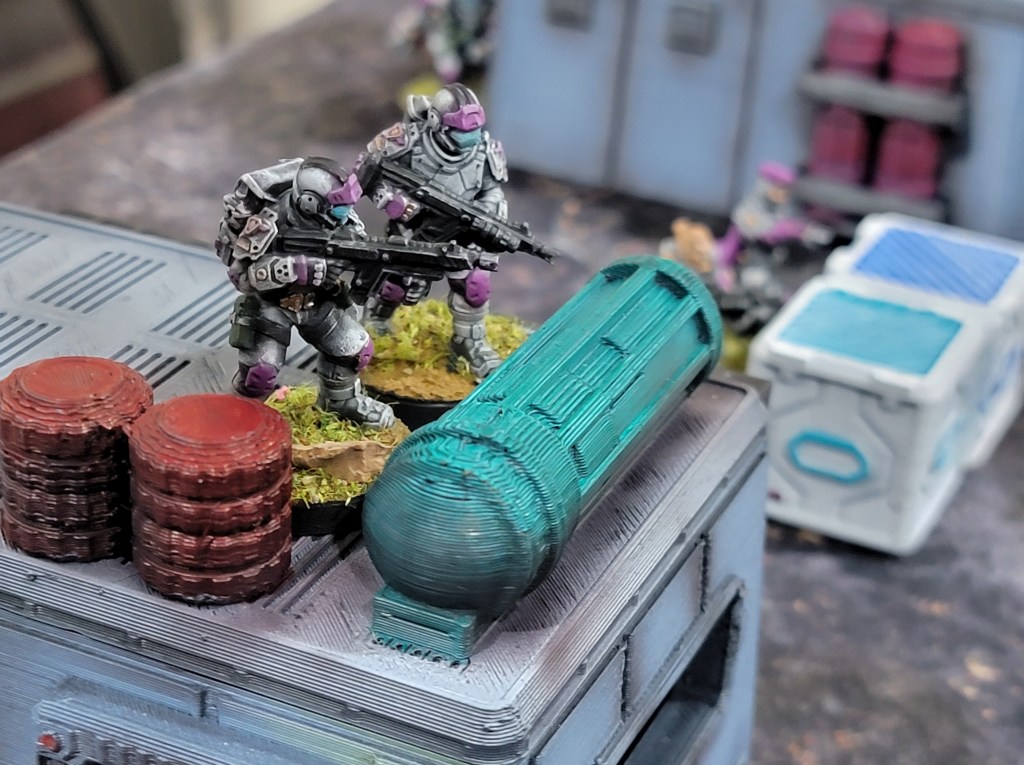
DPS is a ruleset I’ve been working on with my son for the past month or so. We’ve had a lot of fun, but the game’s design has drifted quite a bit over the course of playtesting. Originally, I wanted something tight that you could readily play on a weeknight. The design as it stands takes about an hour and a half to play. We’ve crafted something almost oddly thoughtful which really encourages strategic play. It’s rad and I like it—but it doesn’t fit the original goal.
I’ve been mulling how to shrink it down. The shooting, movement, and other base systems work quite well. I like the lethality as it stands because it encourages you to be cautious. The drones work well, too. My first instinct would be to cut down the number of units on the board by lowering the points cap, but due to the game’s lethality if I lower it too much they may drop too fast and render one side defunct after only a few losses.
That might work, but… I still dislike it. There’s a delicate balance here. I’d like a game that goes 30-45 minutes, not one that ends if you get a little unlucky on turn one.
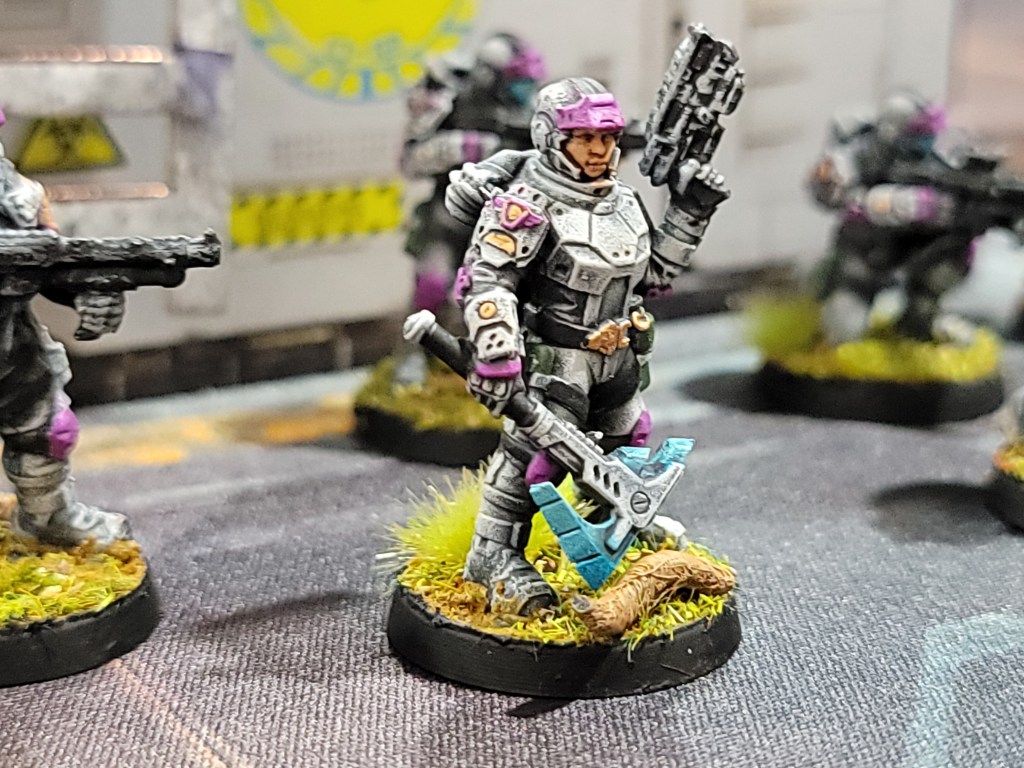
My solution is to lean into something I’ve been resisting: inspiration from other games I’d like to play. In the Halo miniatures game, you play out the online multiplayer from the Halo videogames, right down to the respawns. I love that idea! It lets you play with fewer miniatures, take more risks, and still play quickly. Leaning on this, I could recapture another early concept: leaders being real heroes who dominate the battlefield.
And then I could take yet another concept from a game I designed ages ago around real time strategy video games: resources you gain and use to bring more units onto the board. You capture parts of the map and they give you some amount of points over time that allow you to bring more models.
This would create some problems with my current activation system, so I would need an activation system that does not reward simply having more models on the board. We pivot to the D12 idea I previously threw away. You get 12 points per turn and spend them to do 12 actions across your models, limited to 3 actions per model. This naturally reduces your span of control such that you want to have a minimum of 4 models on the board, with a rational maximum around 8.
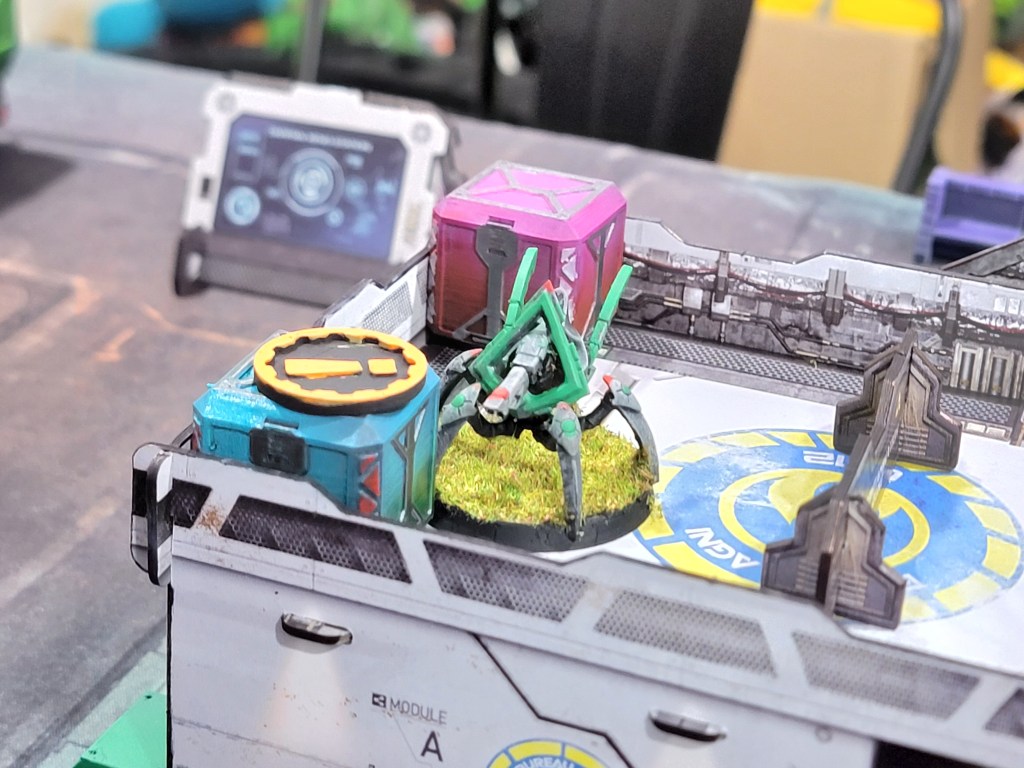
So, putting it together, the changes would be:
- Reduce the game from two vectors (fireteams) to one, with one main “Hero” on each side. You start with a limited number of points on the board formed by your hero and some supporting grunts you customize out of game.
- The hero has multiple hit points so they last longer and make a more dramatic impact, while grunts die on failed armor rolls and disappear.
- There are areas on the board you capture which are distinct from the match’s objectives. These areas give you “Tickets” (stolen from Battlefield) to spawn more models at the start of your next turn.
- A “cheap” grunt might be 3-4 tickets, while an elite with a good weapon might be 7-8. Your leader should be 10 as an upper-bound, but should rarely ever fully go down.
- When you activate, you get 12 points to spend and can spend up to 3 per model. This stops the leaders from utterly dominating the board but still allows them to be key figures that greatly affect the flow of battle.
- We go from a 4×4′ board to a 3×3′ board. This one I’d debate the most, honestly. It reduces the value of snipers and with the game’s inherent high mobility, might cause other problems.
There’s some tuning to be done here, like how many tickets you should gain per turn or how powerful those heroes should be. What’s the right board size for the speed of the models and pace of the conflict? I want to say a 2×2′ board will work quite well but with the need for both areas you control to get tickets and objectives you need to fight over, that might become too dense and chaotic.
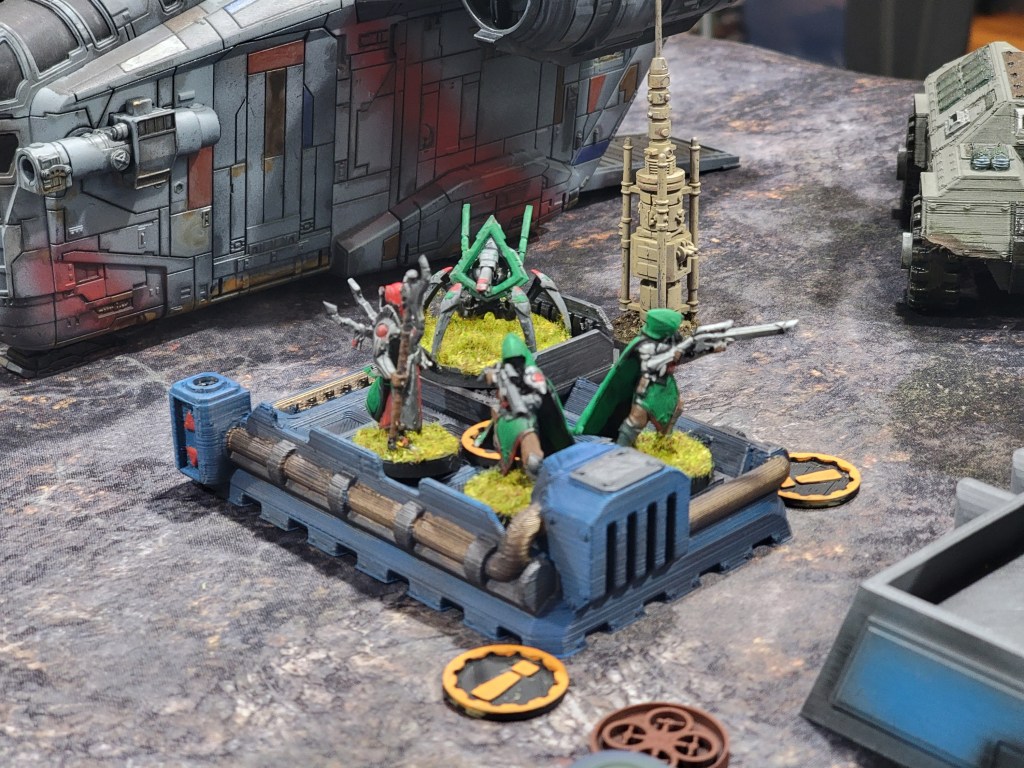
Another big one: how do I stop the snowball effect? If you own all the areas that give more tickets, you can overwhelm your opponent with bodies. In theory that’s not entirely true—the activation system limits what you can do in a turn. In practice, that might not be enough to actually stop things from going wrong.
I really like the idea, though. I hope to test the revamp with the kiddo soon and report back. I’m unsure if this replaces the existing systems or if I’m now forking into a different design. I do believe it hews closer to what I originally wanted. It also feels better for a game abbreviated “DPS.” It feels less serious while still being interesting and tactically rich. It also just… has an interesting hook. There aren’t many games with respawn mechanics.
At least, not yet. We’ll see what happens after more people get their hands on Halo: Flashpoint. For all I know, I’m one of fifty designers all taking this inspiration at the same time. Soon, much like how Halo added recharging health to all first person shooters, Halo: Flashpoint might add recharging forces to all miniatures games.
If I had a nickel…



Leave a comment