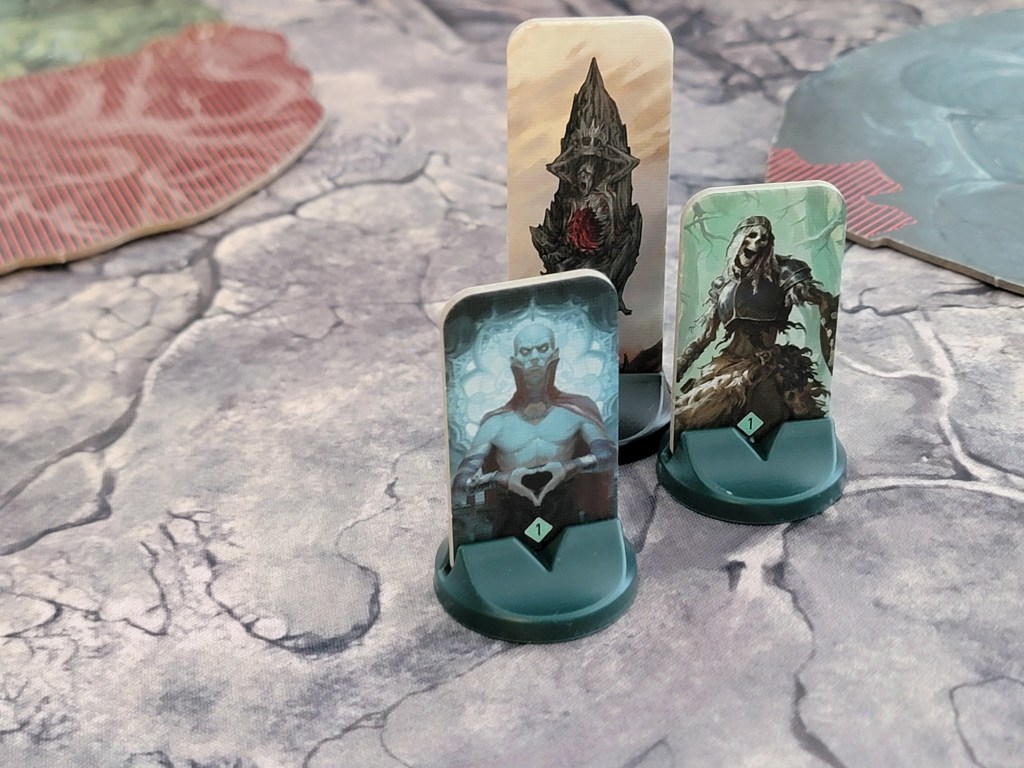
I had the opportunity to play out a full game of Malediction over lunch at work. Almost living the dream, except I worked an additional hour to make up for goofing off.
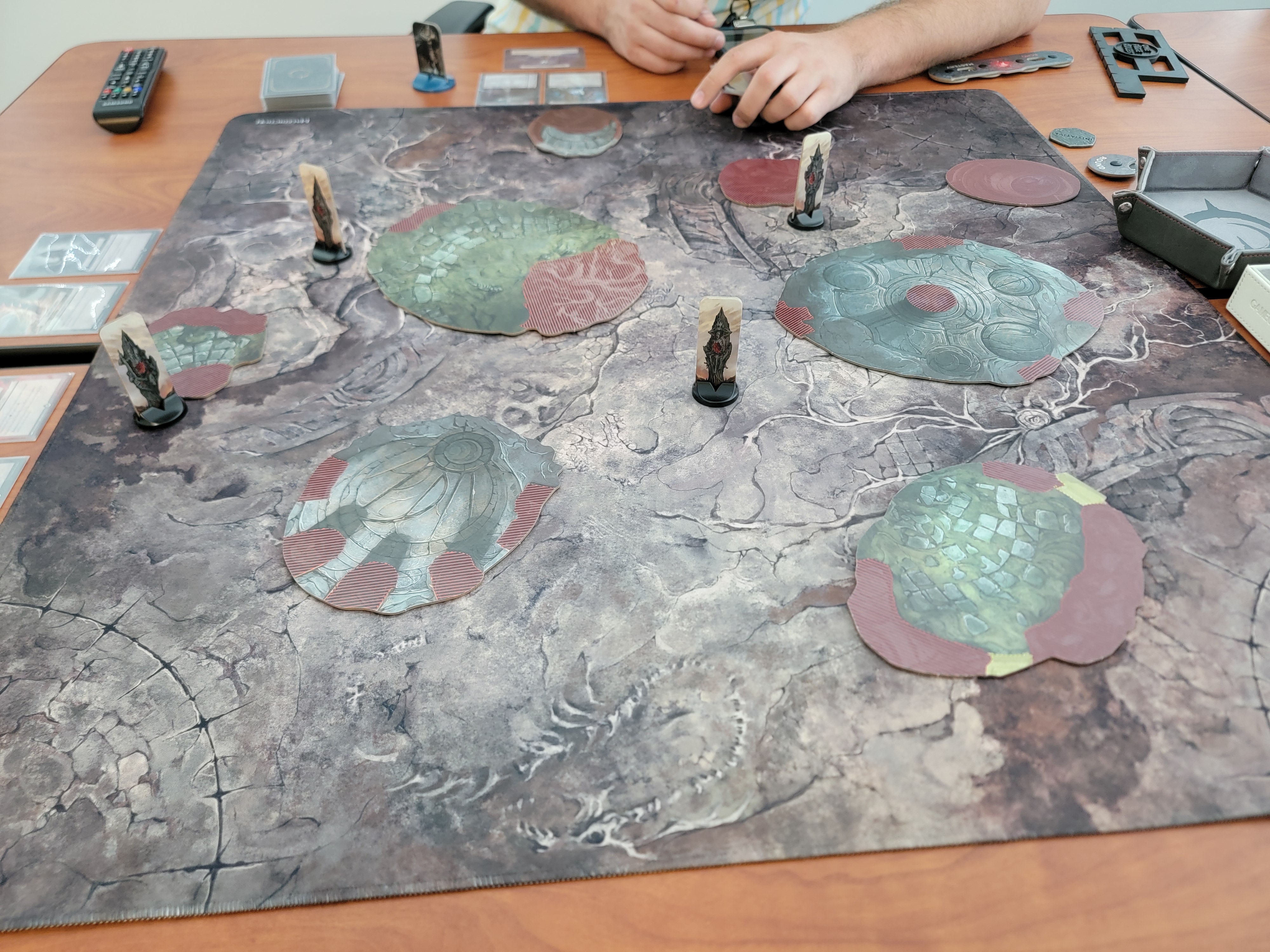
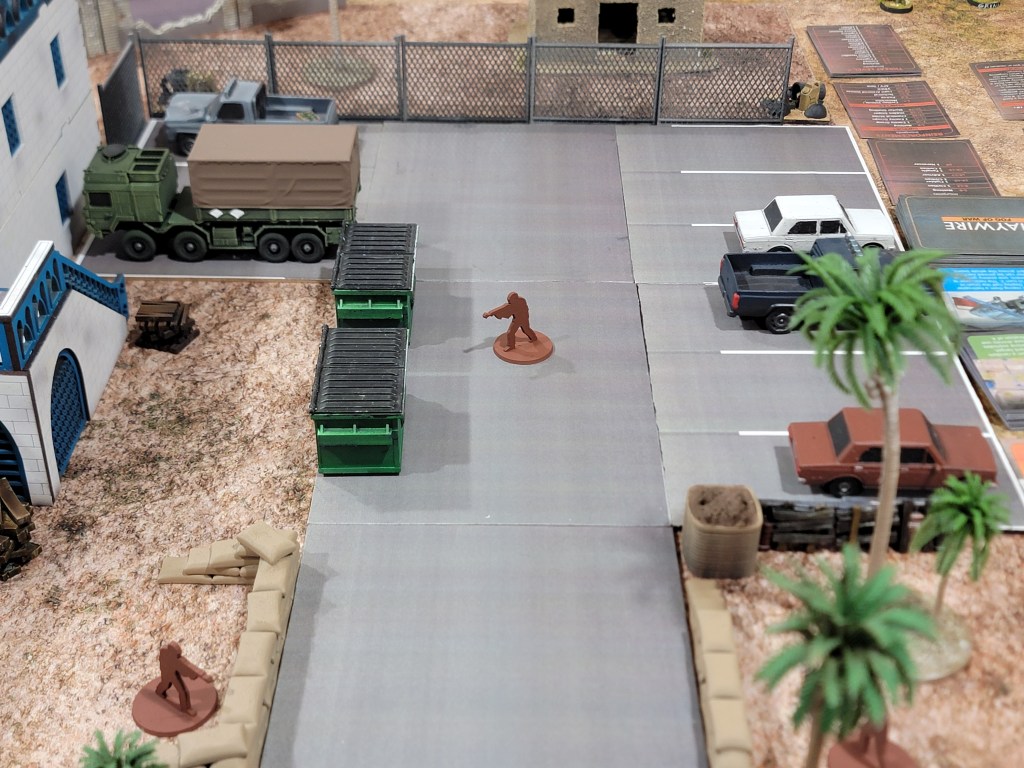
We laid out a board with the 2D terrain and used the cardboard standees the game comes with. They look fine, but it does lend itself to a rather lifeless display to me. I tried looking for photos of a fully painted game with terrain and all–unfortunately, all I can find is painted miniatures just for display, not in game. Aesthetics aside, the terrain setup process was clearly important. My terrain pieces allowed for units with ambush to spawn anywhere inside them, while my opponent’s pieces would harm me if I entered them. I can see this being a well thought out part of the game, with both sides jockeying for proper terrain placement.
On the other hand, I hate it. The different factions have different “vibes” to their official terrain, so I can imagine if both you and your opponent painted up terrain sets and then put them down, you’d end up with an odd clash of color. It also eliminates any ability to put together a thematic board. As a person who values beautiful boards, that sucks. It’s the cost of doing business here, though, so we’ll move on.
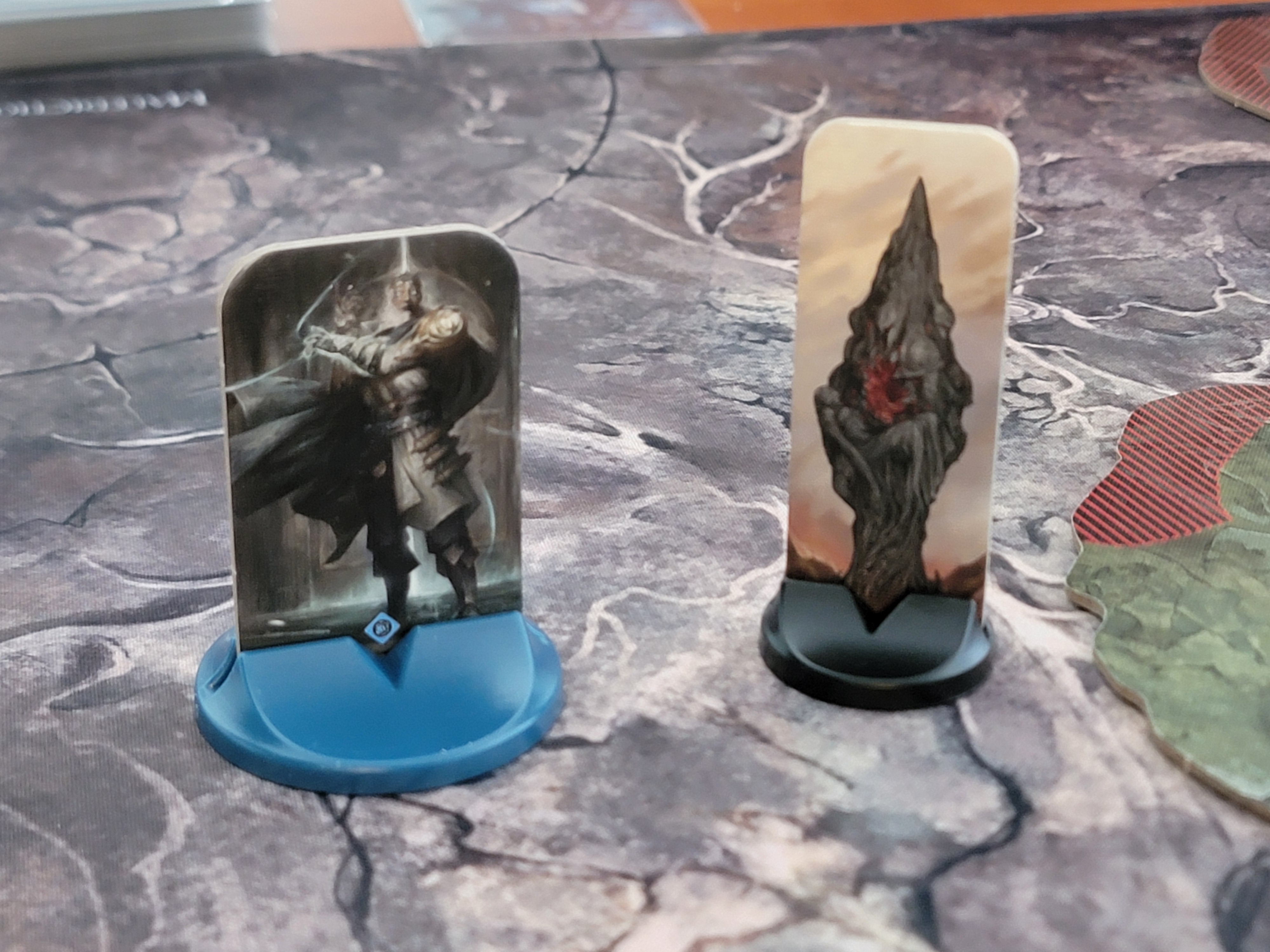
The game’s sole scenario revolves around scoring points. You do so by claiming relics from the husks placed during game setup. When you claim a relic, you gain 10 mastery (VP). If you drop that relic, you lose the mastery. Relics do interesting things by buffing the units that carry them. I really like this idea and it was cool in practice. For instance, I dropped a range extension on one of my units and enjoyed the ease of targeting and attacking enemies that it brought.
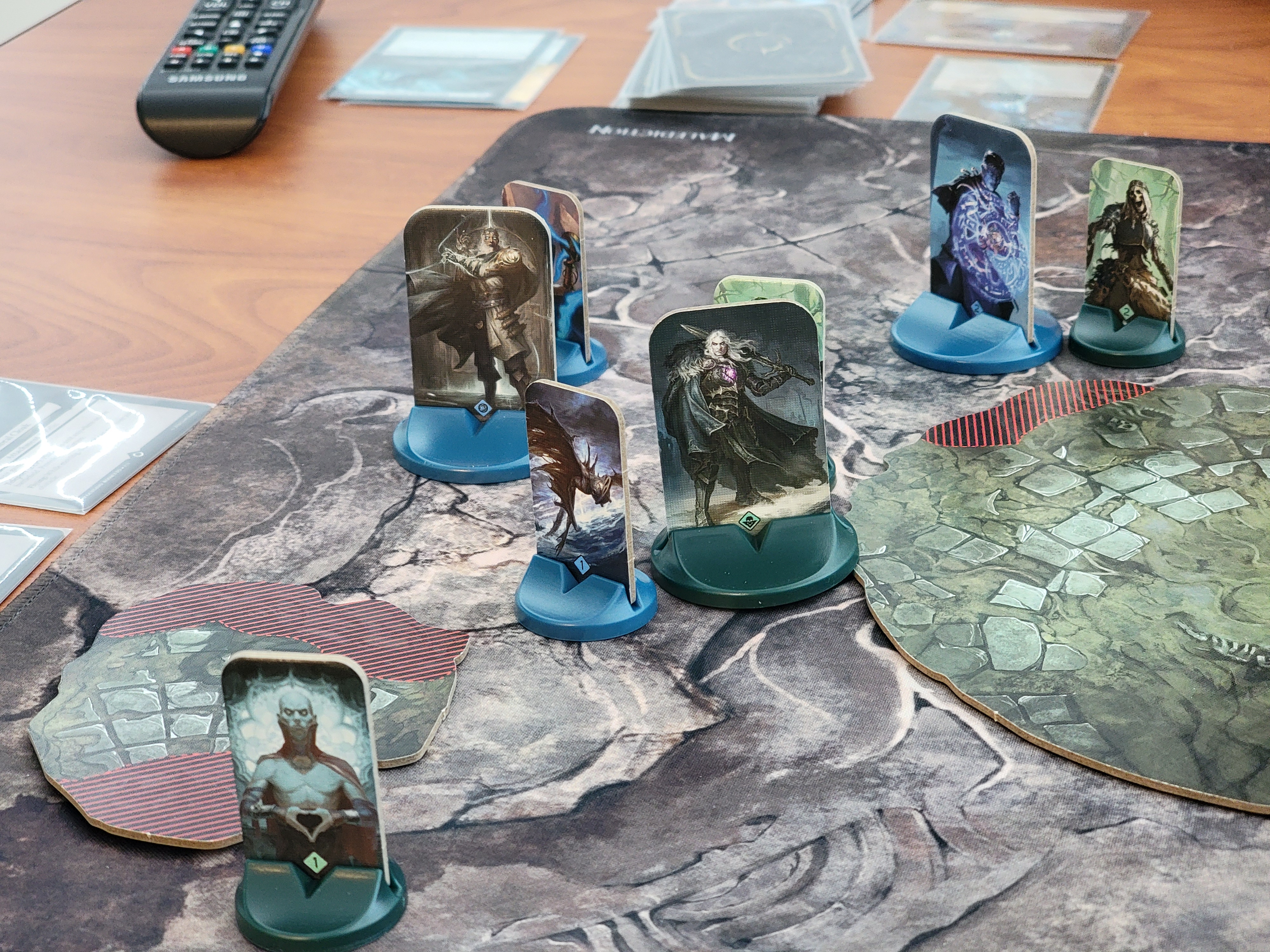
The only way to permanently gain mastery is by killing enemies, gaining their cost in echoes (energy/mana). Here, we see my leader slain by spells cast by his leader, gaining him the 10 mastery that would later win him the game. Put together, the two ways of gaining mastery create an interesting base scenario for the game. We found our points totals swinging wildly as we gained and lost relics, and relics created a fun bit of target prioritization that we had to resolve. At one point I put a relic on a weaker ally just to distract from my opponent killing my leader. It didn’t work, but it was worth a try!
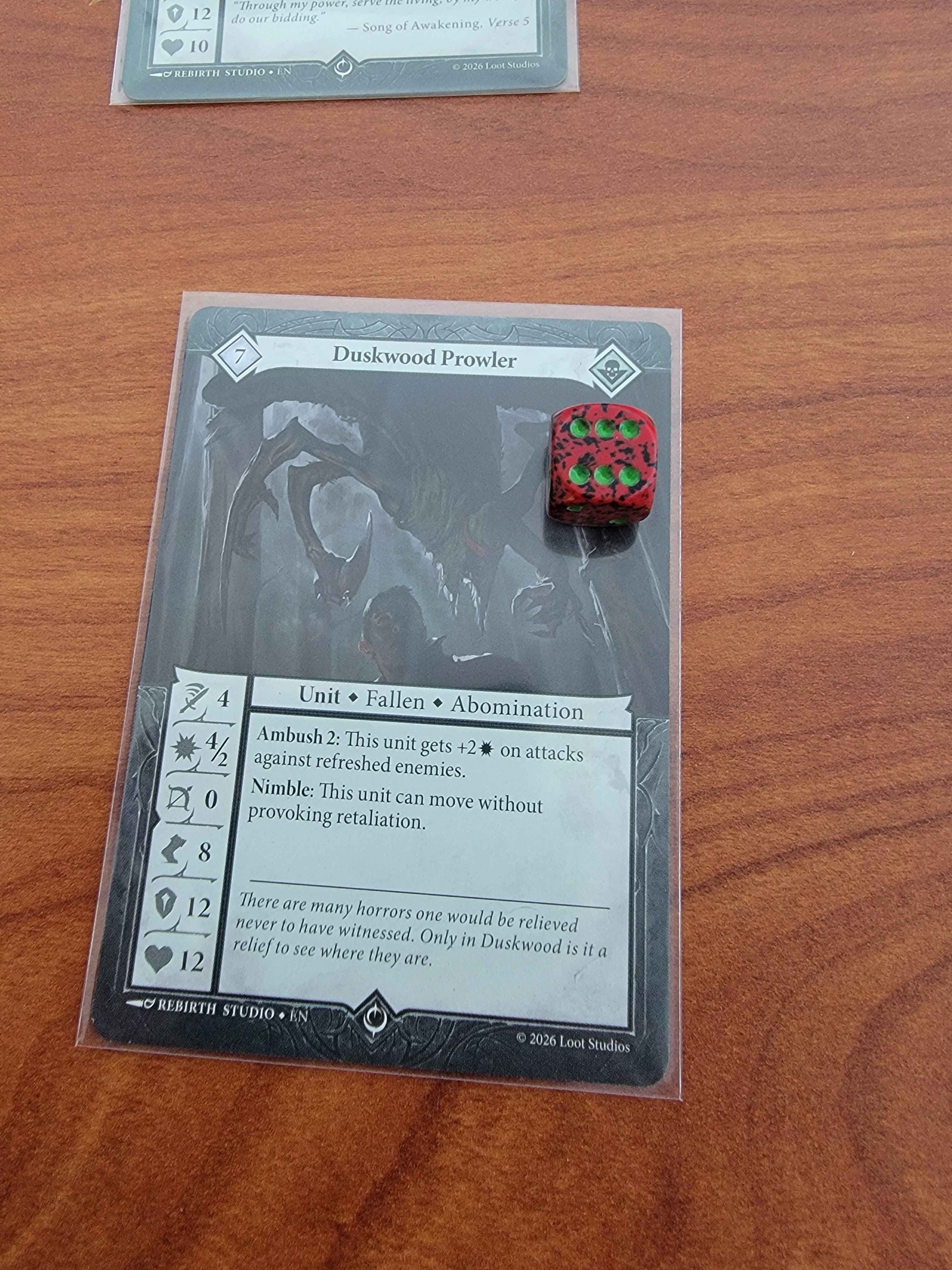
Combat itself runs on a D20 system. Specifically a D20. You roll 1D20 and add your Accuracy (4 in the example above). If you beat your opponent’s Defense (12 for this guy), you do your big damage number (4 in the “4/2”). If you ‘miss,’ you deal your small damage number (2 in the “4/2”). Now, the fact that you always do damage does help with the “Feels bad” of whiffing. What it doesn’t do is fix the underlying swing of the D20. I’d have preferred either more dice to roll or a bell curve of some sort. It doesn’t destroy the game, but I do fear it brings up the potential for imbalance. I could see a deck focused on dice manipulation being overly powerful, for example.
I’m not dying on this, though. At the end of the day, they would likely just ban the enabling card and disable anything too broken.
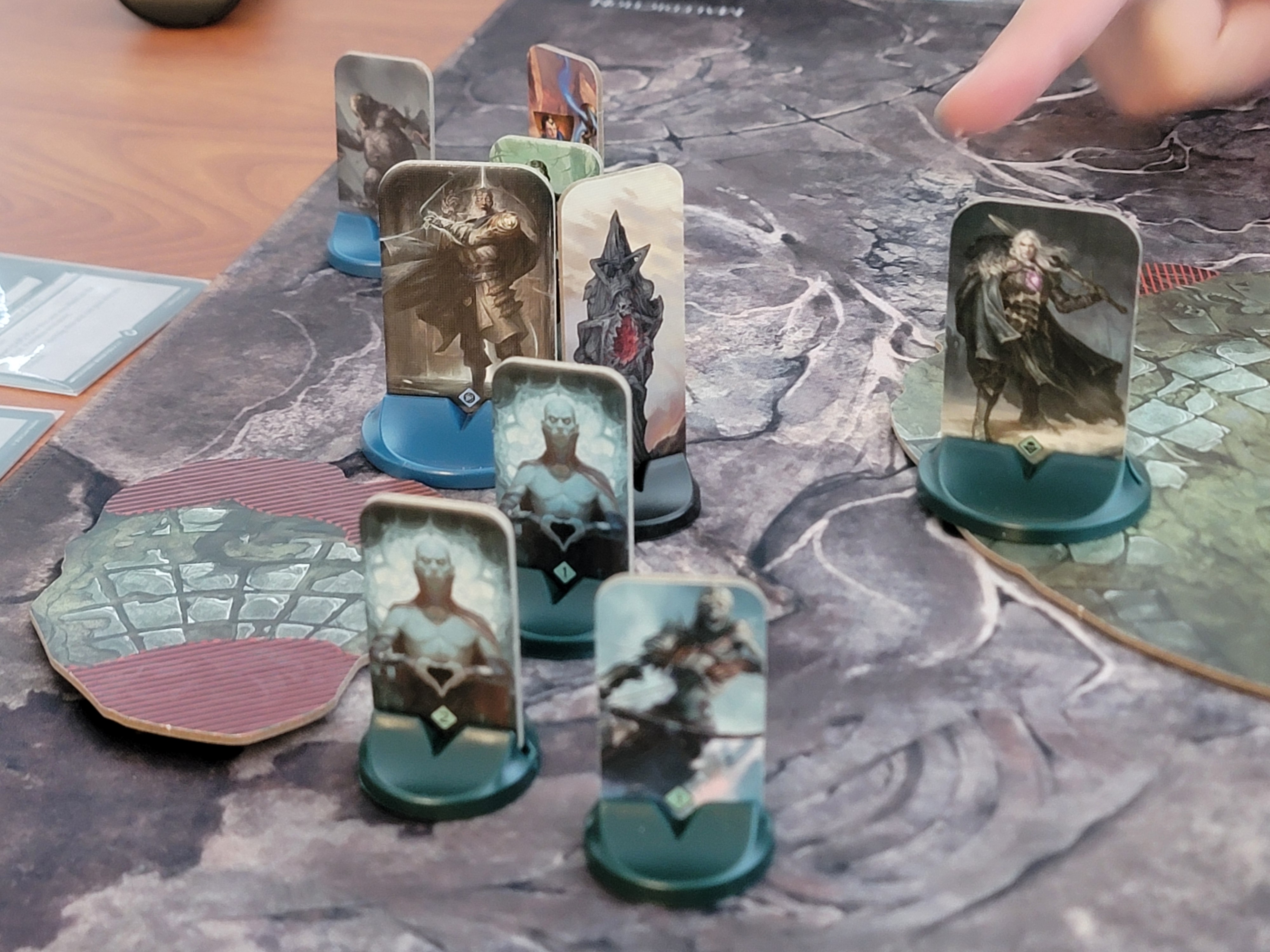
And honestly, this match was fun. I really enjoyed the game even if it felt a bit lifeless without miniatures. We didn’t know the winner of the match until the final moment and even then with a touch more luck I may have pulled the win. Unfortunately, I got bloodthirsty and gambled on defeating the enemy leader. I should have denied him the relic he was about to collect (worth 10 Mastery) and fought on for another turn.
The card play was basic but allowed for surprises. The interaction between units and spells led to a sense of combo building across the game. This is a game that I think a Saga player would greatly enjoy. It scratches that almost mathematical itch that comes from solving how pieces fit together to maximize their impact.
I walk away reasonably satisfied. My only opponent is someone I might not get another game with for months, so if I revisit this world it will likely only be to paint miniatures from it for another game altogether. For now, though, I’m fairly confident in saying that if Malediction appeals to you and you have an opponent, the starter box is a safe buy. I think you’ll find it fun and get your money’s worth, particularly if you’re printing off the miniatures and painting them.
If you’re on the fence, nothing here quite gave me what I need to say “Make the jump.” I hold to my opinion that this game layers the risks of a growing card game on top of the risks of a growing miniatures game. If you want a weekly game, I’m not sure you quite have it here. I’ll be curious to watch as the game expands and see if it really possesses staying power. Maybe it does–and maybe I’ll find someone else to play with down the line.
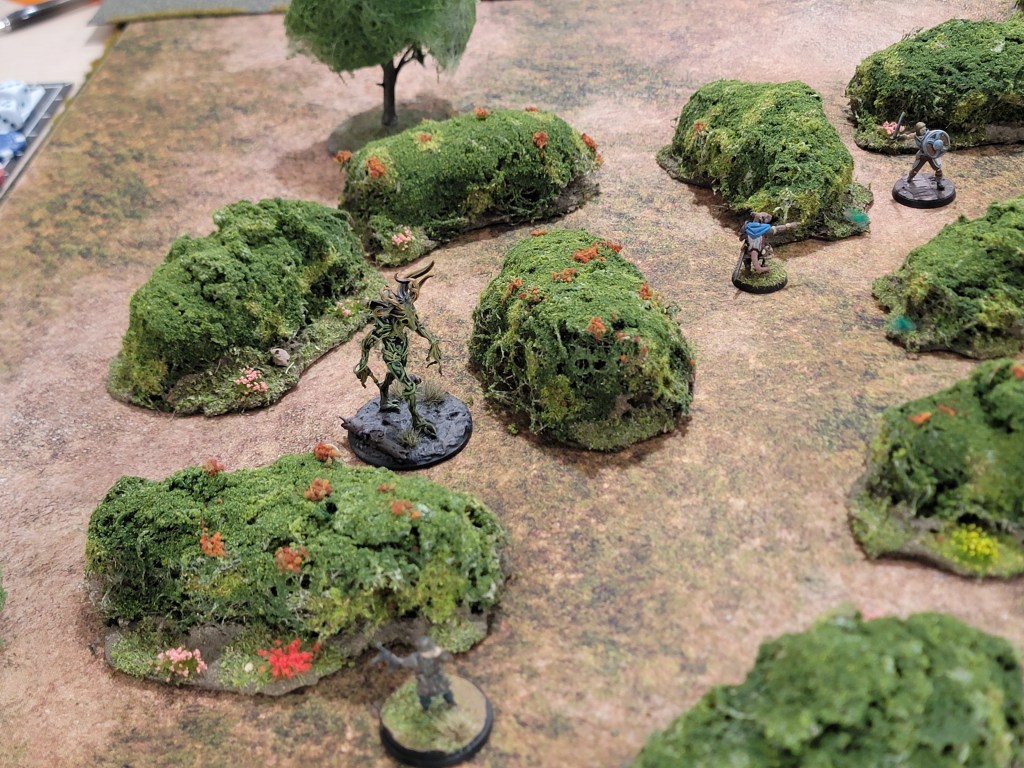
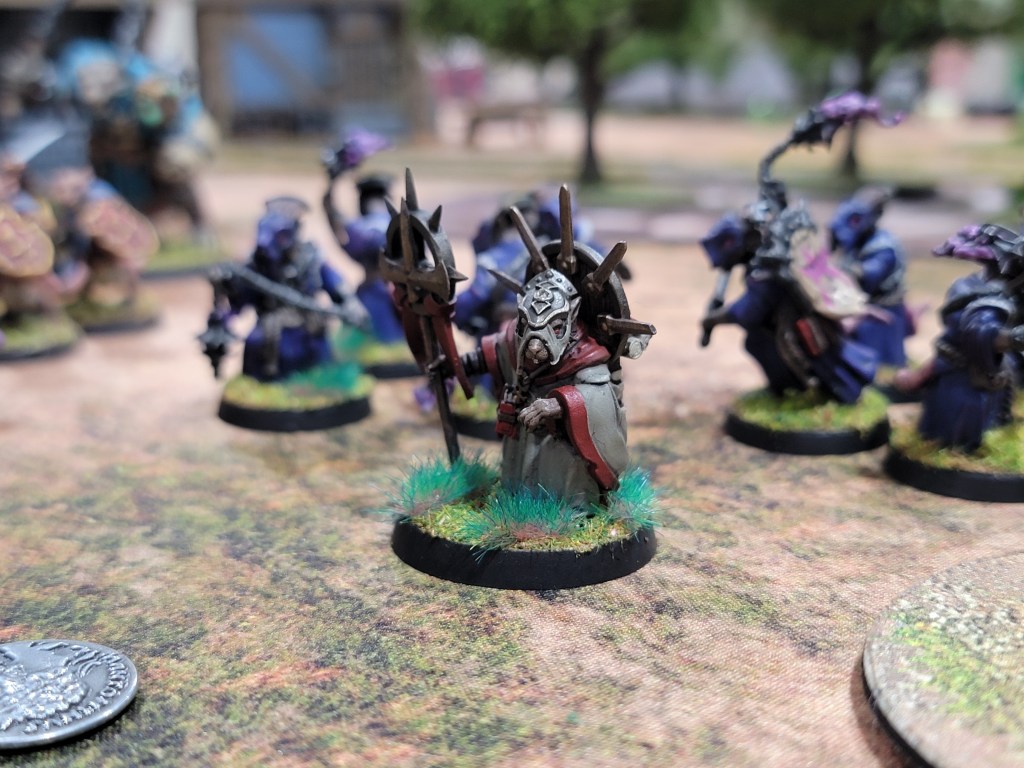
For now, I’ll content myself with some pretty miniatures to use in whatever fantasy skirmish game I inevitably build later this year.
 Small Scale Victory
Leave a comment