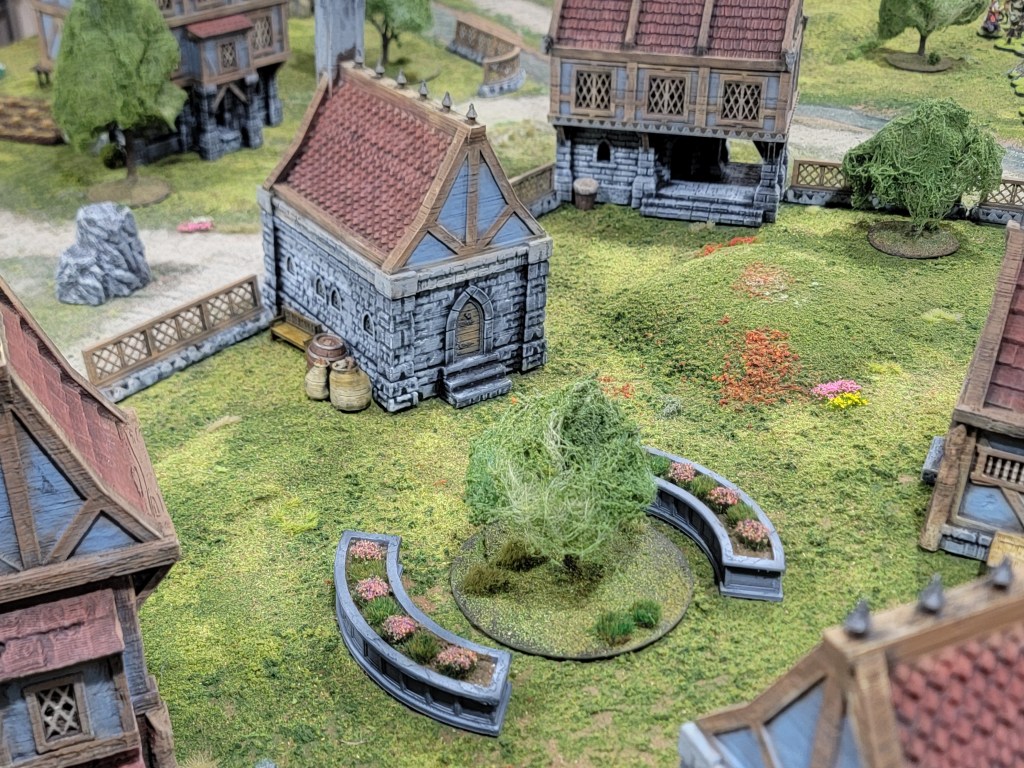
Desiderium is the name of a warband sized fantasy ruleset I’m developing with my good friend and long time gaming partner, Paul Bussard. We’re still early in development, but we’ve been playtesting weekly and iterating on our core concepts each time. We’re hoping to be able to run a small playtest this Summer with folks other than us. The core tenants of the design, as I understand them, are:
- Leadership matters
- It seeks to model the different and diverse ways fantasy warbands approach combat without artificial inflation
- The game must be strike the balance of being accessible and comprehensible in your first playthrough
I haven’t hammered this in, yet, but it feels about right. Desiderium is warband sized, meaning you run around 20-40 models depending on how elite your force is. We’re currently custom-building units, but at this stage we intend to make bespoke factions with set units. Originally, we intended a fully flexible system where you build whatever units you want–we’ll see where we land.
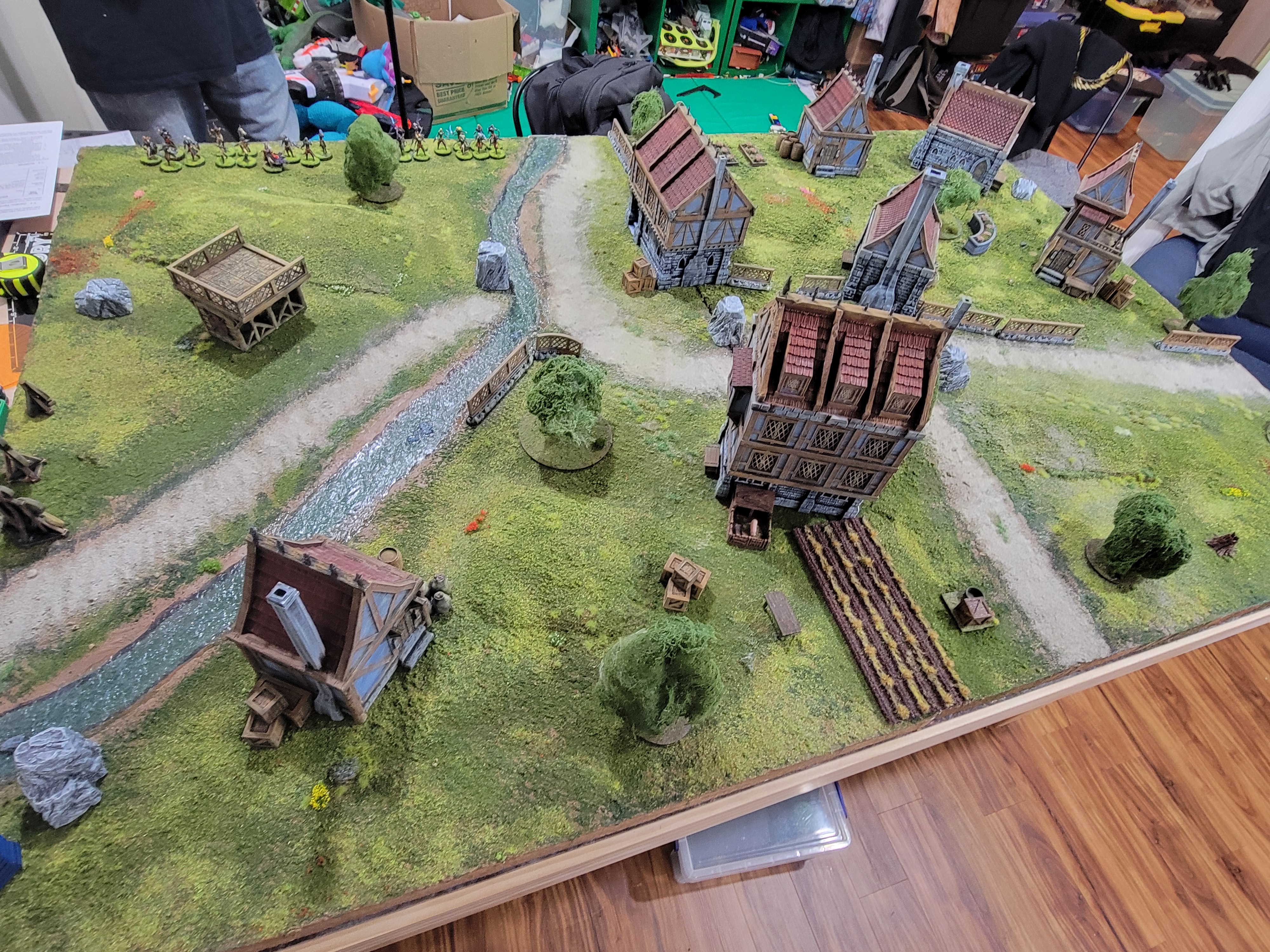
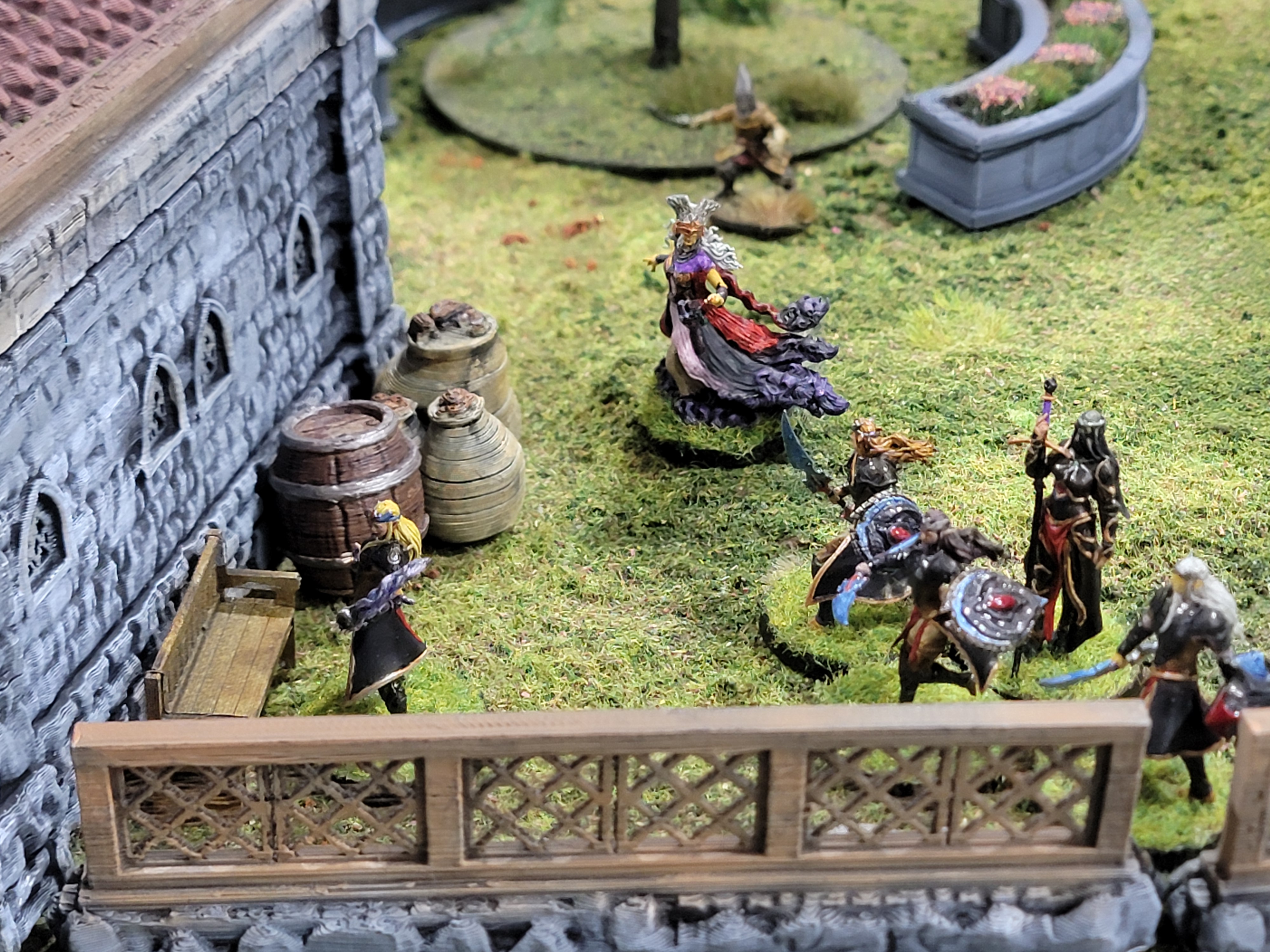
Our latest battle had a somewhat experimental mission. The goal was to collect villagers (cultist models in the photos) who were fleeing from the conflict. Each turn they scatter in random directions or directly away if one of our units got too close. First one to collect the majority wins.
Our game features a deployment system in which you maneuver scouts to draw battlelines. Anyone familiar with the Patrol Phase from Chain of Command would see some recognizable features here. The idea is to allow each battle to start dynamically with forces able to close in quickly, while still accounting for the maneuver and shaping of the battlefield. I used the phase to enact a simple plan: divide the board in half and hold ground while my backline collects the cultists.
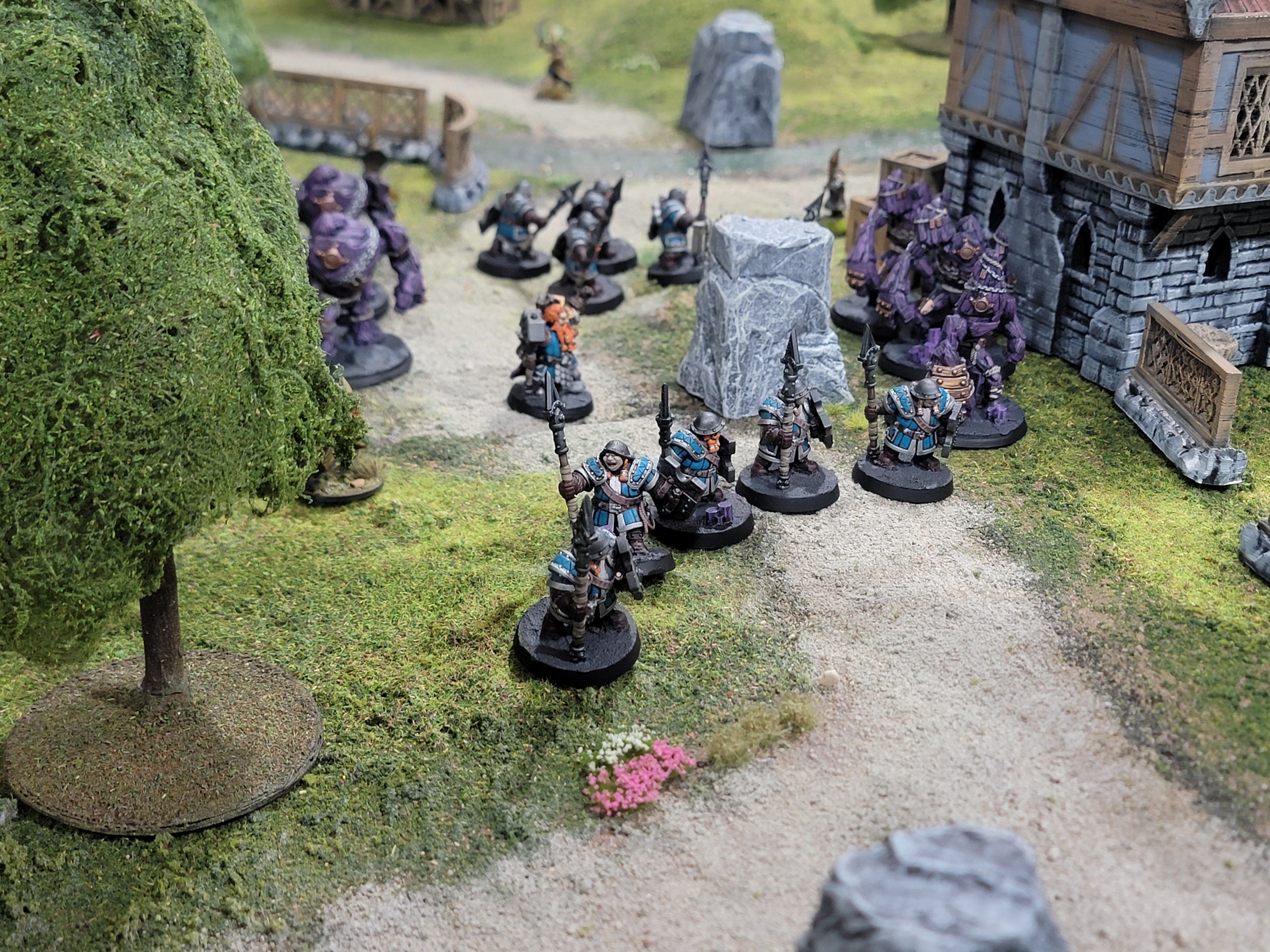
Frankly, thanks to Paul being a touch silly with his deployment to test some of the bounds of our scouting phase, this ended up being a good tactic. I quickly established control over the center and held ground against his dastardly elves.
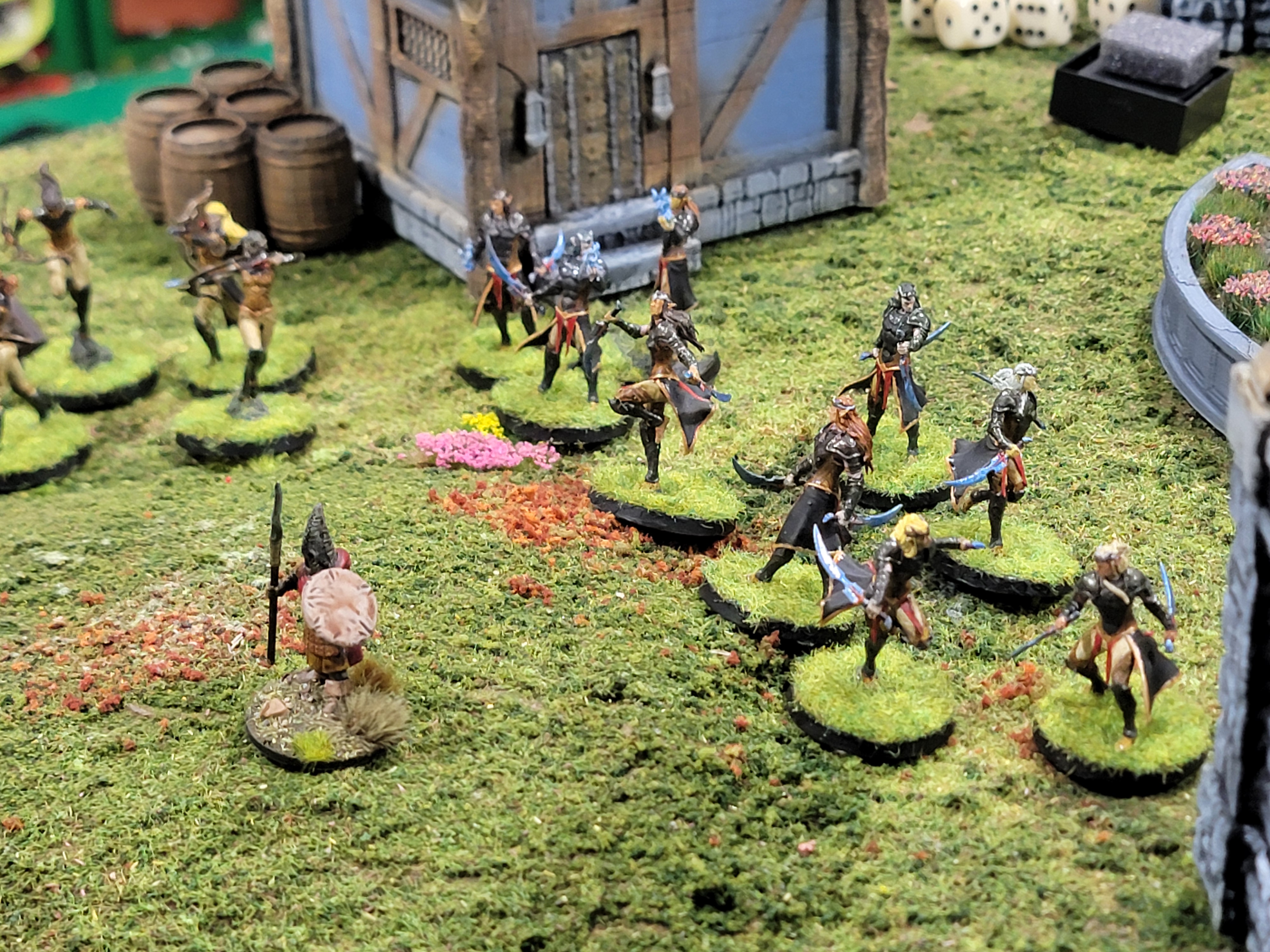
We found shooting and melee to work quite well, offering some interesting decisions in how we approached the battle. Combat in this game is simultaneous between the units involved. Both sides roll attack and defense dice at the same time. The catch is they dedicate dice to either attack or defense. This means if you have ten dice to start, you’ll choose how to split those ten between attacking your opponent or protecting yourself.
An example of why we did this was readily apparent here. I could use my cheaper dwarves to stall out his elves by having them roll purely defense dice, locking him in combat. This was a touch cheeky of me, but it mostly worked because of the deployment decisions made in the scouting phase. Otherwise, he would have been able to leverage his superior speed to hit me with multiple units at once, likely defeating my poor warriors in a single round.
We built the system to reward tactical thinking. It’s not about hitting a unit with a big stick–it’s about out-maneuvering the opponent… and then hitting them with a big stick.
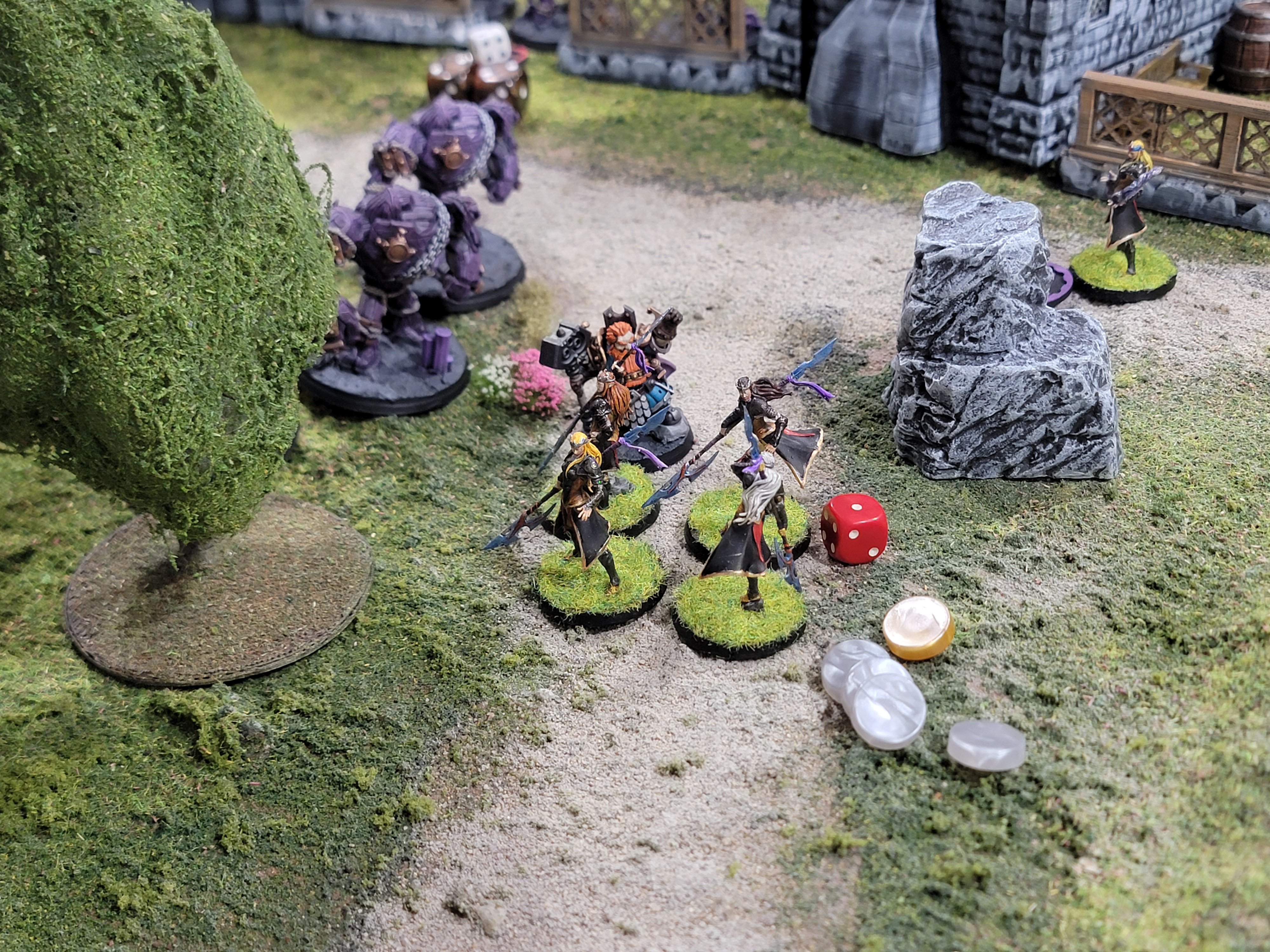
One of the challenges we’re addressing this upcoming weekend is magic. We built a high magic system, where magical use is very common–but this begs the question: why don’t you just drop meteors on armies and make them obsolete? Well, the answer is that everyone is pretty magical, which means even base warriors have some amount of magic resistance. What we found in this battle is that we over-tuned the magic resistance and needed to find a way to buff magic so it’s still viable. Similar to melee, we’re seeking a way to allow you to “out-maneuver” your opponent’s magic resist.
I’m not 100% sure we’ve landed it yet, but I think we’ll hammer out its initial balance after our next playtest.
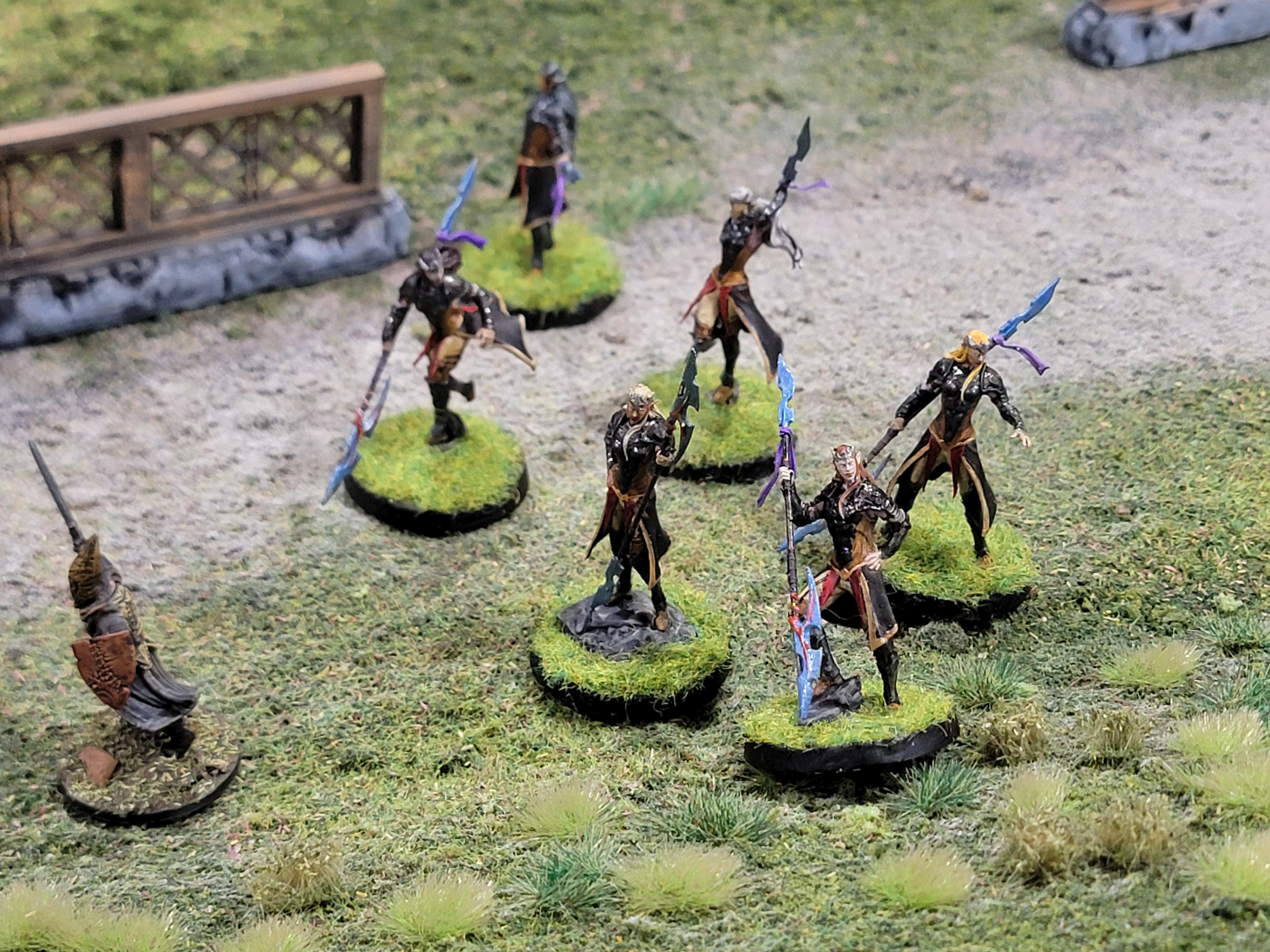
I’ve been really excited about this system. I had to stop myself from just rewriting the rules here. We haven’t even discussed how command and activation work. I love a good activation system and I think we really have one here–but I’ll leave that for another time.
For now, I should probably explain the title, at least. In Portuguese culture, there’s an emotion known as saudade. I’ve heard it best described as “the presence of absence.” It’s a deep rooted longing for something long gone, rooted in a sorrowful tone. For the Portuguese, it’s a core part of their culture. If you drive by a graveyard, every stone has the word saudade on it.
It’s also common stated that saudade has no English equivalent. Well, that’s bunk. “Desiderium” means roughly the same thing and works perfectly as an English analogue, save for the heavy cultural connotations. It also works well to describe a world where strong emotion brings forth magic. In my mind, I think of it as being something you long for without realizing it. The desire to change the very fabric of the world, whether subconscious or otherwise, driven by an underlying emotional drive that allows the user to tap into something and actually alter the world.
Again, still hammering it out, but I love the direction. I’m no lore-master.
I suspect that’s enough for a first post. I’ll continue to post about the game’s development and where it goes. As a partner, Paul has been amazing and put together so much for the game. We’re farther along than I’d have expected for just a few months and a lot of that is thanks to his drive and initiative in developing the rulebook and list builder.
I always say you can’t predict what I’ll do next in my wargaming, so I won’t promise anything.
Anyway, I bought Malediction. See you next week.
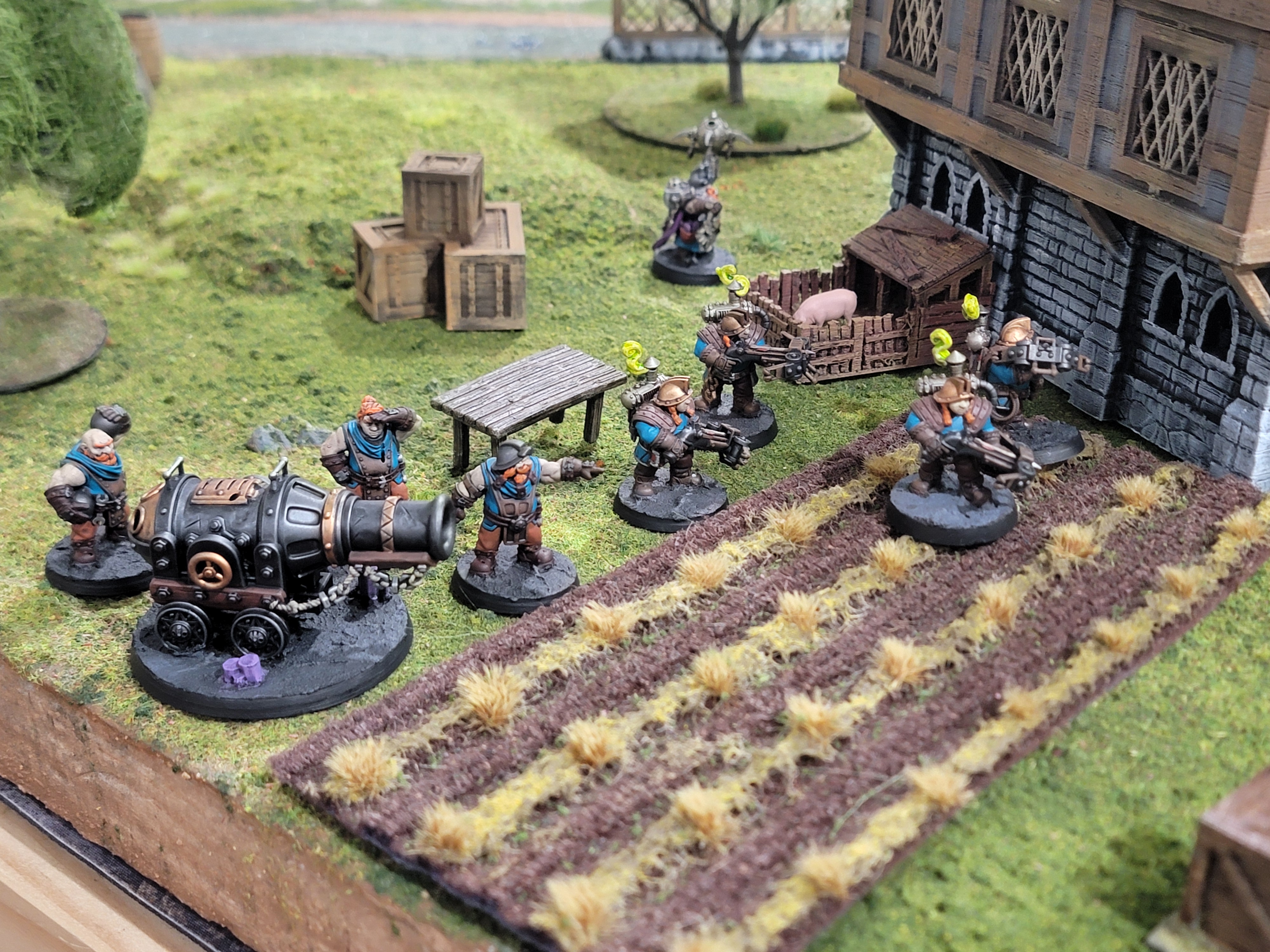
(I’m half-joking; I bought it for the STL files–the models are beautiful–but I’ll give the game a shot with a friend who really likes it.)




Leave a Reply