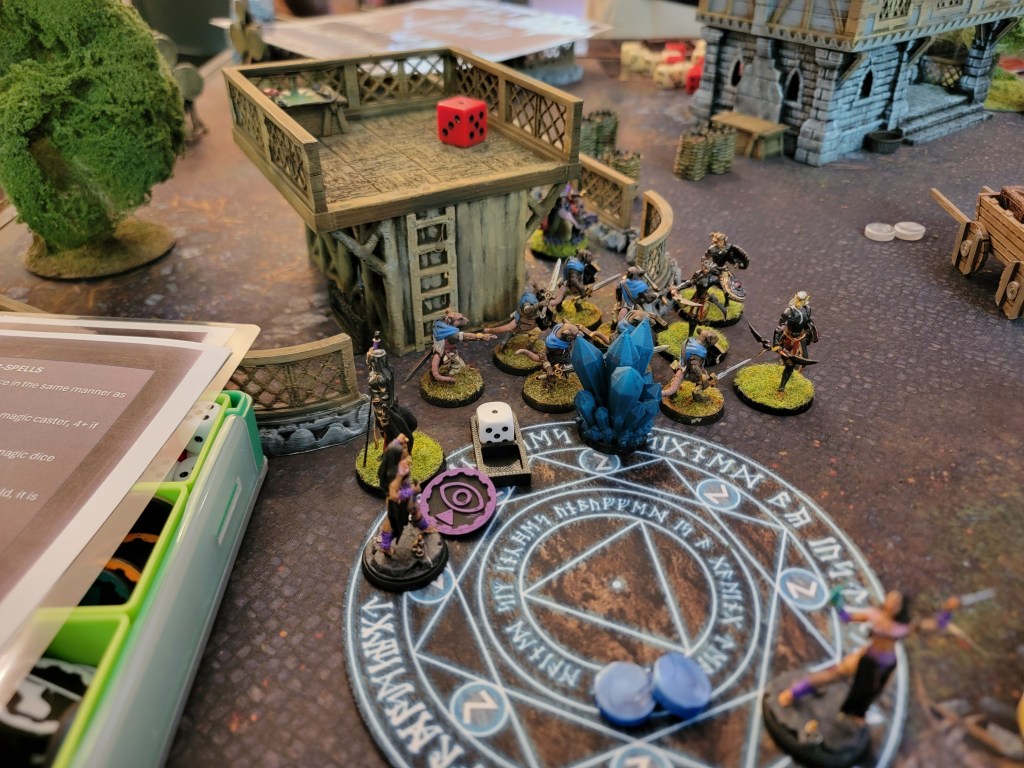
This year at Tentcon, Paul and I ran two demo games of Desiderium. The objective was to get feedback on our current build while giving players a chance to influence the future of one of our factions. It went mostly well, and I’m here to mull it over. We’ll start with the games themselves and their outcomes.
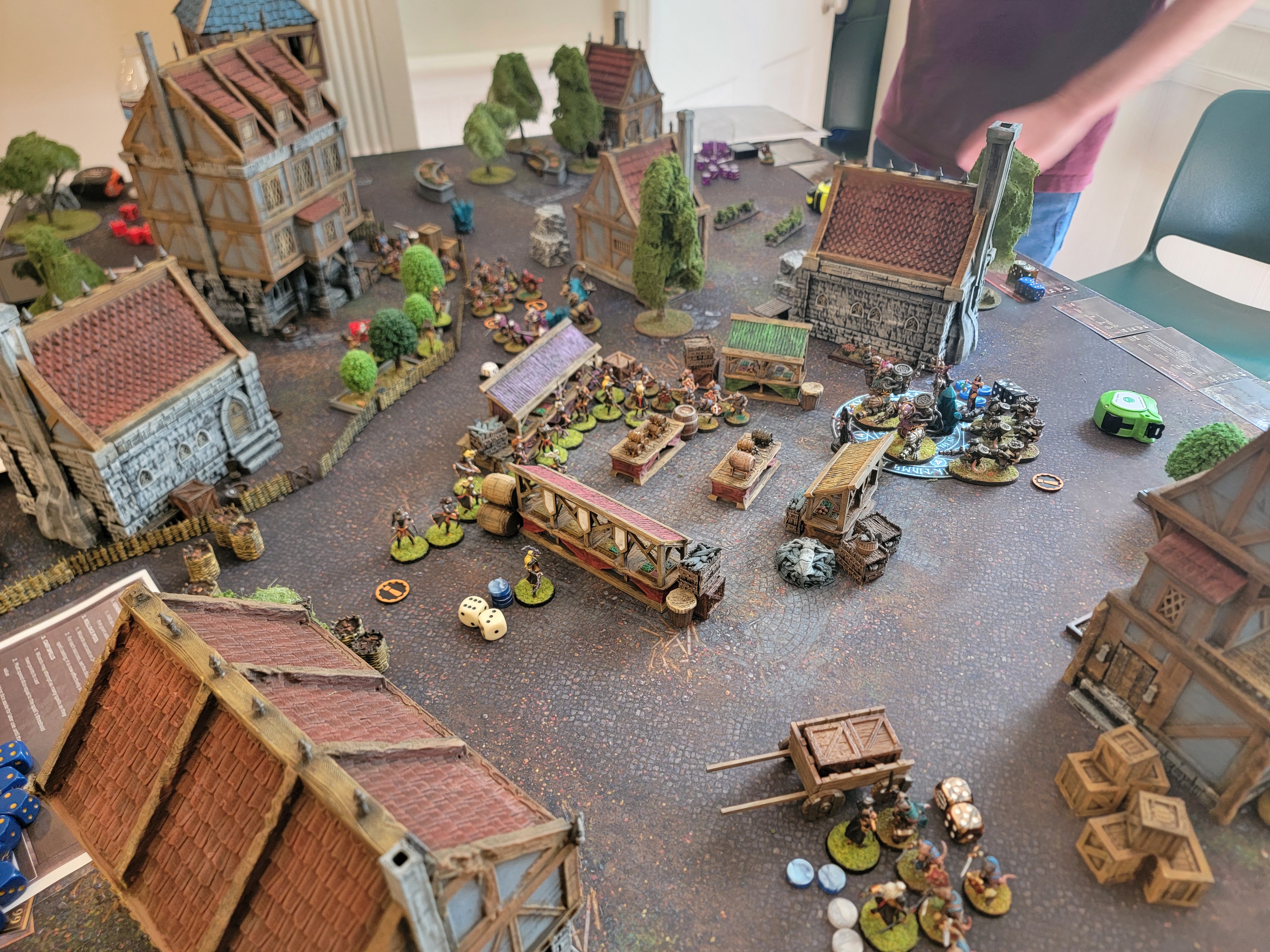
The Game
We originally designed this scenario envisioning that we’d have two players playing the Sombrevals (ratkin), so the narrative decision point here was placed on them. In short: Verrance will fall—that’s a fact—so the ratkin are here to save their civilians. They have a choice between trusting these strange void cultists and opening up portals, or doing the harder task of setting up wards to hold off the enemy while civilians escape on foot. The outcome is scaling, such that players could do a bit of both. In actual play, we ended up with players on both sides of the board, so the elves got to be a touch more aggressive than I’d initially anticipated, which made for a more fair game.
Game 1 saw the rats achieve two wards and then fail to tap a portal in time to use it. Game 2 saw the rats tap a portal right off the bat, and then establish all three wards.
I’d say my favorite moment of the day was in Game 2, where the rats appeared to be stomping the elves until the tides shifted about two-thirds of the way into the game. Suddenly, the rats were on the backfoot and were unsure if they’d be able to establish the remaining two wards. It took the heroic sacrifice of multiple rat units, who withdrew from combat and tried to charge the final ward. They pulled it off by the skin of their teeth, making for a narrative moment that should probably be written down somewhere in a lore book.
As for the larger narrative? I’d say the rats performed well enough for their republic to remain intact. They will go into the future as, mostly, a force for “good” or at least “normal governance.” That said, both games at least tried to embrace the void cultists, so some amount of that will sink in. Every government has a shadowy underbelly, and the rats will be no exception. Their final list can expect to see cultists and assassins as options, perhaps even with specialized divisions and rules to encourage it.
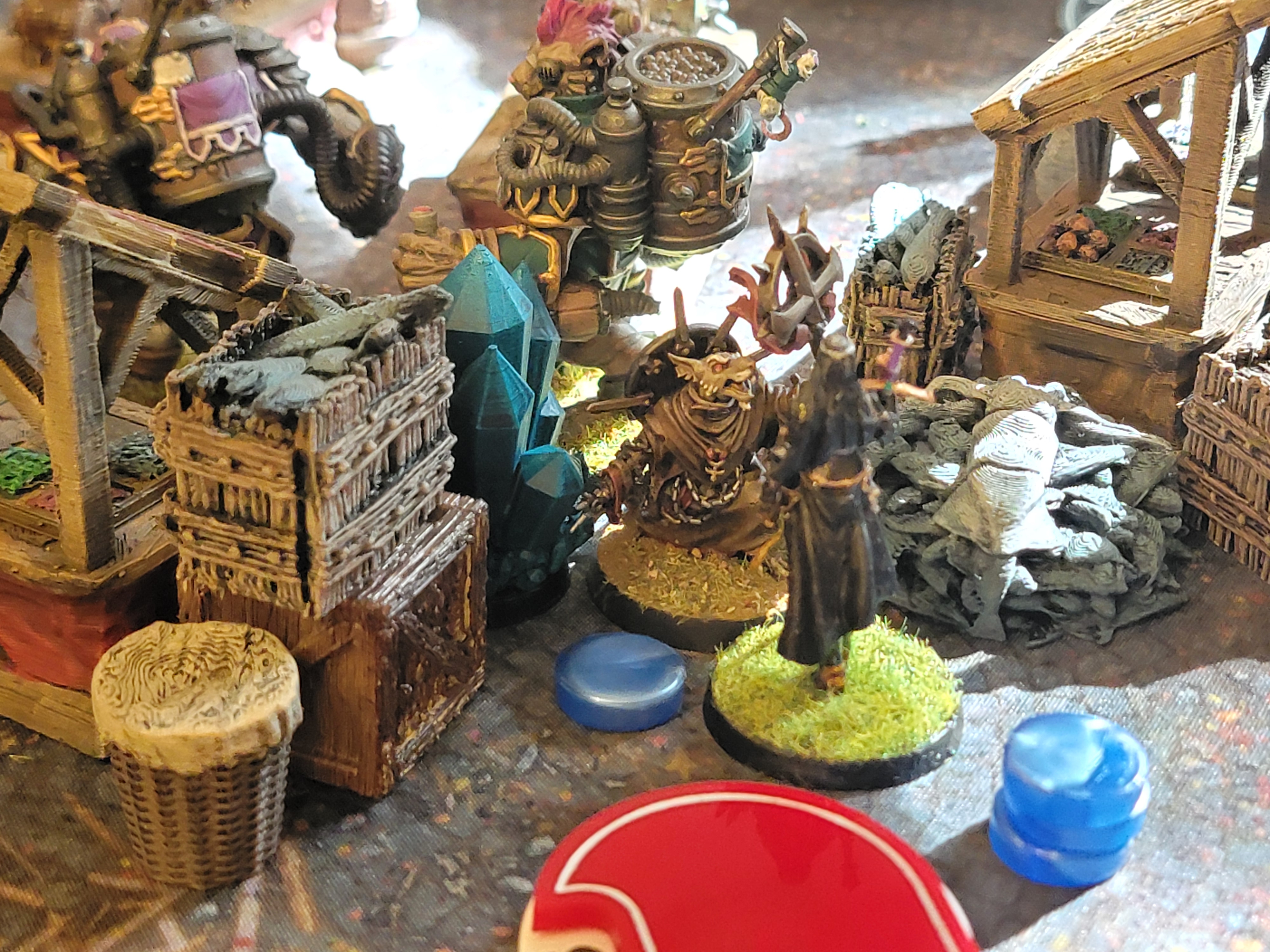
Beyond the narrative, I’d confidently say the games went well. They took about three hours each, which makes sense given the players were learning the rules, then splitting armies—which always slows you down. I’d estimate if these were played with a single player per side, they’d have taken about two hours. Our goal for the game is that experienced players wrap up in an hour and a half, so I think we’re on track there.
The players claimed they had fun, but they also know us, so I’ll take that with a touch of salt. The better question would probably be something like “Would you play this over another fantasy warband game?” but I’ll hold that for a more developed build. Let’s get to the focus here: how did the game itself survive?
The Feedback
I’d say the core of the game’s systems survived. We got feedback about the initiative system because it involves hidden dice, which raised concerns about cheating. Paul and I agreed to consider other options and I believe there’s a chance here to build a more interesting initiative system, but I do think our current solution models leadership better than anything else I can think of.
Right now, you roll 2D6 per leader, then modify the result based on their personal command value. The game then steps through initiative values starting at 12, down to 2. So you’re manipulating when each unit will activate during the turn. The catch is that you do this in secret, so you’re only considering your own units without knowing how and when your opponent will go. We did it like this not for the tension, but for the simplicity. By only considering your own units, we avoid a whole mini-game of setting up your command dice against your opponent’s command dice. That might be fun, but it would lengthen the game in a way I strongly dislike.
We’ll think it over. To me, this is the biggest piece of feedback—not because our system is broken, but because the players were so ready to throw it away. It’s not as interesting as I’d like it to be.
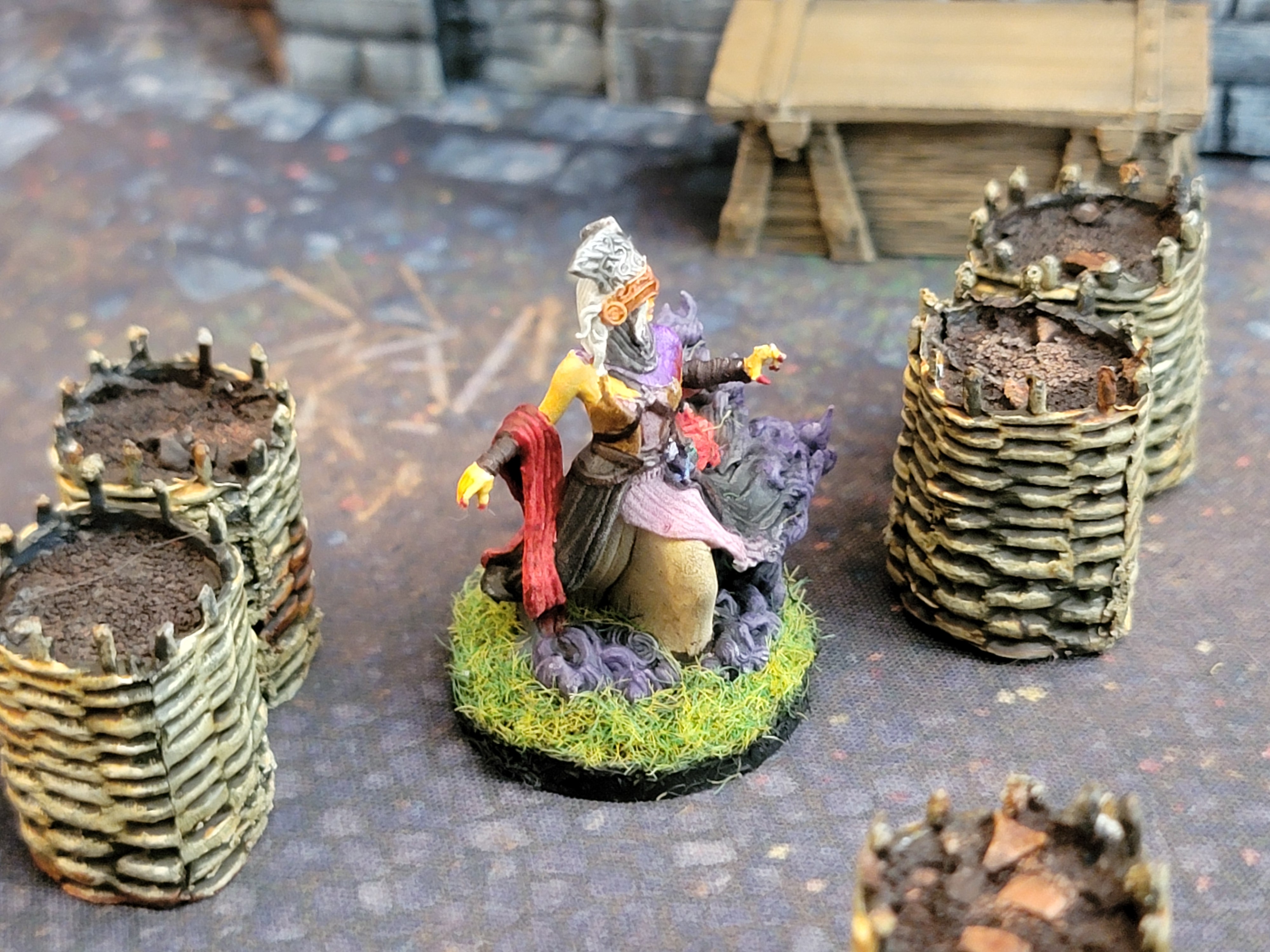
The next two pieces of feedback were immediately implemented. Our magic system involves rolling dice to determine how much magical power your wizards have available that turn. We did this when a wizard casts a spell. As one player put it, “It’s hard to track a negative.” We changed this roll to occur at the start of the turn—easy enough, and a definite upgrade for game tracking.
The next one was charging. The game is actually quite mobile, which devalues shooting units. In Game 1, players could move, then charge—this readily allowed units to cover 16-20 inches into combat and then fight immediately. Given how quickly units close to within two feet of each other, that creates an awkward situation for any gunline. We changed it such that you can no longer both move and charge within a turn, but charging gives you 1.5x distance. This changes the average charge from about 16″ down to 12″. I’m not convinced we’re done here, but it was an obvious change.
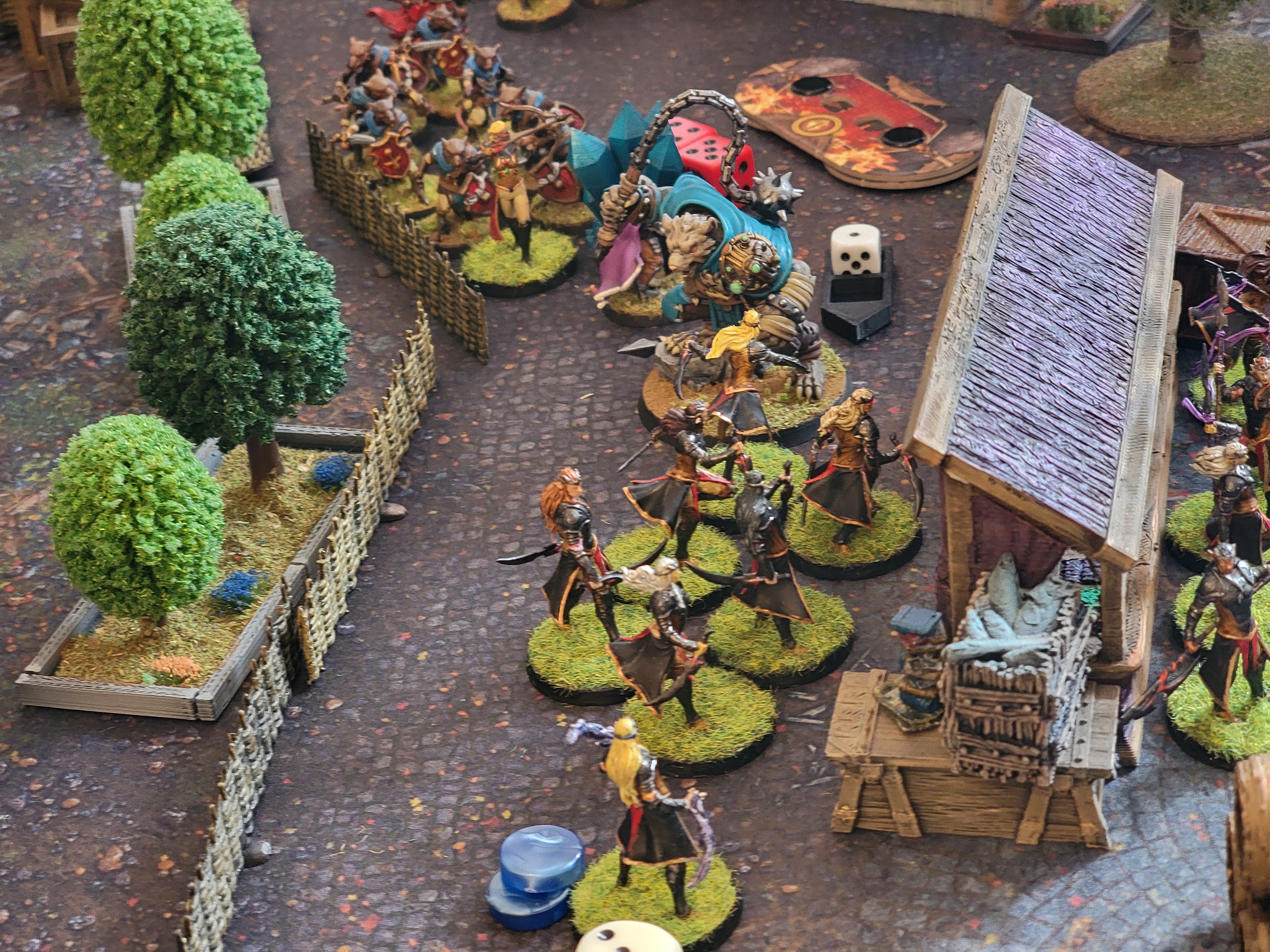
The next big piece of feedback I took away is that shooting feels weak. This is more a question of world model to me: how strong do we want shooting to be? The answer is that we want it to be effective if executed in concert. In practice, that wasn’t quite the case in these games. Shooting units definitely felt like a tax than a boon. I’m not yet sure how we’ll solve this, but I suspect some amount of “You can shoot through allies” will be necessary—or perhaps we accept that at this level of engagement you simply aren’t shooting. Anyone with a bow or gun is also melee capable as a rule. That might be a more reasonable solution.
Actually, as I think about it here, maybe the solution is to sidestep what shooting does altogether. Shooting could instead solely hinder your opponent. It could inflict a slow effect, or have an easier time inflicting stress. That way, shooting serves to harry your opponent, rather than acting as a secondary method of killing them. Again, we’ll put more thought into this.
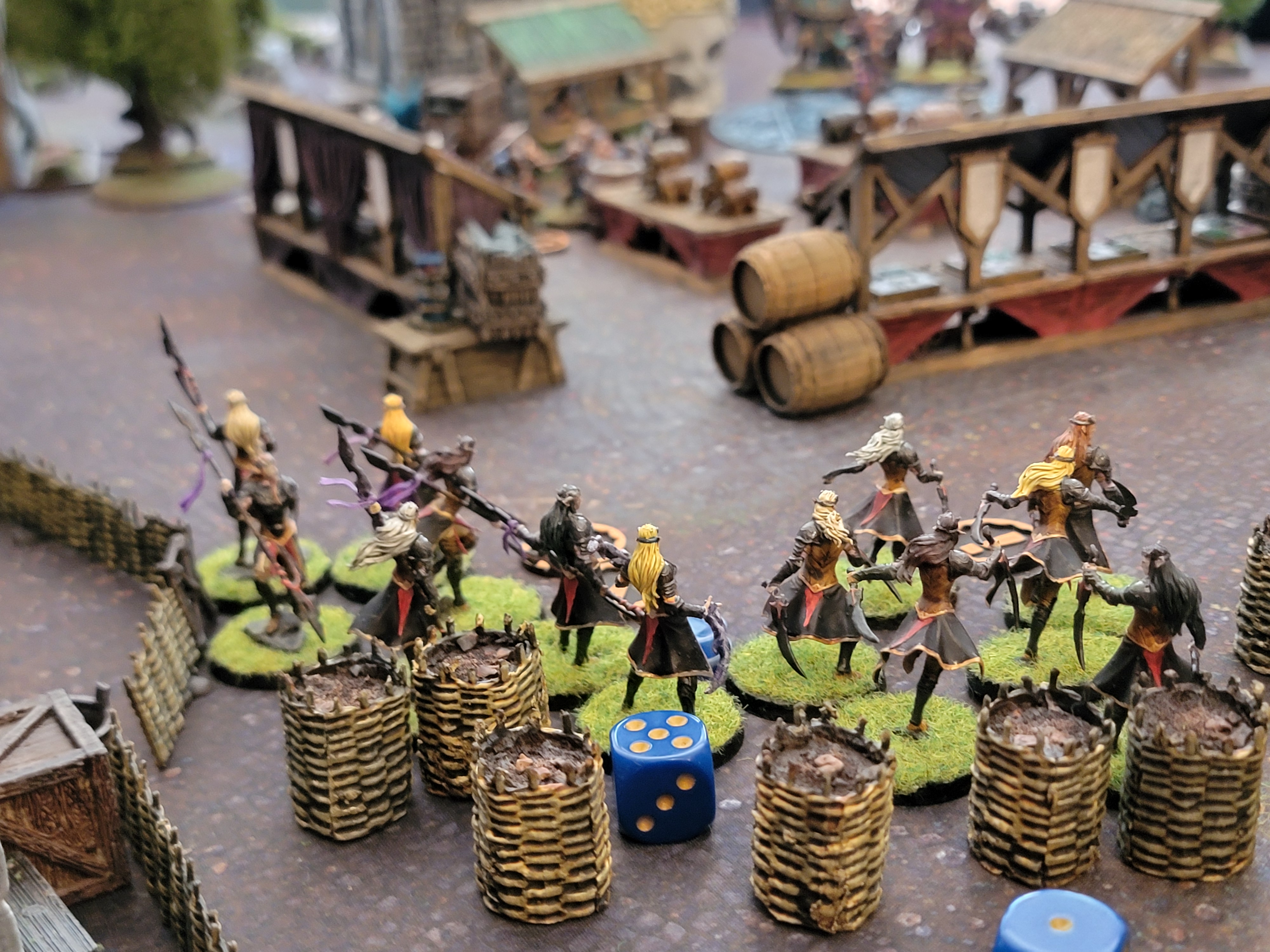
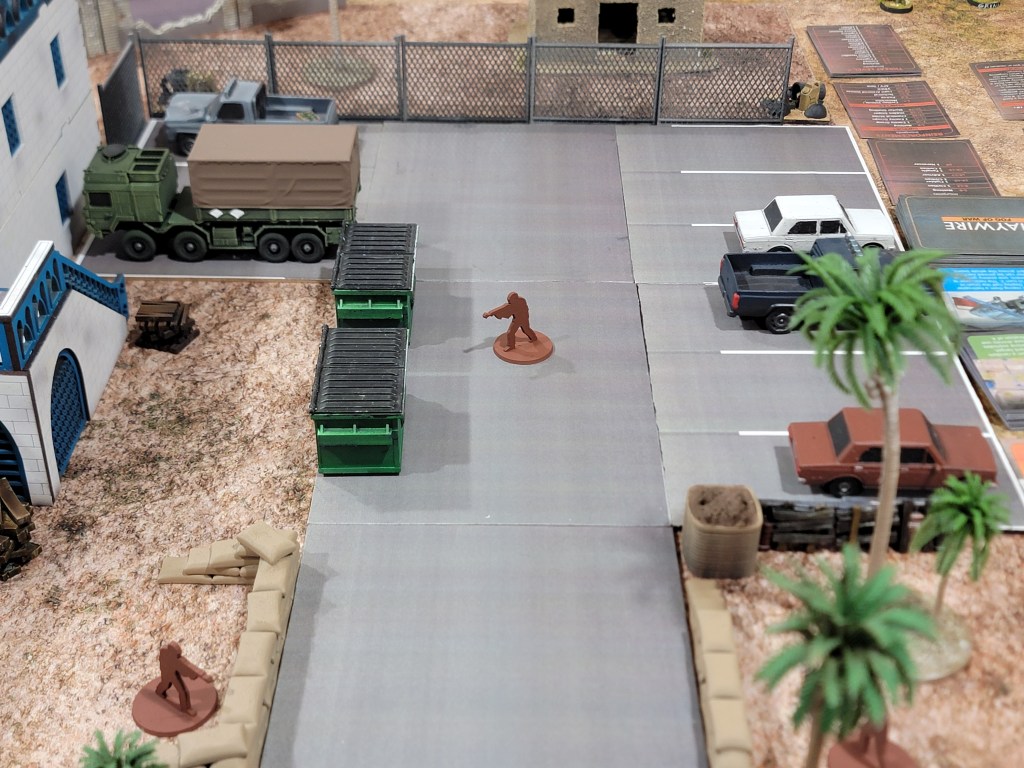
The last big piece of feedback I want to really give thought to is terrain. OOne player noted that the terrain did not meaningfully affect the battle. In a strange way, I agree. We fought in tight city streets, so the terrain mostly served to funnel players rather than create interesting tactical decisions.
We didn’t have any area terrain and the linear obstacles didn’t serve to slow anyone down enough to have an impact. I’m left wondering if this is a case of “this terrain didn’t impact the game very much” or “terrain doesn’t impact the game very much.” He brought up the idea of being able to pen enemies against a wall and gaining a benefit.
I’m of two minds, I guess. Overcomplicating terrain interaction tends to lead to players just ignoring it. It’s also just one sample game, so I won’t make any changes right away. That said, I have to acknowledge I love the idea of terrain interaction as a core element of a game. I think we’ll get there, but by expanding the game laterally rather than changing its core mechanics.
For example, we already have a spell that blows up buildings. It wasn’t in this game, but it exists. I’d readily add a spell that places walls on the battlefield, or perhaps other pieces of terrain. I think this will bring about a sense of being able to interact with the world with more than just models.
Magic
It gets its own section. I think magic in the game has a good core idea: you determine how much magical power your mage has each turn, then spend those points to both cast spells and negate enemy spells. Rad. The issue is that you so often negate enemy spells that something like one in four spells actually occurs.
Now, the tradeoff is spells are impactful, so that one spell was probably worth it. We’ve had a single spell turn a whole flank of a battle. I just think the constant cancellations is a bit of a negative play experience. I watched a player fail most of their spells and it was clear it made him feel like his spellcaster just wasn’t that useful. If not for a fateful spell late in the game, I think he would have written off spellcasting altogether.
I’m not yet sure how I want to fix this. Damaging spells are so influential because they shift the battle permanently, more or less. I almost want to remove them and make spells easier to pull off, but root them in breaking the game’s various rules to provide players options rather than take them away. For example, right now withdrawing from combat is a risky endeavor that will often leave you in rough shape. As a result, the risk calculus becomes something like: “I’ll lose half to most of my health and have to spend actions recovering it through magic. But I need my mage to stop the enemy from destroying another unit, so…I’ll just stay in combat.” Well, give me a spell that lets him escape and remove the pressure of my mage needing to nullify magic elsewhere.
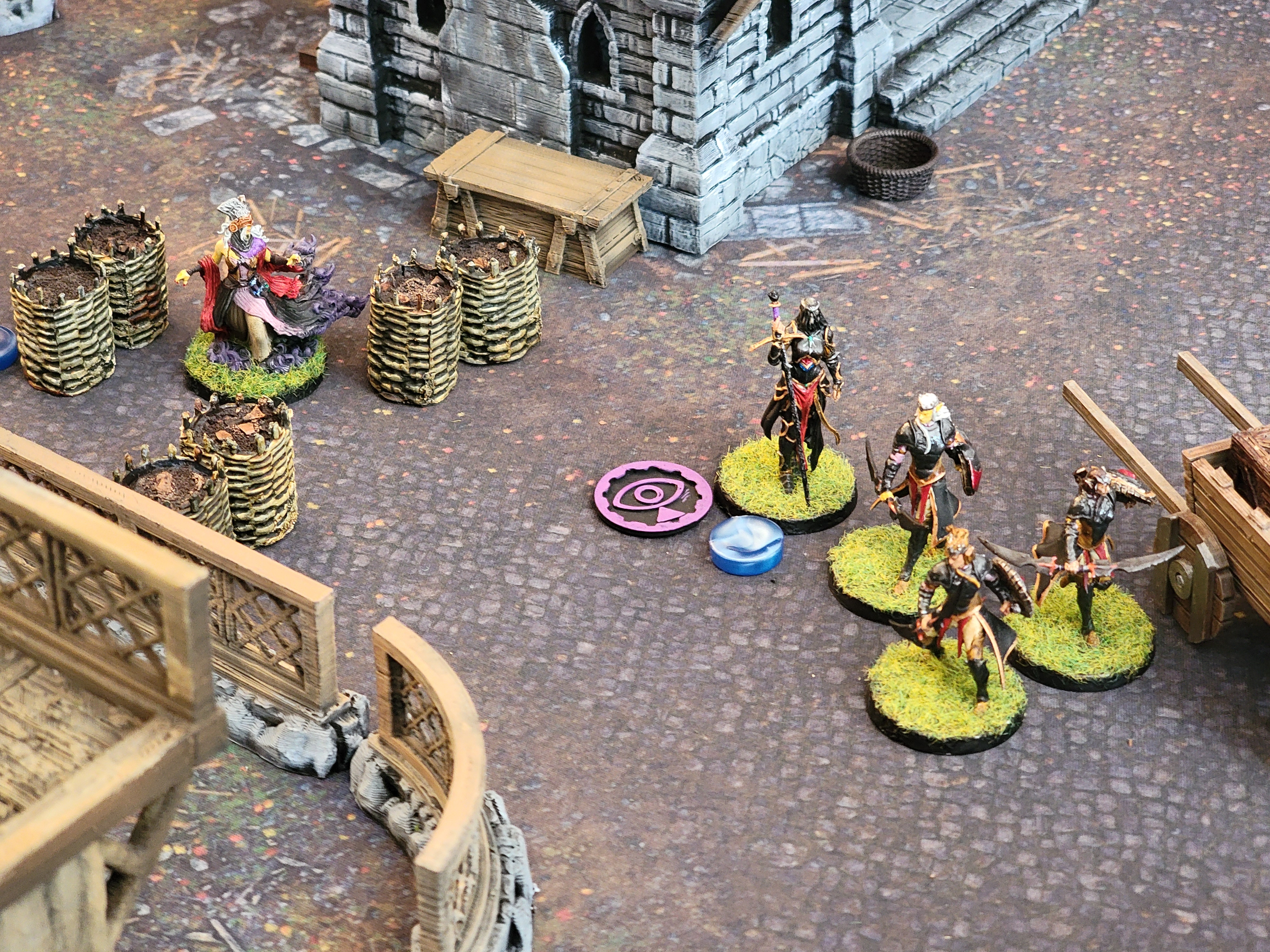
This is tough, though. There’s a great back-and-forth right now of deciding if you want to block spells or cast spells. We also just haven’t played games with a ton of spellcasters on both sides, so it’s hard to say if that back-and-forth wouldn’t produce more interesting results. I explicitly built the rats to deny magic, not use it, so naturally this slants my attitude. More experimentation is needed, but I’m convinced magic will need to expand and succeed more often than it does right now.
Now What?
The above is mostly food for thought and represents my thoughts specifically. My partner disagrees with a few of these, I’m sure. That disagreement is vital in the design process, because we represent two people seeking the same goal but with two different perspectives. That synthesis is what produces a better final product. We’re both somewhat wrong, so there’s got to be truth in between.
I guess the cheeky answer is “Now we playtest a ton more.” Fair. I think our next game will focus on the core changes we agreed on already, but leveraging different list structures for the armies. I’ll see if I can paint up a few more options and build out differently for my rats. An obvious answer is to give them another mage and think more carefully about how they employ shooting. It could be that a different angle is all I need to see that the existing systems work well.
Further, I think we can safely start to settle what the factions actually look like. We need to build out the list building options with more spells and special rules, while expanding our existing factions. A big change we’re likely to make in that process is unit categories, which will further restrict how many models exist in a unit. We’re not sure exactly how we’ll hammer that down, but we got a lot of feedback revolving around potential abuses that would arise from players being able to freely set their unit sizes. The solution, it seems, would be to remove that ability and start settling how big “Big” actually is.
But again, more playtesting needed.
My biggest takeaway overall is, quite honestly, that I enjoyed the game. I think we’re on track and we’ve got something worthwhile. With refinement, I’m confident we’ll have a ruleset worth playing, even by my own standards. I’m really pleased with that idea, and I fully intend to ride this high into painting more rat boys.
But first?
Homework. So much homework that I put off by prepping for Tentcon. Remember, kids—don’t get a degree. It eats too much of your time and takes you away from the important stuff: painting minis.



Leave a comment