This is an impression of the Halo: Flashpoint rules after a read-through. It is not a review. It’s just my opinion after paying for the app and reading all of the game’s current rules as of May 22nd, 2026. I’ve danced around the idea of buying Flashpoint for months now. I am enamored with the notion of a wargame based around a video game and have tried to stave off buying this game by writing my own design to play with my son. But here we are: I was weak and decided to play around with their app.
Note: images in this post will be taken from official marketing as I lack any of my own and don’t wish to misrepresent the material.
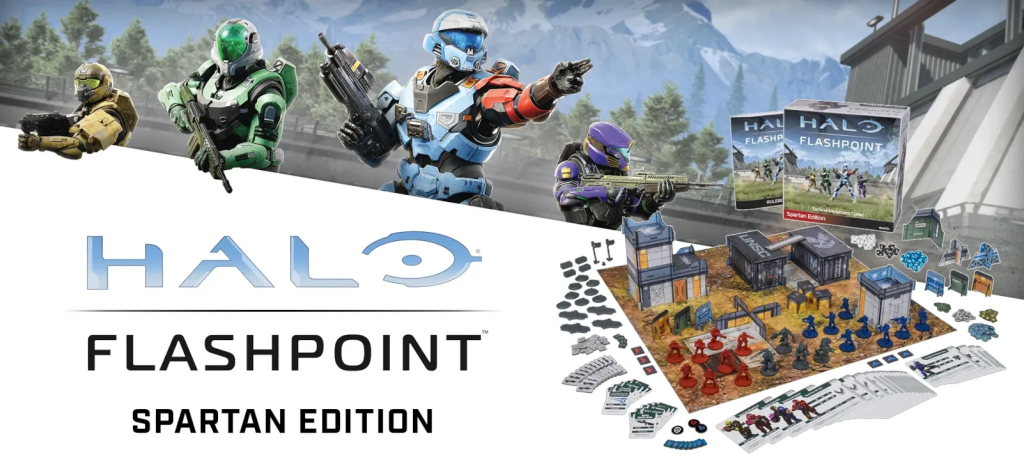
Before we continue, we should calibrate. What do I look for in a game and what have I liked before? Well, I tend to look for games that understand and execute their scope while simultaneously adhering to a core conflict model. That is to say: the game knows what it wants to be and the rules cohere together, such that you could almost guess how the next rule will work. To me, that’s peak design.
Next up, what skirmish and science fiction games have I played and especially enjoyed?
- Infinity
- Marvel Crisis Protocol
- Cyberpunk Red: Combat Zone
Of these, I expect Flashpoint to compete with the latter. I don’t believe this aims to be the same beast as Infinity, and I’m not convinced the Halo universe—even the video game multiplayer this game imitates—really lends itself to super-diverse heroes with larger-than-life abilities. I expect this to be a more contained game, the kind you bust out every few months and remember how to play with ease, which allows you to play a facsimile of Halo multiplayer and just have fun.
I should note my experience there, too. I played a lot of Halo 5 multiplayer and a fair amount of Halo: Infinite. I got pretty high up the ladder in Halo 5 specifically (before my kid was born, if I recall) and I forbid myself from touching it again for fear of being sucked in.
I will not be reviewing this solely as a “board game” where you buy the Spartan Edition and call it done. I’m going to try to review this as an ongoing hobby you play with some regularity. I can tell you that if it appeals to you, this works well as a one box board game and is worth your money—but I think you could readily get away with the cheaper Recon Edition and call it done.
As for the longer term hobbyist?
Bottom Line Up Front
The BLUF here is simple: I like the rules and I think they’d work in your rotation of weekly games. They’re easy to understand, flow logically, and seem to have just enough meat on their bones to be fun without being cumbersome. I believe the objective of the game is not to be your end-all-be-all wargame, but to fit in well within a crowded hobby and distinguish itself through a unique focus that lends to fun, simple games. That unique focus is simple: this is a game where you run 4-7ish models against an opponent in game modes designed around the Halo videogame multiplayer matches. As a result, it focuses on clear objectives, tactical play, and fun moment-to-moment gameplay while avoiding bogging down with overly technical rules.
After a read-through, I think it pulls that off almost perfectly, except for one major hitch. The game features a lot of special rules. They don’t seem that hard to manage and understand, and the app you can pay for does a good job of making them accessible, but this is a sizable hitch. The $3 per month doesn’t seem so bad and there is a free version—but that version has limited features. More on this distinction below.
I’d give the game a qualified recommendation based on a read-through. As a weekly game, I imagine the fee for the builder will be offset by its value, and the special rules lookup will quickly fall into the background as you learn your lists.
Simple, But Flavorful
The core rules are not difficult to follow or understand. On a single read-through, you’d likely be left only looking up the setup rules and little else. I’m not even sure this game needs a Quick Reference Sheet (QRS). Usually, this would be damning praise—a simple game is often a little too light to enjoy. Here, I don’t think that’s the case.
You start each round by rolling your command dice, which give you extra bonuses for the round and enable the usage of your limited, points restricted pool of special rules. You alternate activating models and each model gets two short actions or one long action. Easy enough to remember and play.
When attacking, the designers use a clever system that reduces the dice math many games bog down in. You start with 3D8 to attack, then add more for modifiers. Enemy not behind cover? Add 2D8. Got a height advantage? 1D8. Special rules? More D8s, maybe. You roll and your opponent rolls 3D8 in defense. In both cases, you check your relevant stat on the model for your target number. If the attacker gets more successes, they deal the difference in damage. If the defender gets more, they’re unharmed. Roll any 8s as attacker OR defender and you score a poorly named “headshot,” which gives you another dice. I guess as a defender you… headshot the bullets?
Melee works just about the same way, as you’d expect. I consider this a point in favor of the rules having a consistent way of modeling conflict.
Both shooting and melee are simple and exciting, but feed into the main problem: special rules.
Absent other mechanics to distinguish each weapon, they rely on special rules to feel different. Here’s an example:

It has three special rules. Here’s their exact text in the app:
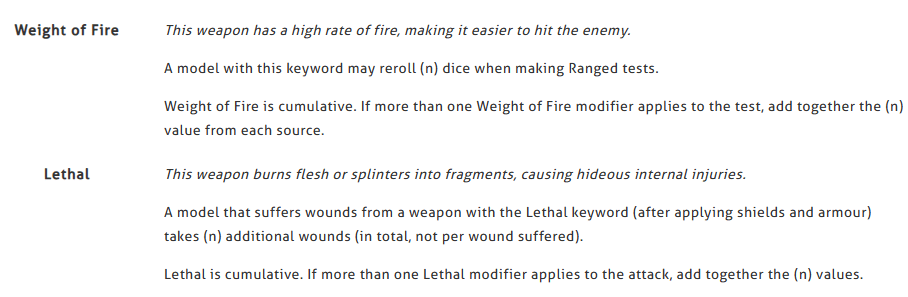

You’ll note it’s a touch “wordy” in order to be clear. This is fine, to a point, but you can imagine how inconvenient it would be to print out or look up during the game. This feels a little odd in the middle of such a simple ruleset, but it’s the common burden of simplicity: if the core is clean, variety often has to come from bolt-on rules. You have to “bolt on” more rules to build diversity into the game. These rules are not all that difficult, so to the weekly player this is probably no big deal. To the person playing on occasion, though, I’d advise printing off some form of quick reference for yourself, or you’ll dread taking the game off the shelf and having to look up the rules.
It’s notable that this is just one weapon, though. Here’s a snapshot from the list of weapons you can add to your units:
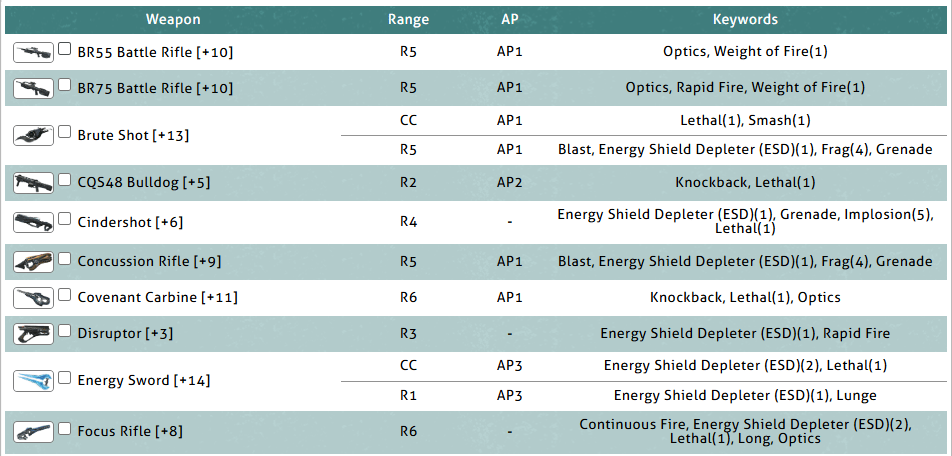
There’s a lot of rules repeated here, but this should give you the idea if this is a bit much for you or not. I’m not personally worried, but for my purposes I intend to just print off summaries of the rules I need for a few lists as I play with my son.
To wrap this back into “flavor,” I’ll say that the rules are effective and tie well with the rest of the game’s mechanics. A major mechanic here, and a deviation from the game’s parent game system Deadzone, is shields. Most units in the game have regenerating shields as well as an armor value. Weapons can carry both armor piercing and “Energy Shield Depleter” attributes/special rules. This allows weapons to distinguish themselves by how they injure your opponent and encourages bringing a diverse set of weapons to each match.
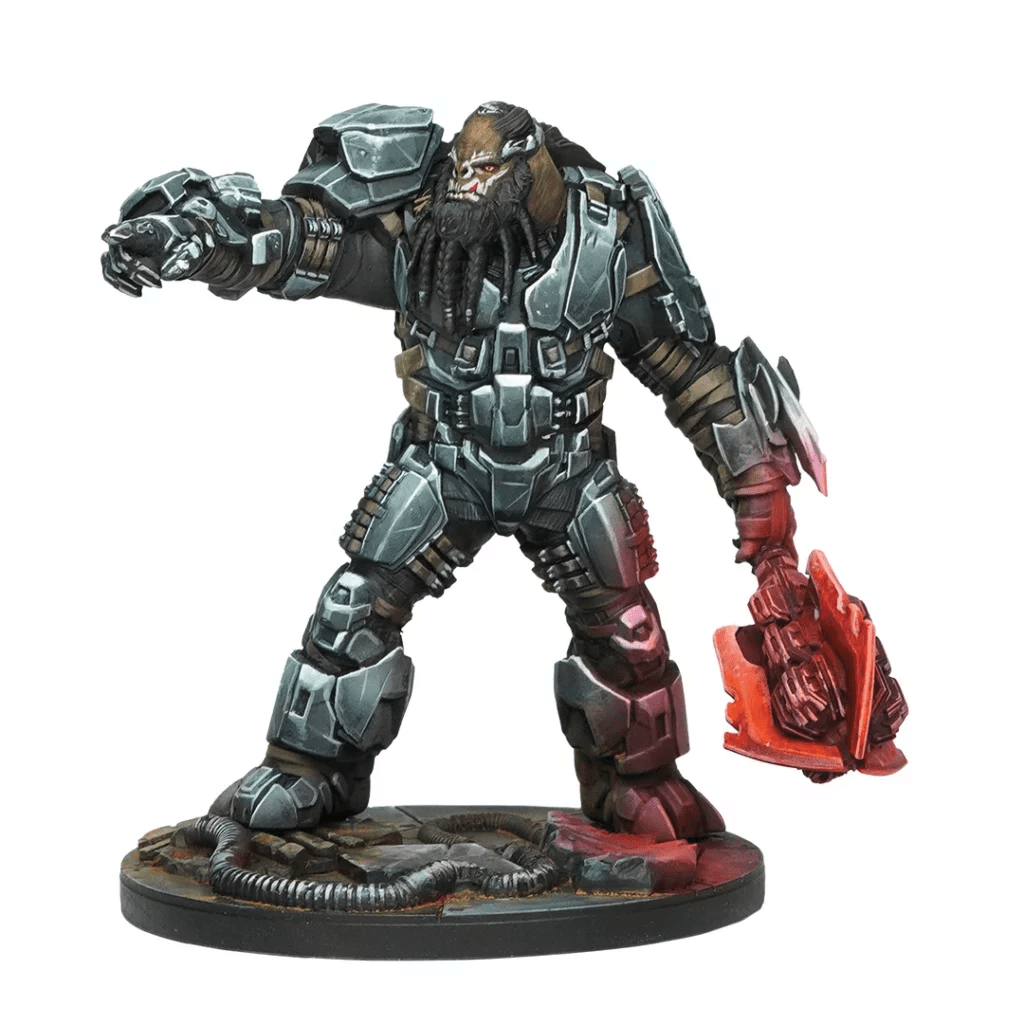
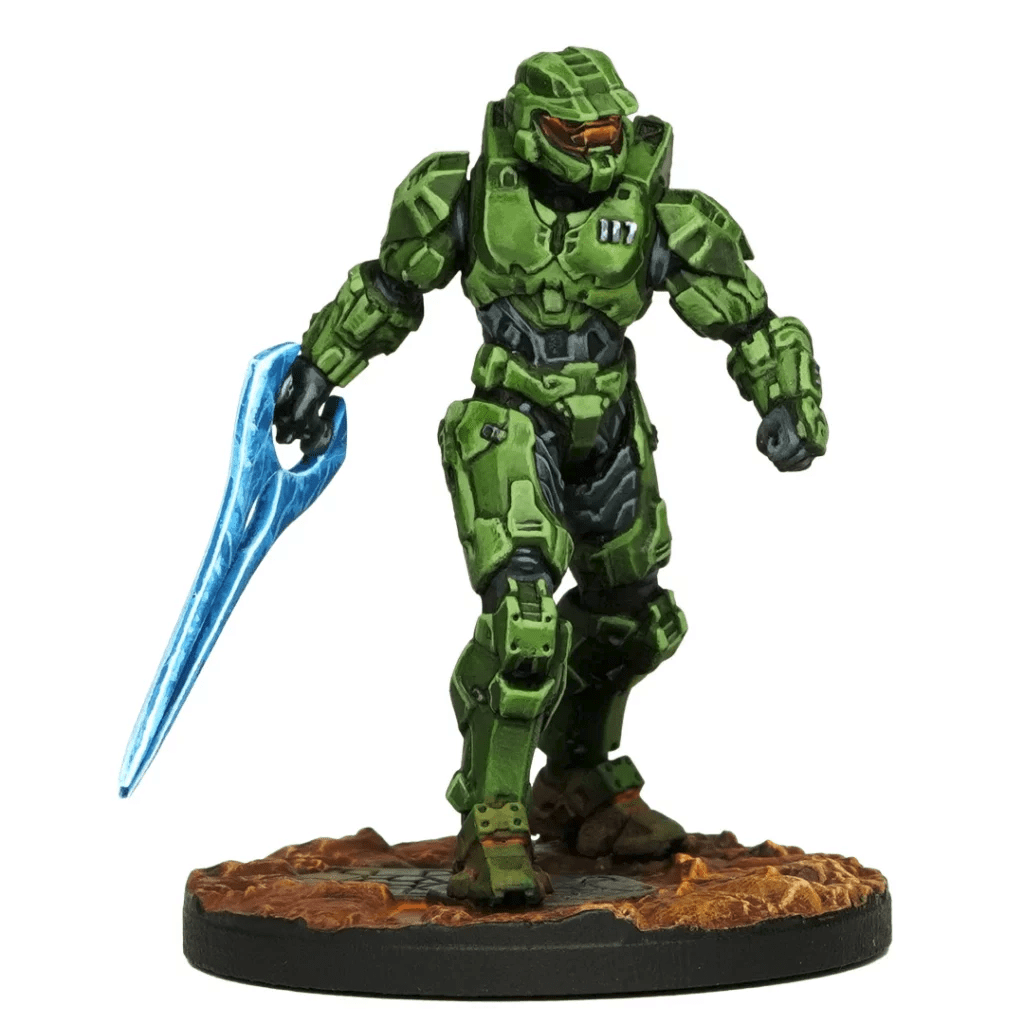
There’s enough here that the gravity hammer and the energy sword genuinely look like they feel different as weapons. I think it’s a worthwhile tradeoff for dealing with the pile of special rules.
Another great example of the flavor is respawns. This is Halo multiplayer, so most of the matches include some form of a respawn mechanic. I love this idea. It introduces a bit of forgiveness for sloppy play, while also encouraging tactics you might not take in other games. You can absolutely risk a valuable model knowing that you’ll get it back. Or, if you’re me, you can take the convenient shot that makes you feel just a touch guilty, knowing that your opponent will get their prized model back in a moment anyway.
This layers on top of scenarios built around multiplayer games. One of my favorites is Oddball, where you fight to collect the Oddball objective and hold onto it to score. The objective itself is a melee weapon, and if you kill an opponent with it you score even more points. What a fun, silly concept. You don’t see scenario building like this in many wargames and I am here for it.
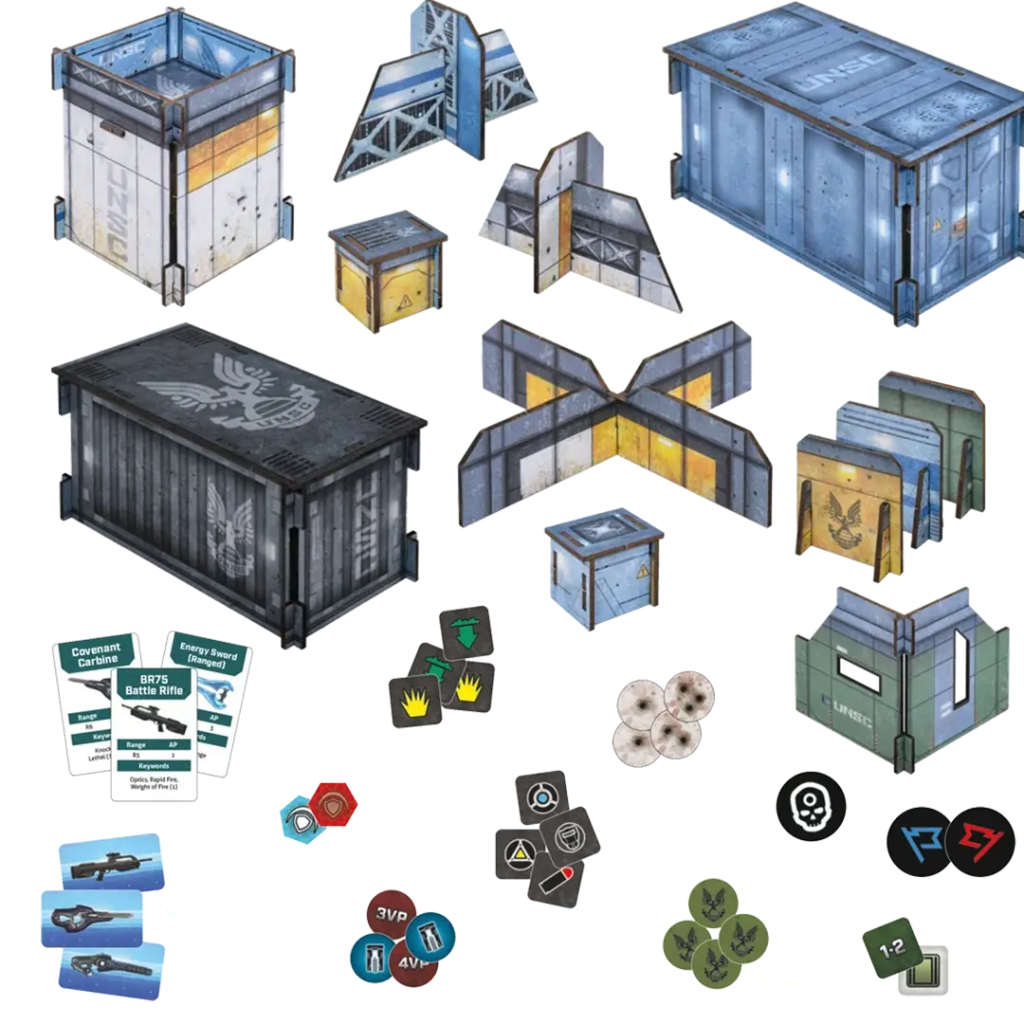
One more positive before we hit my “neutrals.” Many of the scenarios involve weapons on the board you pick up as you go. This is a cool idea. One thing I have not spoken to yet is how well this seemingly comes together to really live out how Halo multiplayer worked. Most people think of first-person shooter multiplayer games as being about scoring headshots. This is somewhat true, but really once you learn to nail headshots every time you’ve only started the game.
Multiplayer in Halo is about map awareness. It’s about understanding how to navigate a map to maximize ideal one-to-one contacts, while understanding how your opponents are choosing to navigate the map. A major factor in this is the weapon drops. In Halo, you start with two basic weapons (pistol and assault rifle) and have to get “better” weapons off the map itself at weapon spawn points. This means a huge part of map awareness is understanding where these spawn points are and what impact they have on the flow of the match. A key weapon can dictate the flow of a game entirely in the right hands and you often want to make sure those hands are yours.
From the respawns, to the weapon drops, to the way the game encourages multi-layered, dense terrain, it really comes together to evoke the feeling of Halo multiplayer.
Alright, I’ve gushed. Let’s hit some “neutral.”
Grid Movement
The game plays on a cube grid. Each cube is 3” in every direction, including height. Models move grid square to grid square. I give this its own section to say: it makes sense and is inoffensive. I have no perceived issues with this system.
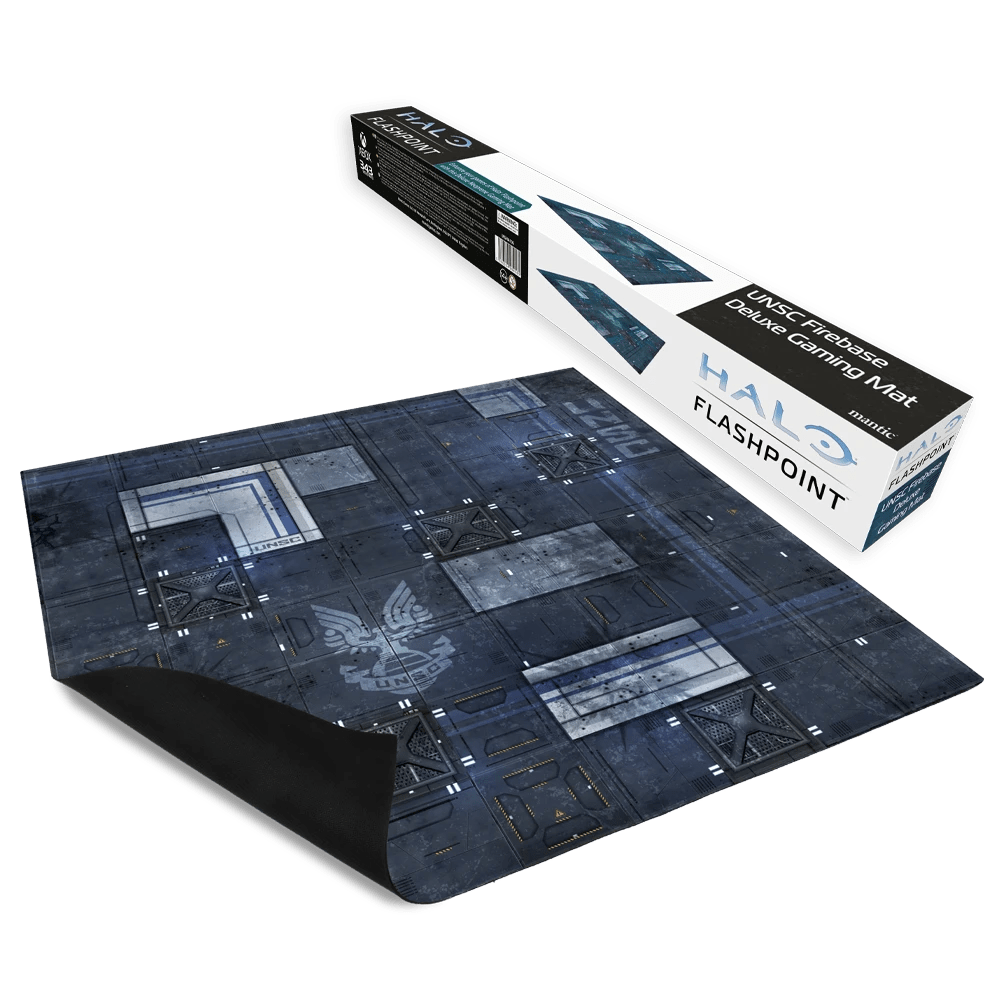
The rules come together well and I can understand movement readily. Do I think it really saves a ton of trouble? No. I don’t believe measured movement is very difficult. I do think it saves time and encourages three dimensionality. Climbing all over a multi-layered map is rendered easier when you don’t have to measure everything. Movement in general is simpler and faster for it. I think it fits and I encourage anyone balking at the idea of a grid to look past it. It should not be what stops you from trying the system.
The App
First off, it’s not an app. It’s a website. It’ll never be a proper app.
Second, it’s good. As best as I can tell, it has all the rules. It has the rules for the bigger matches, additional missions, and additional force rules released elsewhere as part of model packs. You could, in theory, pay $3 and put in the work to just copy the rules you don’t already have.
The list builder works quite well, right down to being clickable everywhere you’d expect. Every rule is easily referenced by clicking on it. That said, I don’t like using a digital app during my games—it always feels like it takes a moment longer than I’d like.
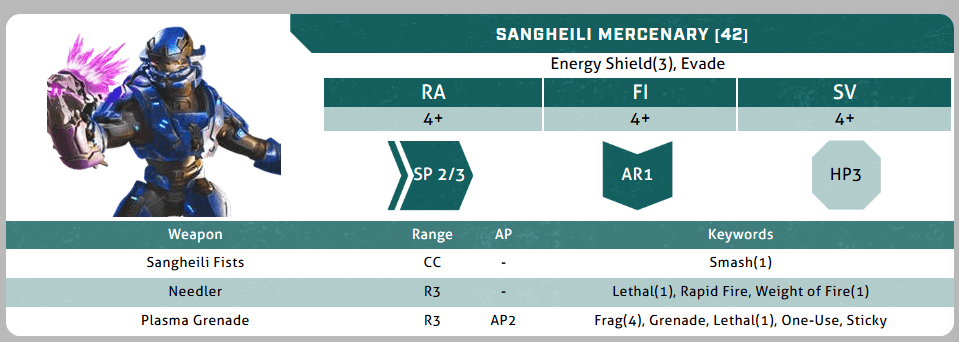
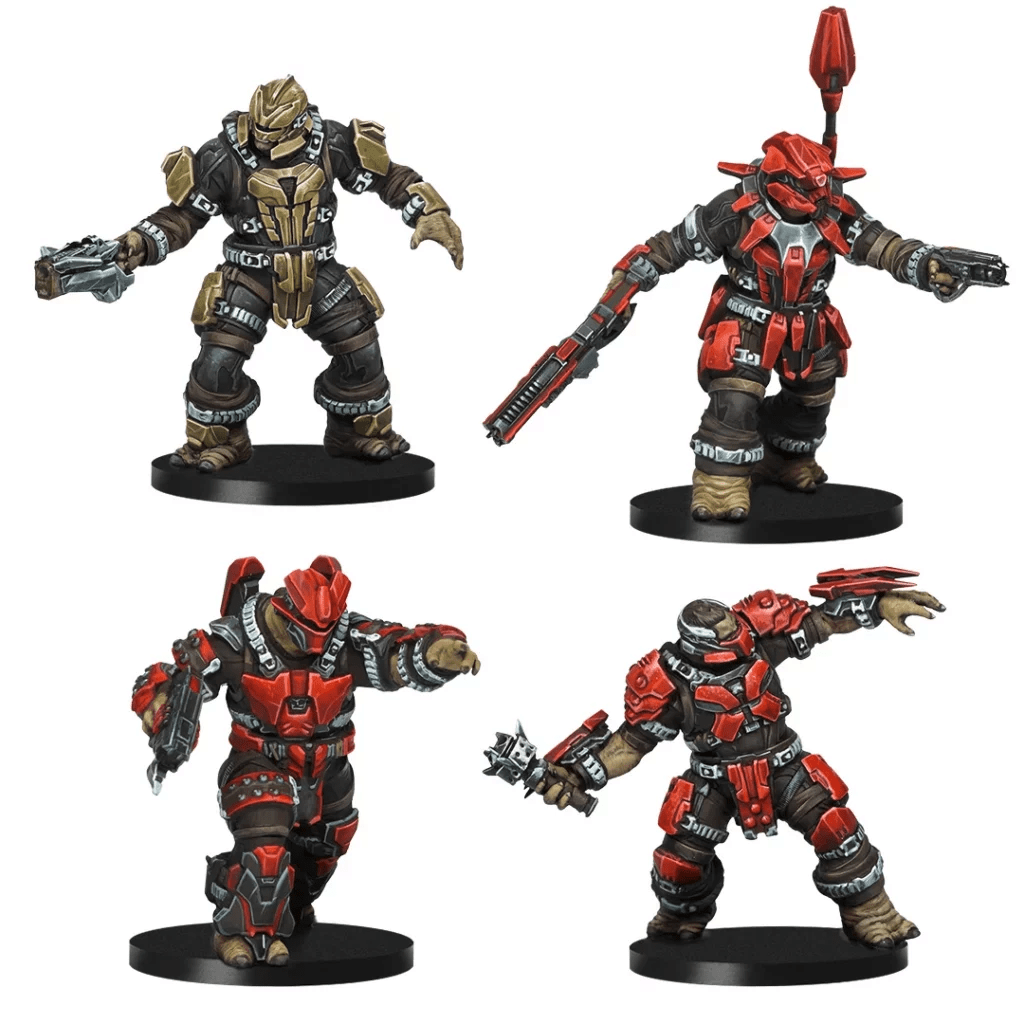
No problem there: you can print it all. They have a solid variety of printing options, including printing all relevant special rules to your list. This is great, if a touch mixed. As an experiment I put together a simple team of four Sangheili mercenaries. Their cards print across two full sized pages, then it prints off… three pages of rules. That’s a lot for four models. It’s back to the issue of the rules being so “Wordy.” I suspect I could make more concise explanations for myself and just have those on hand. Again, the majority of this seems easy to recall, so I’m not dying on it.
I appreciate that the app is convenient and well thought out. The sheer word-weight of the special rules worries me a little, but I have to grant that Mantic has done a great job of putting together a worthwhile app that helps to mitigate the issue.
Conclusion
I believe there are two markets here. The first is someone who wants to buy the starter box and call it a day. It’s super well designed for you—you don’t even have to worry about points. They include a drafting mechanic that skips points entirely. If it appeals to you, buy it. If it mostly appeals, but the $110 sounds like a lot, buy Recon. You get the same game, just less choice.
The second market is the one I’m addressing here: the weekly or monthly players. You intend to play regularly and want to know if it’s worth your time or if it’ll grow old. I think that as a sole game—the only thing you play—it falls flat. There’s not quite enough out there yet to justify that level of buy in long term. Measure with your wallet, I guess. Everyone has different tolerances.
For the person who plays it once a week and also plays something else? It looks like a “Buy” to me. I think this would work well in a rotation of games. I can see why people want to play it competitively and there’s enough here to experiment with to keep you entertained as it continues to push out more content.
But the true caveat? You need a local playgroup. I live in one of the busier areas for wargames and I’m not aware of a local group playing Halo: Flashpoint at all. If I weren’t still in school, I’d consider sponsoring one myself—be the change you want to see and all that. I think the main thing holding this game back is just that simple: people need to stand up and promote it.
If you’re not going to be that change in your world and you lack anyone to play with regularly, the starter sets may be worthwhile as board games, not living wargames. If that leaves you doubtful, move on. There’s far too much to spend your hobby budget on and no reason to waste it here.
As for me?
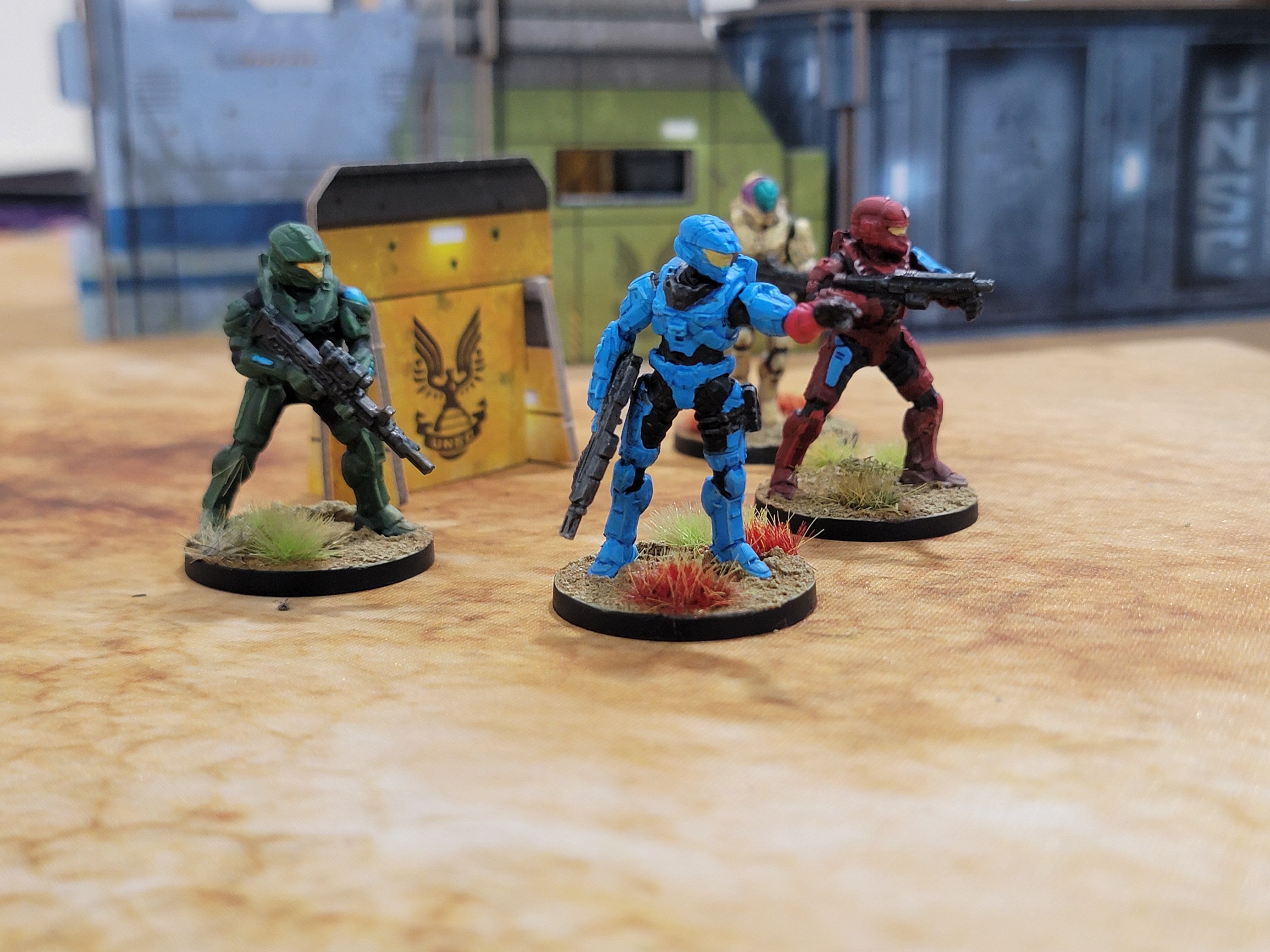
Well, I got the starter. My son likes Halo, as does one of my closest friends. I know this will hit the table and I want to paint the models. I believe I’ll get my money’s worth. I fall into the former group: someone approaching this as a contained experience with limited expectations. For that person, I can safely recommend the game. We’ll see if that changes as I play.
So, there you have it. Board game? Yes. Wargame? Maybe.
Now onto finding yet another ruleset to review several years late. Do you think anyone still cares about Shatterpoint?
What do you mean it got canceled?! I haven’t even read the rules yet!




Leave a Reply