I’ll be honest: I’m nervous about this one. One of the common features of the board game side of our hobby is that you can download the rules for any given game for free. It’s key to sharing them. It’s a great feature that allows you to get a friend onboarded before your match.
It’s going the way of the dodo. I promise you. Today, we look at why. I want to be clear: I own this game.
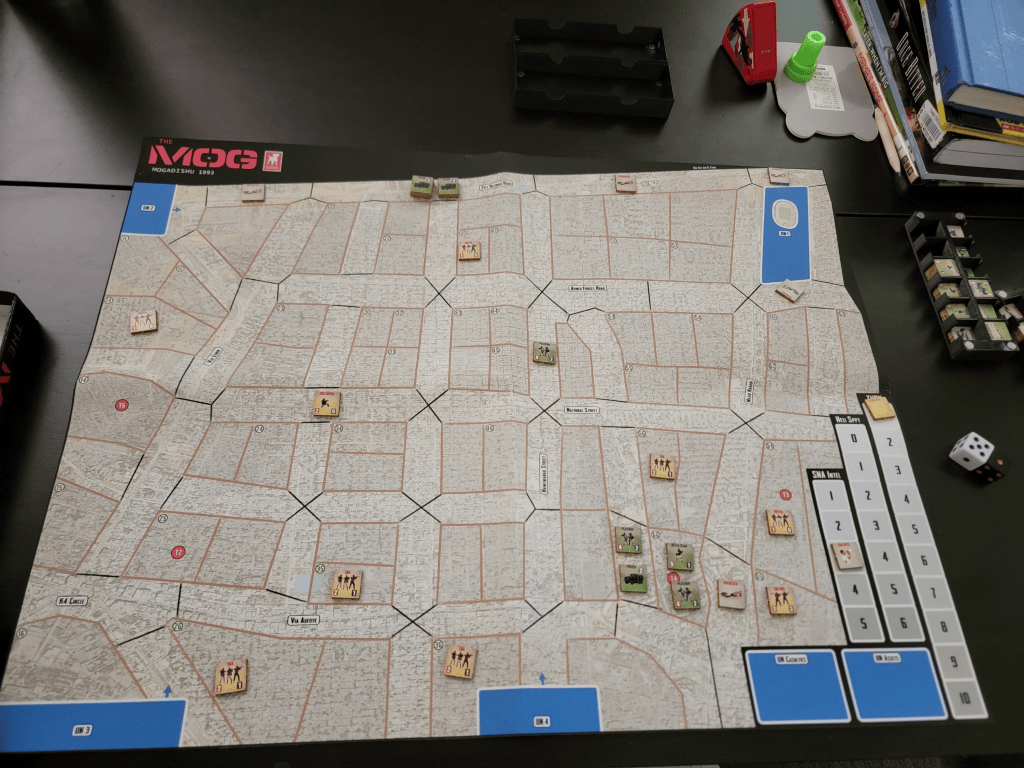
I also think it’s a great, simple solo experience. I recommend it. Here’s the link. Now, let’s be a bit morally gray. We’re going to build a digital version of this game. Here’s our prompt, placed into ChatGPT 6 Astra:
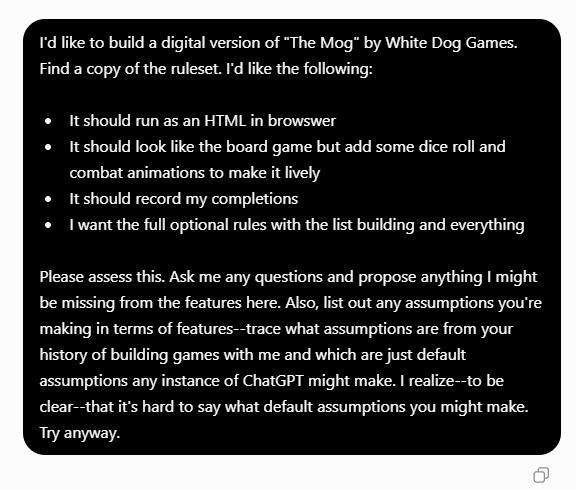
Now, you’ll note a few things:
- I started by listing out my basic requirements, which are pretty light.
- I asked it to go find the rules, which is generally trivial for ChatGPT to do.
- I ask it to ASSESS my request before building the game. I always start with a two-way conversation with the AI to help flesh out the prompt and concept.
- I asked it to list assumptions, which I only did for the sake of this blog post.
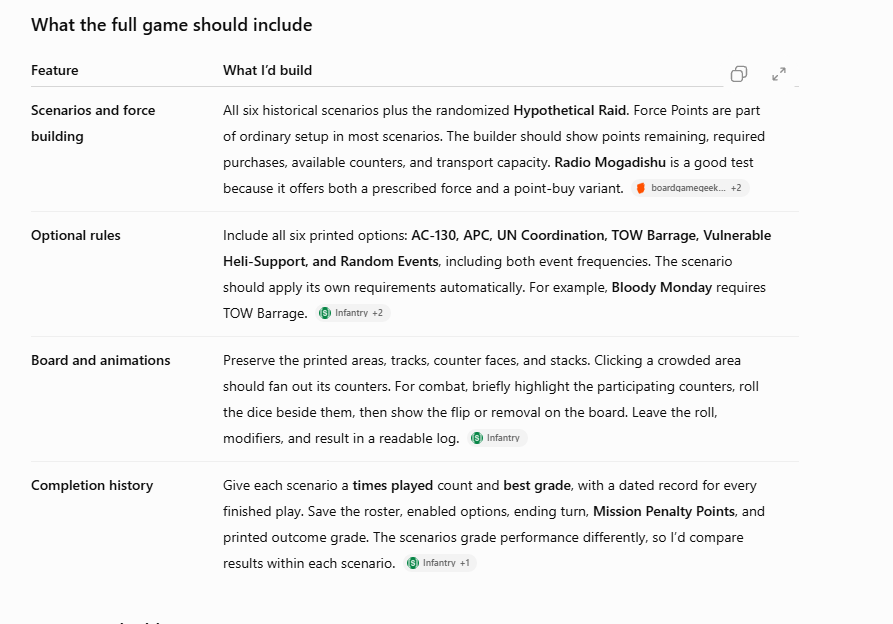
It came back with a concept of the build. Note the section on animations if nothing else. It did a good job of coming up with basic ideas for how the animations should work. Next up, we have its suggestions:
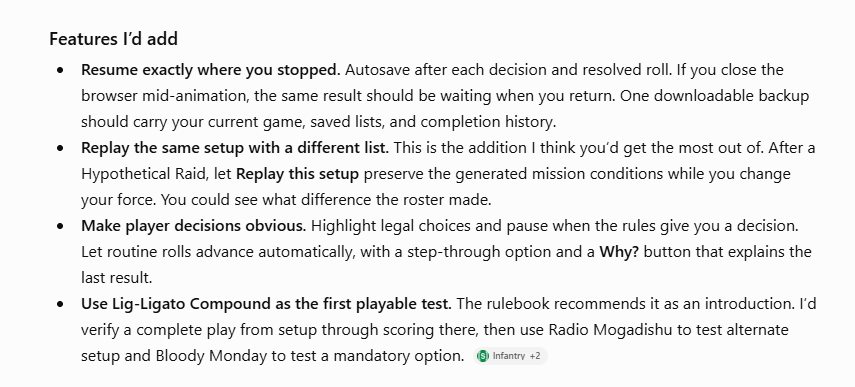
It added some great ideas. It even recommends a playtest version to make sure everything is good before it builds out the whole book. As for the assumptions I requested:
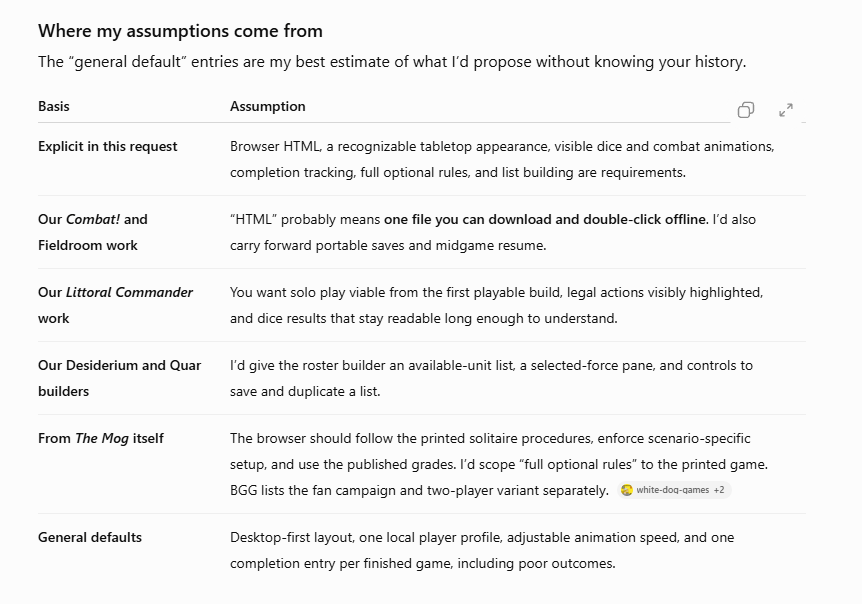
You’ll notice it pulls a lot from our history of building games. As you build more, it gets better. Now, for the last bit:
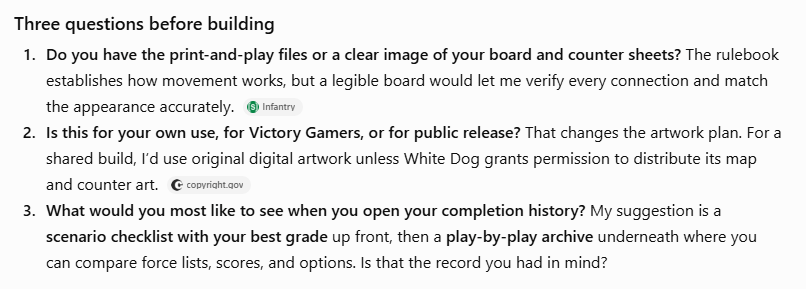
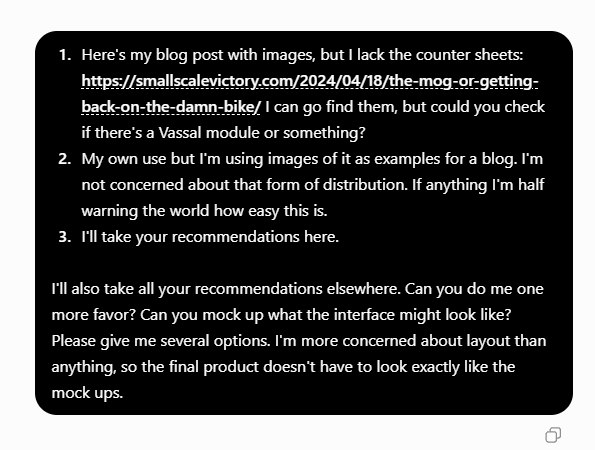
Note the sense of morality in point 2, which is easily circumvented. To be clear: I am absolutely not sharing this. Go buy the game. It’s just an example. I’m going to keep this simple by accepting all recommendations, feeding it images of my board and asking if it can find anything online, and letting it know this is for solo play but I’m using it for a blog post.
More importantly, I’m going to do one more thing I find helpful: ask it to mock up images of the interface. This will allow me to have a conversation with it about how the interface looks and feels. I’m not really all that concerned over this for a solo experience, but I find it really helpful when building any AI vibe coded tools.
It actually came back with a clever idea: three different views to fit my different needs. It even made a partially functioning HTML mockup I could open, which I thought was really cool. Unfortunately, it couldn’t find the unit icons. I chose to allow it to create some for the sake of moving this along and not having to dig out and arrange my counters. I went ahead and selected the following, which is a pretty standard ChatGPT layout:
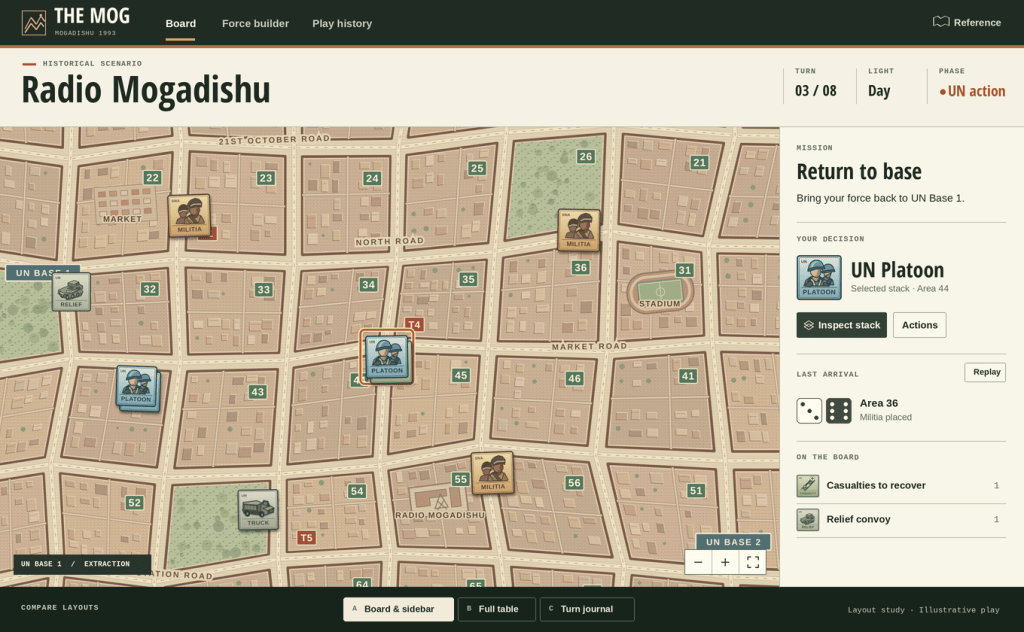
I did give feedback some feedback:
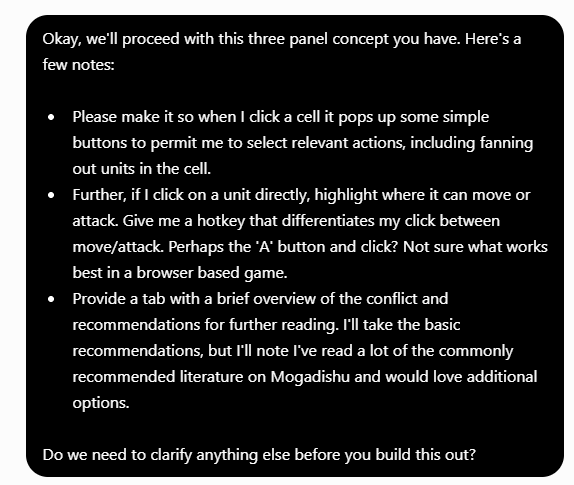
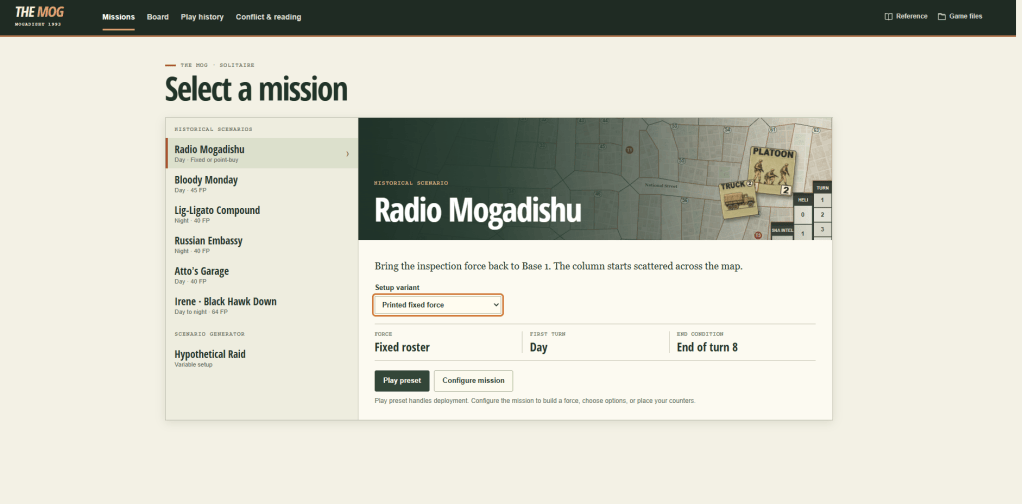

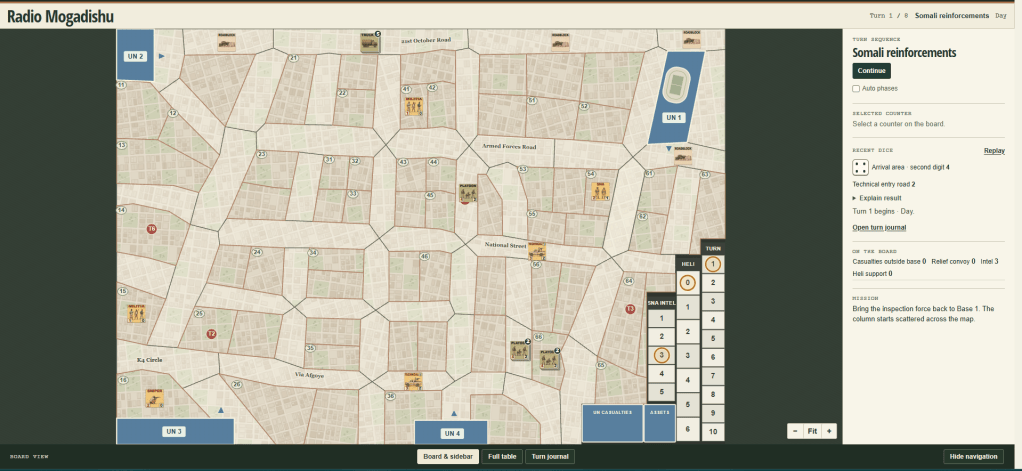
After a bit of play, I realized my suggestions above confused it and now there’s a mess of menus you click through to activate units. I know how I want this resolved (by making me select a unit, then select where I want it to go), but for a bit of roleplay, I decided to let it make suggestions:
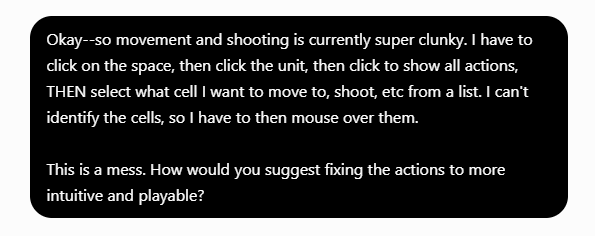
There was a bit of back and forth I’ll spare you from, but we ultimately cleared it up and improved the interface considerably.
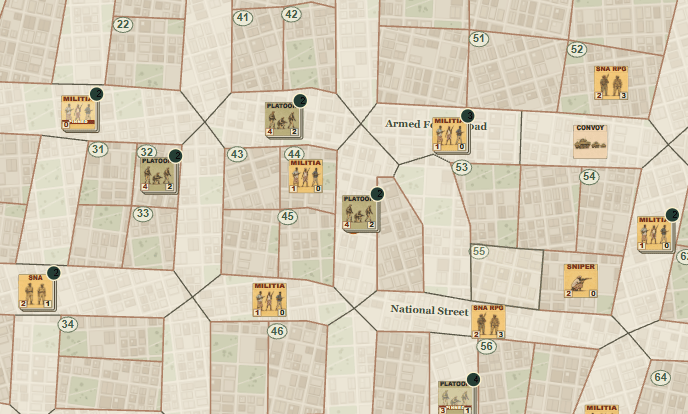
I proceeded to have a terrible set of rolls and a rough go of it in this match, but it helped me remember a few things I think are valuable in these digitized solo games:
- An event log you can expand to understand what just occurred.
- While I never asked for this, ChatGPT built this such that I can step through the enemy turn one step at a time, do it all at once, or even have it auto-advance through the enemy turn one step at a time. The latter is the most useful to me so I can see the dice rolls as they occurred instead of building an understanding by reading the event log.
- Animations, which I explicitly requested, really help you to understand what’s happening. They’re nothing fancy: circles when something shoots. Dice that roll above an event. Play with them a bit and you’ll start to get a feel for what you do and don’t like. They go a long way toward making the events of a turn more readable.
Sorry I won’t be sharing anything this time. I debated writing my own ruleset and building it. Actually, now that I’ve written that: that might just be our next step. I have a grid-based small ruleset kicking around in my head. We might just look to build a digital instantiation of it to provide a testing environment.
Hopefully, between this and my last post on AI, you’ve picked up some concept of how it can be useful. I have a few more ideas planned for this series:
- Building the digital playground in which to test rules, as mentioned above.
- Working with GPT in this to help expand your concepts. High risk, but I’ll discuss where I think it can be useful and where I think it’s truly dangerous.
- Making STL files.
- Making tokens and other small things to aid a game.
- Using AI to build a game tool that doesn’t exist. e.g., building out a campaign module.
A lot more to come, I suppose.
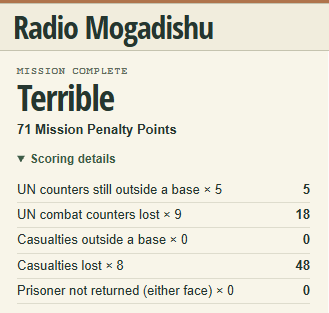
But first, I’m reattempting this mission… ow.




Leave a Reply