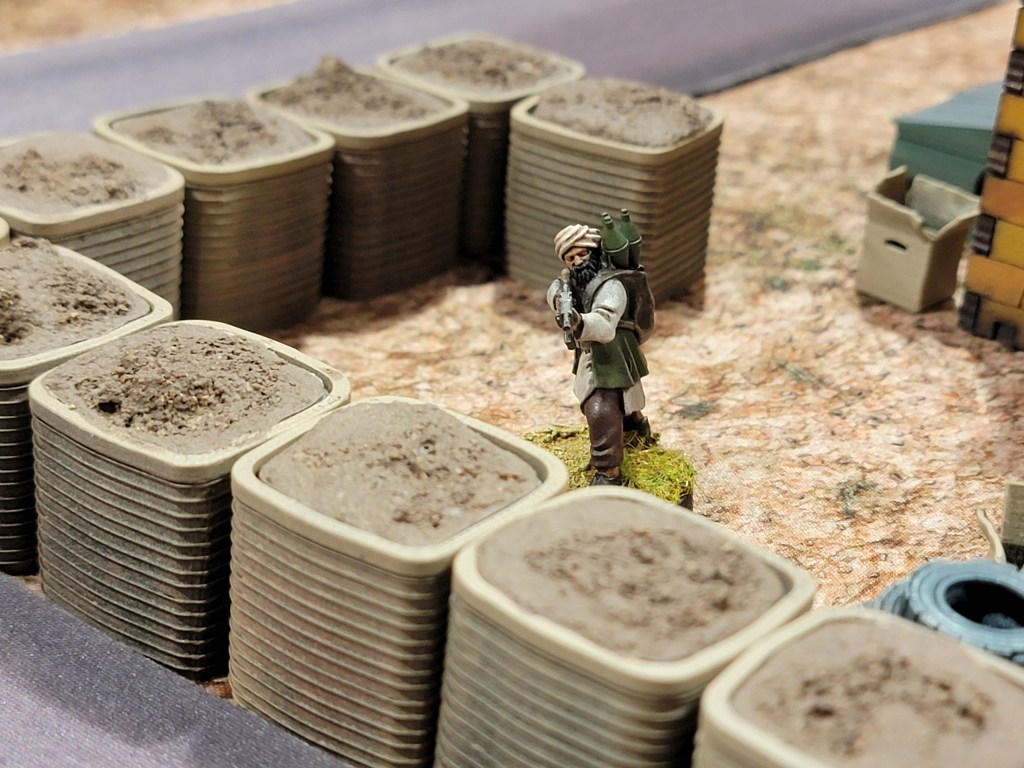
This is it: the final campaign mission. We started this campaign around the beginning of August, and here we are finally bringing it to a close with Operation Domino:
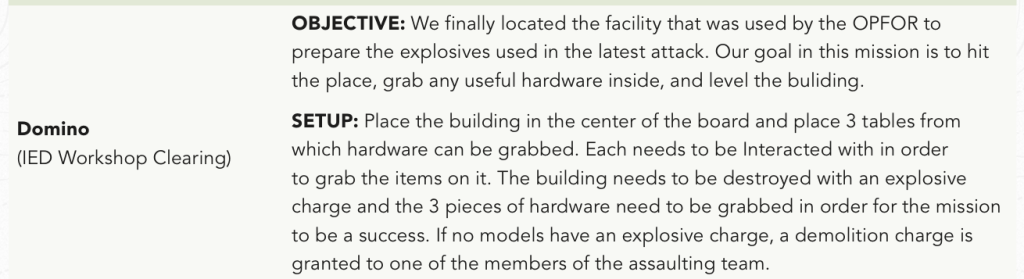
So let’s back up. How did we get here? The way the campaign structure works, in short, is that you play through missions with their own objectives while also rolling up random “Intel Point” objectives, which act as a sort of secondary. Once you’ve completed six of those, you roll on the final campaign mission chart, which gives you your final mission. I’ll be honest right here: I find them a bit awkward. They don’t always feel very “Final.” I found this one adequate, and rather than roll, I chose it. We’re destroying an IED workshop and thus dealing a critical blow to the local insurgency. I think that’s… well, reasonable.
My original roll was…
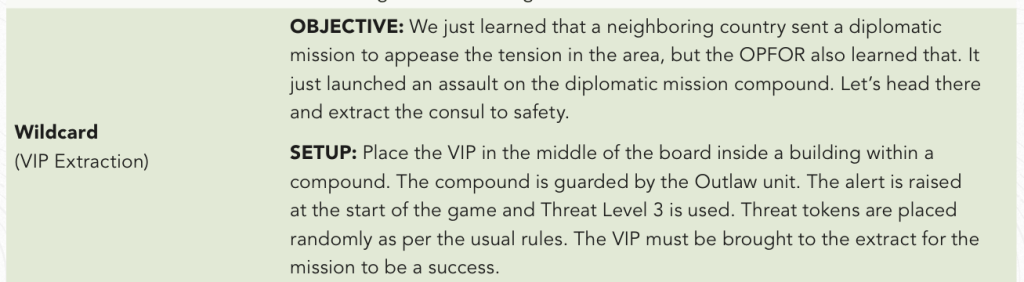
Get a VIP out of the area. That’s… a mission, I guess. Not very final. That said, I recognize that a real spec ops team might not have a proper “Final” mission before disbanding or moving on, so I don’t want to harp too hard on this.
Anyway, Operation Domino was an interesting experience and brought together my thoughts on the campaign nicely. Let’s see why.
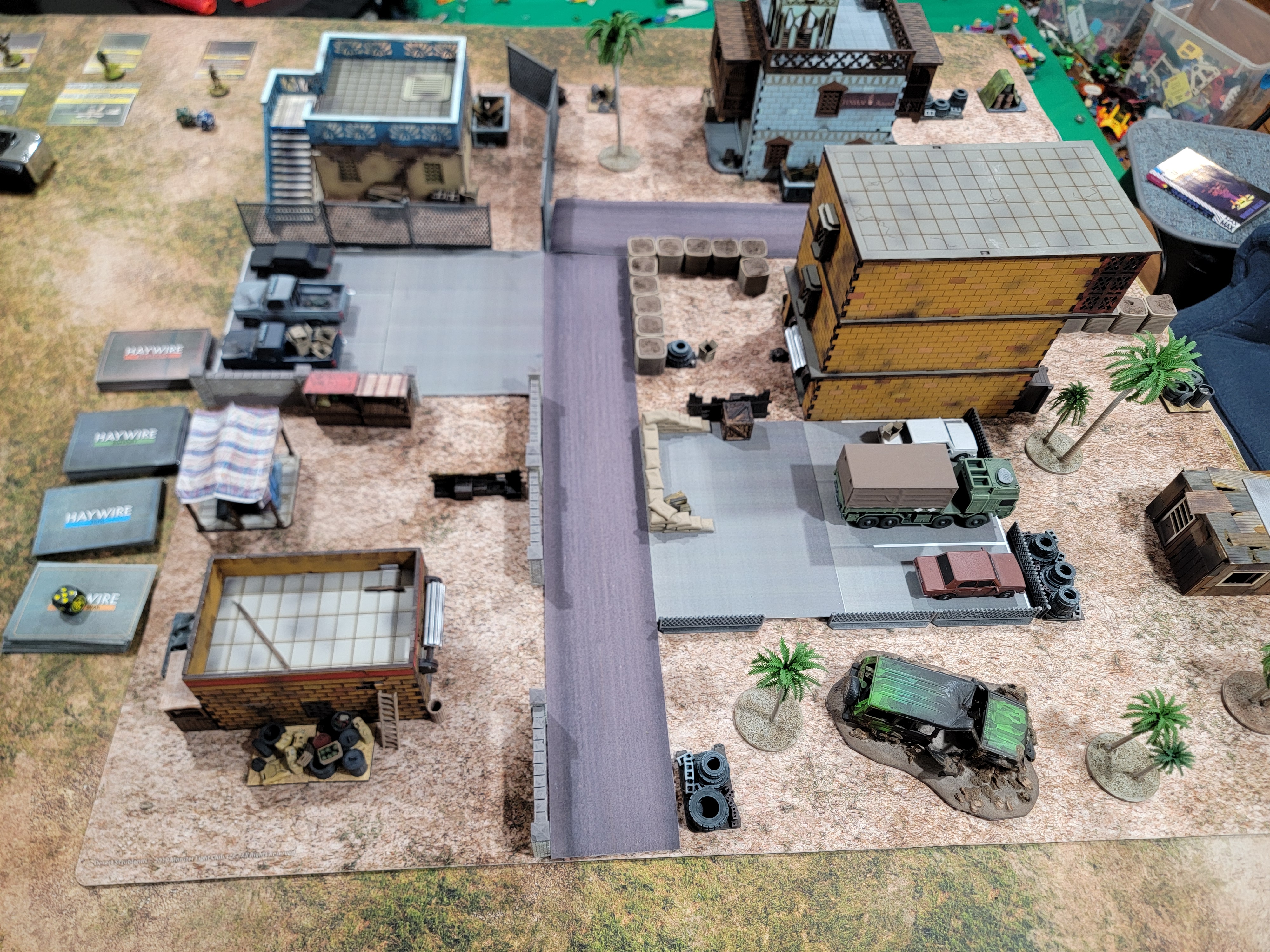
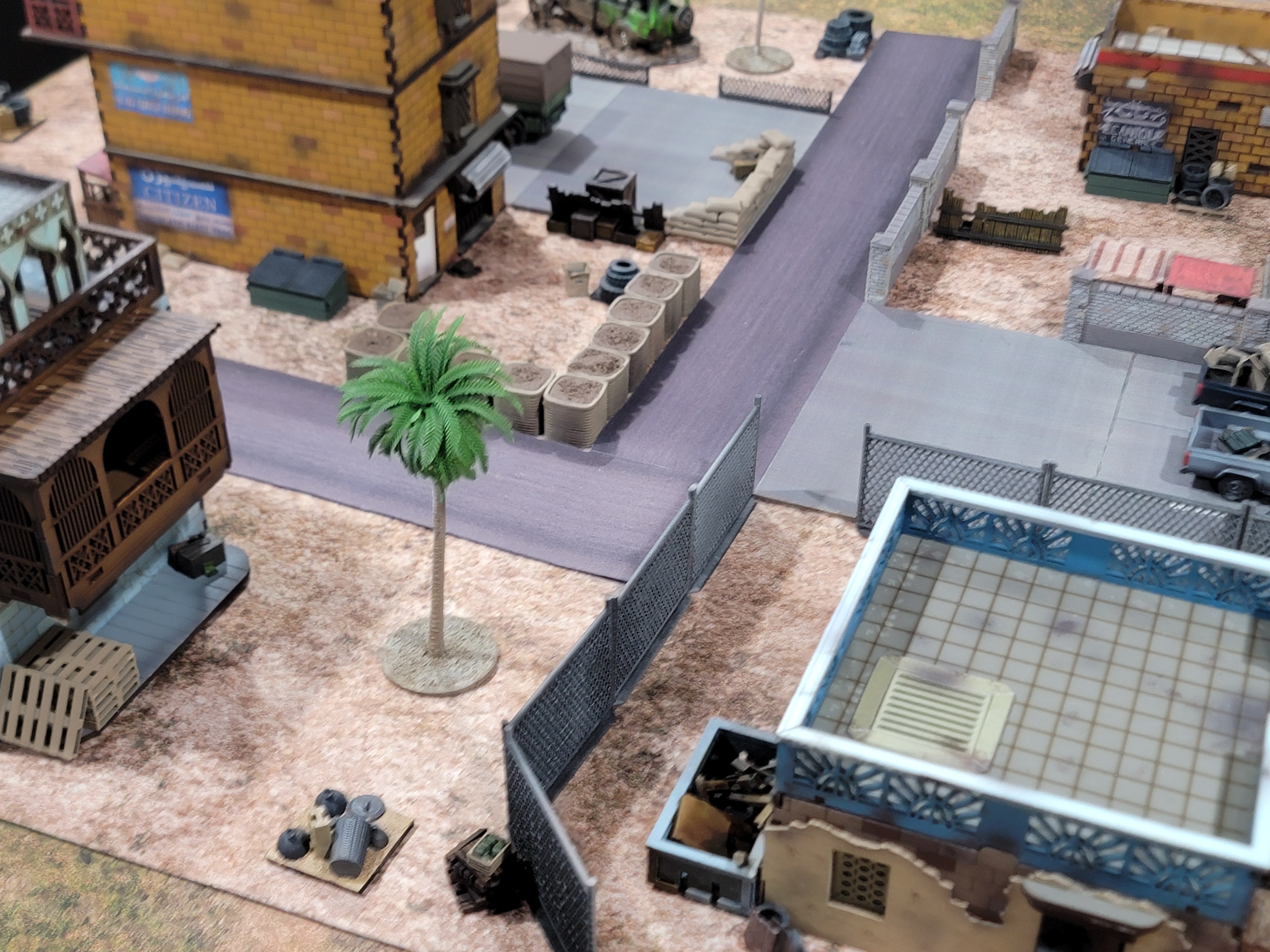
The workshop is the large, three story orange building in the middle of the board. Our mission was to go through floor by floor, clear it, gather the parts for evidence, and then blow the building. We drew our two deployment cards (INFIL cards):
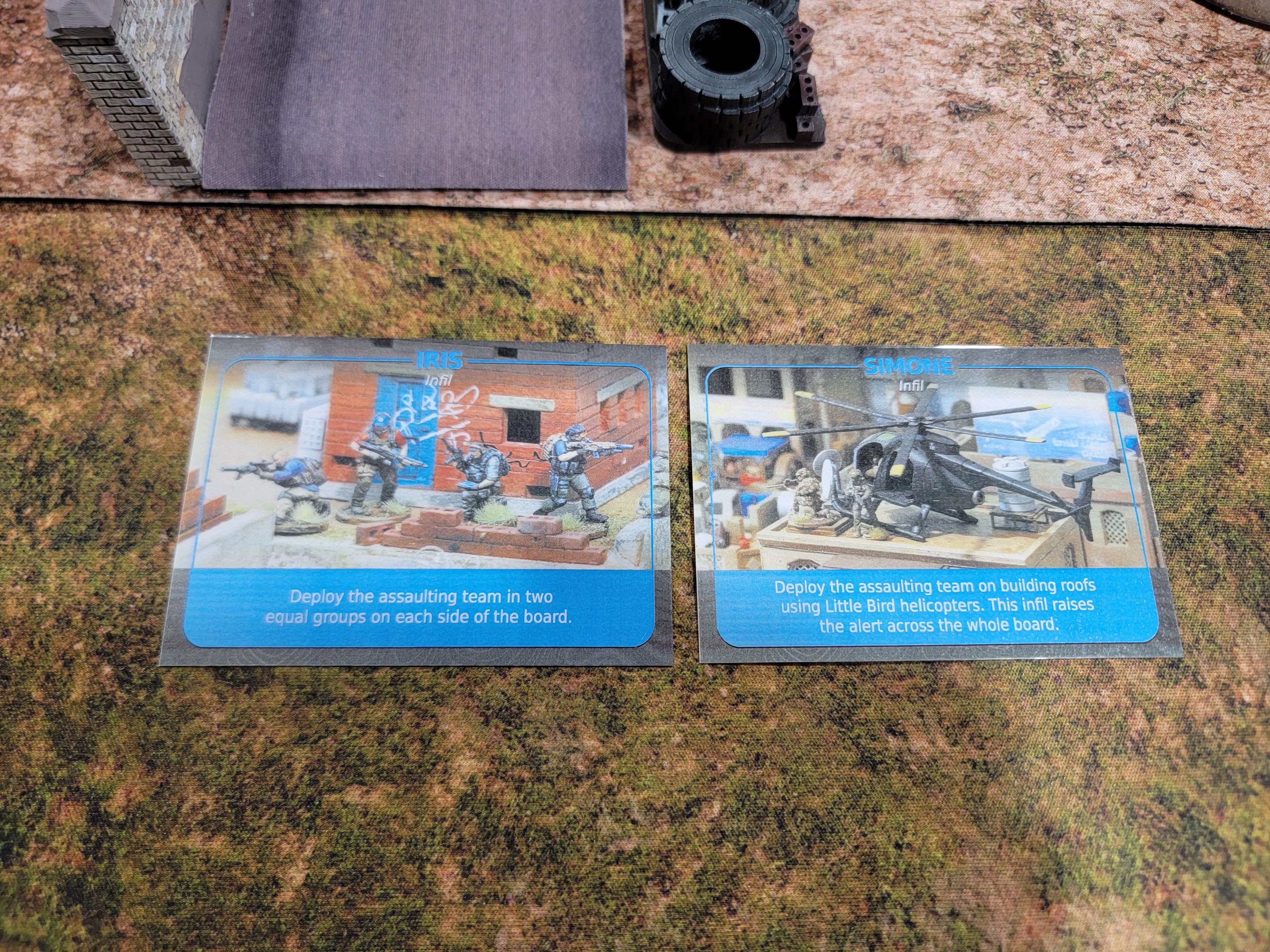
And found that it wasn’t much of a choice. Starting on the roofs and setting off the alert is cool, but a bad way to execute. We chose to come in from two sides, effectively inserting from opposite corners so we could clear all the forces on the board before hitting the building. We were aided by our considerably upgraded base. We were able to move two threat tokens and identify two of them at the start, allowing us a ton of information and control over the board space. We also bought down the threat level of the mission with spare points, then revealed all enemies quickly while at the lower threat level. This was being a bit “Gamey” but it allowed us a significantly easier mission than… well, almost any of our last five missions.
Upgrading our base really did catch up and left us feeling very well equipped for this final mission. To not bury the lead: we utterly rolled over the OPFOR, accomplished our mission, and walked away just fine.
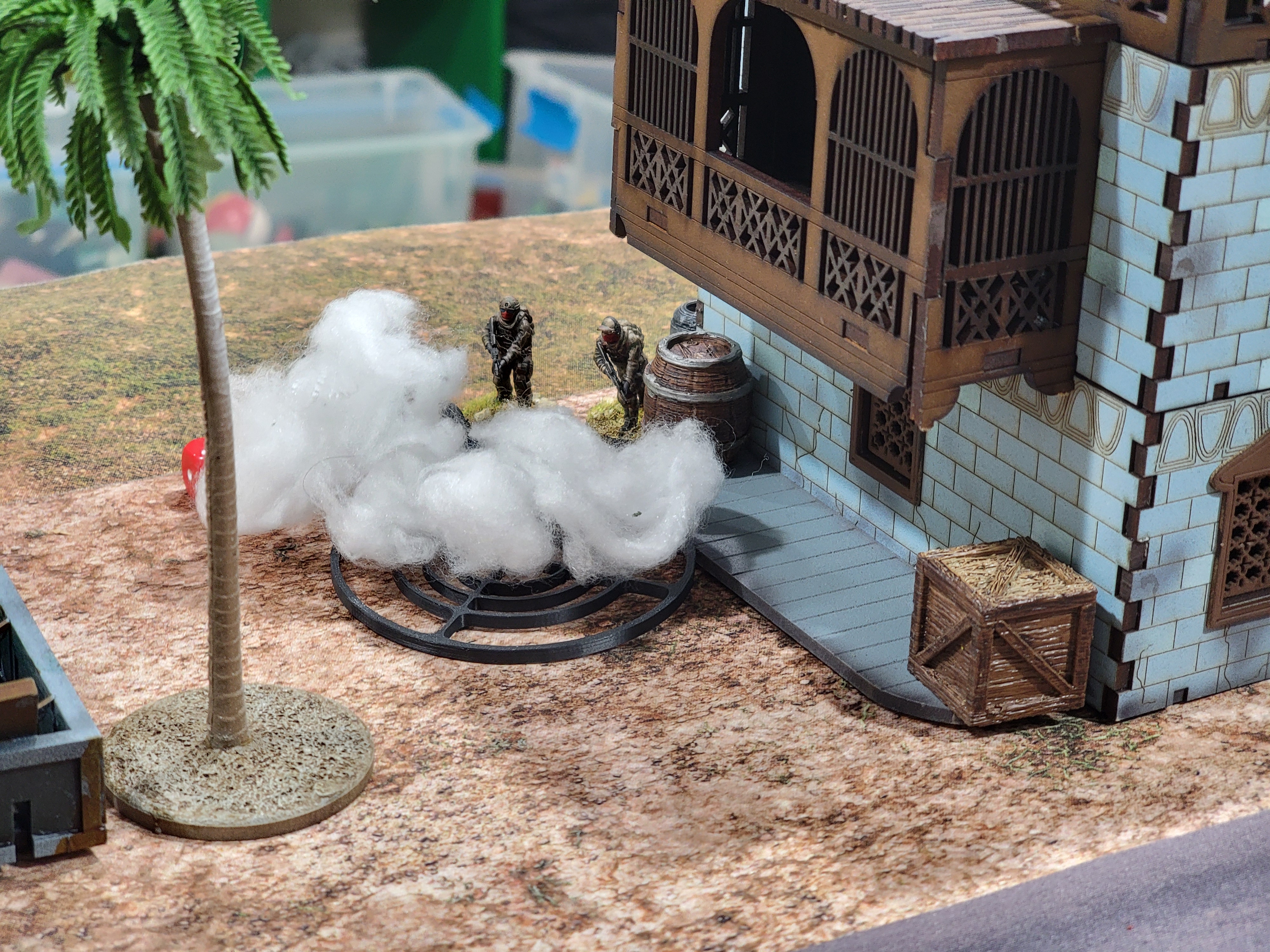
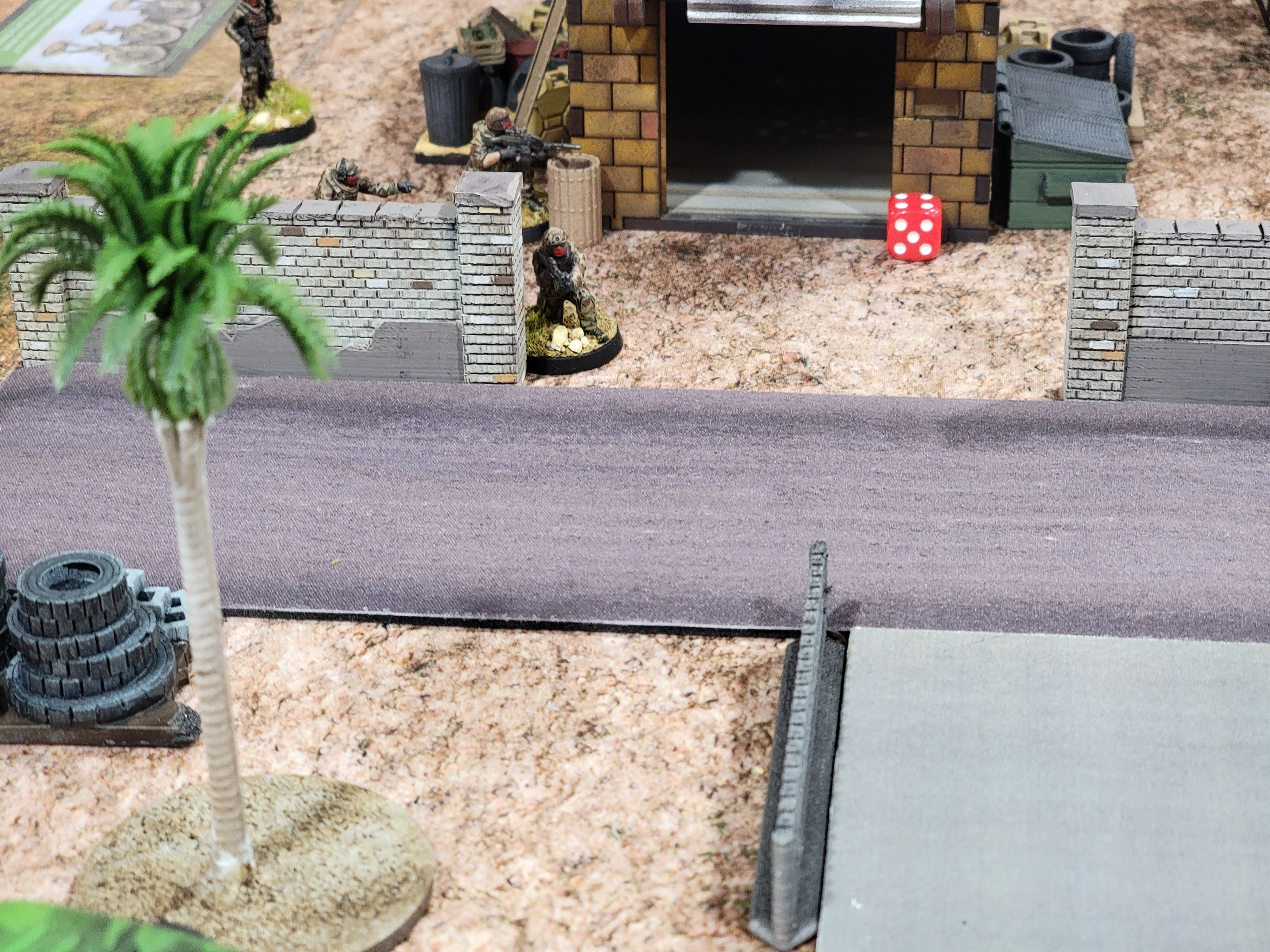
We started by picking our corners carefully, leveraging LMGs, our sniper, and smoke to cover our approach and pick off enemies easily.
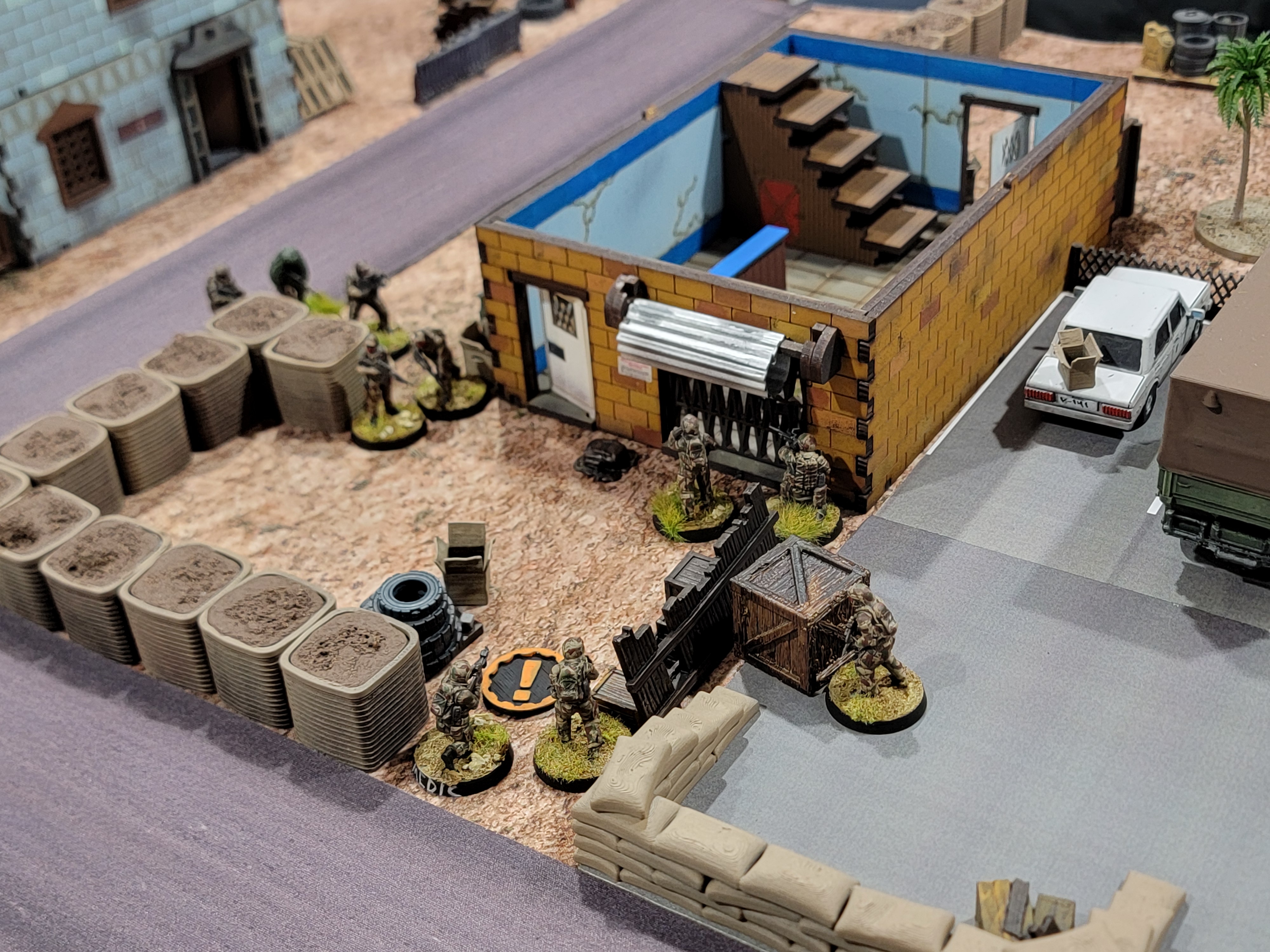
By start of turn three, we were breaching the doors and clearing the building with no enemy resistance left on board.
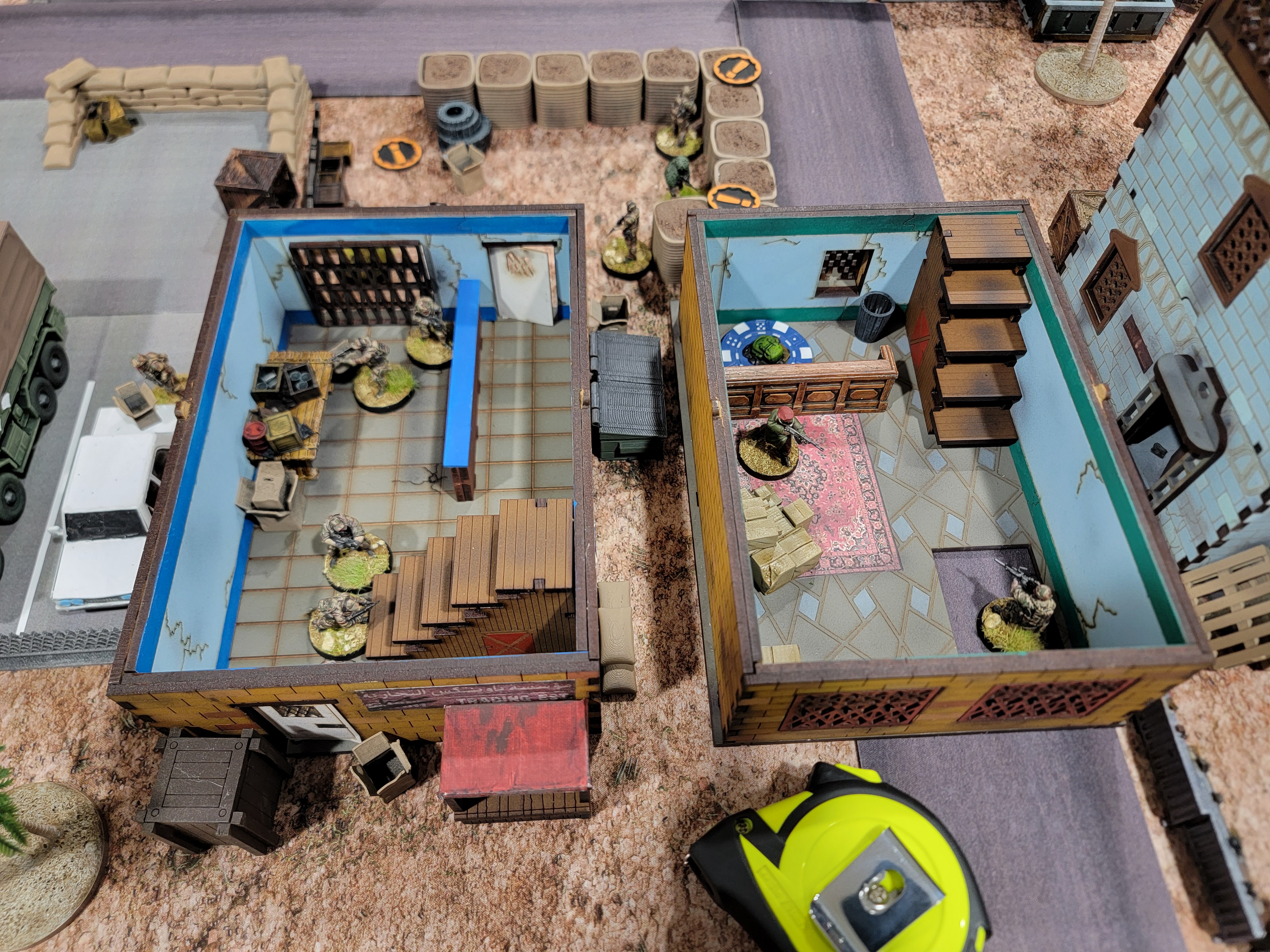
The enemies we DID face in the building were piecemeal, just a person per floor. This is rolled for on a chart, and I acknowledge we rolled well. Also, they didn’t roll well. They missed every shot. I went out of my way to let them shoot us so we might see some tension. We, uh, didn’t.
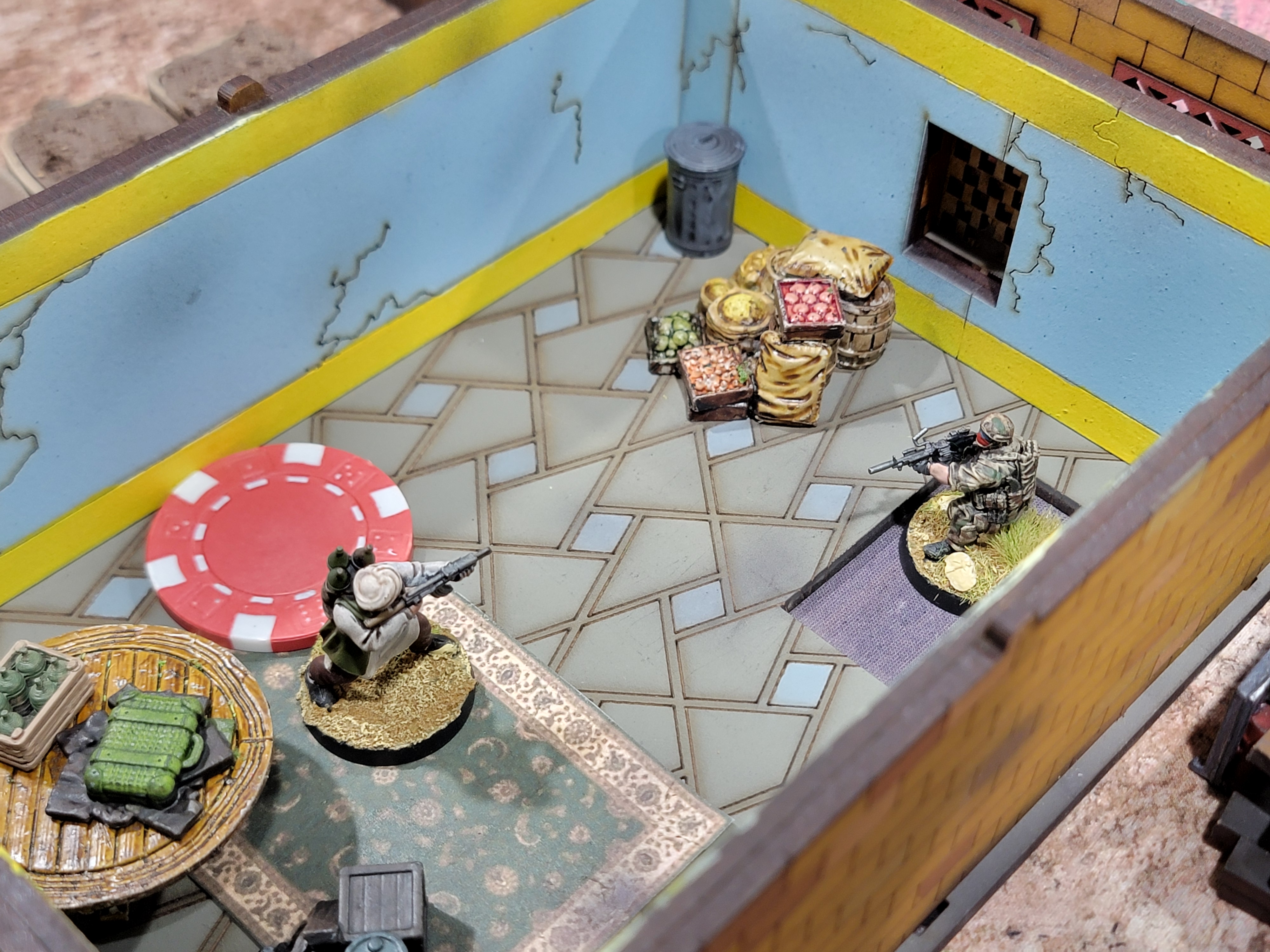
Add to this that we had the support option that disabled enemy spawns for two turns and we just called the game after we cleared the building. Blowing it up and walking away without enemies on the board would have just been a chore.
I’ll post my thoughts on the campaign separately, but in short: I had a great, if very uneven, time with it. This was the Tour of Duty, which was basically a randomly generated campaign. We played against the easiest enemies. If I were to do this again, I’d have raised their stats a little so they’d have connected more shots. I don’t think the underlying structure is bad by any stretch. It’s just that… as written, you should probably be ready to ignore the easy outs it can hand you for the sake of some tension.
That said, I played with my son and wanted to really feel out the system correctly, so I embraced it. I made all the decisions that made the games easier, because anyone playing this could and arguably should do so. You paid for the right to draw multiple INFIL cards, so… why wouldn’t you take the best one?
Again, I had fun. I think Task Force Wayfarer did a great job of navigating difficult local engagements without harming civilians. The game gave my son and I a lot of great discussions about tactics, proper ways to approach military problems, and the differences between the fiction of war and the reality of war. We actually had a discussion about Afghanistan as a result of this campaign and I think that was really worthwhile.
This campaign will stand positively in my memory and it encourages me to play another, harder campaign with my son when the book finally arrives. Modiphius is notorious for issues with preorders, so I expect to see it months late, by which time I might want to give it another swing. And I hope I do, because I really did enjoy our time with it.
So there we go. Not a bang of an ending, but not a whimper. We got our shit together, found the enemy, and cleared them out in a very professional manner with the equipment and capabilities we built over the length of our time in country. Honestly?
That was rad.




Leave a comment