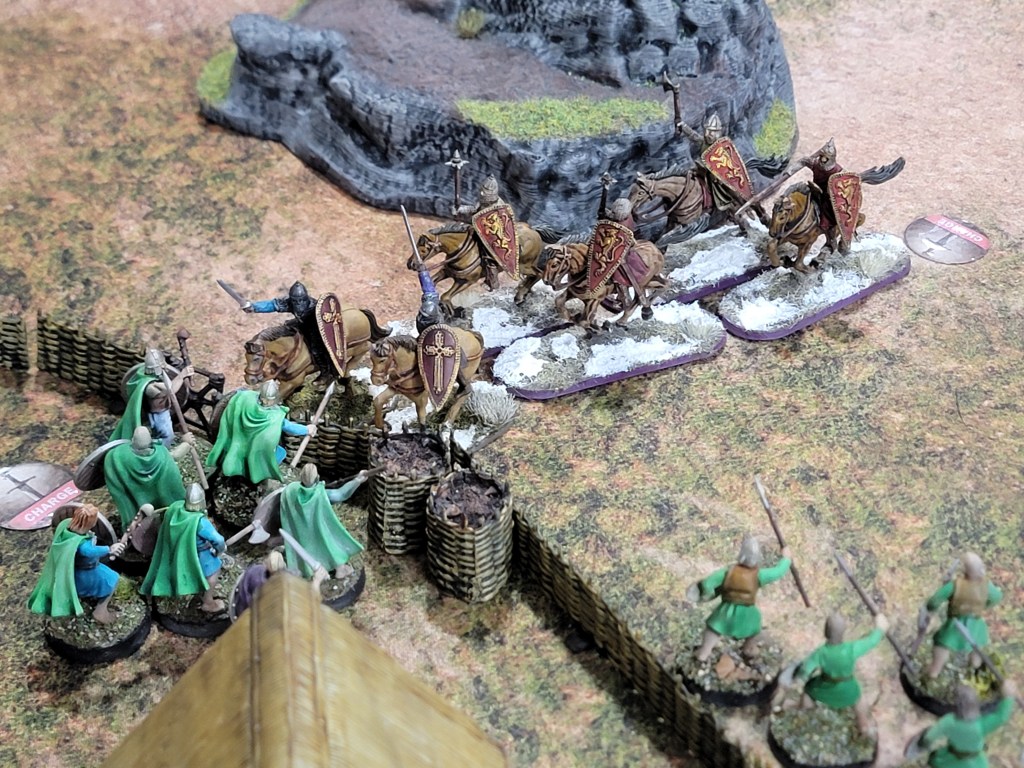
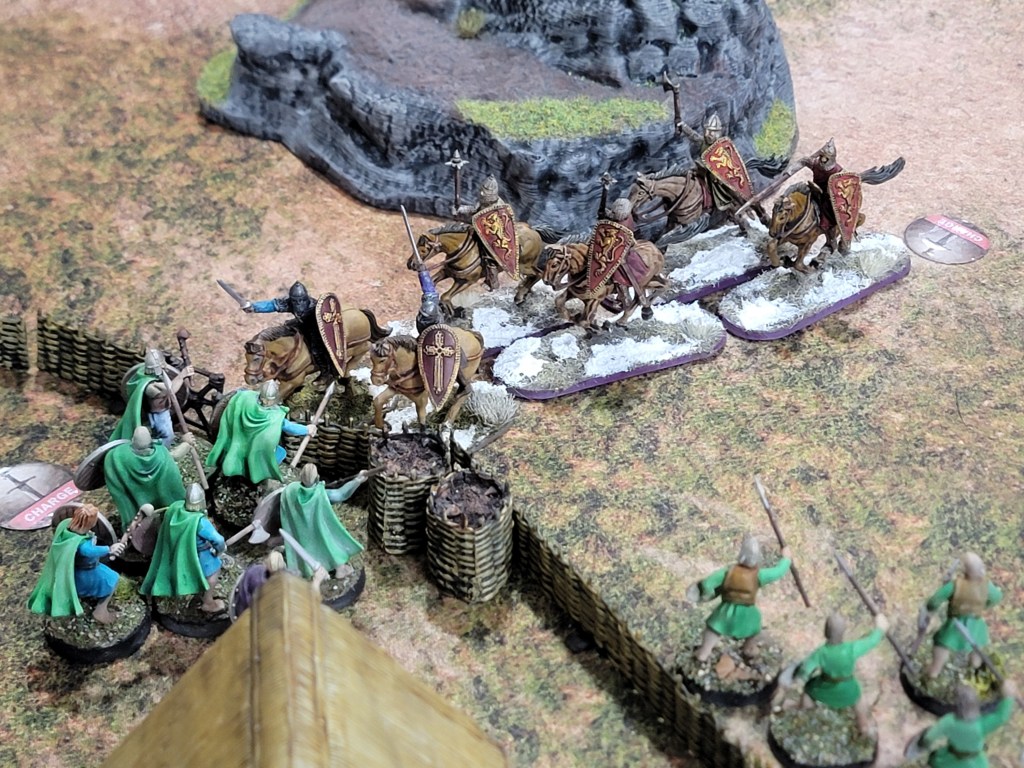
Had the opportunity to put With Shield and Courage on the tabletop again with my son. This time, we increased lethality slightly and changed nothing else. I’ve started to find that testing ideas in isolation is really important toward getting a feel for them. The feel here is… actually great! It was a huge improvement for the game in general as it allowed things to move a little more quickly and meant more “happened” in the battle.
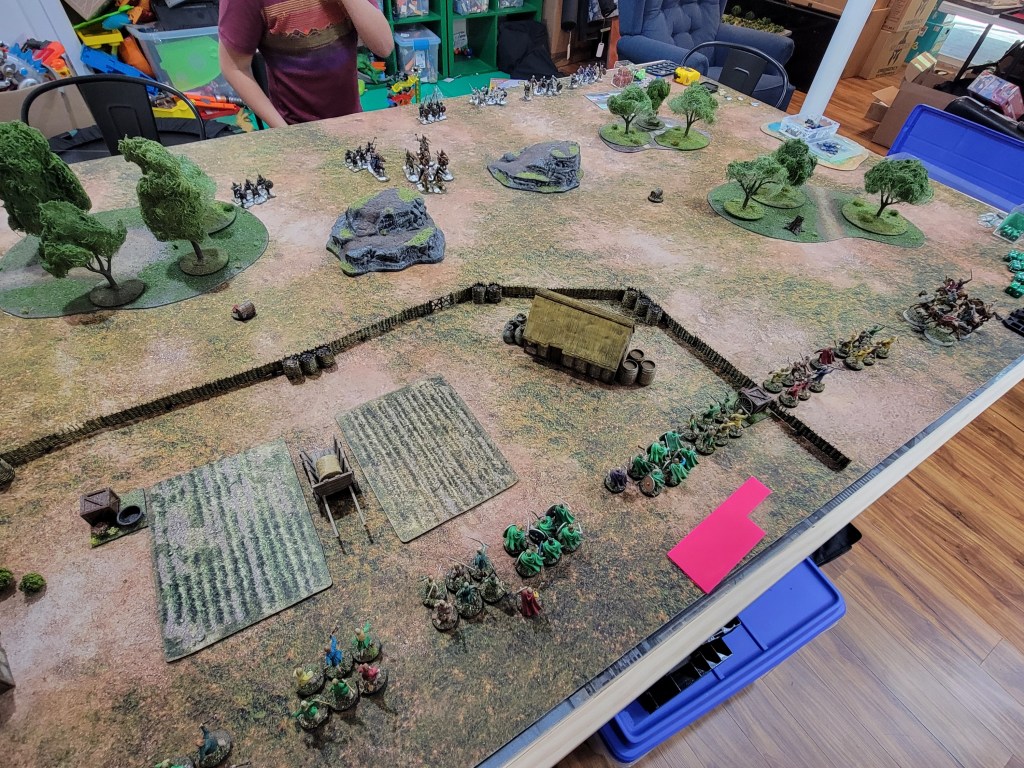
We came down to the wire, with my son beating me—but out of our 8 starting morale each, I was down to 0 and he was down to 2. A few factors contributed to it being a closer match:
- Both lines broke in different places within 1-2 turns of each other
- This allowed us to assign our forces differently as the battle progressed, which turned into the key decision
I lost because I chose to reinforce one flank while hoping the other would hold ground. It actually held on pretty well but once it broke that gave my son possession of an objective, which allowed him to whittle away my morale faster (objectives deduct from enemy morale). I want to try again with a more robust scenario (we were just fighting over two area control objectives).
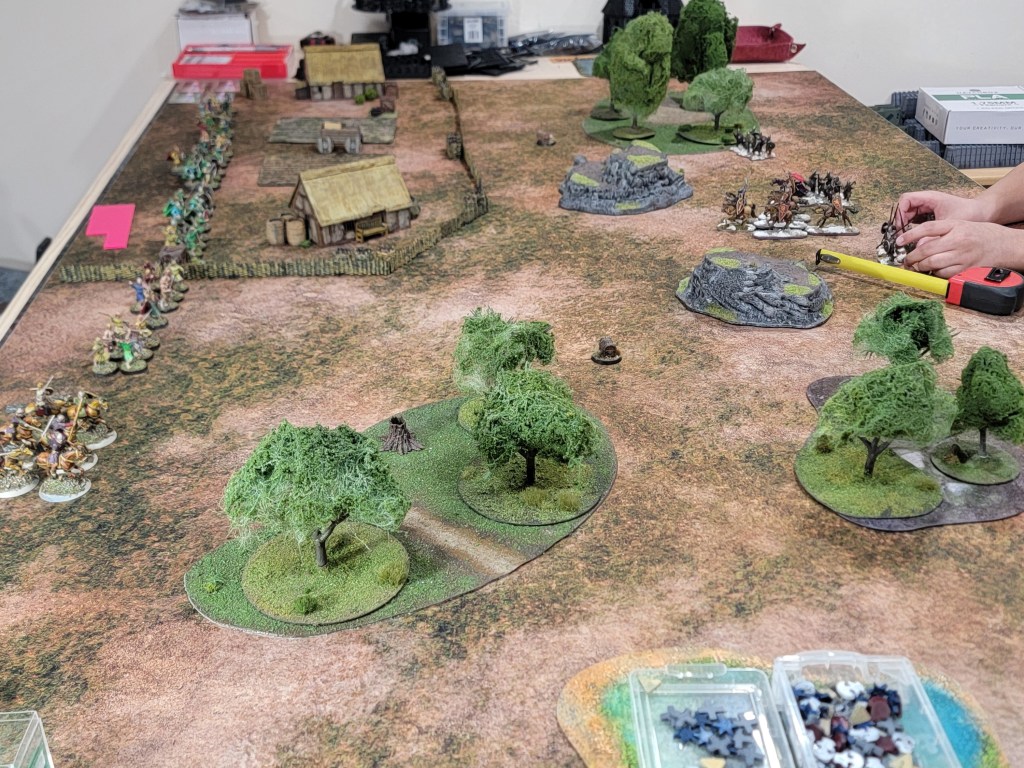
I’m happy with this level of lethality. Forces take 2-4 turns to break, which gives enough time for maneuver and repositioning to matter. Now that I’ve settled this I can move onto the next decision: do I shift to a Heroic Historical or stay in the realm of reality?
Honestly, I’m running out of ideas for “reality.” I think I can improve the deployment system and have two competing ideas for it. Beyond that I’m pretty much tapped out. With 50 men a side there just isn’t enough going on once they clash. The scenario will bring a little more decision making but it’s not quite enough.
Let’s look at those deployment ideas. I have two, specifically:
- Secret deployment selection. You secretly select where your forces will deploy and reveal at the same time. The less heavily armored side will get to deploy second (representing a maneuvering advantage). Each side would have a selection of 6 potential deployments, allowing the player to deploy on their edge, their corners, or the sides of the board entirely.
- You trace a contiguous three foot area as your deployment. Player 1 (less armored) drops one point on the board edge. Player 2 drops two points three feet apart, the space between which composes their deployment area. Player 1 now drops their second point 3 feet from their first, finishing their deployment area. You can drop these points anywhere around the board.
I lean toward the second option for simplicity’s sake but the first option would allow for split deployments. I’ll continue to mull—there may be a middle ground of some sort.
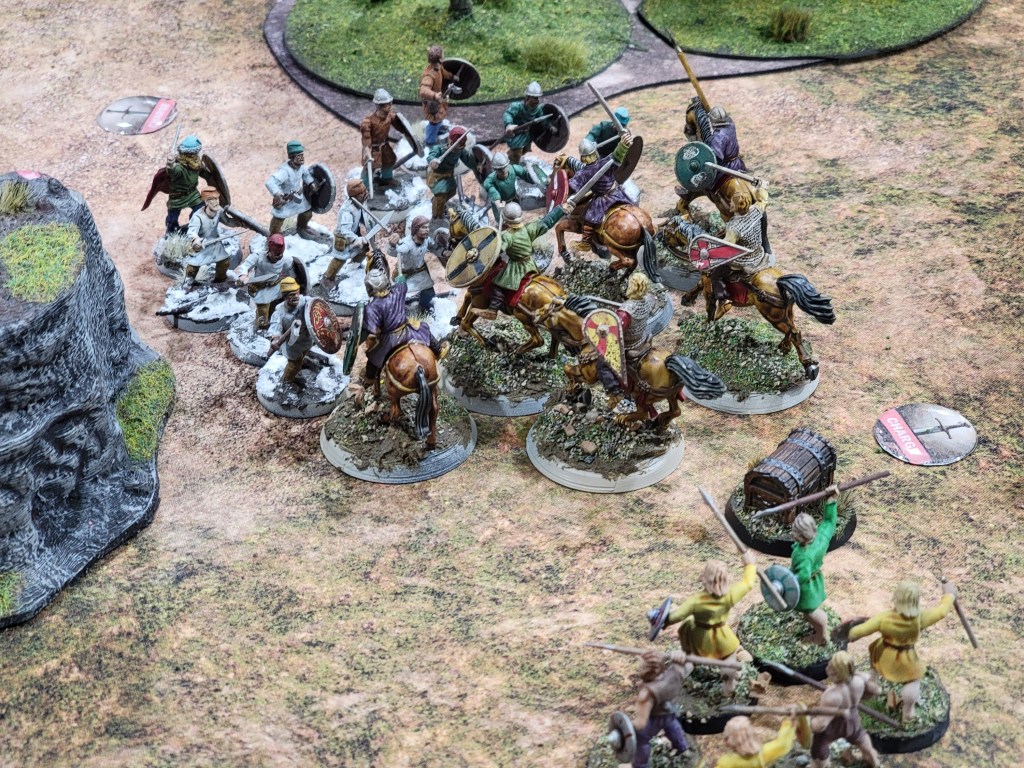
Now for Heroic History: what does this allow me to do? Well, it Hollywoodizes the game a bit—so leaders become way more important. You need your main characters, after all. I’d likely give leaders a limited resource they spend (similar to Lord of the Rings or the upcoming Midgard) on limited abilities that allow them to break the rules of the game. Examples would be things like withdrawing from combat without suffering hits or moving troops double speed. Perhaps repositioning a deployment or extending a deployment area.
In this model, leaders would be useful for their passive benefits (they buff the unit they’re attached to, they help with morale in general) as well as their limited active benefits.
I could also dip a toe into the mystical with customizable leaders that have special abilities that affect the game space. In this manner you could get some of the “Special Rules Vomit” style fun without going overboard. The possibilities here are broad—once per game rerolls, additional movement speed on their unit, custom body guards that are especially strong, etc. I like this route because it allows the player to build some of their own narrative into their leadership without complicating the remaining process of building a force. Your armored spear boys are armored spear boys, but Monsieur Jean-Génie Stratégique is a master tactician who will be able to move his forces around more swiftly and outmaneuver his opponent to get the best position in every battle! As opposed to Sir Emeric the Brutish who will simply buff his own unit and tear a hole in the enemy lines.
I’m leaning toward this concept with some of the improve deployment mechanics. I think there I land in the realm of “Just enough meat to chew on but not so much it has to be my main game.”
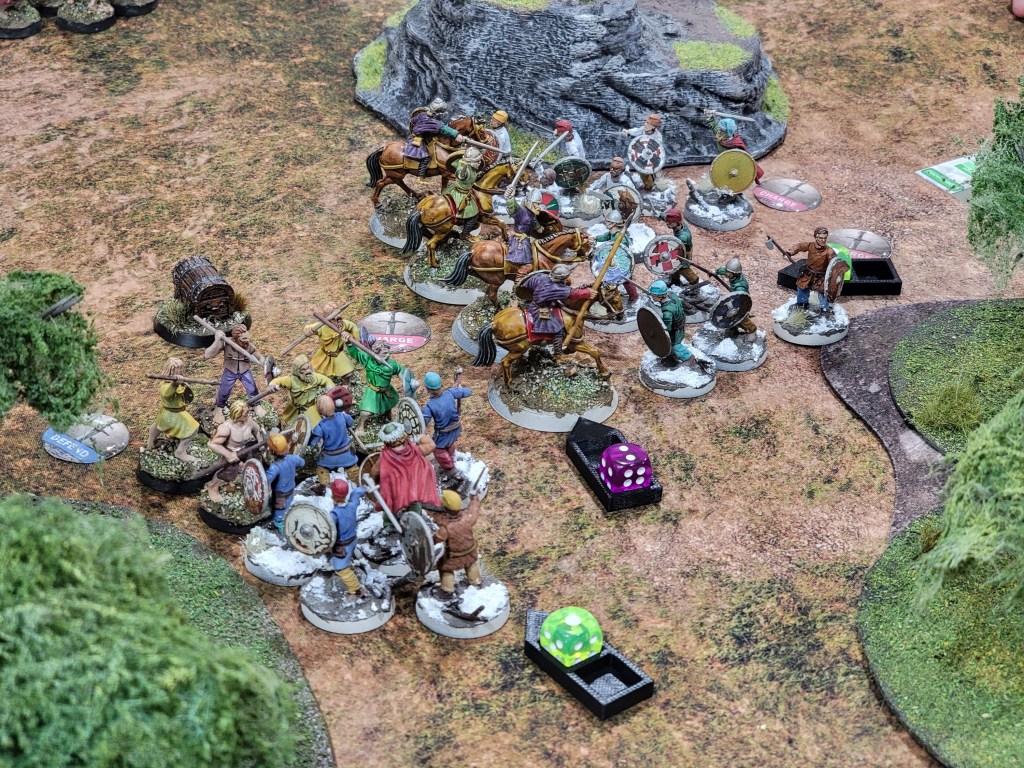
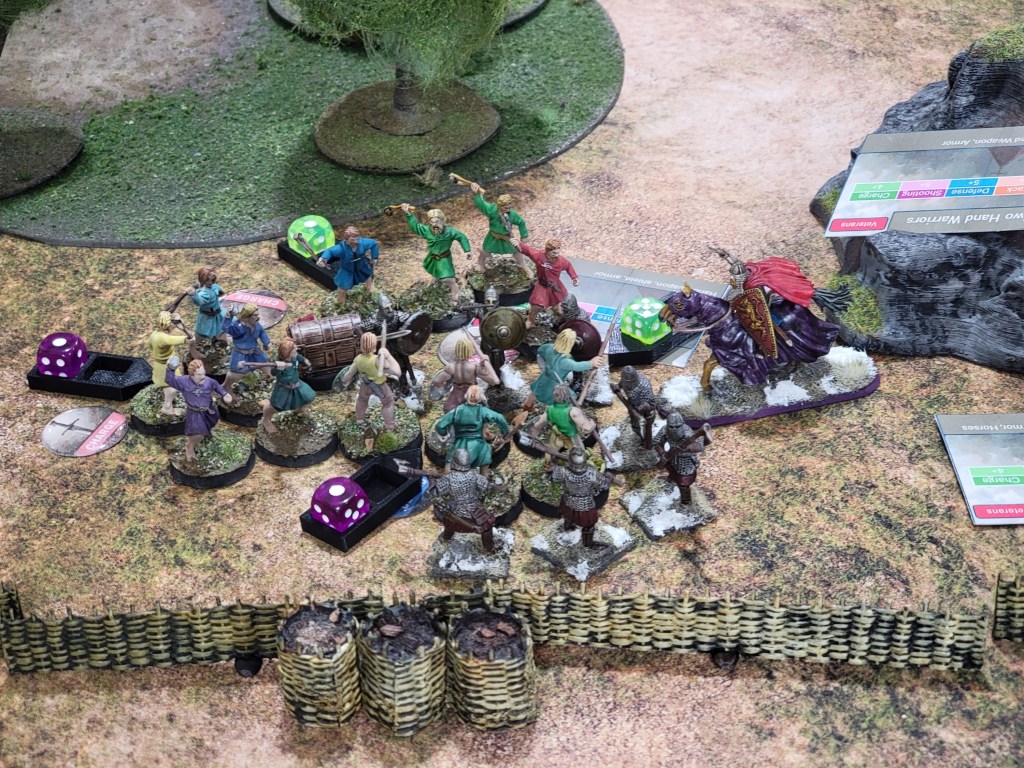
I also have some mechanics to review. I still have hidden orders built into the game—but once you’re in combat they no longer do anything. Men in combat fight: there’s nothing hidden about that. I enjoy the tension of the hidden orders before battle but once battle occurs they feel a little misplaced. I figure there’s two routes here: the first is to embrace hidden orders by adding them to the combat. Perhaps you can choose to “rest” in an effort to reduce Battle Stress or maybe there’s some form of gamey rock-paper-scissors I could come up with. Rest vs. Attack vs. Defend? This would run the risk of lengthening combat, which I don’t want to do. The other option here is to strip away the system and return to a more traditional IGOUGO. I’m not opposed to this but I suspect I’d lose something important: the uncertainty of charging an enemy. I’ll mull.
What’s funny is I’m putting all this thought in while simultaneously preparing for Midgard, releasing from TooFatLardies next month. The moment that drops there’s a non-zero chance I switch over entirely. It’s just fun to think about, I suppose. I think I’m closing in on something good—maybe not great, but good.
Either way I’m coming to understand the challenges of developing a melee system. There’s an awkward amount of decision making that doesn’t necessarily yield results—but when you cut that out you end up not making many decisions at all. I’ve thought up an entirely different system to address this but that’s for another article. “Mass Battle System: what happens when you know exactly when every unit will break and run?”
There’s a fun thought experiment.


 Small Scale Victory
Leave a reply to tankfanboy Cancel reply