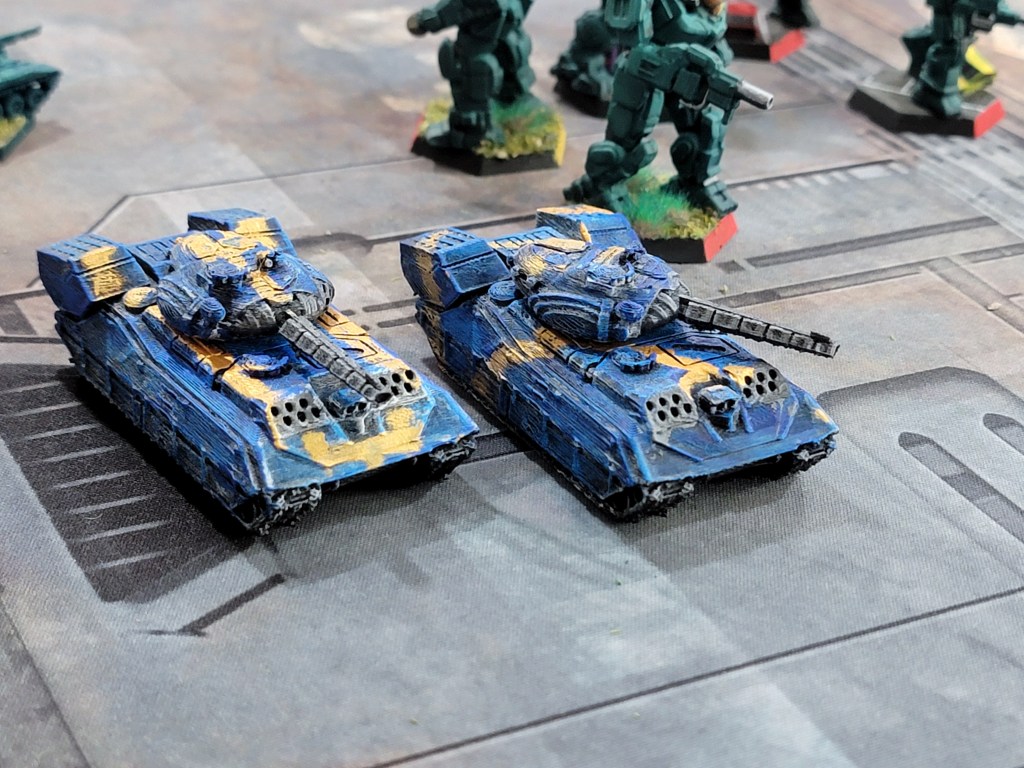
Recently, I’ve spent a bunch of time playing Battletech: Alpha Strike. A casual browsing of the front page should make that no surprise. Aside from me really enjoying the rules thus far, part of the reason I’m playing so much is my son. He’s eight and finally starting to be able to grasp at a real understanding of games and strategy.
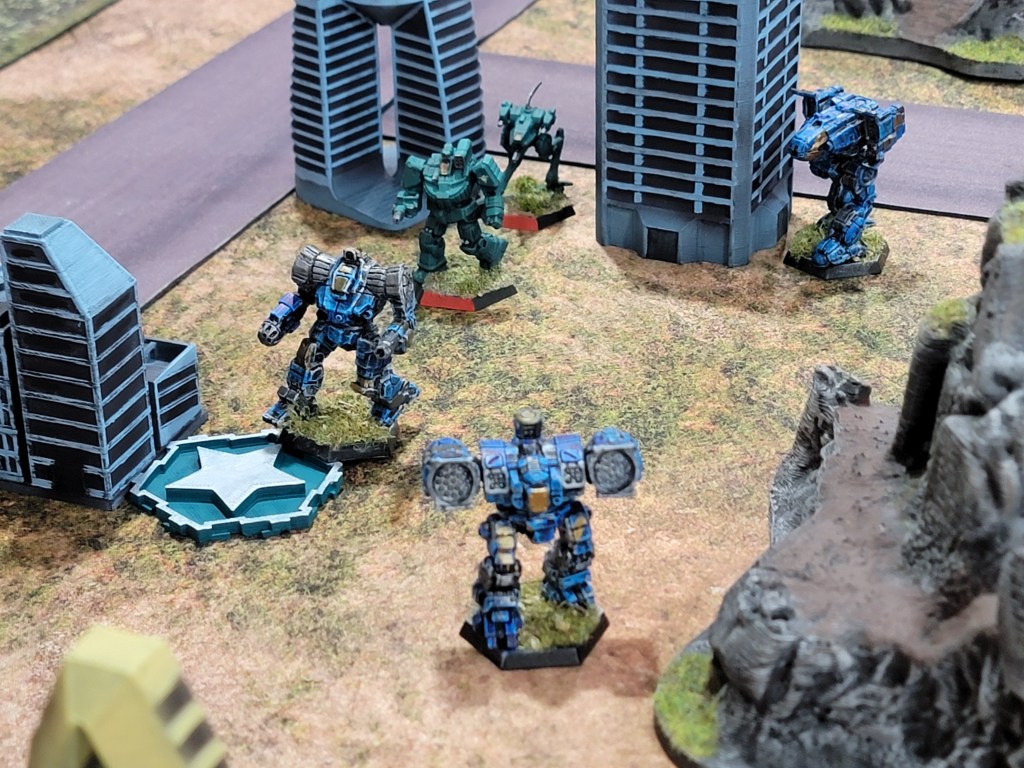
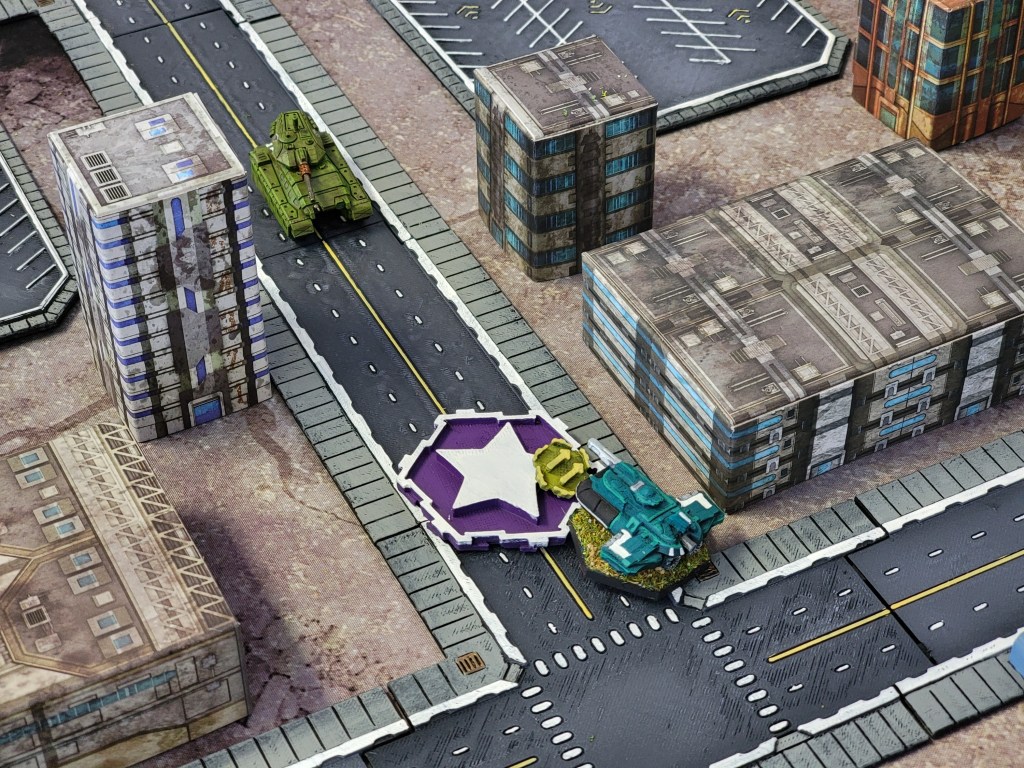
I have to be selective with games for him. He needs to want to play them and they need to not be too complicated—having to remember five rules before you can roll dice is probably a bit much. At first, I thought Alpha Strike might be a little too much for him, but in practice it isn’t. He’s playing with tanks, mechs, and multiple lances just fine. This week he’ll earn some VTOLs (he has to write 10 sentence essays or stories to earn a model) and I have no doubt he’ll understand them just fine.
This has me thinking: why does this work? We played X-Wing for a while and it worked, but he never quite grasped it. He understood the flow of the game but forgot rules a bunch and required very constant coaching. For Alpha Strike, he still requires coaching, but it’s more to do with maximizing what he’s doing rather than redirecting it—which is fair, given the nature of combined arms combat. I expect that when he puts down VTOLs, he tries to use them as tanks and I’ll need to teach him to use them as harassment, but that’s just learning. In X-Wing, by contrast, he’d forget how to use the special additional rules for his units, or never quite grasp how to combine those rules into real results.
Luke can use force powers to do X, then pull a special maneuver, which based on another ability lets him recharge his force capabilities to do X again. That’s a satisfying combo, but it doesn’t map to any reality beyond the card.
As per the title, here’s the hammer for the anvil: verisimilitude.
X-Wing has a series of combos that are fun to execute but have nothing to do with the reality it’s portraying beyond making Luke or Vader particularly strong. It lacks verisimilitude. My son had no issue grasping the basics of the game—ship turn order, initiative meaning you get to see what your opponent does first, and hidden maneuvers all make sense in the context of dogfighting spaceships. The challenge was always maximizing what was on his cards. I got around it by keeping both our forces simple so he could understand everything.
I don’t mean to knock on X-Wing here—executing those combos is fun and satisfying, but sometimes I feel like it’s a lazy way out to distinguishing Luke from a random grunt and really just serves to make the game harder to play.
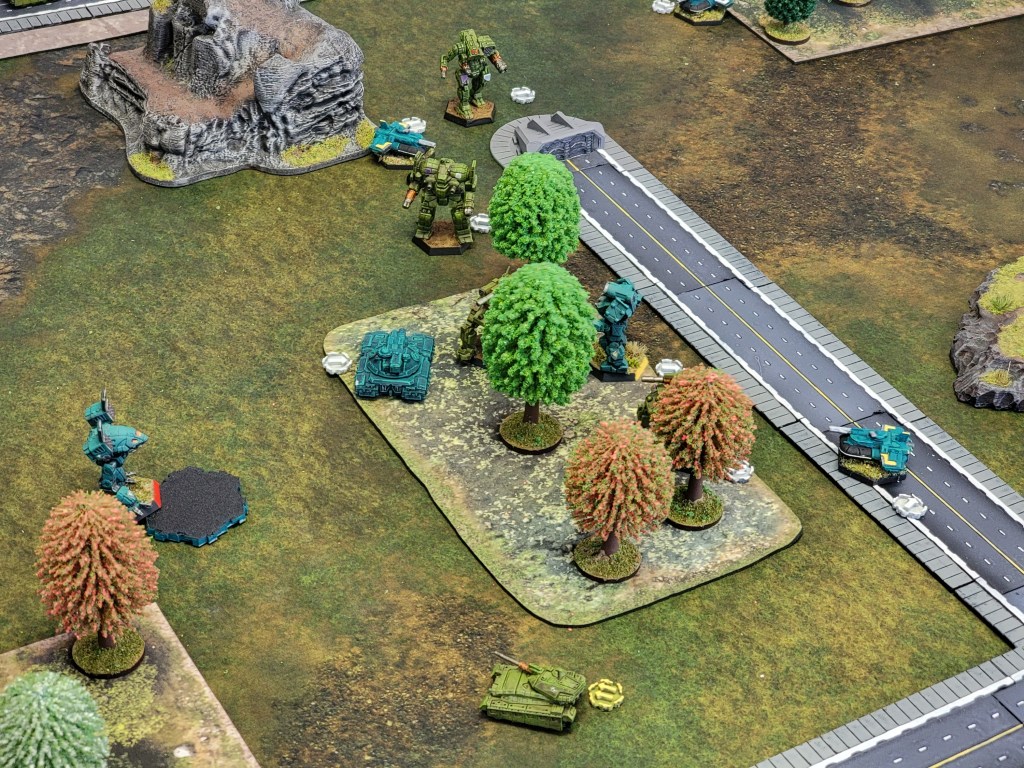
Back to Alpha Strike—there are still special rules, but they map to the reality that Battletech presents. VTOLs have a high TMM, which makes them hard to hit organically, but they also have a +1 to hit you have to remember. Why? Because they’re flying objects zipping around and dodging. Tanks work like mechs, but they take a motive crit check on every hit—why? Because in universe tanks are more likely to be immobilized as you can’t heavily armor their treads like you can mech legs (…sure). One explanation and my son understands.
Further, decision making is as simple as thinking through what’s going on and deciding from there. You don’t have to know the rules to grasp that a mech that is jumping is harder to hit than a mech that’s just running on the ground. My son can’t tell you the modifiers, but he can tell you that you shouldn’t shoot the jumping mech unless you really need to.
This flows through the whole of Alpha Strike, with one exception: lance special rules and pilot special rules. Lance special rules can vary from simple (you get 6 rerolls with this lance per game) to more complex (choose, each turn, from a list of special rules to give two models in this unit for this turn). Pilot special rules are sparse, with only one or two models receiving them at a time, but they’re often ignored by the player base anyway and still not very hard to remember. I can probably make an argument that these map to the game’s reality, but it isn’t as clear as “Jumping thing harder to hit.” For now, we stick to simple rules and he has no problems keeping up.
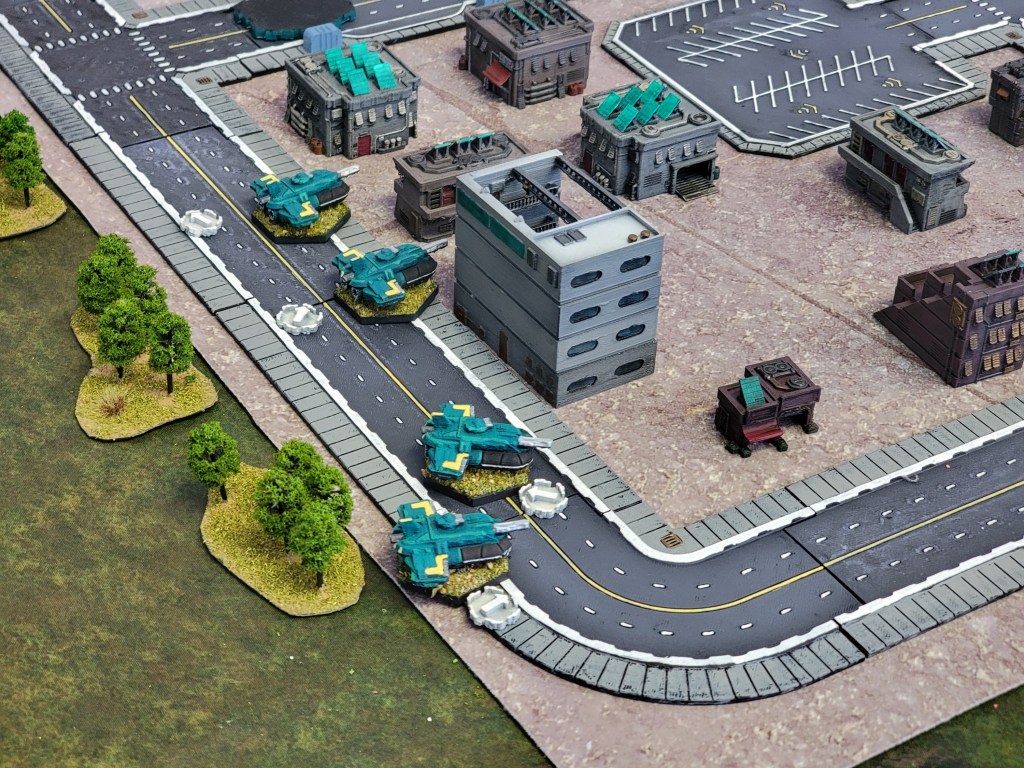
There isn’t really much of a point to this post, I guess. I doubt I’d get much pushback on the notion that a streamlined ruleset with solid verisimilitude is easier to teach anyone, let alone an eight year old. It’s just another point for Alpha Strike. This is the first ruleset I can truly feel my son wants to play and understand. We had an excellent match in which he outplayed my remaining two mechs with a single Locust—a light mech worth 1/3rd the points of the two mechs it was fighting. I coached him on using his speed to his advantage, I admit, but he did it just fine from there and successfully stayed out of my arcs well enough to take down both mechs, winning the game.
Suffice it to say he won’t let me forget that moment for a long time.
Actually, suffice it to say I won’t forget that moment for a long time. Battletech has given my son a proper love for wargaming, and for that I’m eternally grateful.

 Small Scale Victory
Leave a reply to Pete S/ SP Cancel reply