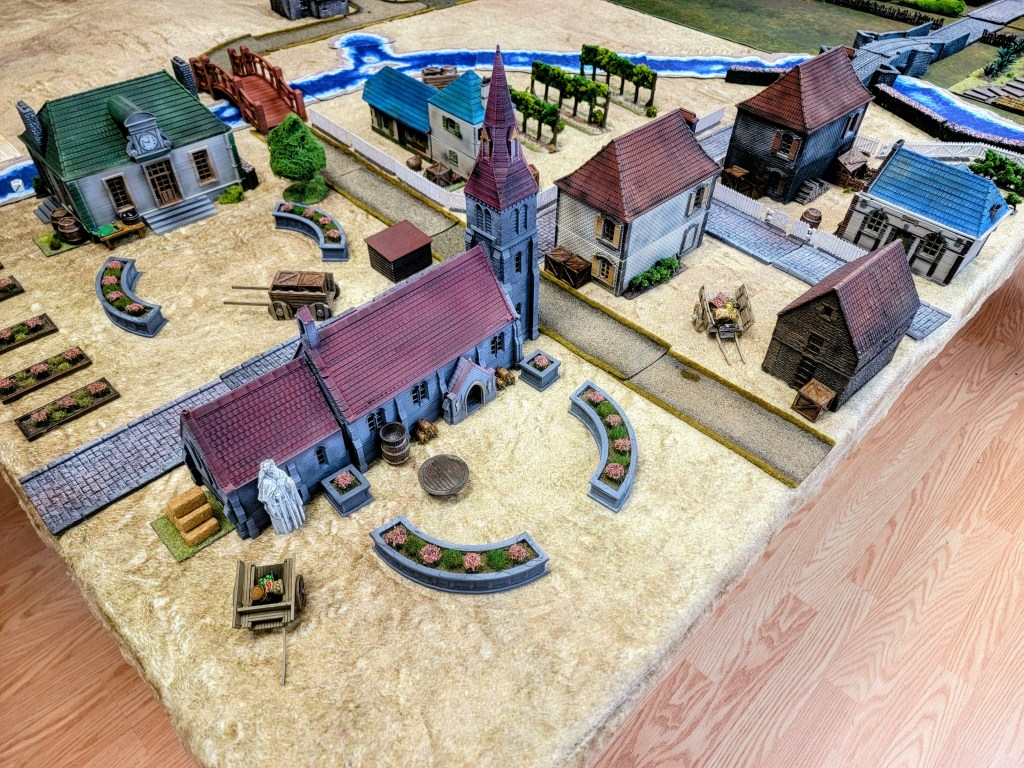
Terrain is often an afterthought in wargames, which is a shame. I adore great terrain and the processes of making it. It’s hard to say no to a truly great looking board and it can really help to bolster your numbers as people play other games nearby and eye your beautiful scenery with envy.
I am the “Terrain Guy” in my club. If I could wear that on a shirt, I would. That’s not to say I make the best terrain ever—indeed I believe I can greatly improve and want to do so! I just have a lot of terrain and tend to make good looking boards. The main issues I’ve found with terrain are three-fold:
1. Time: making a set of terrain takes time away from painting miniatures, which is hard to give up.
2. Portability: terrain can be difficult to move around without damaging, which dictates a bit of how we put it together.
3. Storage: similar to portability, terrain needs to be capable of easy, condensed storage. Even if you have a whole basement to dedicate to it, you’ll end up wanting so many different sets that their compactability will matter greatly. I say this as the owner of over 20 sets of terrain across almost every possible setting.
Bearing these things in mind, I don’t recommend the average player go out and make a ton of terrain. I will, however, advocate for creating a simple terrain board capable of playing Chain of Command and will give my advice for doing so here. This should fit in 1-2 large 7” tall bins depending on how crazy you get with the trees. So let’s get into it.
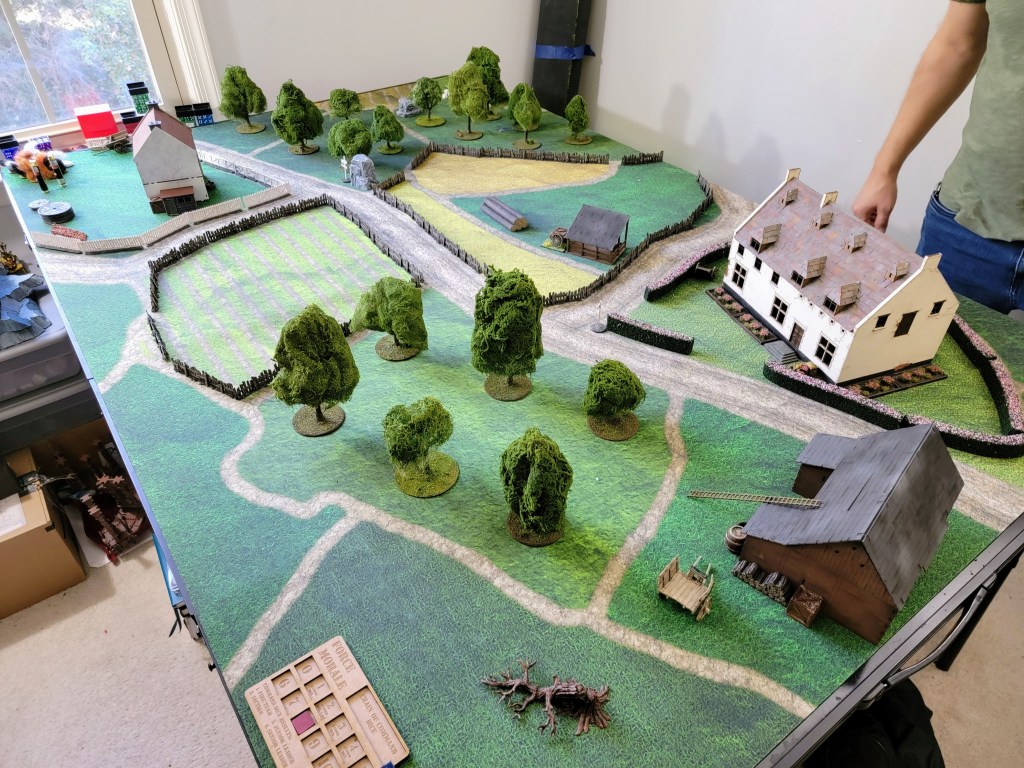
Your First Chain of Command Board
It’s not that hard to plot out, thankfully! First off, we need to decide if we are in 28mm or 15mm (with 20mm having the same considerations as 15mm). The only real difference here is going to be how many buildings you put down on this initial board.
Buildings and Other Human Scatter
I start with these because they’re the obvious appeal, but also because they create the setting of the board. You could, in theory, buy a few buildings and take them down to your local game store, then use their supply of greenery to fill out a great looking board. This is a great way to adapt your local store’s terrain to work for historical games.
Before getting into the sizes, I strongly recommend for your first set that you do not base your buildings. It makes them harder to store. Basing buildings and terrain sets brings them together beautifully and makes a huge difference in the quality of an overall board, but I’ve yet to do it at all. Why? Storage. They’ll separate from their bases if you’re not cautious and even if you make the bases modular and separately storable, it will take up more space and make portability more of a time consuming issue.
So again, don’t start there. Build to it. You can always come back and base your buildings later.
At 28mm I recommend 2-4 buildings total for your initial board. Better yet, get just two buildings but include some out buildings and maybe buy some small scatter for them. Think of things like sheds, wood storage, pens, and stables. These add character that make your board stand out and I’d honestly recommend you buy some with every building you acquire. Go slow, but high quality. At 28mm each building should run you $20 or less, so budget accordingly.
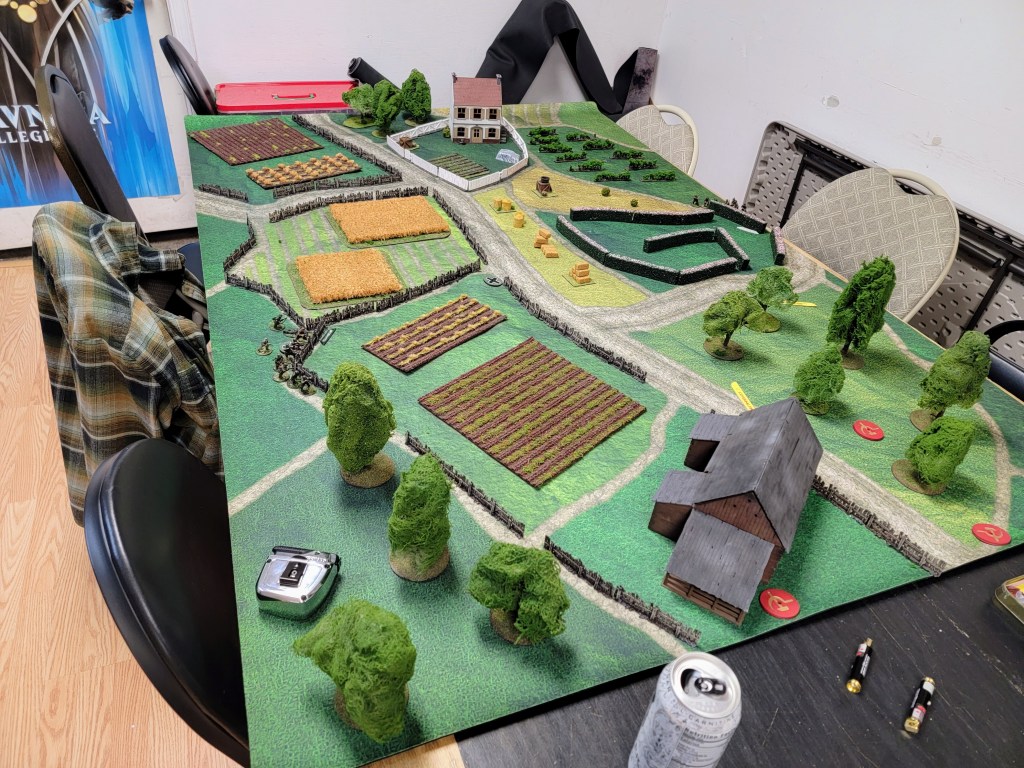
At 15mm you can similarly stick to just a few buildings, but given price points you have more of an excuse to get upwards of 8 buildings so you can really decorate a corner of the map. I would still say you want scatter with each building—think of benches, gardens, or anything else you see sitting in front of your neighbor’s home. Sincerely, drive around a neighborhood and look around. You’d be surprised by how much inspiration you’ll find. Regardless of where you set your board, humans tend to have similar types of scatter in their yard.
For example: I see a little red wagon in my neighbor’s yard. Belongs to their kid. In France, that’d likely be a hay carrying wagon. In China, that might be a cart.
Greenery
Greenery varies setting to setting.
For most settings (Europe, Russia) it is trees, bushes, shrubs, hedges, downed trees, and anything else you see when you look around in the woods or farmland. I recommend crafting these. An easy tree craft is to get plastic tree armatures, wrap HVAC filter around them, then spray it with spray adhesive and flock.
In the jungles of the Pacific, I’d look at doing dense bamboo area terrain alongside various small (repainted!!) small aquarium plants. Palms work for many settings, and honestly quite a few settings use the traditional European style trees. Base them using a mixture of flock and Italian seasoning—but seal it well so it doesn’t smell.
In the desert, you’ll want to stick to more urban areas and honestly that means more buildings and way more human scatter. You can still do palms and smaller plants (once again look at repainted aquarium plants, the smaller variety).
You want as much of this as you can stomach, but remember that for trees they are generally part of woods, which are area terrain. As such, you don’t need more than a few trees to really mark out an area of woods.
If I’m putting everything in ONE bin I shove under my bed, I’d have two buildings and the rest of the bin would be full of greenery, roads, and fields (next sections).
Fields
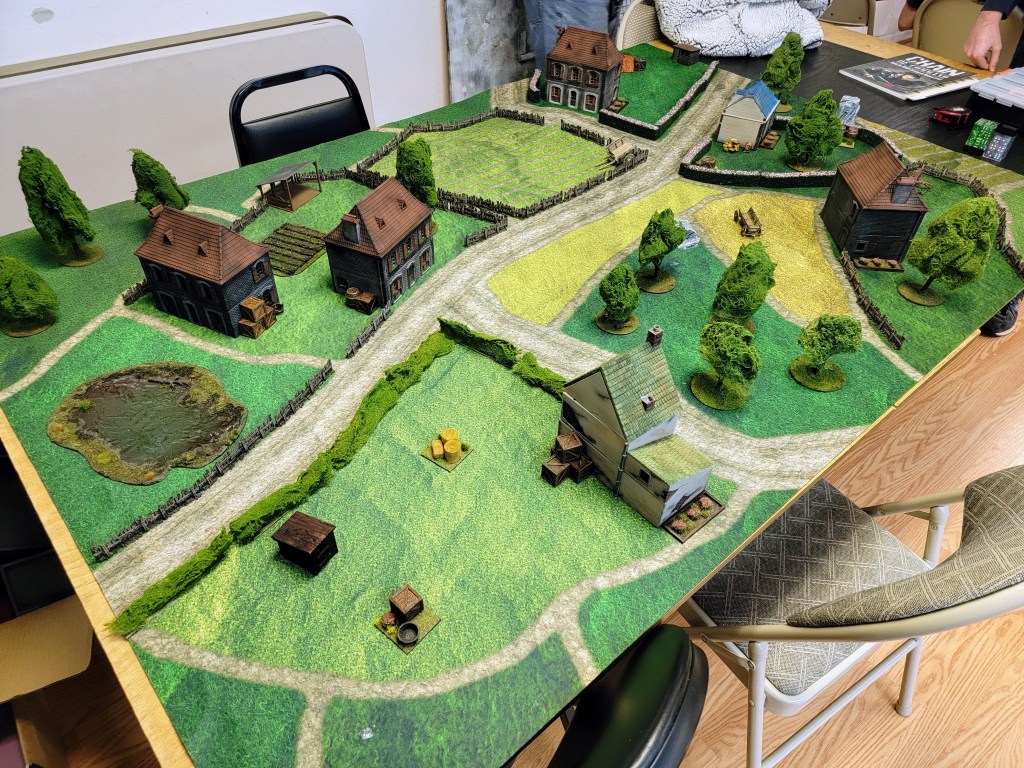
Fields are mostly universal. Go down to your local dollar store, Ikea, what-have-you and buy some doormats. Repaint them as needed, cut them up, and call them fields. That part is honestly super easy. The next part, though, is very important: fences.
That’s right, my section on fences is in the “Fields” section. Fields are often fenced off—usually around a whole area of fields. Fences are vital as they provide easy soft cover opportunity. You could also substitute some fencing for hedges, but the point is people usually mark these areas off. In terms of how much fence to start with, I’d say at least 12 feet. My more advanced terrain boards use 30ish feet of total fencing as an option.
Fences give a sense of place and reality to your board while providing very important opportunities for covered movement. They also hinder movement in vital locations.
Back to the subject of fields: you may also want some small field scatter, but it isn’t vitally important like it is for buildings. Field scatter is usually carts, hay bales, benches, work benches, and maybe some smaller trees that act as wind breakers.
Roads
I hate roads. I hate making them. This is where I spend money. The reason is simple: cutting straight roads of the same width that align well together is actually pretty challenging if you aren’t very handy. For roads, I’d hop on Etsy and look up “Dirt Roads,” or I’d buy the neoprene strips from DeepCut Studios and cut them to the lengths I desire. This where I’d drop $40 to solve something quickly and move on with my life.
The Board
You know what you think would be cheap? Making your own physical board. You know what’s not cheap? Making your own physical board. It also doesn’t store very well.
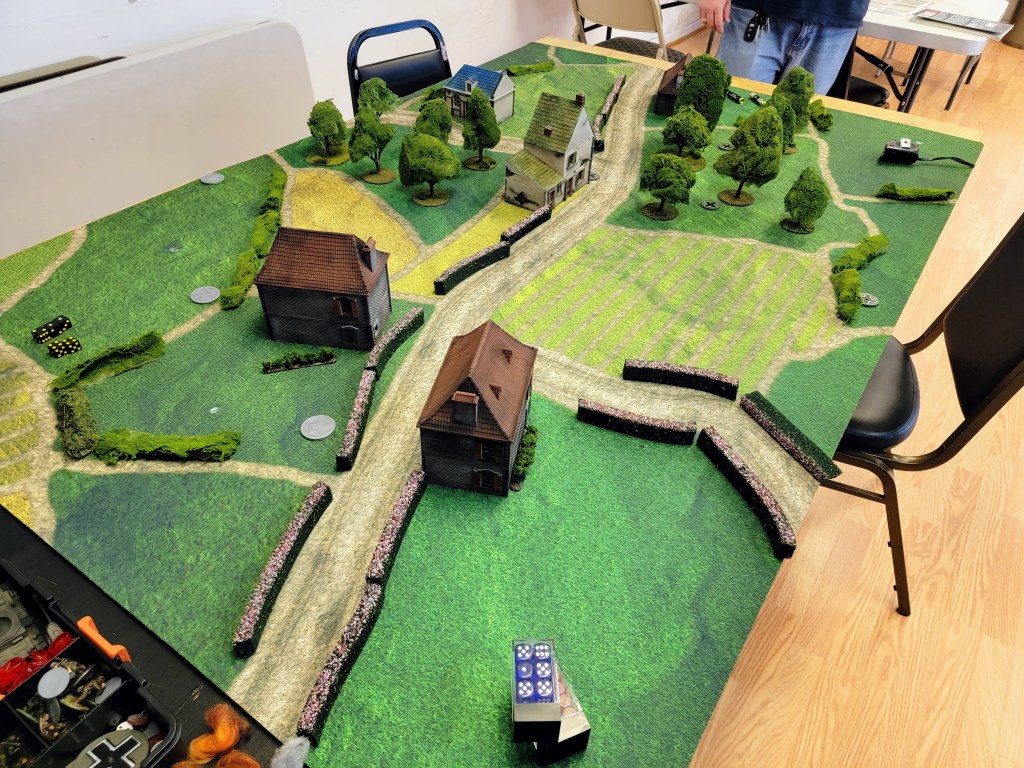
I recommend you bite the bullet and buy a neoprene mat unless you’re gaming at a local store. As a bonus: you could buy a mat that has a road on it and spare yourself from buying roads. You’d think this gets repetitive, but honestly you can vary the surrounding terrain enough to keep it fresh for a long time.
Laying It Down
Okay, so you’ve built out all your stuff. Your MDF is constructed and painted, your greenery is green, your roads are flat, you—you get the idea. How do you lay it out?
Think naturally. Don’t worry about balance, that’s what the Patrol Phase is for. If part of the board is obviously better, the players will fight over it in the Patrol Phase so they can deploy there, which is part of the game strategy. Also, a “Great position” can equally be interpreted as “I let my dudes stay still and shoot” which against the right tactics will fail more often than not.
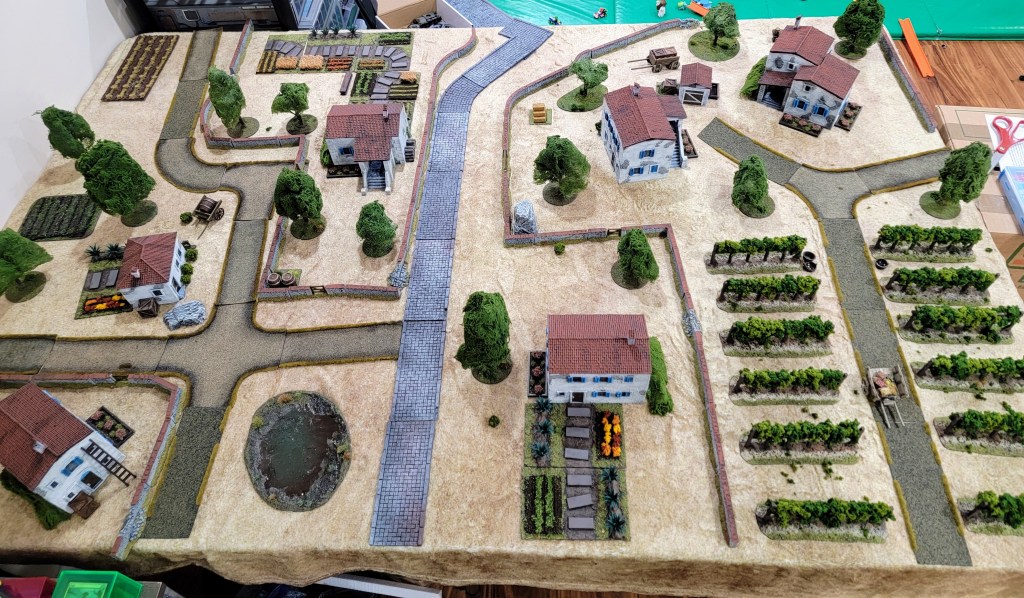
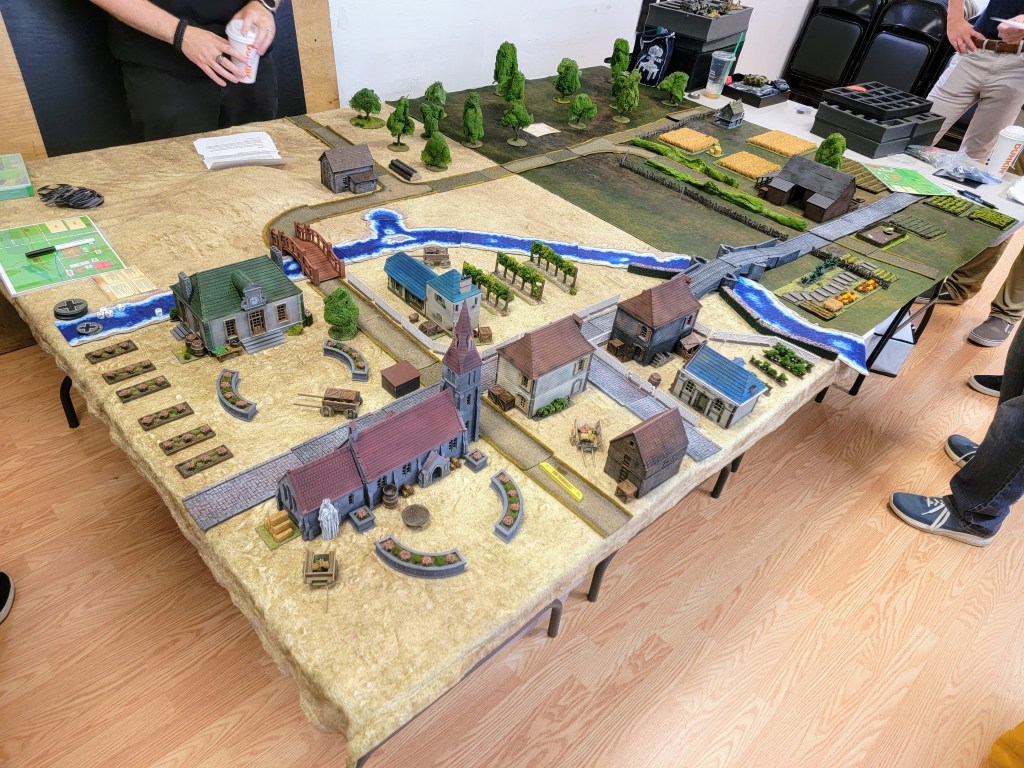
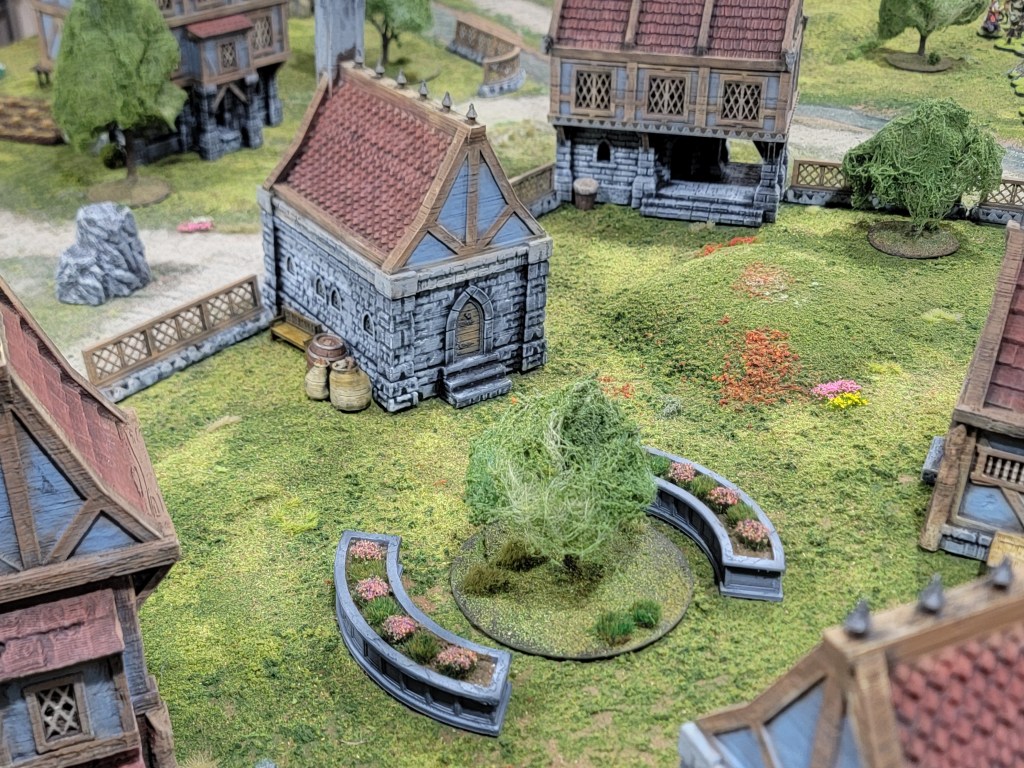
Lay out a natural looking setting. Put some houses down and give them yards, fences, and scatter. Then put your fields down and lay out the boundaries of peoples’ properties. Fence in farmer Olf’s fields alongside his home so you can tell his property apart from his neighbor’s. Put stuff where it belongs in real life. This will create a realistic setting for a fairly realistic game and force you to solve the problems that a platoon leader in WW2 would have to solve.
Get Playing!
“That’s it!” I say 1,500 words in, but it honestly is. Get some buildings, roads, fields, and greenery. Fill out a realistic looking place each time you go to game. Overall, including the mat, I’d estimate the investment here is about $200. Cut the mat (use the store’s) and you’re looking at around $120ish. Use some store greenery and you can get this as low as $60. Even cheaper in 15s, probably.
Within my own group, I have multiple people really wanting to be able to make their own boards but worried about space. To them I would say: just get some MDF buildings and scatter and bring them down to the store. Combine that with the store’s greenery and you’ll have plenty to work with. Bonus points if you get a lot of fencing, too. You can keep your costs and storage requirements low while still really enjoying the game.
Not everyone has to be “The Terrain Guy.” Just get enough stuff that your Terrain Guy can go on a month-long vacation to Portugal without worrying that his gaming group will disperse to the fifty other wargames we constantly bring up.
And to terrain guys everywhere, I say: start with Lisbon and make your way up the coast. You absolutely need to see the mountains in the North and some of the beaches. Maybe spend an afternoon in Spain, it’s also lovely. You may find yourself wanting to make an Iberian village—don’t worry, I promise you’ll find tons of photo opportunities.
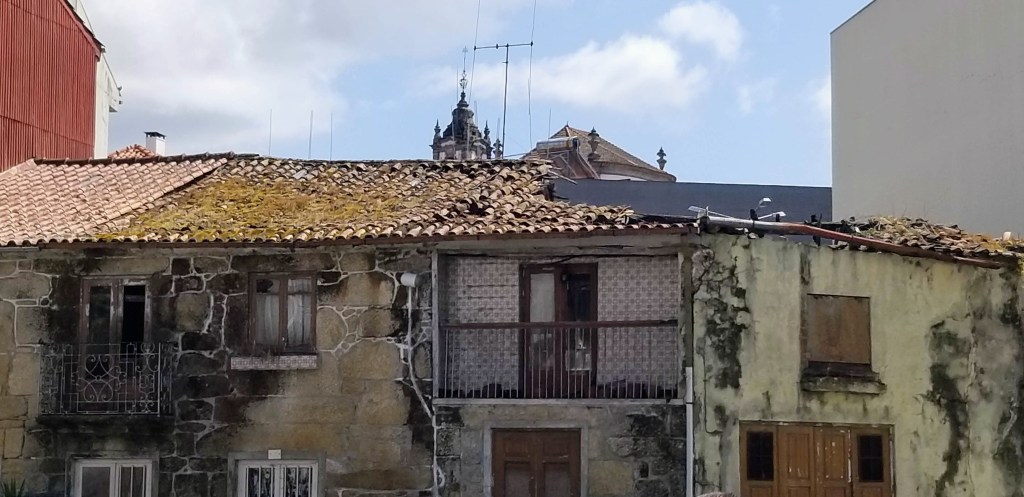
Oh! And if you have a full month you can totally swing by France for a bit. It’s a long-ish drive, but not bad and worth it for the research alone.
Remember: you deserve it. You’ve been making terrain and sustaining groups for years. Take the vacation, enjoy your family, and come back with the renewed vigor to make your next board the kind of beautiful that makes everyone else jealous.
Now excuse me while I go mark a month off my work calendar and hope my boss doesn’t die from the shock.

 Small Scale Victory
Leave a reply to grumpygnome101 Cancel reply