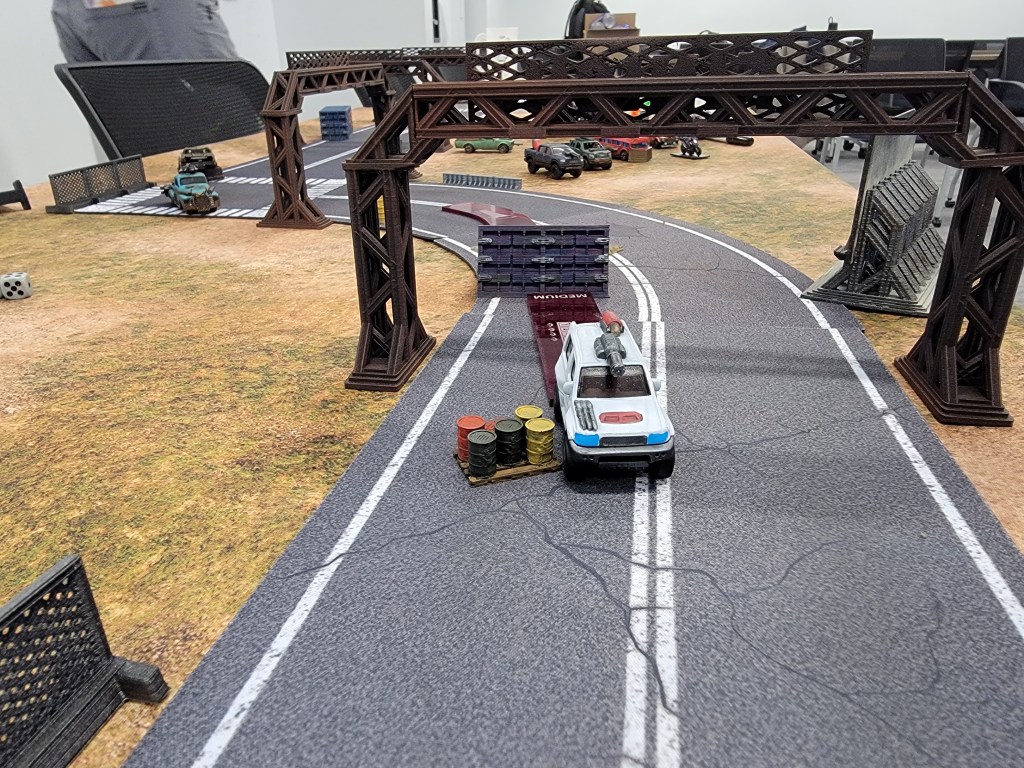
I just wrapped up a demo day for Gaslands at work, hot on the heels of having played a game with my son. Gaslands is one of my most played wargames over the years and it comes back to the brilliance of its movement system. It’s one of those systems that gives you tools that seems innocuous at first, then pretty clever, then really darn smart.
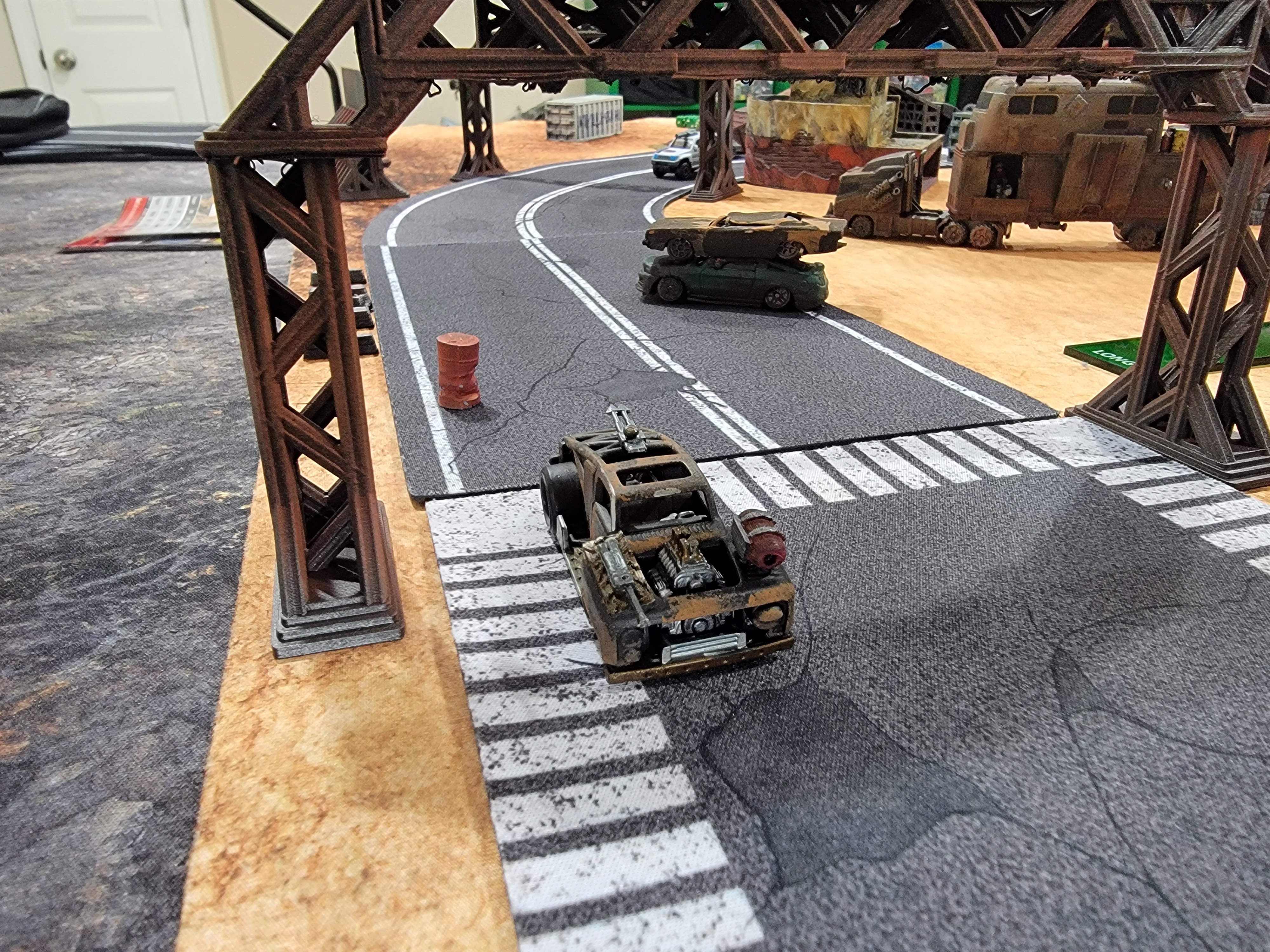
It starts simple: you pick up a template and commit to it before you can measure. This means you have to eyeball where your car might end up–which leads to a lot of mistakes. These mistakes lead to a lot of crashes. Your first realization is thusly that the game has figured out a way to make relatively precise template movement actually hard to execute, emulating driving a car and actually getting better as you drive more. You stop, think about it, and go “That was clever.”
Then you realize that after you place the template, you don’t move the car. You get the option to roll skid dice. Skid dice help you shift up and down gears. “Okay,” you figure, “So I use this to go faster and I might want some of the sorta-negative results.”
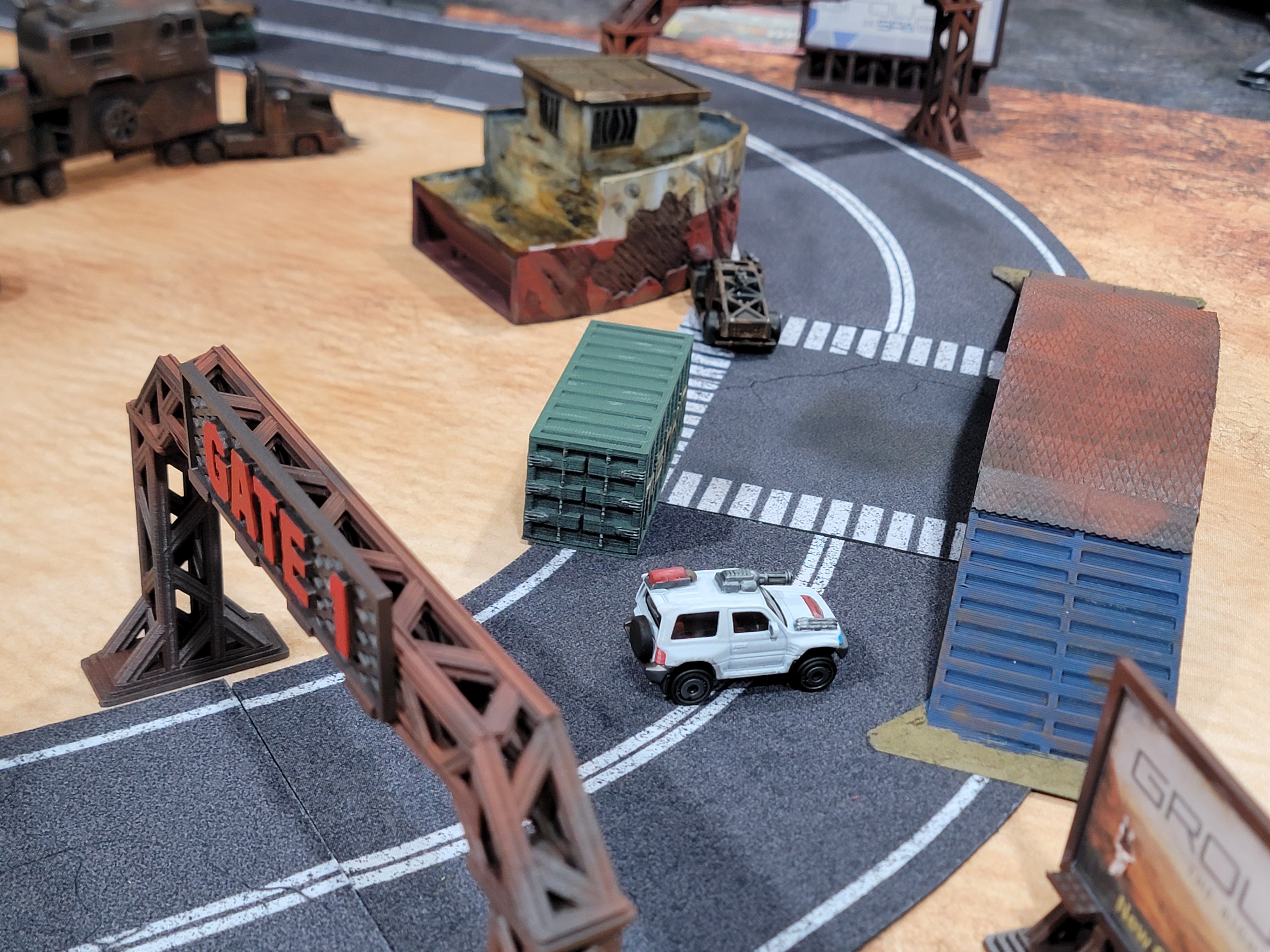
Fair. You might want a spin, right? It lets you rotate 90 degrees at the end of your move. Wait–no, it lets you rotate up to 90 degrees, which means you could do just the 20ish degrees you need to align yourself. Oh, cool. You take a hazard, but this starts to click: I can fix a bad circumstance. Got it.
Then you look at the slide result. It allows you to place a slide template, which modifies the path of your movement. You place your movement template and realize you’ll clip the terrain, then stop and go “Oh wait, I can slide out of it!” Fantastic! Now you’re cooking with gas.
But it gets better.
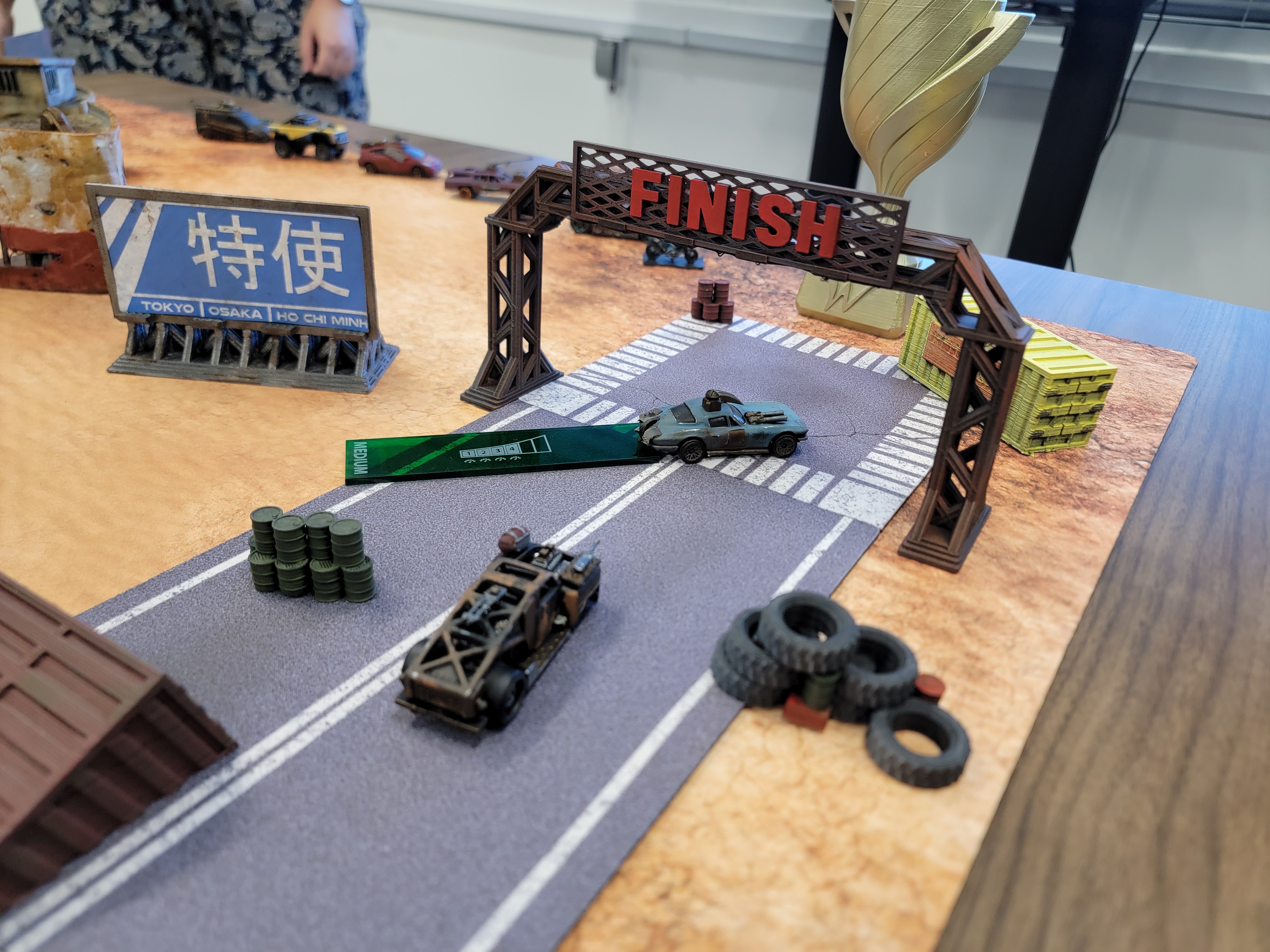
You realize the slide template allows you to orient in either direction at the end of it… which allows you to do a 180 degree rotation. You can literally 180 after, say, crashing into a billboard. You can then use that to position yourself to steal a victory.
The movement in Gaslands is brilliant because it’s simple to understand but as you play the game you get both better and more clever. You realize that a spin or a slide is often the difference between time wasted and an advantage gained. You go from never using spin or slide to using them almost every turn and seeing them as more valuable than just shifting. You get better at selecting just the right template to avoid the crate on the road or to manipulate your final position to line up the ramp so you, you know, don’t hit a big freaking billboard.
It’s the way the rules give you the variables but allow you to write the equation. It’s utterly brilliant. In some ways, I see the same concept at work in games like What a Cowboy, where you combine dice to do various complex activations. It’s a sense of learning how to build the combo that gets you to victory and it feels darn good.
Mike Hutchinson has always been one of the most interesting wargame designers to watch. Playing Gaslands again and demoing it for a bunch of professional wargamers has really reinforced that for me. If you haven’t given the game a try, you should.
Moreso than most games, the truth here is in the play. Ludoveritas, if you would. You just have to play Gaslands to really understand.
![[Tentcon Preview] Blades of Woe: An Elder Scrolls Adventure](https://smallscalevictory.com/wp-content/uploads/2026/03/20250810_135109.jpg?w=1024)
 Small Scale Victory
Leave a comment