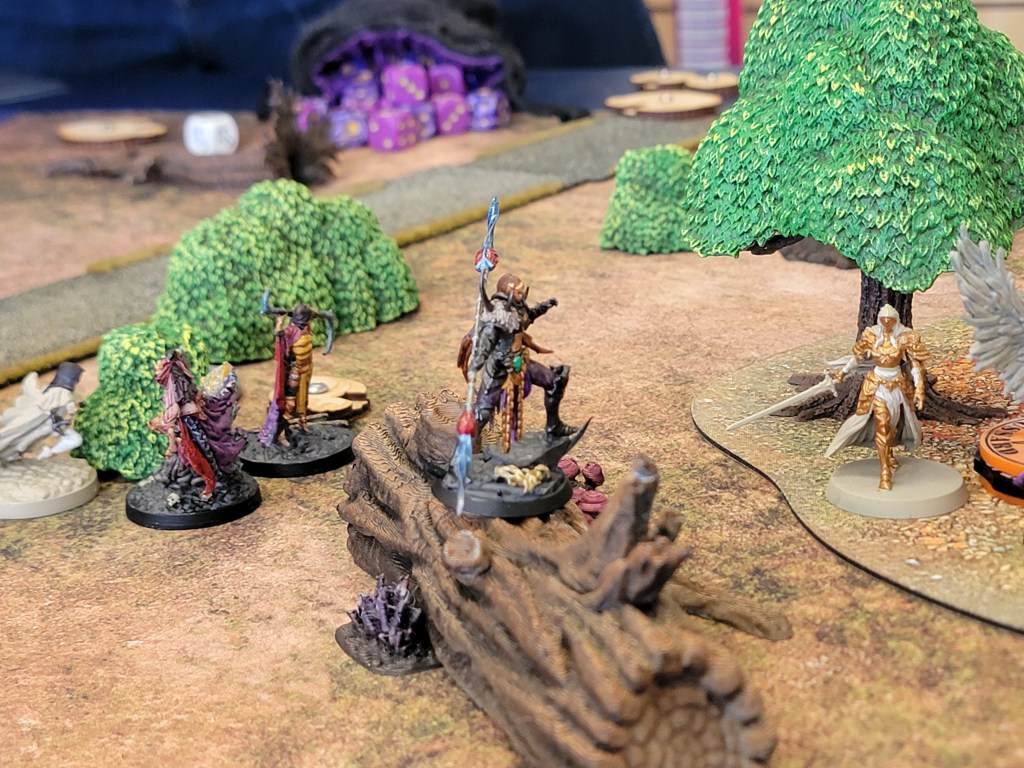
Dragon Rampant 2e has proven to be a more robust and interesting system than I’d initially expected. To the point where my main gaming partner and I are sketching campaign ideas–which means we really like it and based on our history, we’ll probably move onto another game soon.
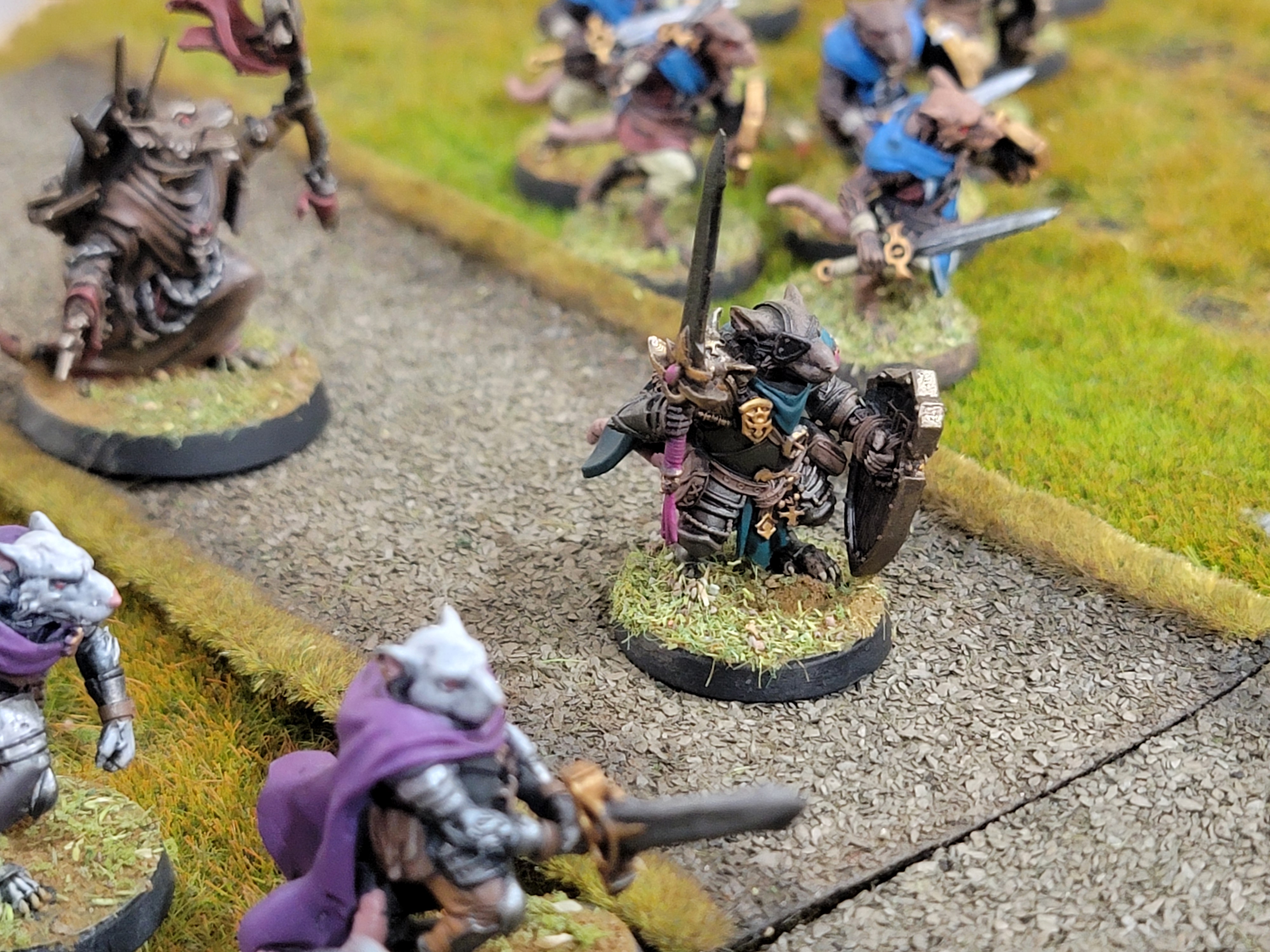
Setting our comedic game hopping aside, I thought I’d share the rules modifications we made that we felt really elevated the system. Our main issues with the default rules is a tendency for units to run away the first time they attack something. The flow is something like this:
- Unit attacks enemy unit while at full health.
- Enemy unit delivers a hard blow back, costing the attacker 3 Strength Points (health) out of 12. They’re down to 75% of their starting health!
- Both sides roll morale as they took wounds, and the attacking unit rolls low enough they’re forced to totally flee the battlefield (a 3 or less on 2D6, 8.32% chance) while the defending unit passes their courage check just fine.
- The attacker just made a rational choice to attack the enemy with a fresh unit and the game system returned an 8% chance they’d… uh… see their own unit flee the battlefield completely.
This is what is known as a “Negative Play Experience” or NPE in game design. Dragon Rampant is built to be fast moving and a little unpredictable–I’ll grant that. It’s just that this feels so out of place that it really hurts your ability to build a narrative. My big, reasonably brave, hard hitting unit just fled due to relatively minor casualties. That feels really far off.
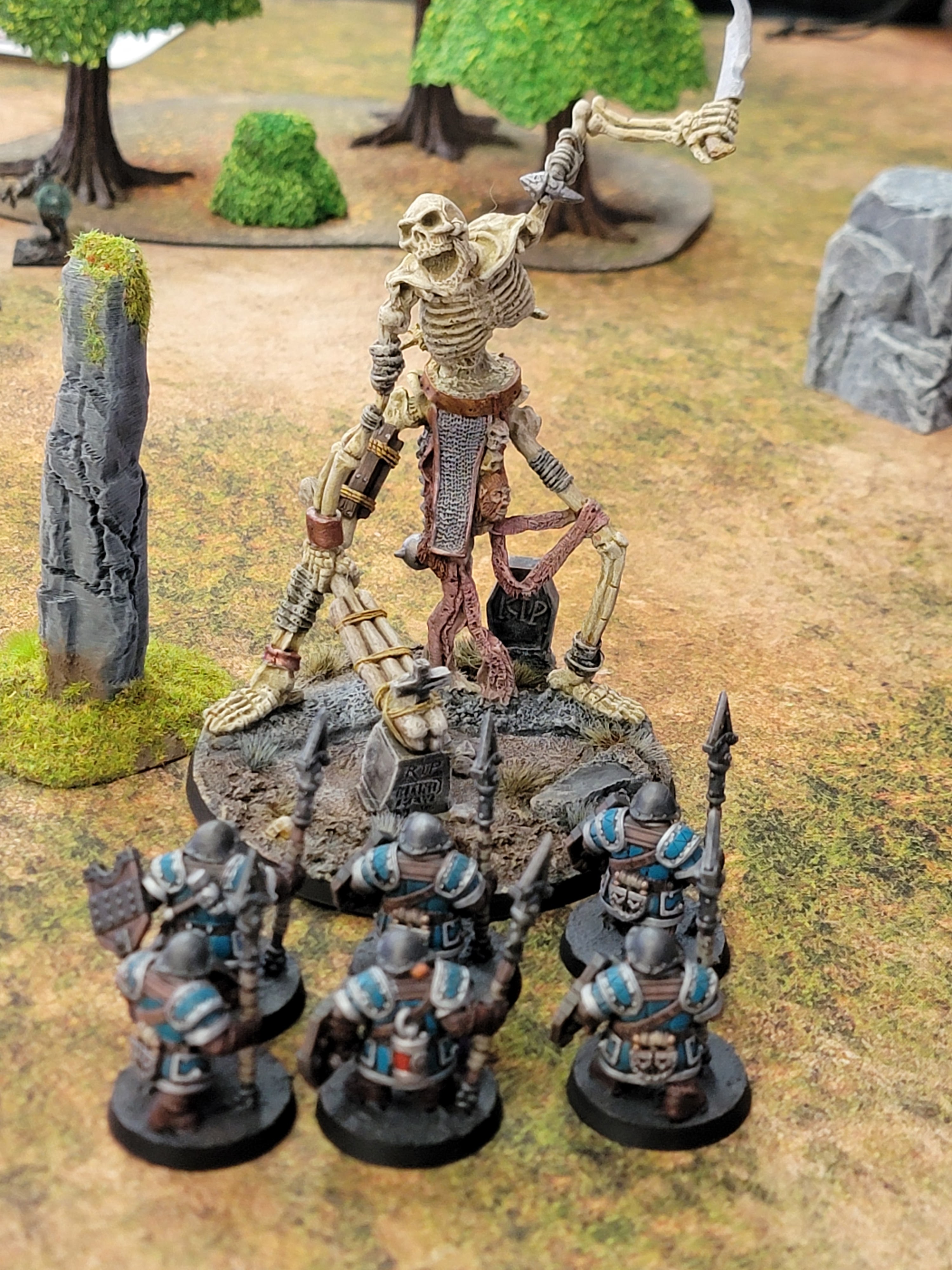
Our next issue is the degrading health from failing courage checks. Losing strength points each time you fail a courage check might make sense in a large battle game, but this game is generally skirmish sized. It makes even less sense when you’re looking at a single model hero losing strength points. It also pairs with the fleeing rule to cause a bit of a spiral that quickly gets out of hand.
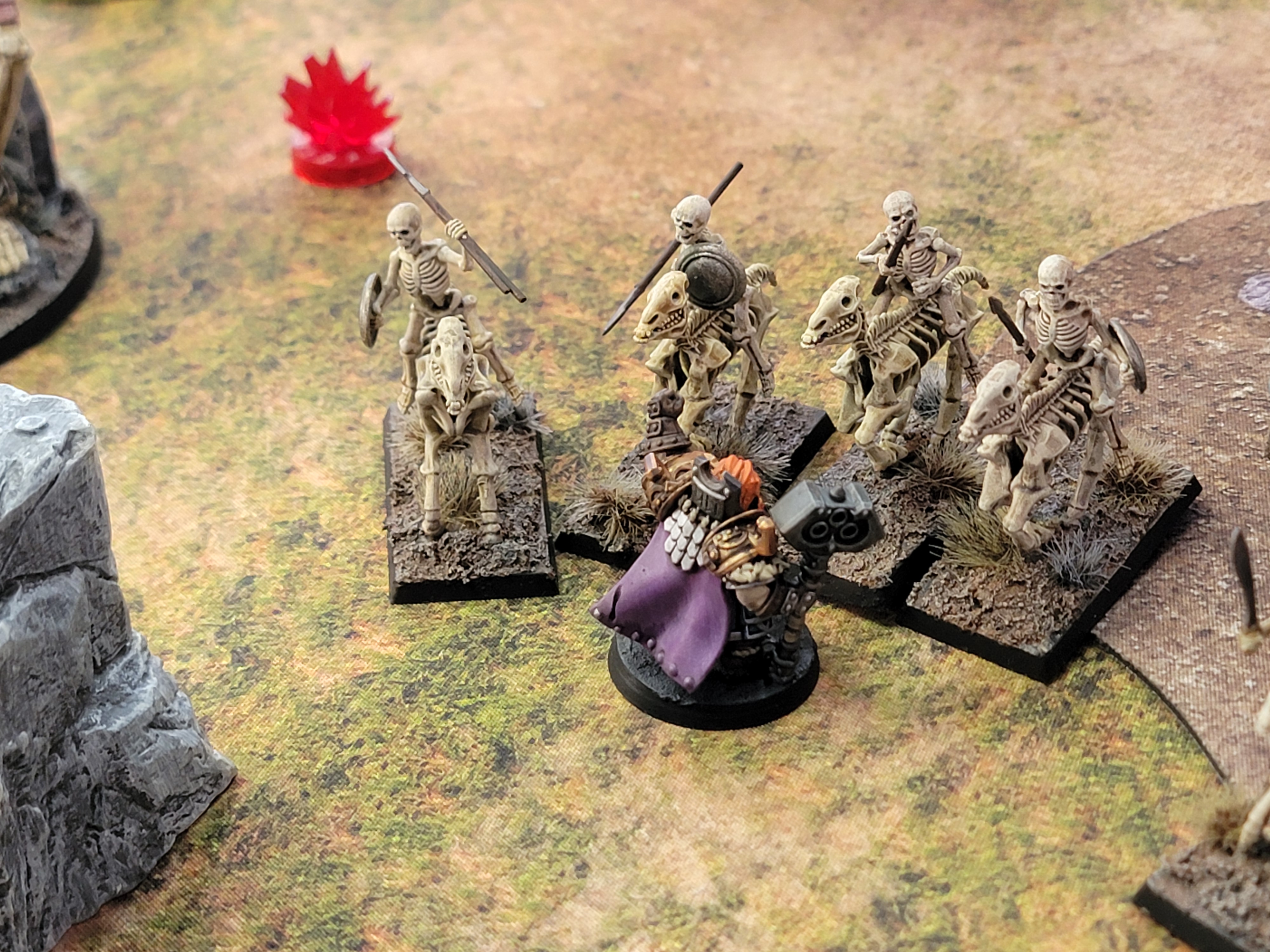
Our fix, which we feel reasonably confident in after a few games, is twofold:
- Units can only flee the battlefield if they are already Battered. Thus, rolling below a 1 on a courage check will only make the unit disappear if it has already failed a prior courage check.
- Units no longer lose strength points when failing courage checks.
The above edits make units feel more durable. They still flee in roughly the same amount of time but we’ve eliminated the instances in which they awkwardly flee before almost anything has happened. It adds consistency to the ruleset.
Er… but we still hit a bit of a problem. Most scenarios in the game are designed around what is effectively a fight-to-the-last. This works normally because of how easily units flee and how they can end up in flight spirals. We have yet to playtest the following concepts, but I have two proposals for addressing this:
- Each time a unit flees the board, your whole force has a permanent -1 to all morale checks, cumulative as more and more units flee.
- For every 3 failed courage checks, your whole force has a permanent -1 to all morale checks, cumulative as more and more units fail courage checks.
I believe these are functionally about the same, but the idea is to shift the force breakage such that it snowballs based on units fleeing the battlefield, as it should. As you lose units, it gets easier to lose more units. Courage is still relevant, as are skills that buff courage or benefit morale checks. Again, these are more experimental–I encourage you to choose one or the other and give it a shot, while combining it with the two modifications I presented earlier.
So why did we do this? Why not move on? Well, honestly, there’s a dearth of a good generic warband sized army games. We started down the path of perhaps designing a system but quickly realized Dragon Rampant was very close to what we wanted and quite clever as a system. It has more depth than I’d initially given it credit and with a little stabilization it plays shockingly well. I’m no longer as sold on the default missions but that’s a lot more workable.
I hope to update this over time and move rules from “Testing” to “Verified.” Depending on how much we play, keep an eye on this space for more.


 Small Scale Victory
Leave a comment