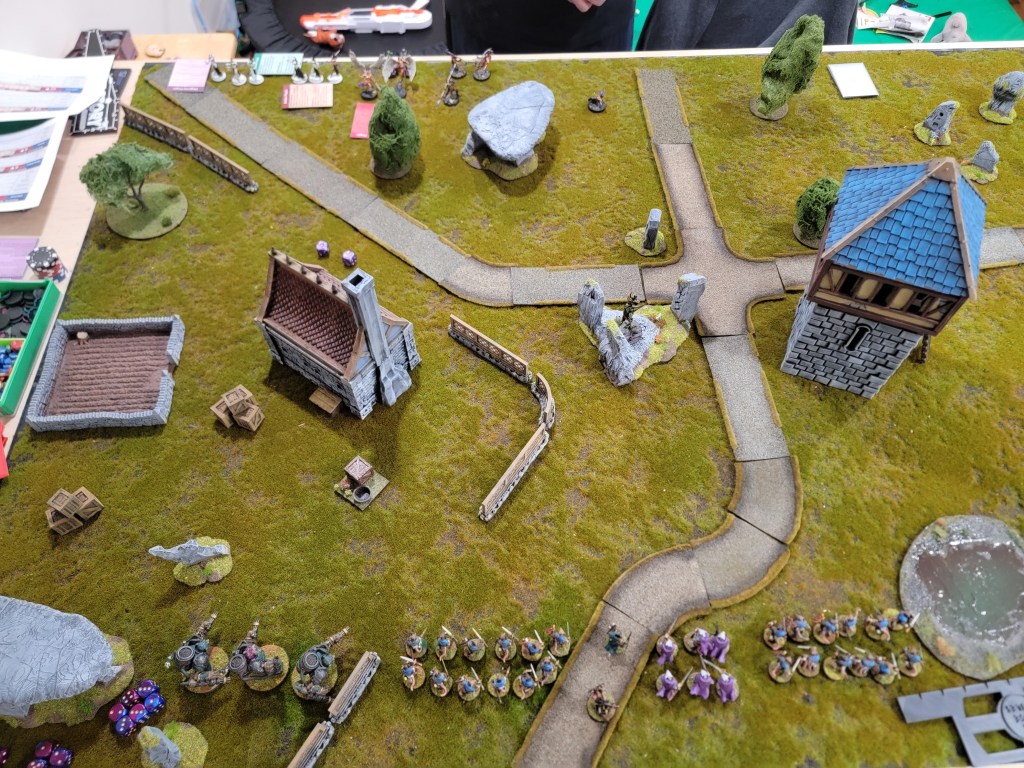
Against a real opponent! Much to my surprise, my regular gaming partner wanted to try the system and actually liked it.
Sorta.
The Matches
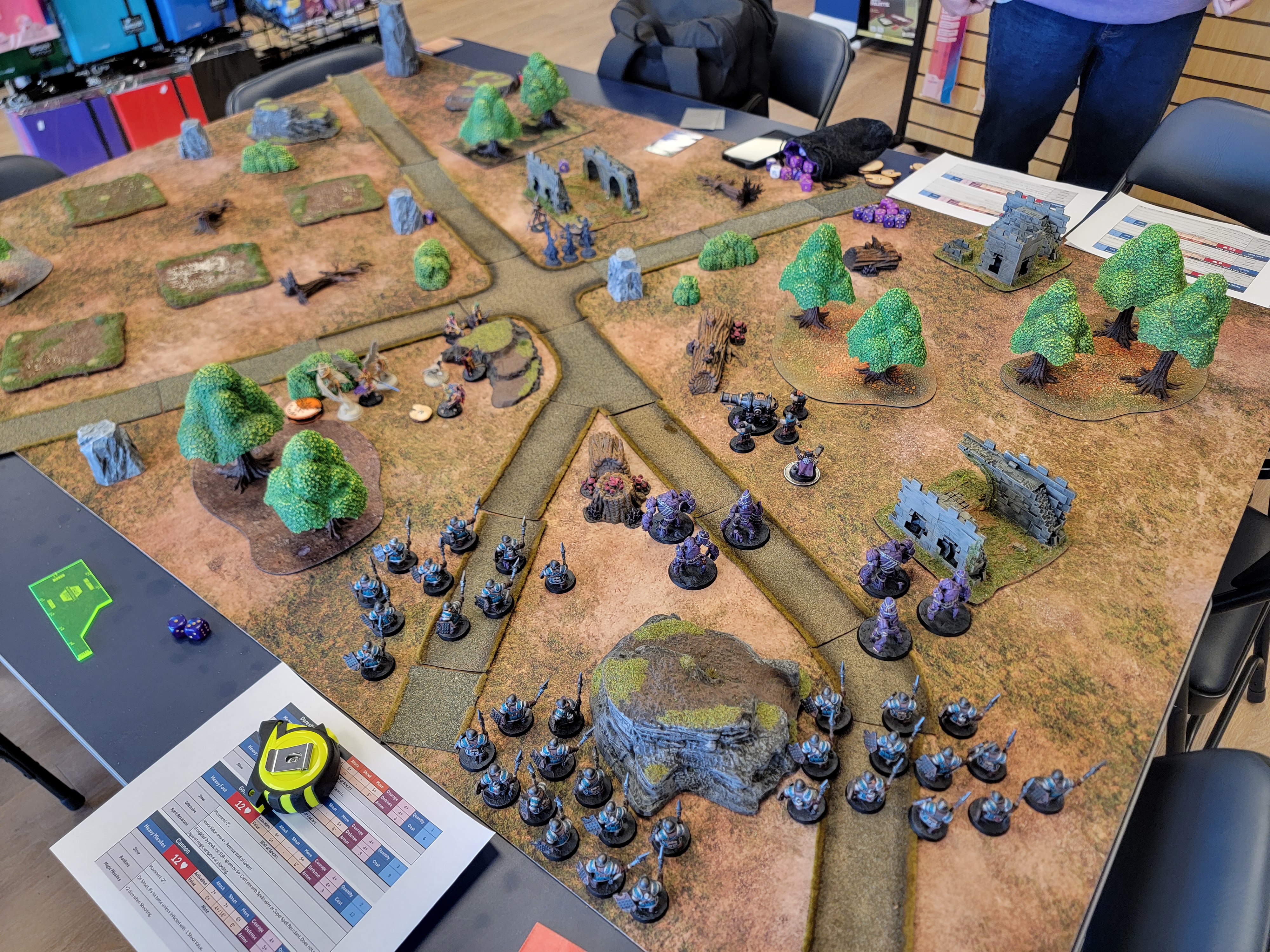
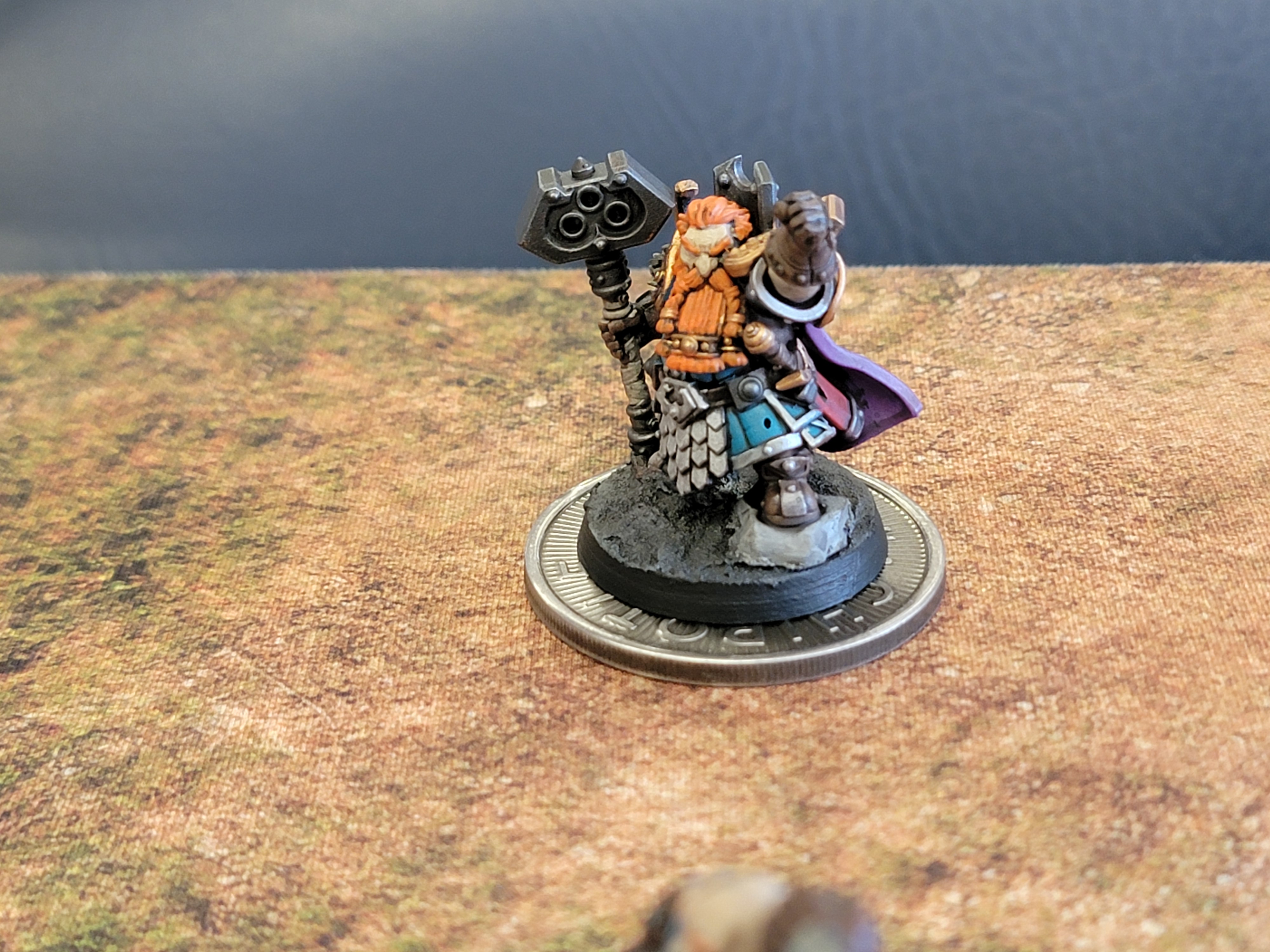
We’ve played three games thus far with a good variety in army composition. He is aiming to portray a set of gladiators with a backline of spell casters backing them up as they tear through my more warband-sized armies. In our first match, those gladiators went up against a very burly, slow moving Dwarven force that had a classic “Break on my shield” mentality for dwarves.
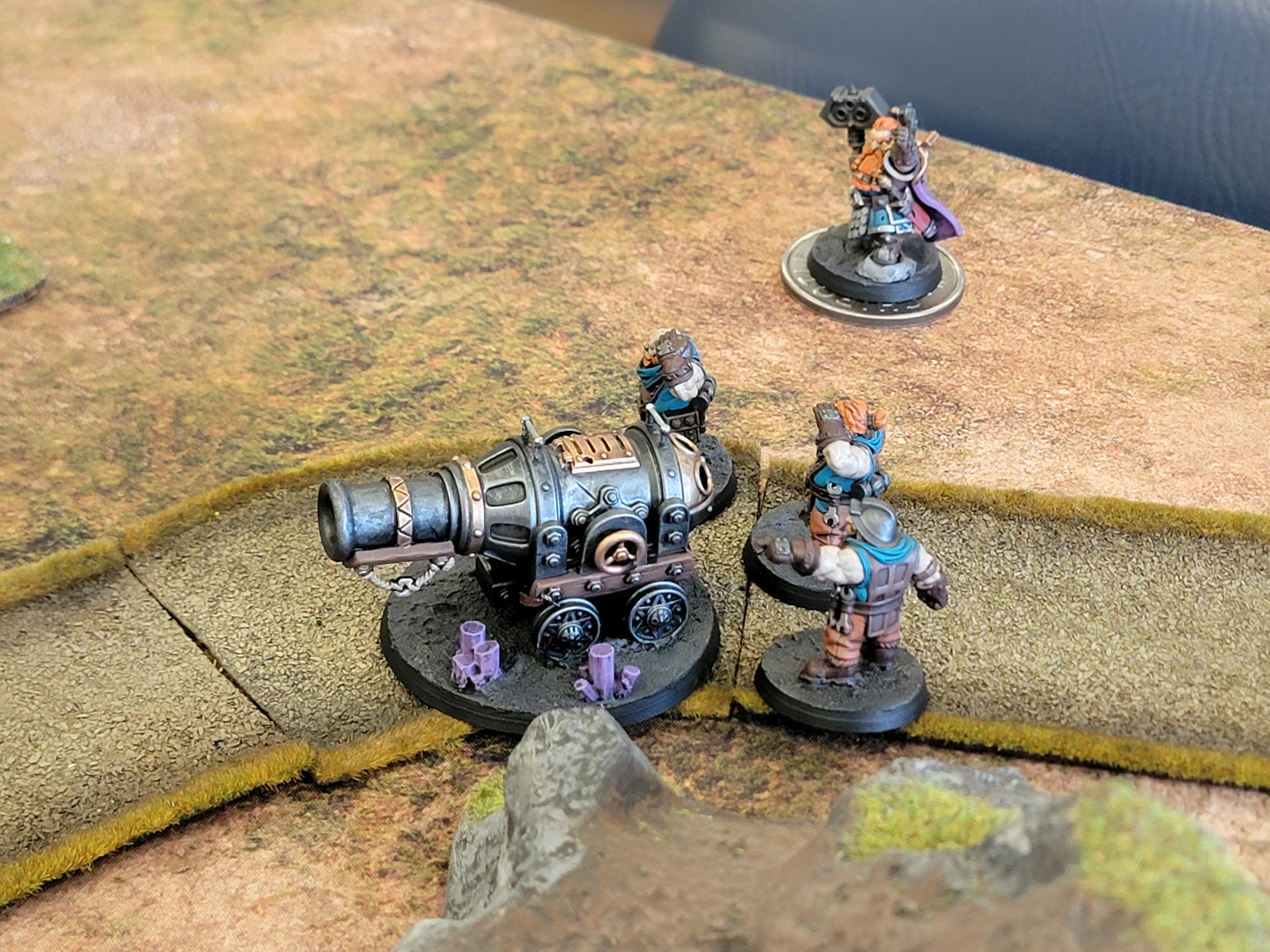
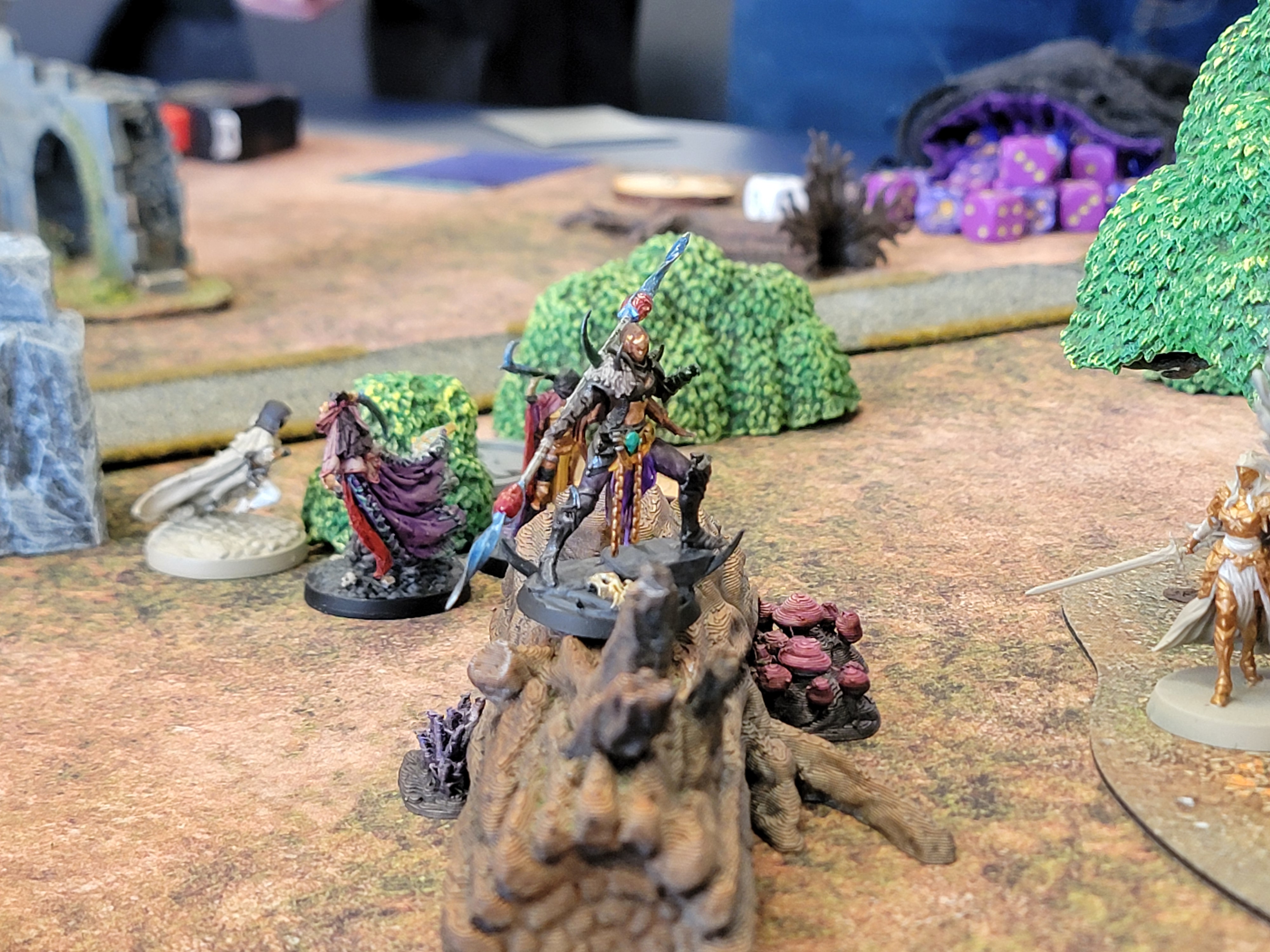
It worked shockingly well. His single gladiators were, of course, just low model units. One may have been Elite Infantry while another was Heavy Infantry, just with a single model. As a result the balance of combat was fine. There was an interesting trade in terms of maneuver and area control, which at first blush felt pretty reasonable. He may be able to squeeze into more places and avoid terrain more easily, but I’m able to block entire sections of the map.
This first match ended in my defeat–I was to carry an object across the board and it turns out slow moving dwarves aren’t the best at pushing a thing across a map. Add to that that the limited deployment area (12″ corner) meant my much larger units struggled to get onto the board, on top of some poor activation rolls, and I ultimately folded when my very heroic dwarven leader… uh… fled.
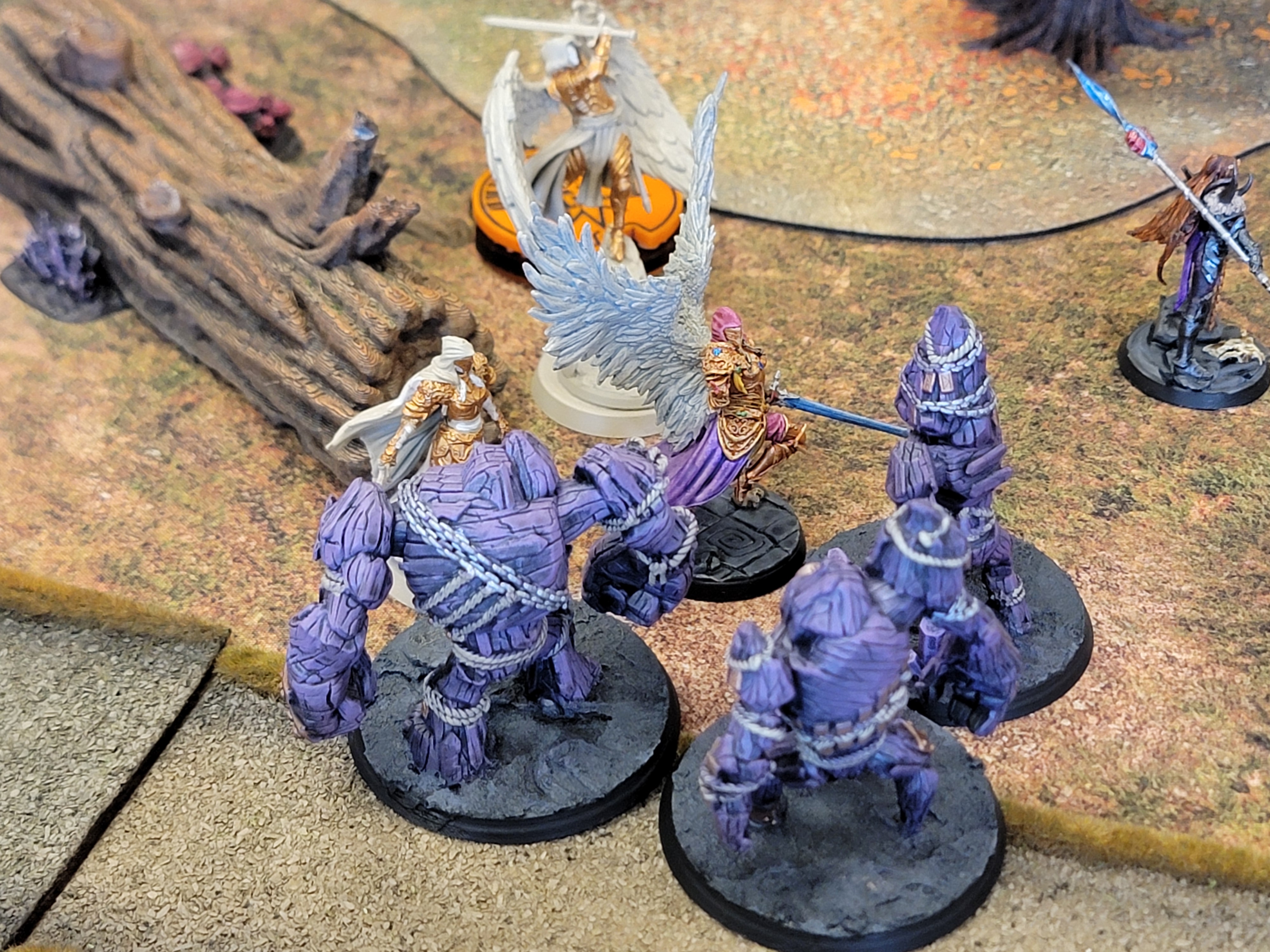
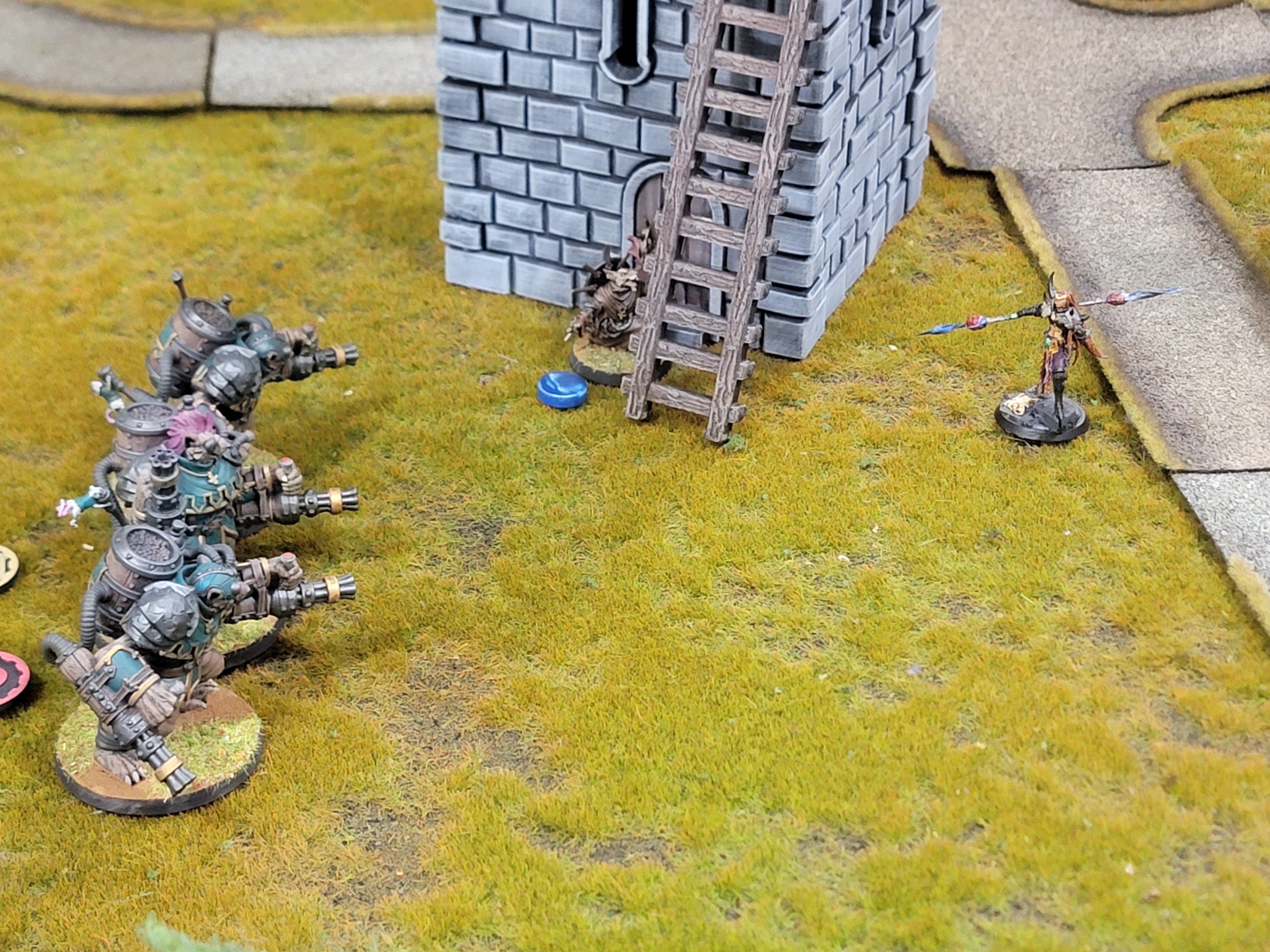
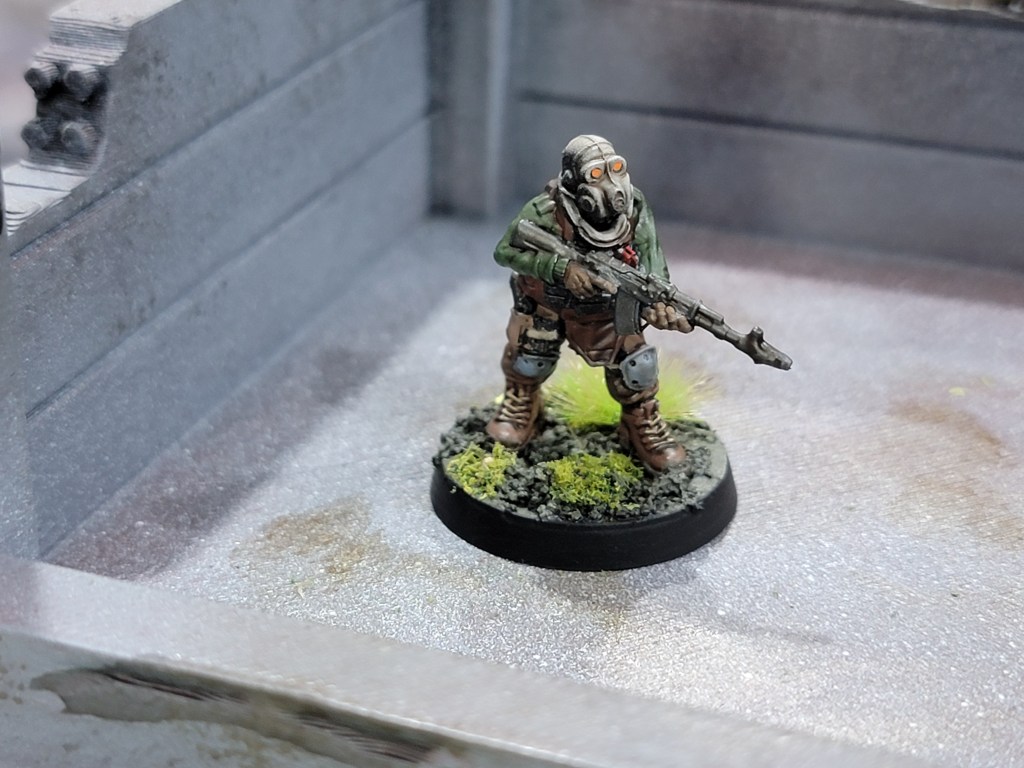
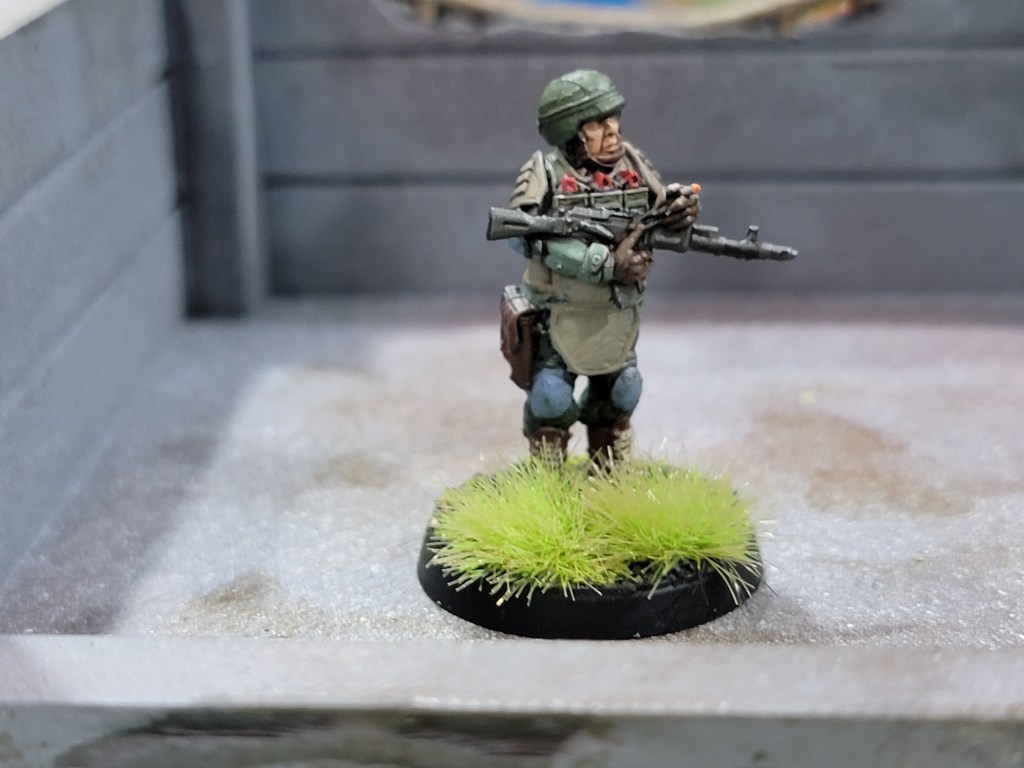
Our next two matches took place in a single afternoon between my Ratkin and his same gladiators (with minor tweaks). My rat boys were constructed with light troops, some heavy fire, and a single elite unit to operate as a finisher. I also had a mage this time, who paired alongside the shooters to make them considerably more effective.
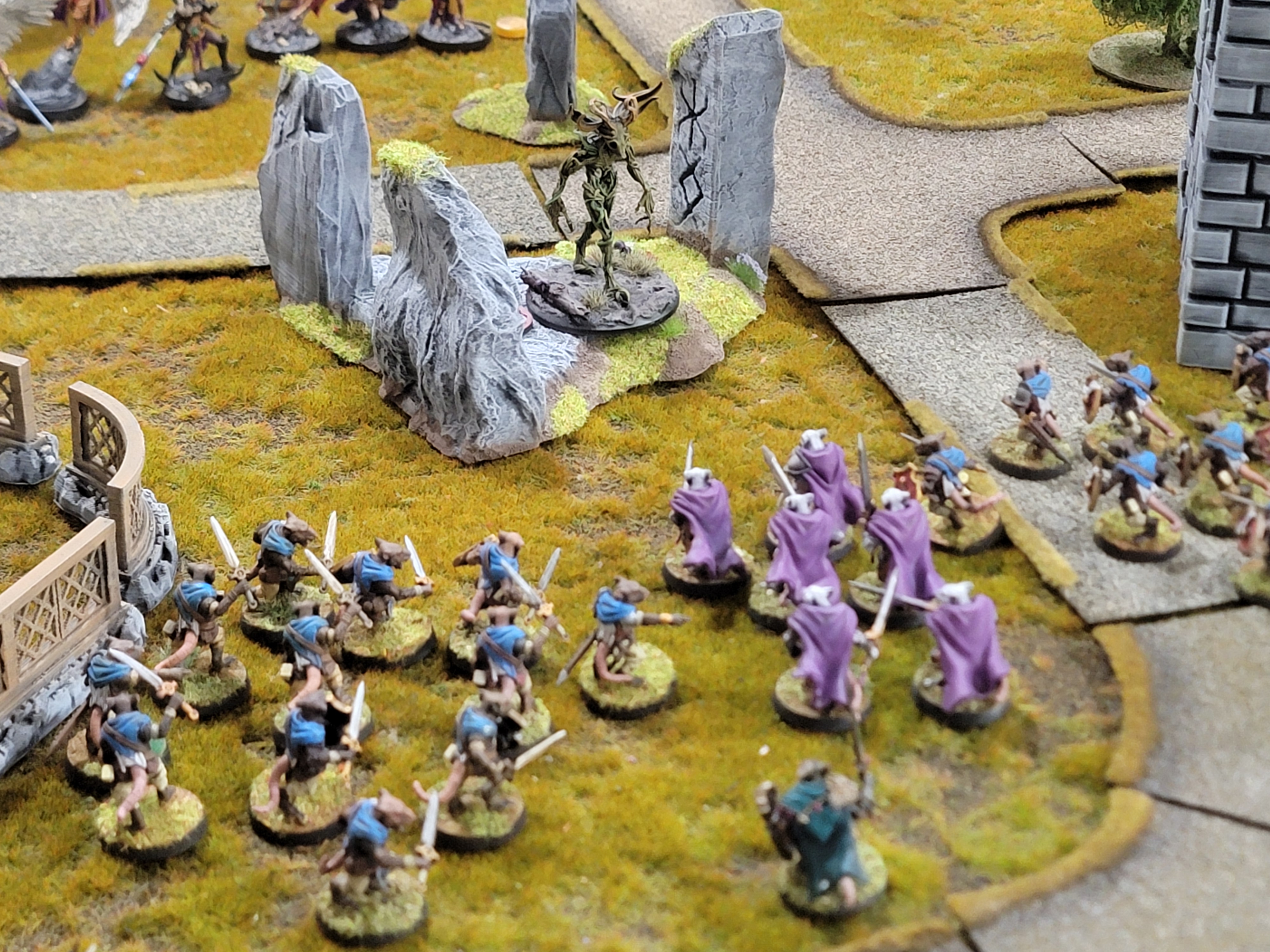
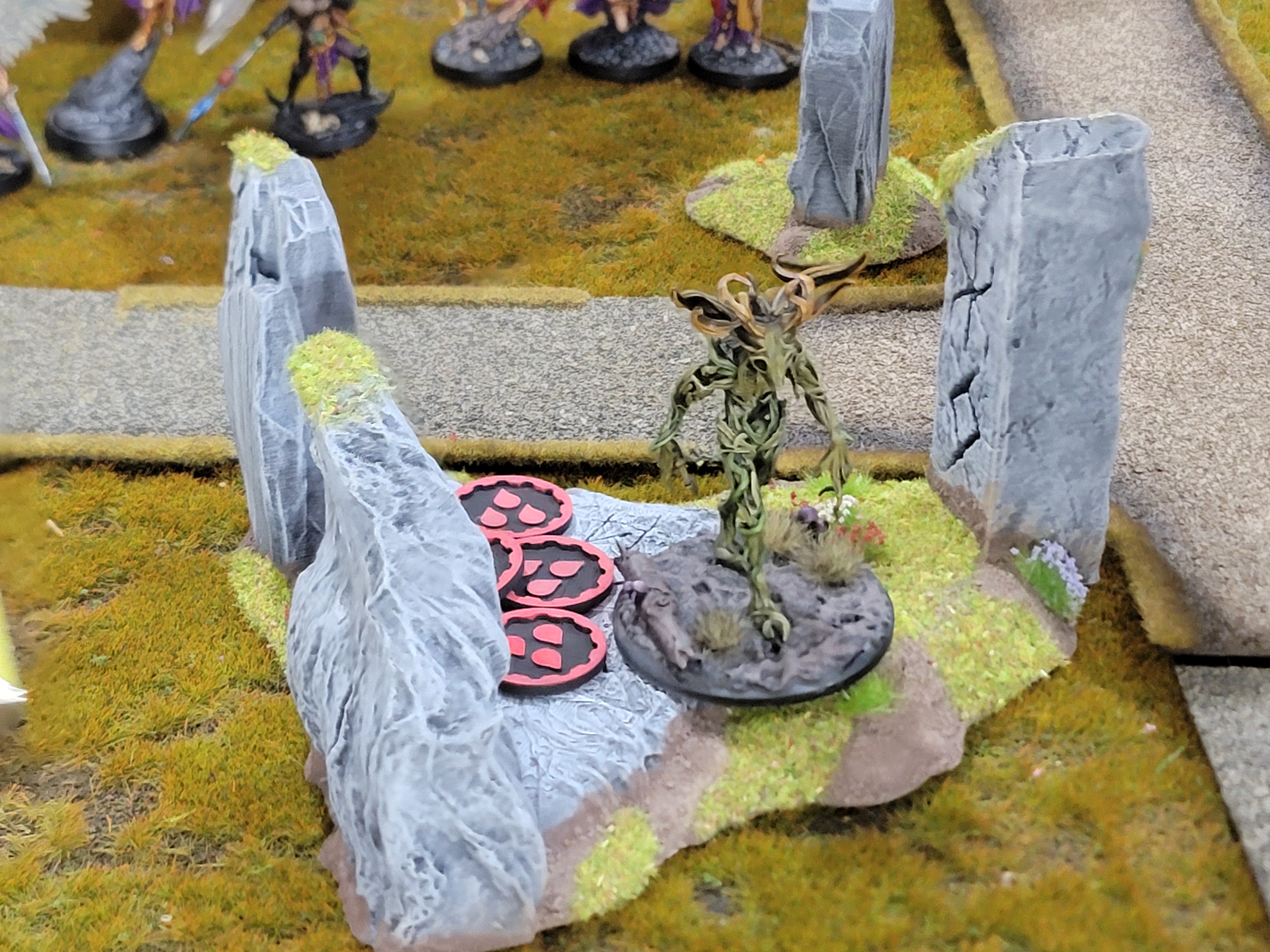
Our first match revolved around competitively slaying a single neutral enemy model in the middle of the board–the “Yellow Watcher.” I represented it with a forest dryad and proceeded to quickly put more damage on it than he did, winning me the match pretty handily and quickly. I was heavily aided by him flubbing an activation roll and losing an entire turn. It was a good, bite sized engagement that we utterly messed up–we forgot the Watcher was in rough terrain, and thus should have had 4 armor. I look forward to trying this scenario again in the future. We sat there discussing how we’d fix it and “Make it die slower” was the theme. Turns out it should have died slower.
Oops!
Our next match was the ring bearer scenario–my opponent noted down, in secret, one of his models to carry the ring. I had to kill that model or just plain defeat his force. The match started pretty ugly. He charged my light warrior rat boys, whiffed the roll, and then whiffed the subsequent morale check so hard his 10 point unit fled the board. The game is played at 36 points. This was rough, and, frankly, felt really bad for both of us.
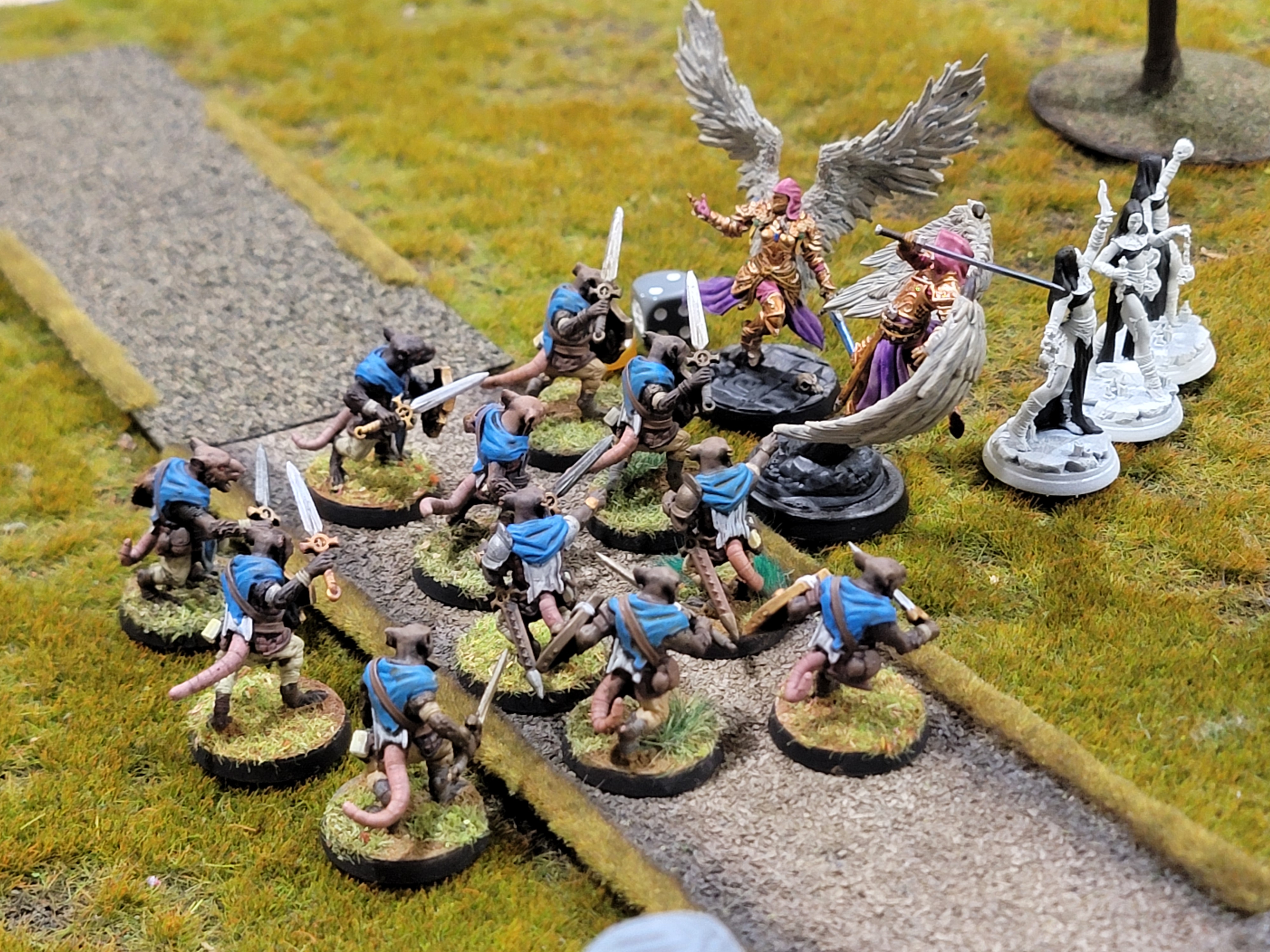
We kept playing, with more and more of his morale rolls going wrong. This kept up until the dice luck finally flipped and I started flubbing activation rolls, morale rolls, attack rolls, the works. By the end of the match, his life leeching leader model was tearing through what remained of my force, facing down my gun line handily. It went from “Rat boys take the day” to “Here lies the Ratkin, once noble, now dust.”
The Problem & Fix
You’ll notice the above match was heavily dice dependent. Dragon Rampant is unabashedly beer and pretzels, which holds it back from really telling a narrative in which you feel like you’re the active participant. This is fine–the game has an objective. I sat with my opponent after and we drafted an ideal warband-sized skirmish game, only to repeatedly come back to Dragon Rampant itself. Instead, we settled on iterating the rules of Dragon Rampant to get to something less silly and lethal.
For our next game, we plan to mitigate the tendency of units to just… flee the board. We’re proposing and testing two changes:
- Only battered units will flee the board if they fully flub a morale roll.
- Morale will no longer chip damage off a unit if they fail.
We’re keeping the activation randomness–it’s more readily controlled and outside of extremes really isn’t an issue. Morale feels a little too prone to making a good unit run off the board, which is just a directly “Feel bad” moment that feels out of place in such a light and fluffy system.
I’ll report back after our next set of matches. Either way, with or without edits, Dragon Rampant feels increasingly like a good time worth having. You may only play it 5 or so times, but it’ll give you a good excuse to put some models on the board and have fun with a friend. Again–often, that’s all you need.


 Small Scale Victory
Leave a comment