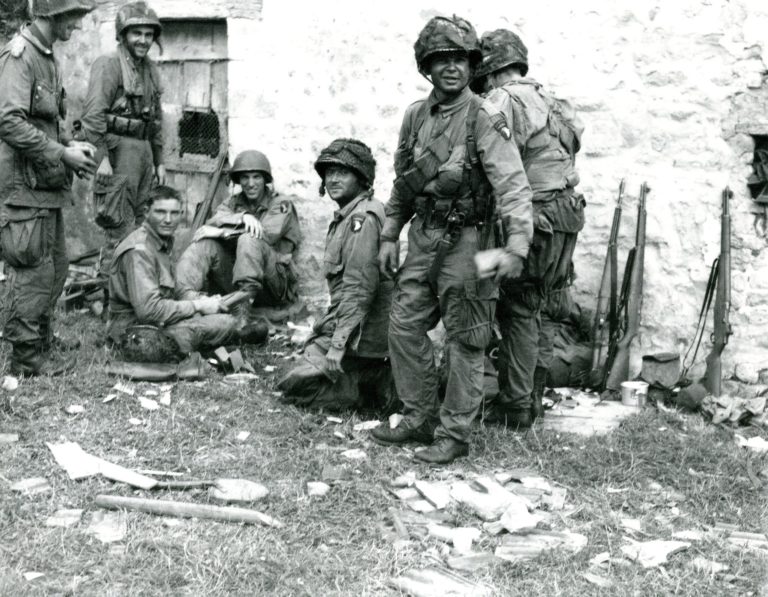
Photo credit to Airborne Museum in Normandy.
My next project surprises even me: I’m going to make an American platoon for Chain of Command. I recently oversaw a demo game of Chain of Command 2 which did a classic matchup of Germans against Americans.
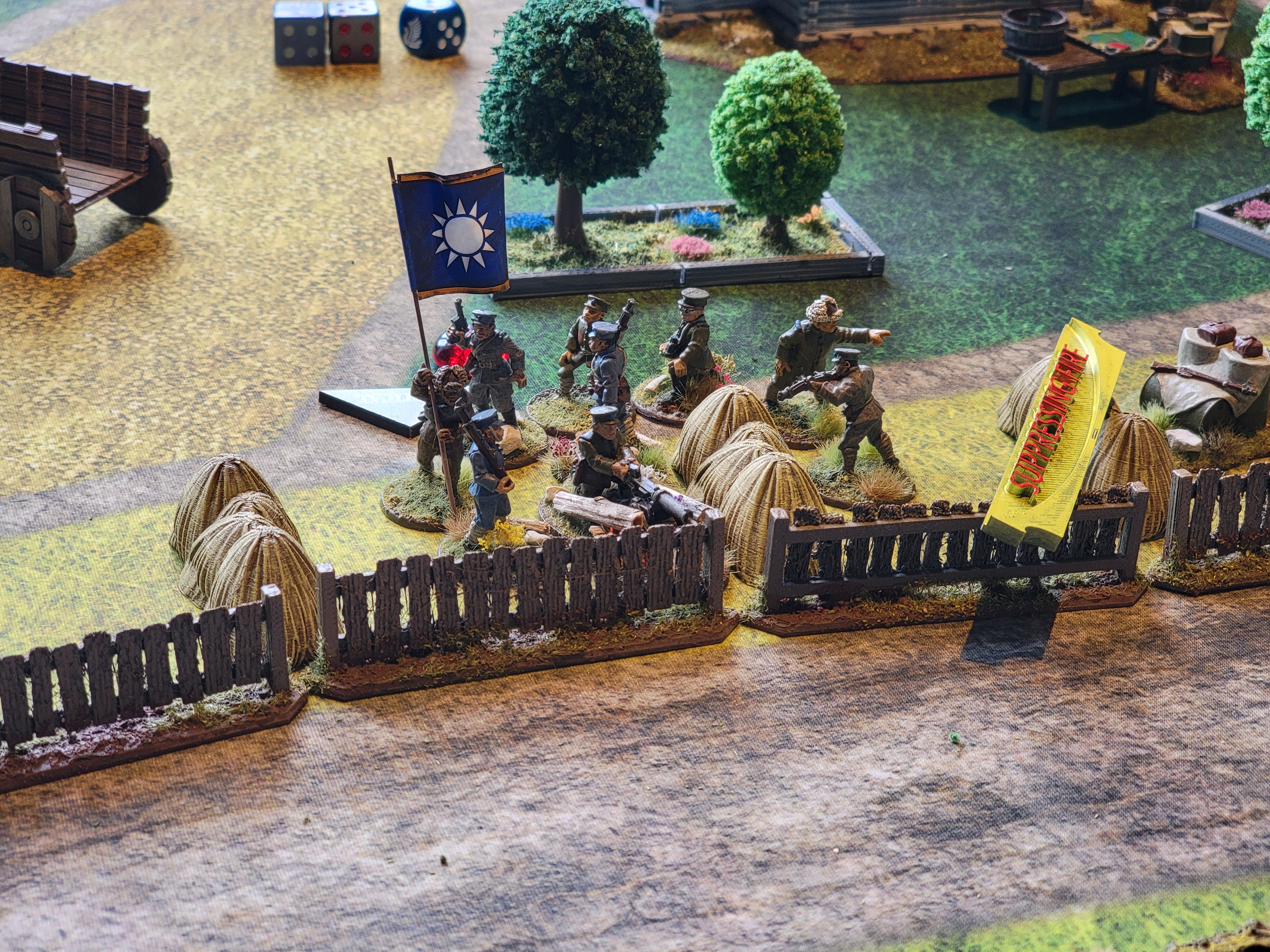
Okay, so we proxied in Chinese for Germans. It’s fine—they used German style platoons in 1936! That’s not the point here, though. The point is the Americans: they’re a faction I’ve never touched and never really explored. A big reason for this is that they don’t really exist early war, which is the era I tend to like playing. What fascinated me was how much I had to change the advice I was giving because of how different the Americans are from… well, everything else.
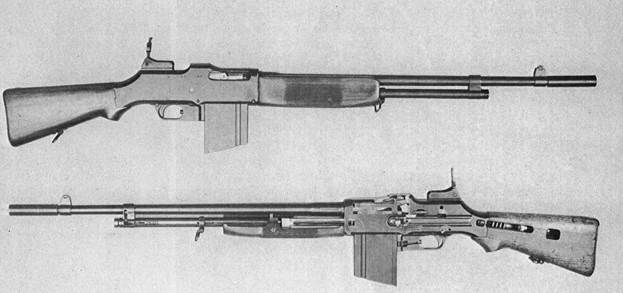
A lot of it comes down to a weapon: the Browning Automatic Rifle (BAR). When playing Germans, British, Russians, or Italians you’re working with sections based around a machine gun. Not so with the Americans: their rifle platoons worked off the BAR. The BAR was introduced in WW1 and carried forward into and beyond WW2. The BAR was, arguably, a worse weapon than the ‘proper’ LMGs used by other services. This is represented in Chain of Command by it having 4 firepower dice versus the British 6 or German 8. It’s barely enough to qualify for suppressive fire.
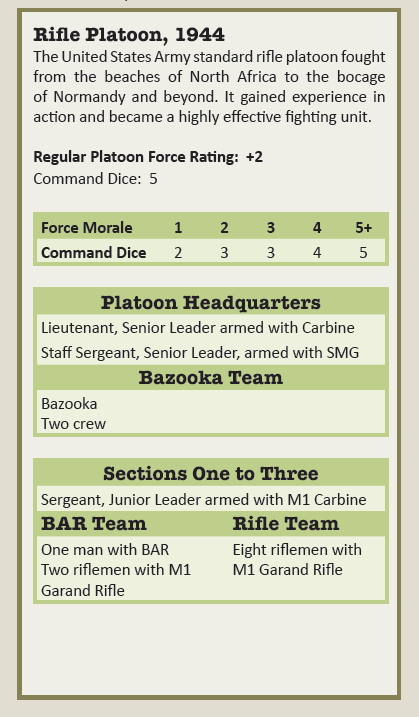
Yet, the American platoon manages to be on equal footing in the ruleset with all the other platoons in the game. How? The answer is the M1 Garand and the number of men in each section. You’ll note each section above has 12 men in it, as opposed to the standard 10 man sections of, say, the British or Germans. The M1 Garand itself has the ‘Storm of Steel’ bonus, which means when it rolls it gets to roll additional dice each time it rolls a six. You have a more even spread of firepower across your unit, which has the effect of making each model more valuable to you in your thought process. The rifle team is eight dice, each rolling an additional dice for every six. This can add up!
Okay, so right away we’re thinking a little differently. We still have a half-LMG to lay down suppressive fire or maybe take up a firing position, but now the rifle team can lay down more fire than the weapon team within a section. This is a paradigm shift from how we fight with an LMG which you can often use to fire for effect and not just lay down suppression.

Now we clip out a single piece of the special rules for the USA. You can move 1D6 and fire at full effect or fire suppressing fire. Put two and two together and you realize the Americans really emphasized mobility and getting inside the close combat threat range against their opponents. Generally, in World War 2, platoon level engagements were won with an assault. Nowhere else in Chain of Command is that as apparent as it is in the American platoon structure.
Put all of this together and I’m really looking forward to finally getting around to trying them out. I’m printing off miniatures I found from Eskice Miniature. I intend to start off with the standard rifle platoon as I’ve described here, so I printed off four sections, two Shermans, an MMG, and an anti-tank gun. That’s plenty to get me going and I’ll figure out additional items if I really feel the need.
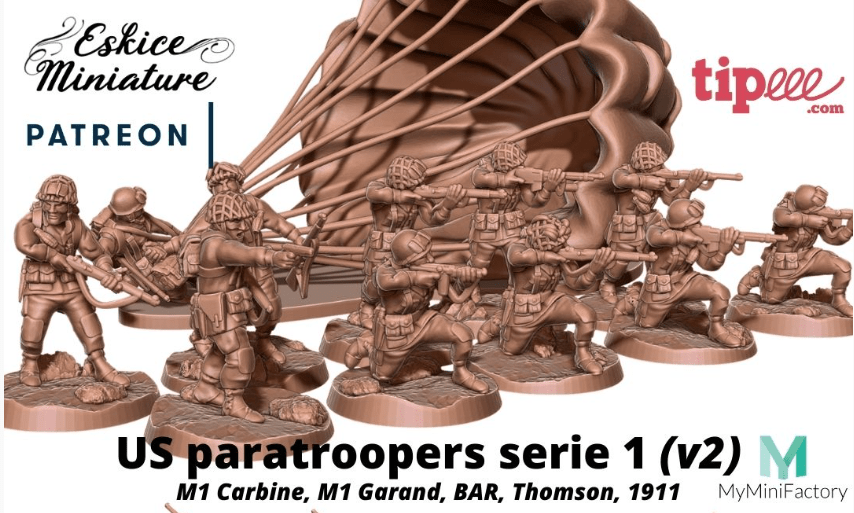
It’s worth noting beyond these there are multiple other platoon structures in the book for America and they’re all unique compared to the other nations. It really is interesting to see how America came at this problem and inspires me to dig up some reading on the matter. I always love when a bit of gaming leads to a bit history and back again. The models I’m printing are paratroopers, so obviously I’ll need to read up on them, too.
The satisfaction and joy of good historical wargaming is how much it extends beyond the tabletop. I’ve had multiple conversations with coworkers around the BAR and Americans in World War 2 and I’m sure I’ll learn a lot more. What I’ve presented here is an initial understanding, but it’s likely to evolve.
I’m off to research camo patterns in preparation for what feels like a rendezvous with destiny (see: motto). I was always going to make an American platoon, I guess–so it’s nice to finally be here doing it.


 Small Scale Victory
Leave a comment