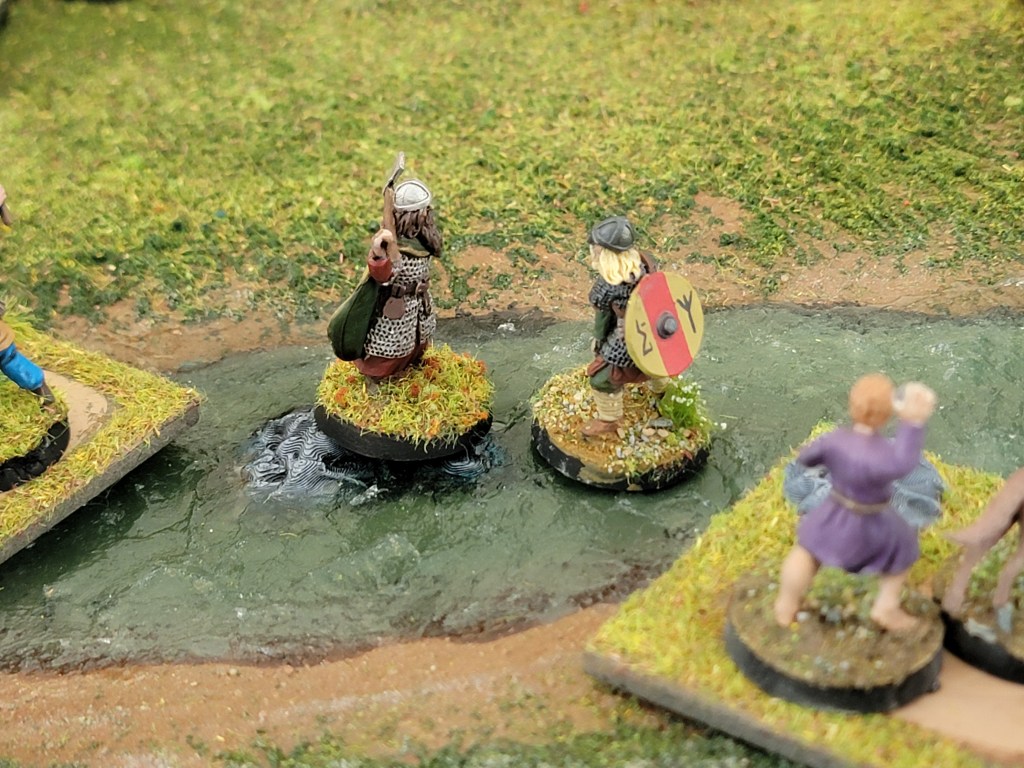
Well, here it is! I’ve spent months thinking about it, painting, building a board no one should ever need to build, and talking about it so much no one ever wants to hear about Clontarf in my office ever again. At Tentcon 2025, we ran The Battle of Clontarf in Midgard and I’d say it went pretty darn well. Here’s a link to the scenario–note that I ignored the capturing ground rules. Ultimately, I don’t think that works well in Midgard as a victory condition. We played a straight up meeting engagement with the only extra Reputation being granted for winning the destined historic duels.
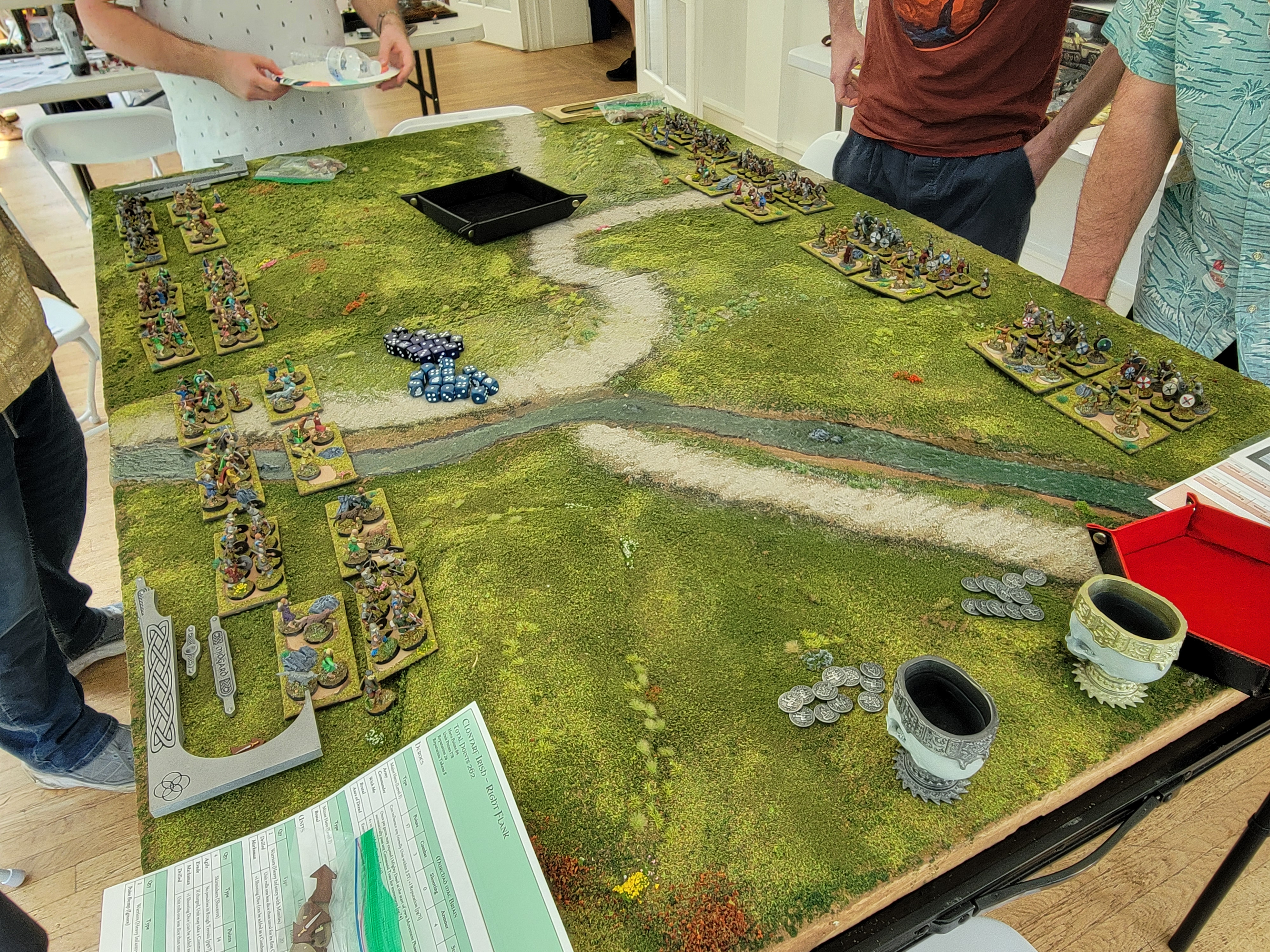
The forces were intentionally simple–both because they were historically and because the players had to learn a whole new system on the fly. The teach wasn’t too bad and they were up and running pretty quickly. The main issue was in getting used to the movement options. My players didn’t have a lot of rank and flank experience and as a result found themselves making awkward decisions as they developed the foresight necessary to really line up charges and flank enemies.
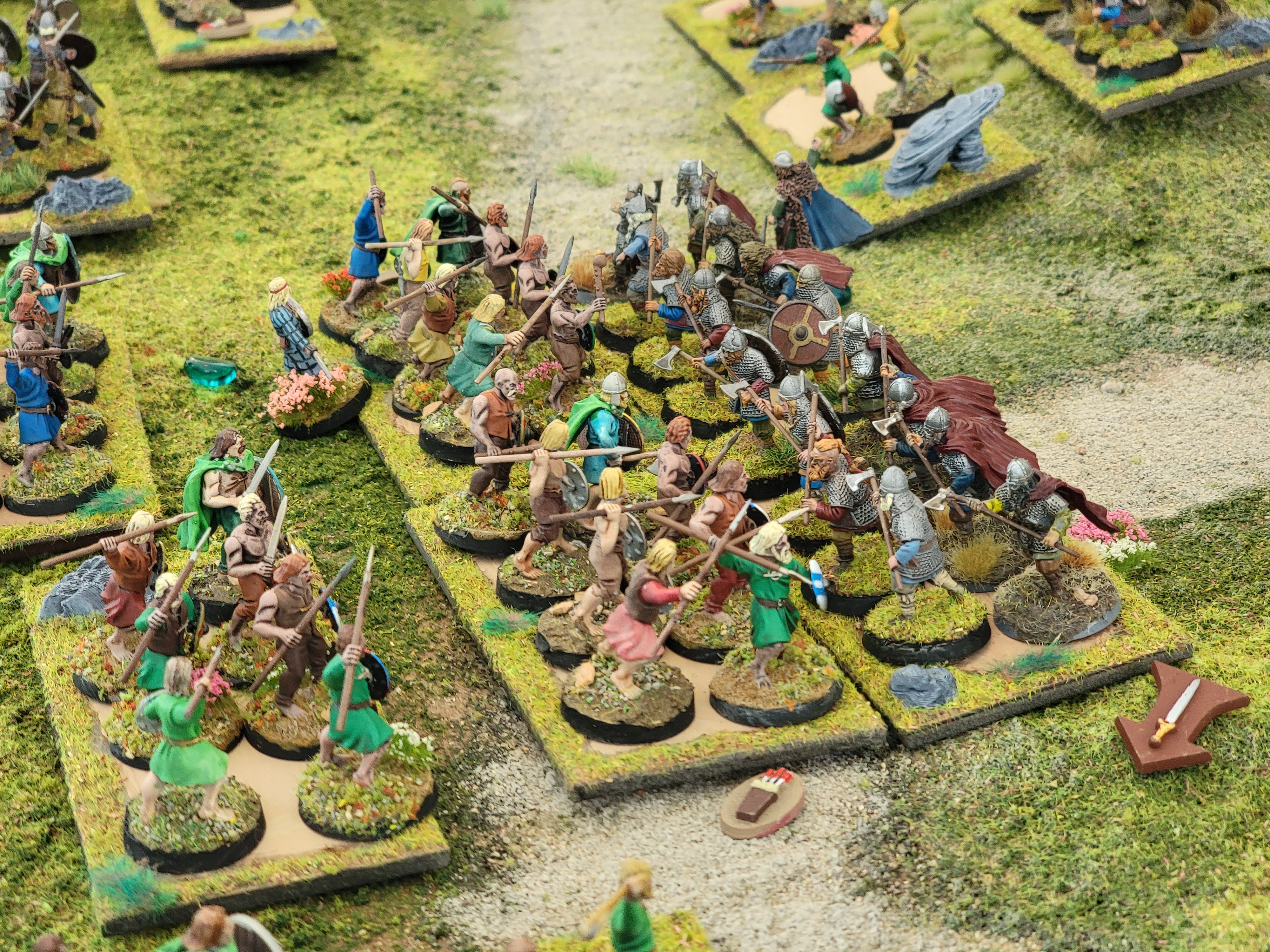
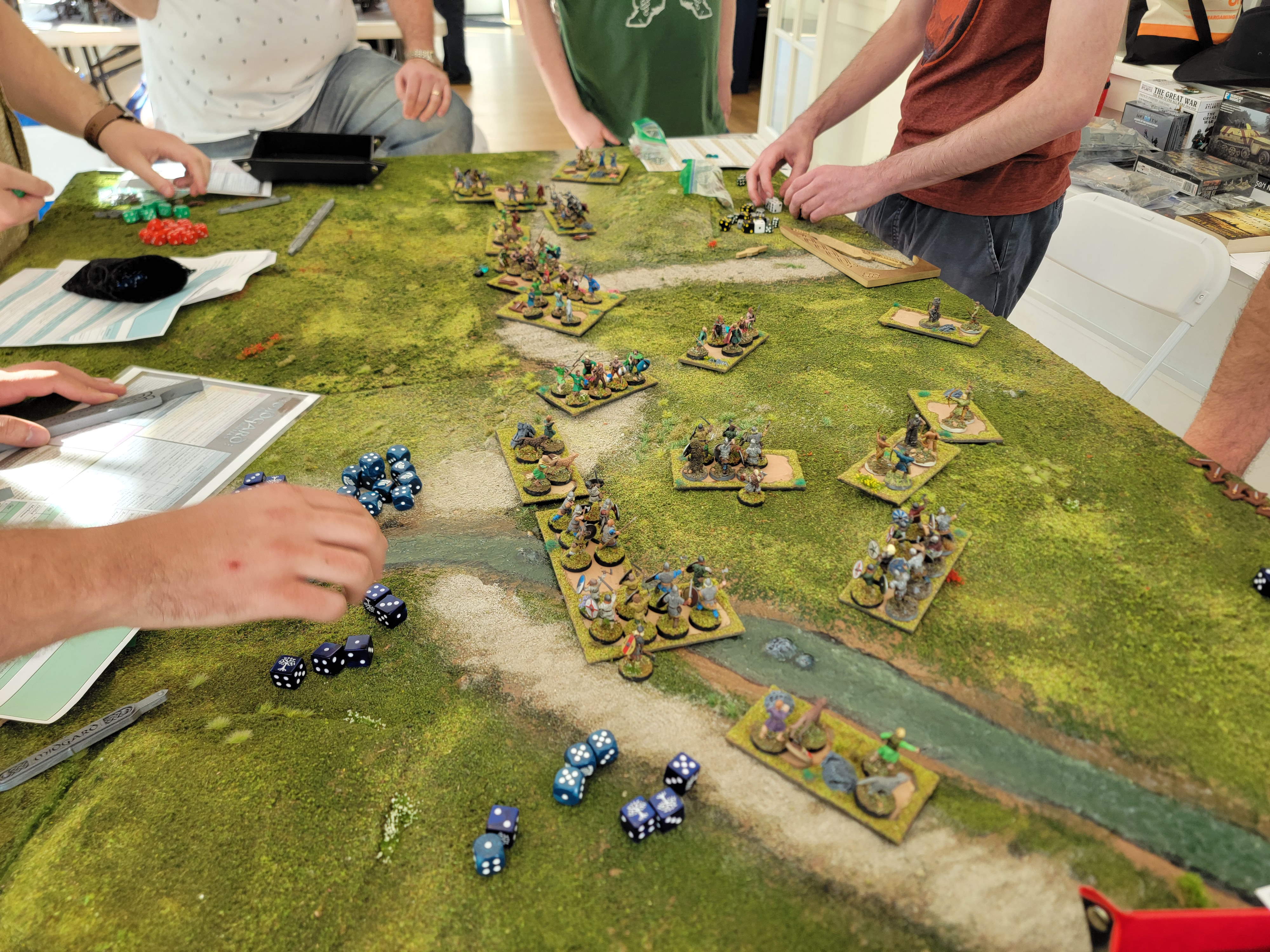
The game itself flowed well with a strong back and forth in Reputation for the first three turns. In turn four the situation started to turn against the Vikings and by the end of turn five they were clearly facing total collapse, so we were able to reasonably call it an Irish victory. Throughout the game, the players had very little downtime and the system showed its strength in how well both sides stayed engaged.
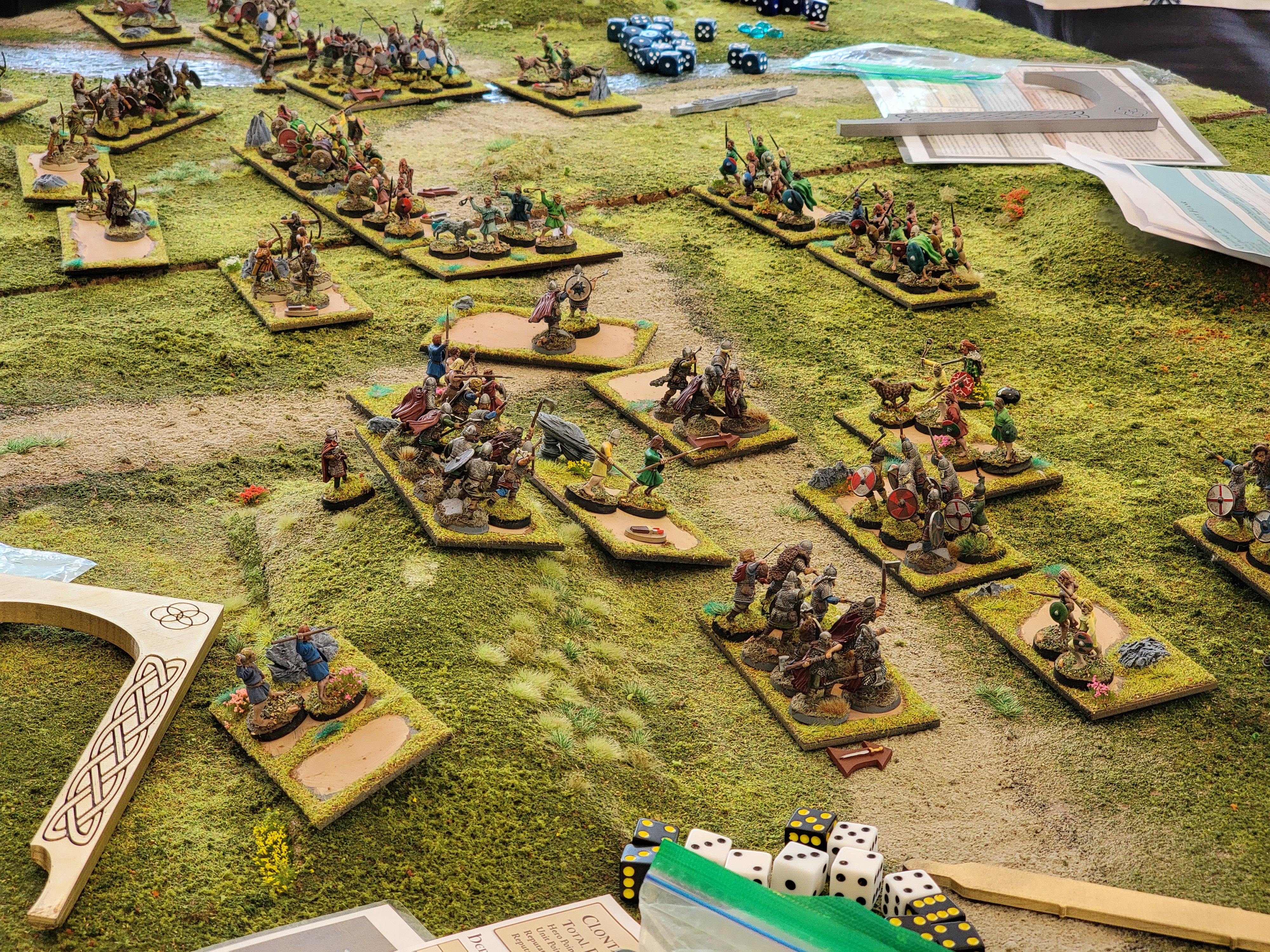
We had some great moments, like a duel between Ospak of Mann and Sigtrygg Silkbeard, which was actually not one of the objective duels. The players held on for each round as they rolled tie after tie, cheering each time. We had several people come over from other games to see what was going on as both men strained themselves through a difficult match, ultimately wounding Sigtrygg but not slaying him.
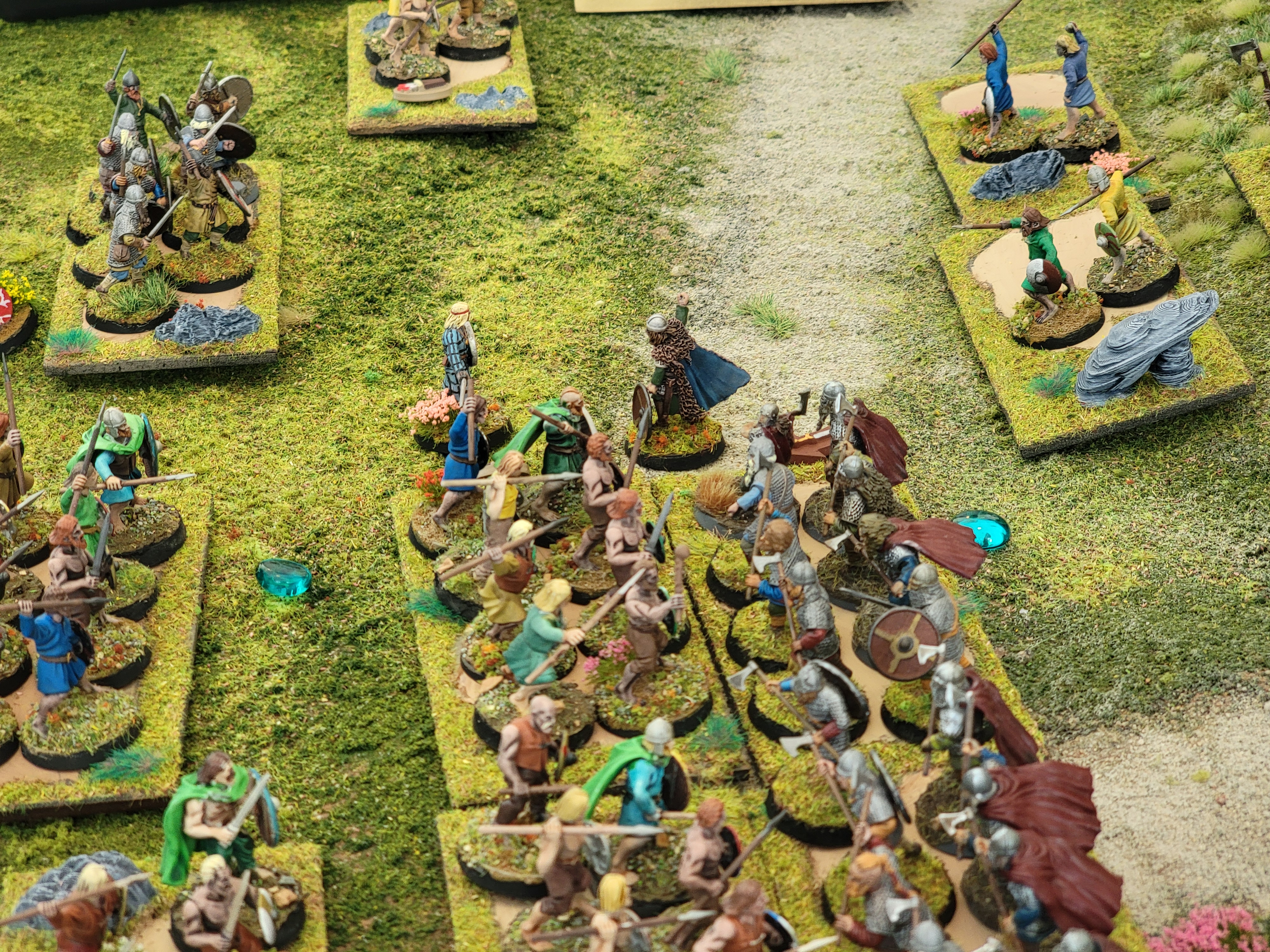
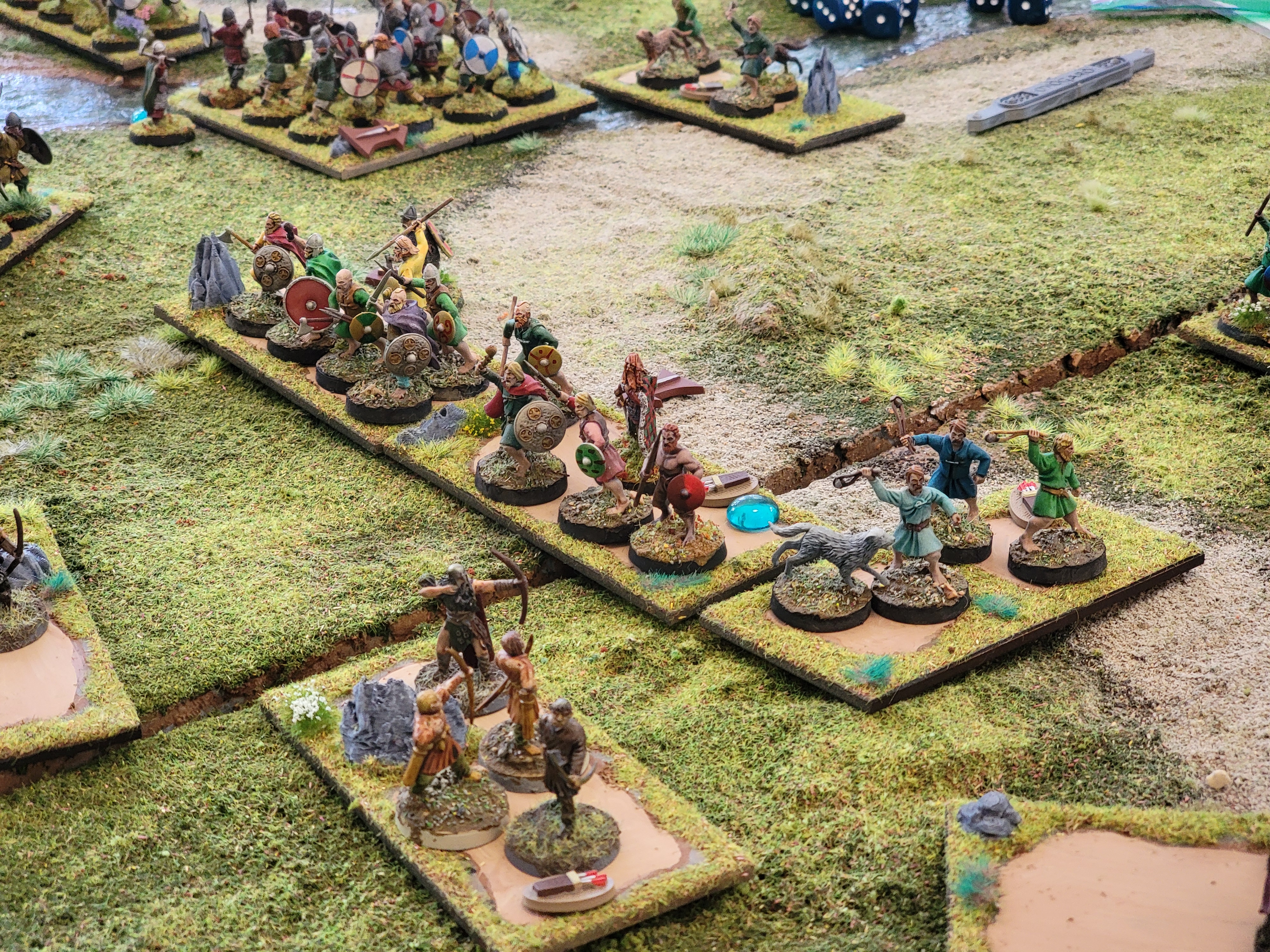
Very few of the destined duels actually occurred. Most of the game revolved around positioning and trying to assign forces while managing command and control. On one end of the board, an entire Viking warrior unit moved so slowly (including taking every opportunity to retreat under fire) that it did not arrive until turn 5. On the other, skirmishers were struggling to clear the route for their huscarls to charge through with dane axes to actually put some harm into the Irish.
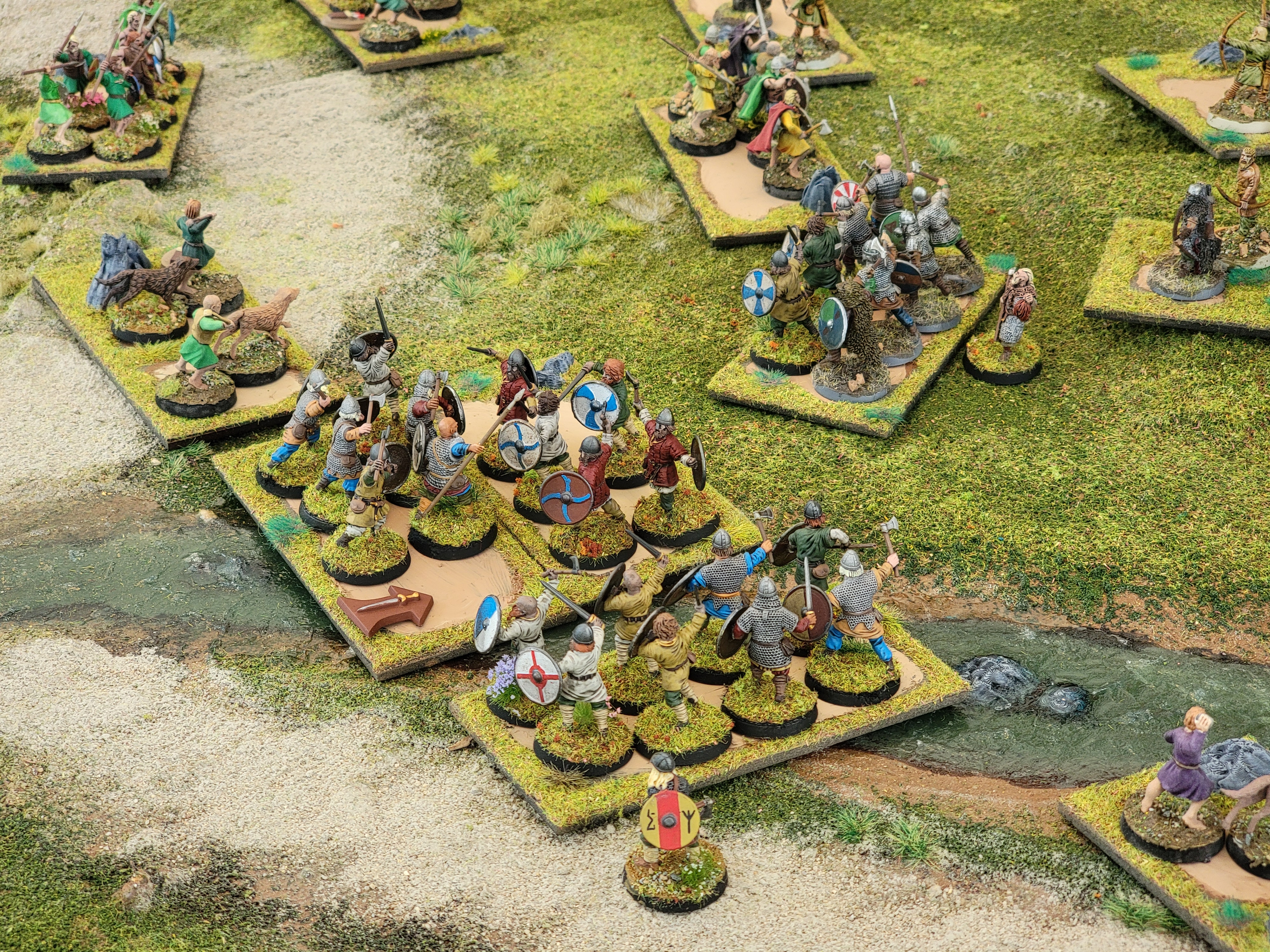
My favorite part of it all was how messy the ending was. As the Viking center collapsed the combat devolved into a swirl of variously oriented fights. I’d like to think the players got an idea for what makes the system worthwhile. I kept getting the “Do you think I should play this or Saga?” question, which I take as a positive. Saga has reasonable footing in our playgroup, so that was a compliment. My honest answer was Saga–it’s a safer bet and has my support behind it already, with other local communities playing it. To be fair, though, with just twenty more models you can take any Saga force and turn it into a Midgard force, so I’m not shutting it down by any stretch.
My personal take is that Midgard is a far better narrative and fantasy ruleset, allowing you to really tell your own story and see it play out. Saga is a very abstract and creative wargame design with a focus on matched play, which makes it more readily accessible to a less organized group. Bring 6 points of whatever historical army you wanted to paint and we’ll roll dice–done. Midgard requires a bit of world building: when my buddy and I play we intentionally choose a low magic world and we discuss the makeup of our armies to fit a joint, shared reality. Midgard really shines in those places. Really, you could reasonably play both.
I think enough of the beauty of the system came through today that if I were to do the follow up game I’ve envisioned (Clontarf, but magic) I’d likely get the same batch of players to show up again without issue. It’s now on my solid project list after a bit of faffing about with the demonic army I’m building right now.
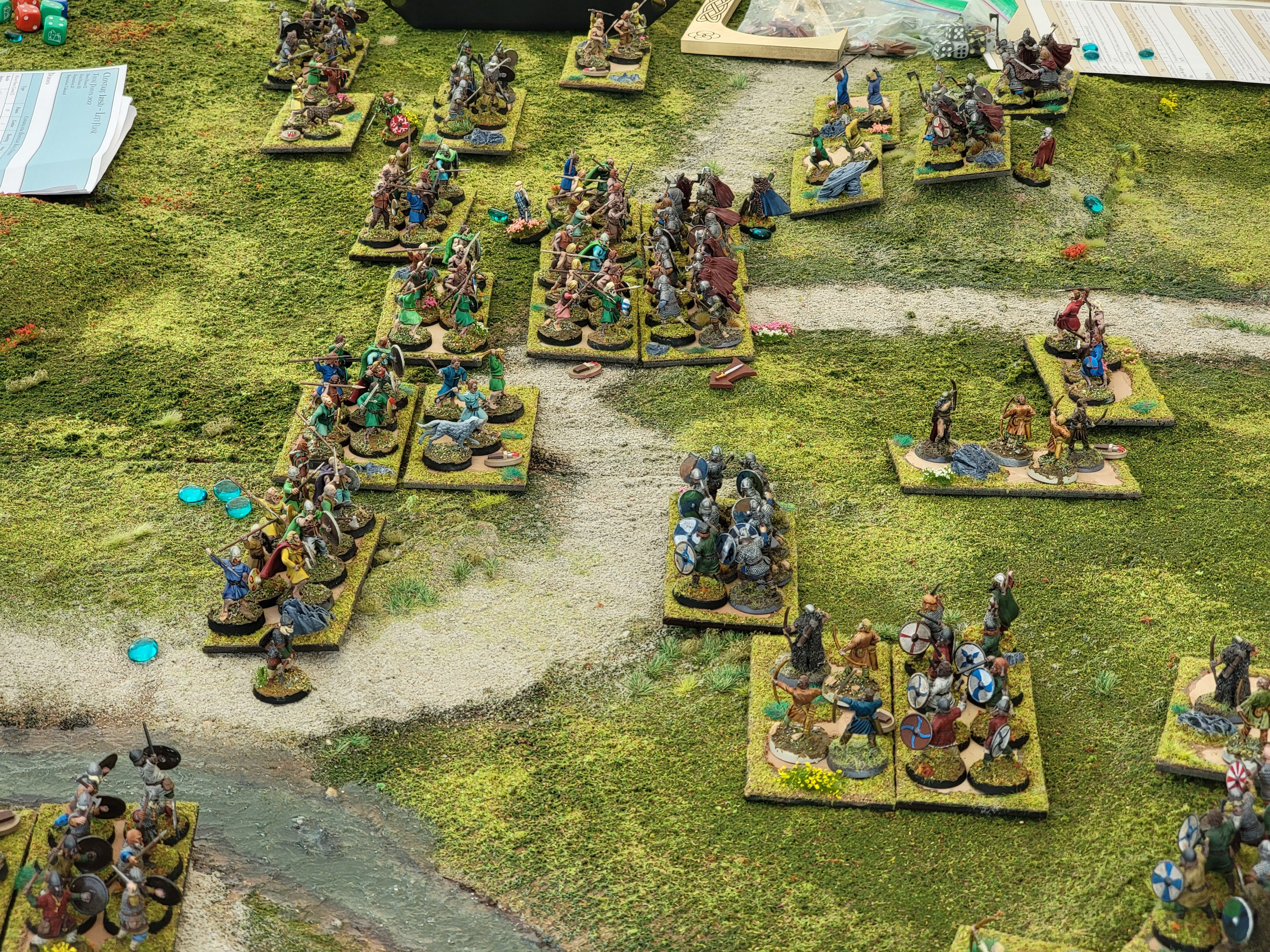
Midgard has really proven itself to me. It was easy to teach and run and the players picked it up readily. As a convention game I definitely feel good recommending it. It took about 3.5 hours to run through teach and play–had we finished through turn 6 I think it would have taken about 4 hours reasonably. I could have saved time by spending less time on explaining the narrative. I could have also saved time by making the units a little more elite so players were controlling a little less. Ironically, while the fantasy version of Clontarf would use more rules (giants, valkyries, Tuatha de Dannan) I think it would run faster due to having less and more decisive units.
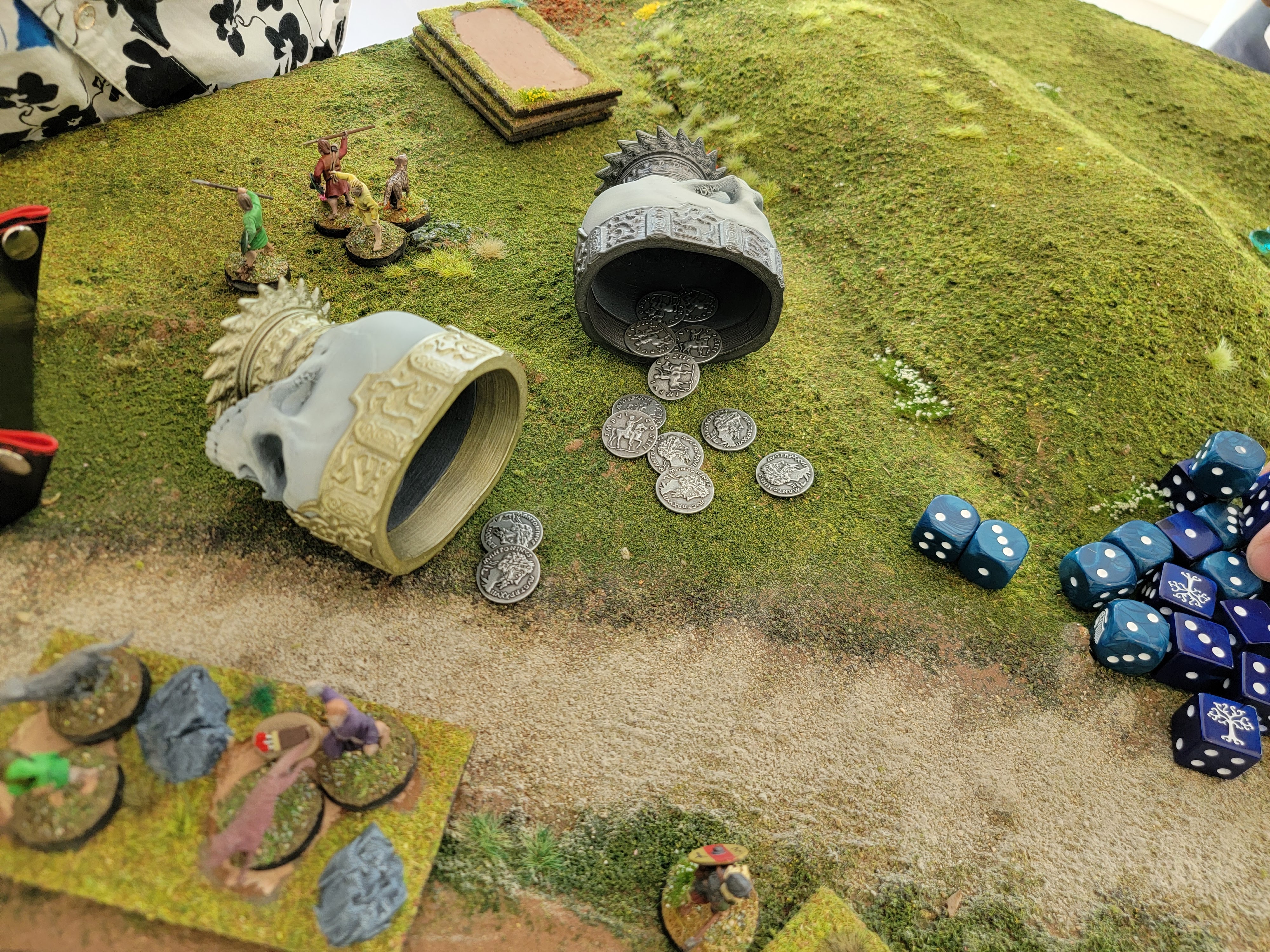
As for this battle? History held mostly true. The deaths didn’t quite align but it did prove to be a bloody battle and an Irish victory. The biggest change is that Murchad mac Briain showed up and survived, so there’s a chance that Boru’s legacy may have continued onward rather than ending with his death. Boru most assuredly would have died as Brodir of Mann survived the battle, so he would have stumbled into Brian Boru’s tent later that evening to slay him as he prayed. Unfortunately, in reality, Murchad never went to the battle and was definitely there to potentially take up his father’s banner… he just never did. Really, I doubt we shifted the whole fate of Ireland here, but that was probably asking too much of a wargame anyway.
Sorry, Ireland–we tried.


 Small Scale Victory
Leave a comment