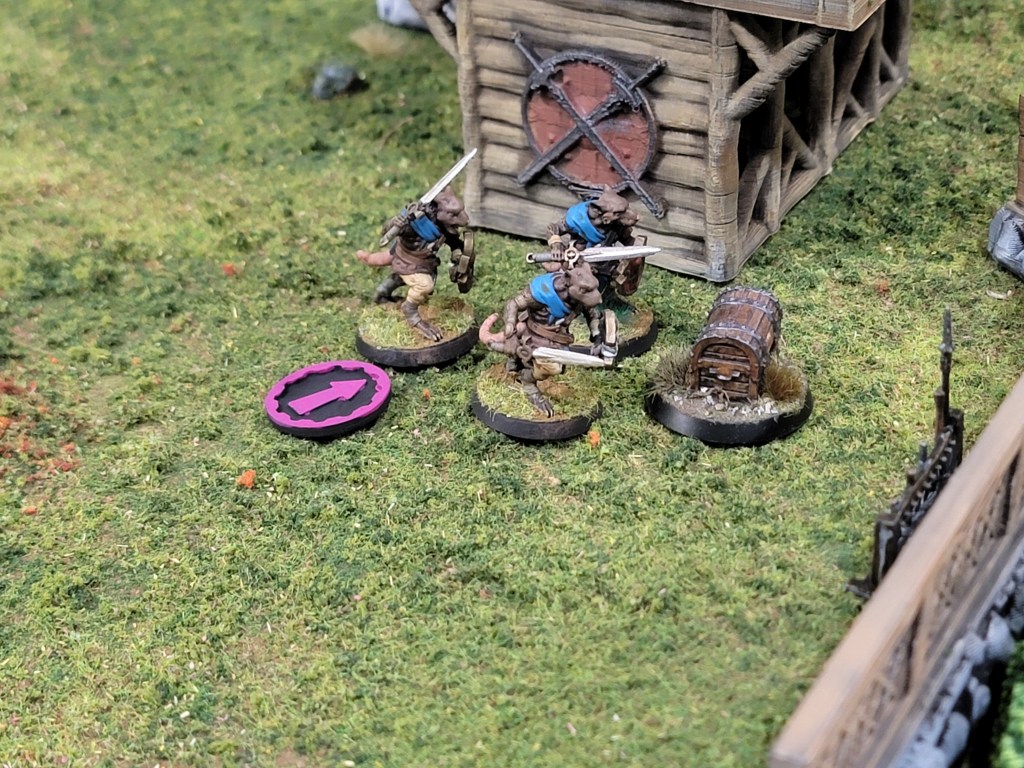
More Age of Fantasy: Skirmish with the kiddo as well as some general impressions of the game and why I hope to move on from it quickly. Not to bury the lead: the game is fine but unimpressive and you basically have to ignore one of its rules outright. Advanced rules add very little to actual gameplay but do bring nice scenario variations.
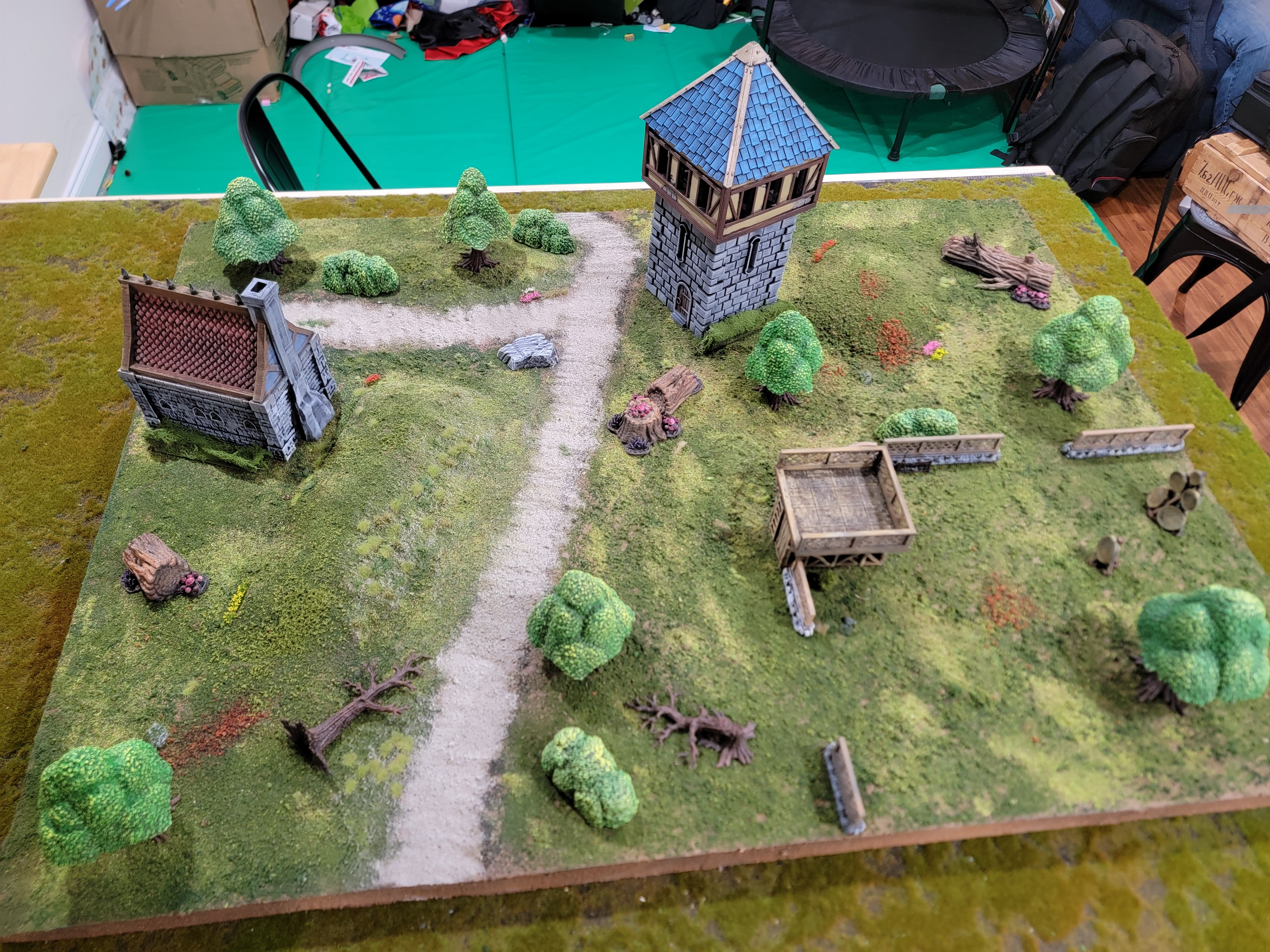
My son, of course, is really enjoying the game. We’ve played a few matches so far and made two major modifications:
- We ignore the wounding rule. Normally when a model takes a wound you roll to see if it dies and add any wounds taken so far to that roll. On a 6, they die. Anything else, they’re… uh… stunned, really. I forget the term but it’s basically a stun. We play that you just die as it picks up the pace by removing the constant series of rolls to see if something is dead or not. As this increases lethality, we also play at 300-350 pounds instead of the 250 recommended.
- I changed the activation system. We draws chits from a bag but you don’t have to activate. You can hold and have another chit drawn, then spend multiple chits at once to activate multiple models. This gives a tension between taking single actions early or coordinated actions later. It’s not revolutionary but works better and faster than the game’s alternating activation default.
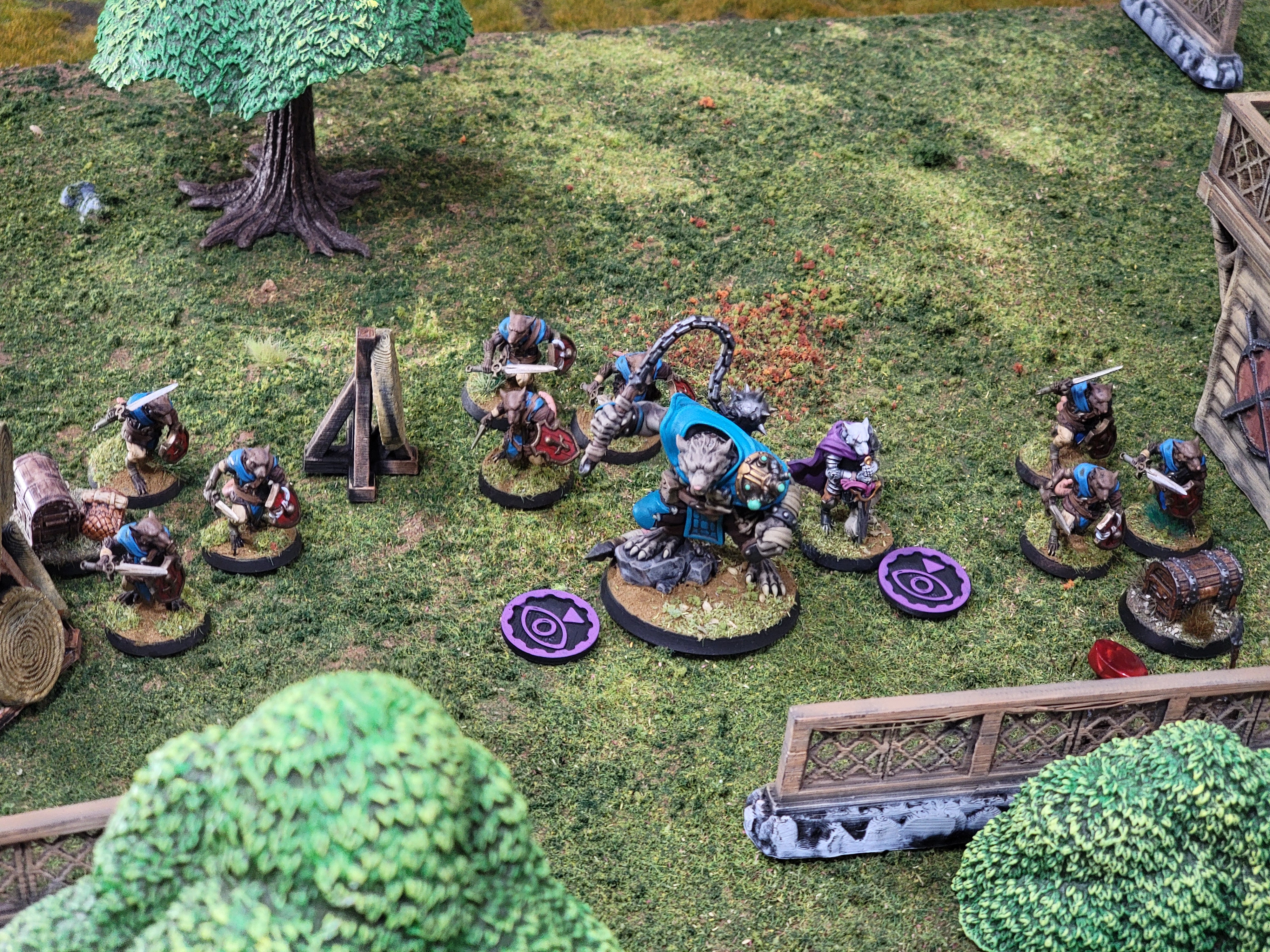
My problem with the game comes down to the lack of dice curves. I’ll spare you the math and graphs today and instead pick a simple example: the Storm Veteran and Ratmen Warriors:
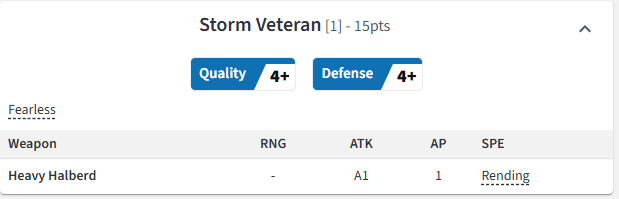
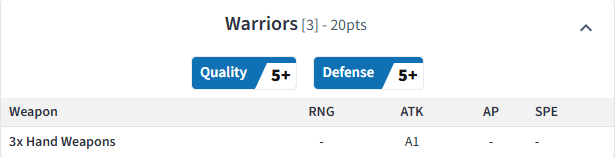
The warriors are a three man unit that cost five points more and roll three dice without modifiers. The Storm Veteran is a one man unit that rolls a single attack with some special stuff going on. The points balance makes sense on paper but we’re rolling so few dice that the game ends up feeling very, very swingy. We don’t roll enough dice to smooth out the dice curves so the end result is very erratic. I’d be better off running as many Warriors and as few Veterans as possible in the skirmish game.
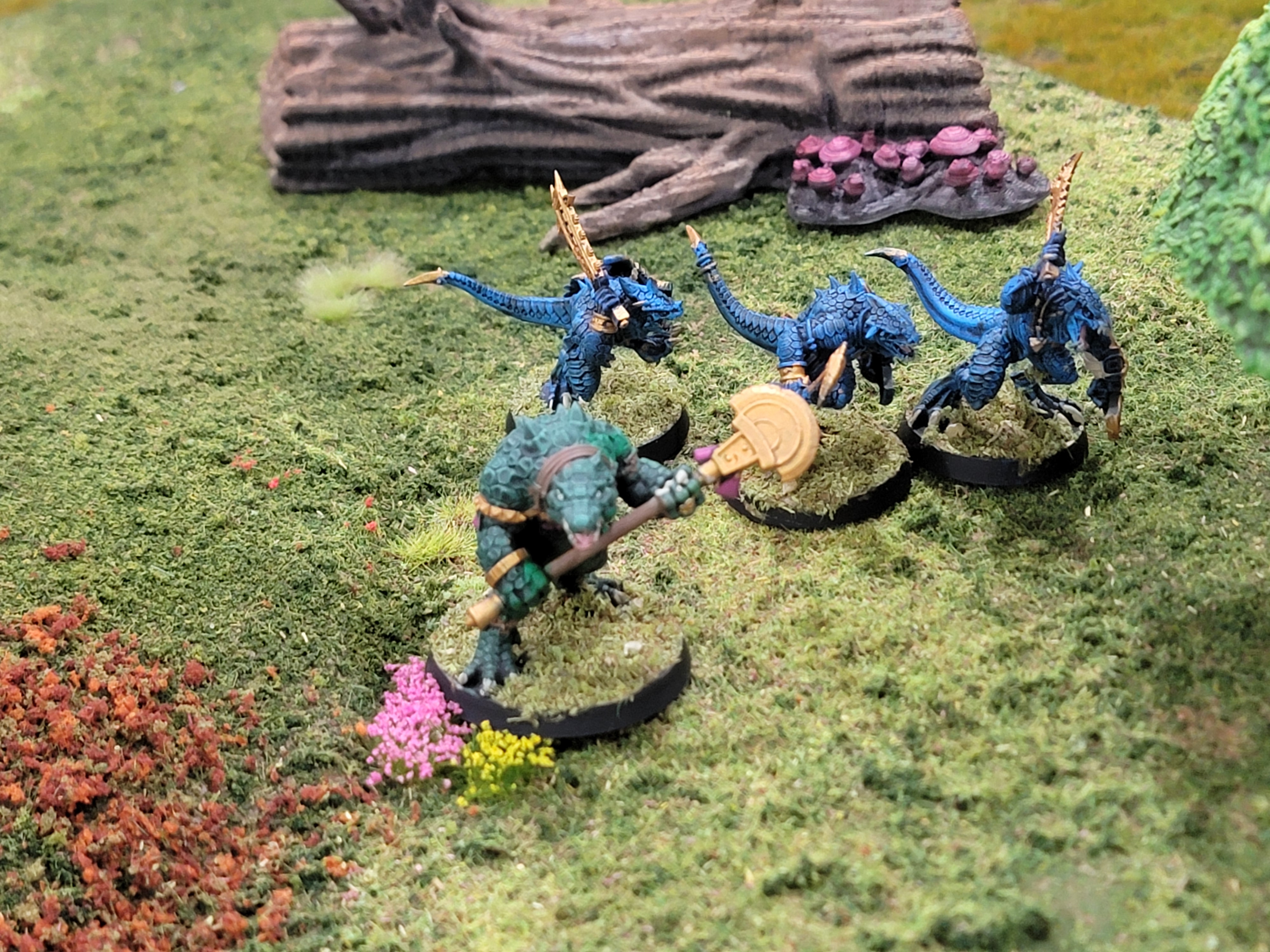
Mathematically, the larger game should work better as you roll more dice. I’m increasingly suspecting that skirmish games should use 2DX dice curves to lend some predictability to their flow, or otherwise make you roll 10+ dice for every attack. Sword Weirdos does the 2DX system and it appears to work quite well there.
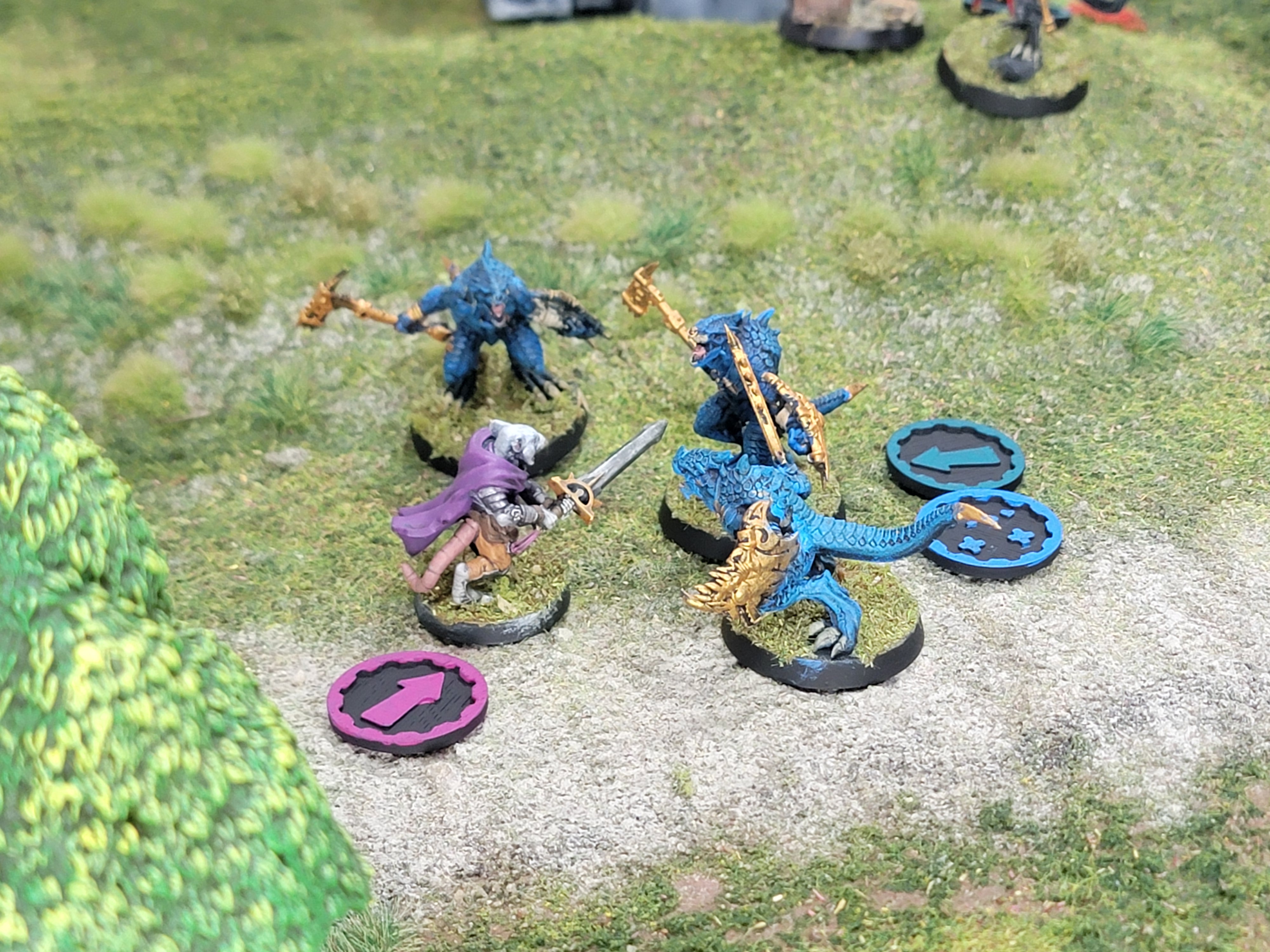
I considered pushing my son onto Sword Weirdos but instead I’m going to make a push for the two of us to paint enough minis to hit 1,000 point games of Age of Fantasy. I plan on making the same activation system modification there but otherwise that ruleset does not have an awkward wounding rule. I’m pretty confident we’ll enjoy that game more.
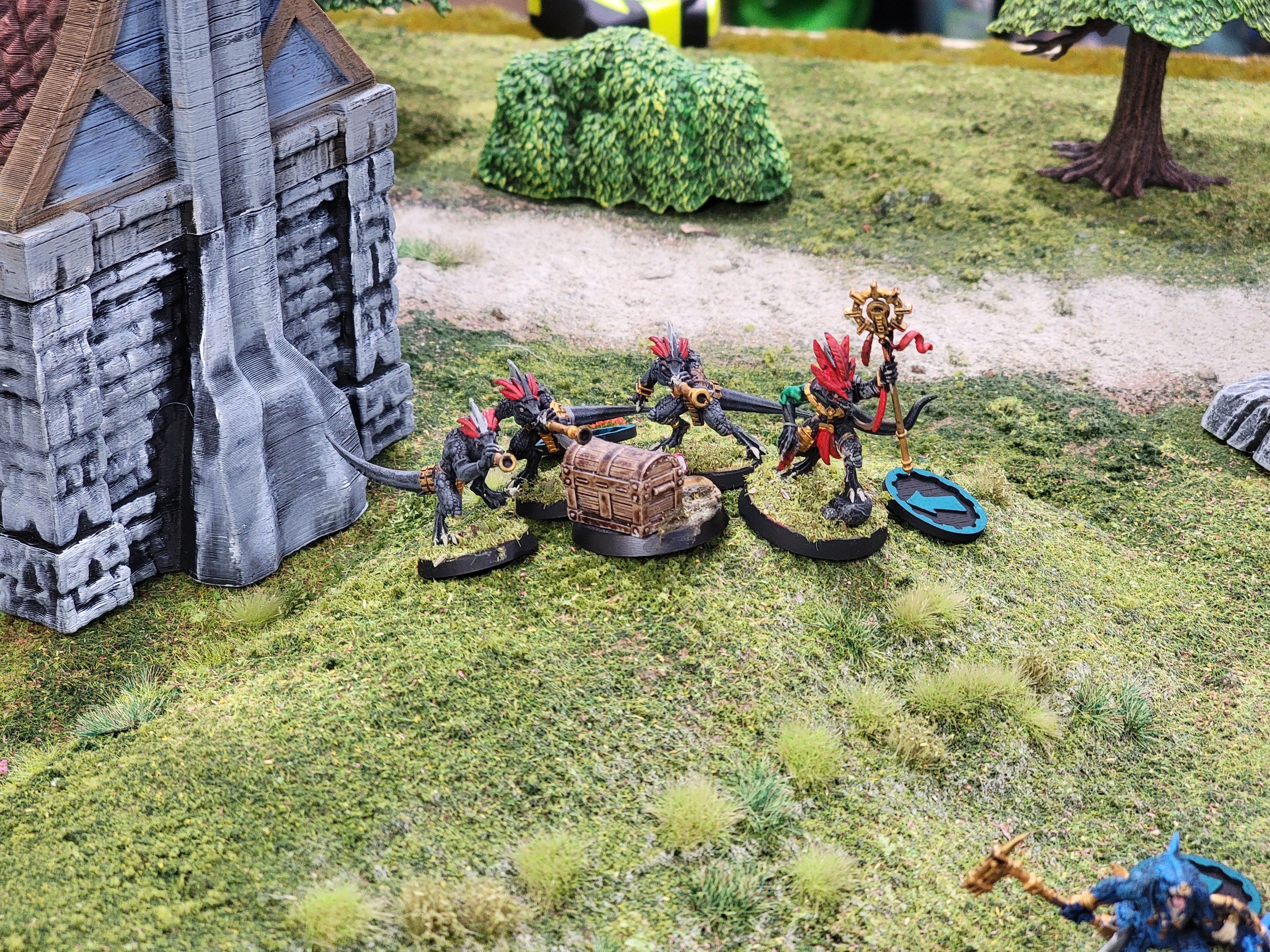
Skirmish is otherwise inoffensive and works in a very predictable fashion. I like the advanced rules for mission generation and the deck of cards you can print (or roll on) for turn-by-turn objectives. These are fun ideas and lend to fun and varied games–well worth the cost of admission.
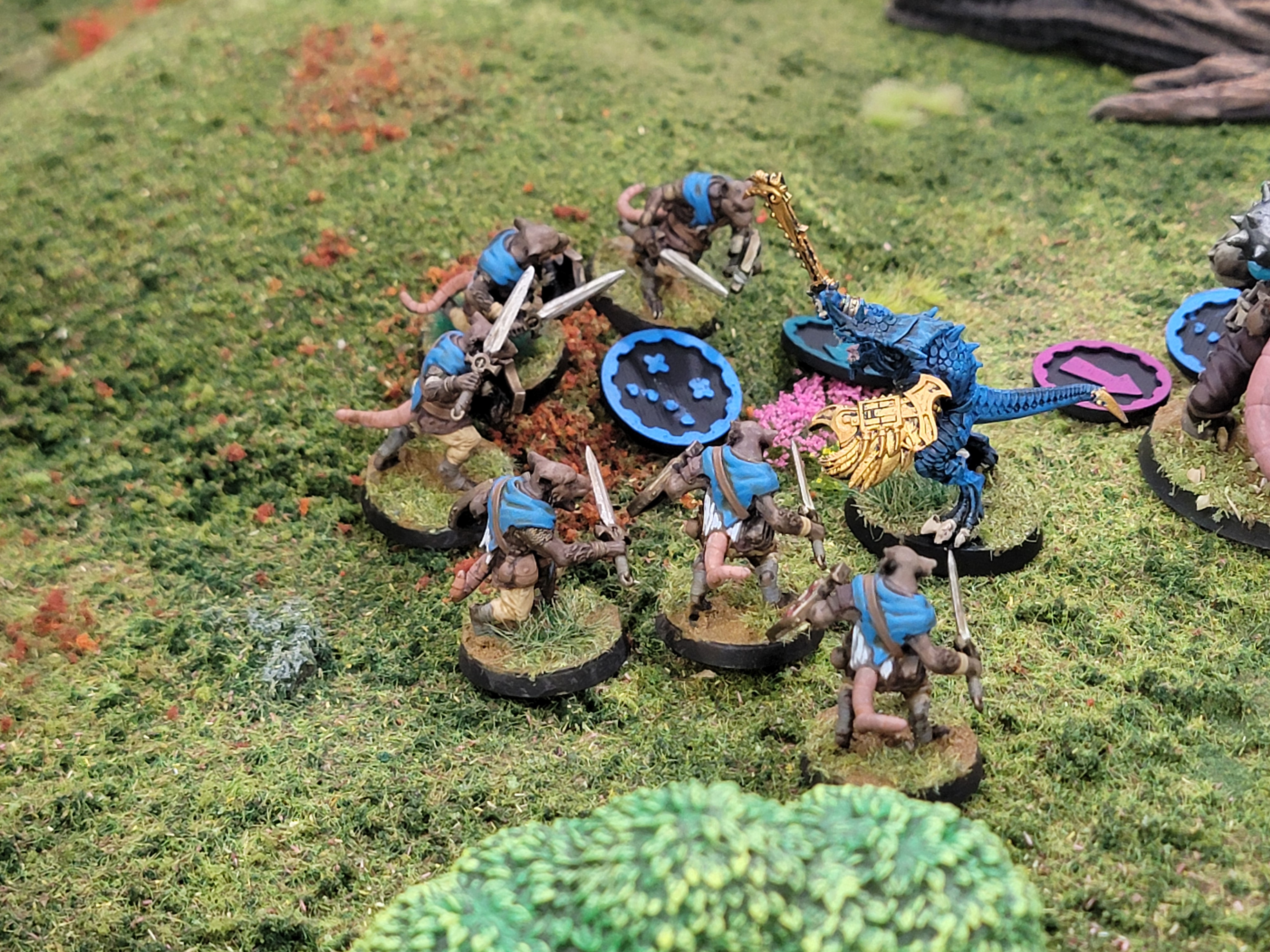
The advanced actions, however, feel superfluous. The advanced rules add 13 actions and only a few of them really appear useful in the fantasy game. Most of the time you’re executing the normal move, shoot, and charge of the basic actions. Sometimes you’ll go on overwatch–but really you’re normally in range to shoot anyway. Sometimes you’ll take a defensive stance against shooting or against melee (two separate actions) but generally you’re engaged or not. I’ve reduced the extra actions to two, really: Ready (a combination of Overwatch and a melee counter attack) and Defensive Stance (both defense against shooting and melee at once). We… have not especially used these because you’re getting stuck in fast enough for them to become irrelevant.
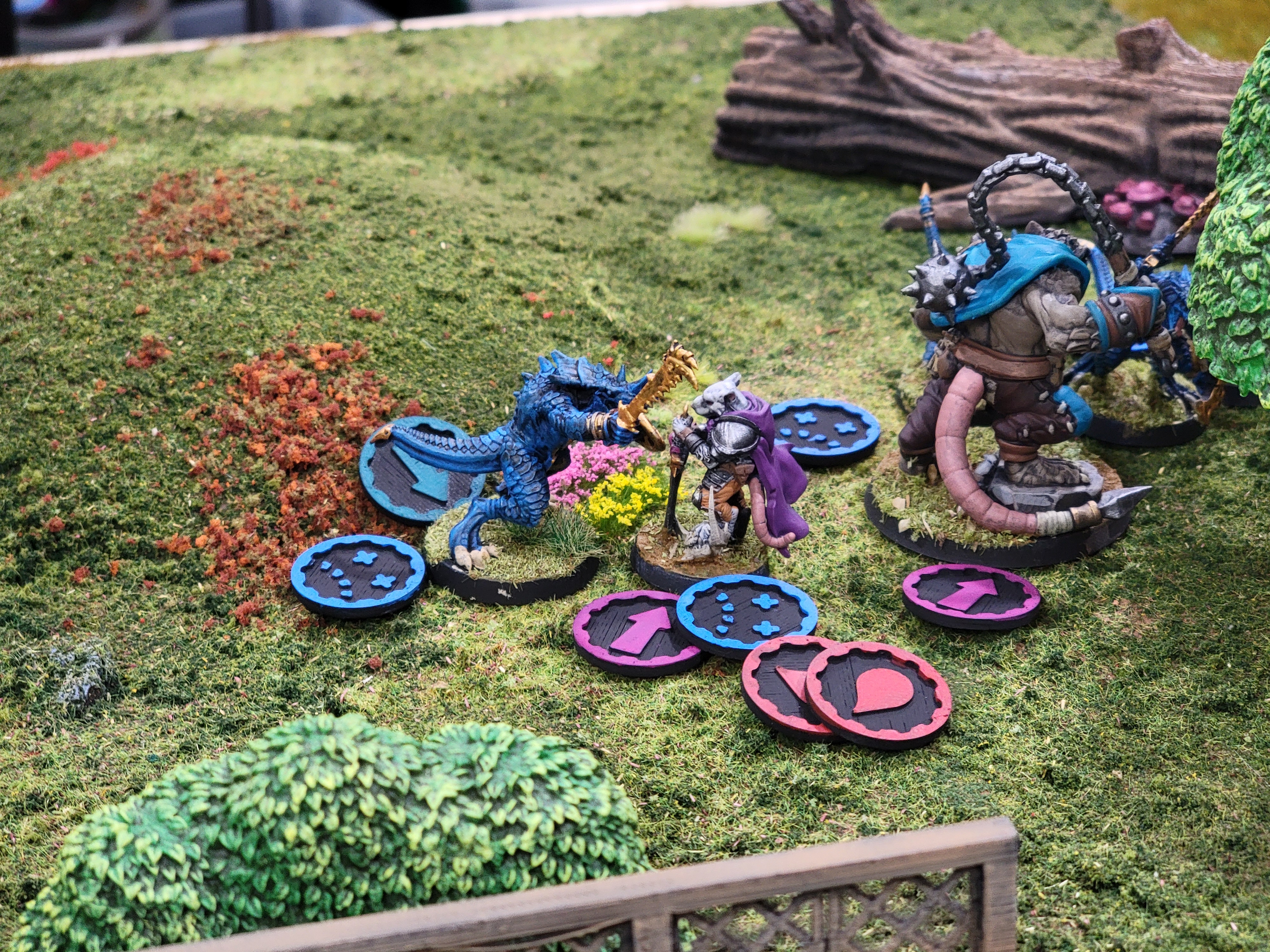
There’s also an action called “Assault” which allows you to shoot as you charge into melee. I could see that being useful but have not had shooting units to date to test it with. I strongly suspect the overall extra actions idea would work better in the future variant of the game with more shooting.
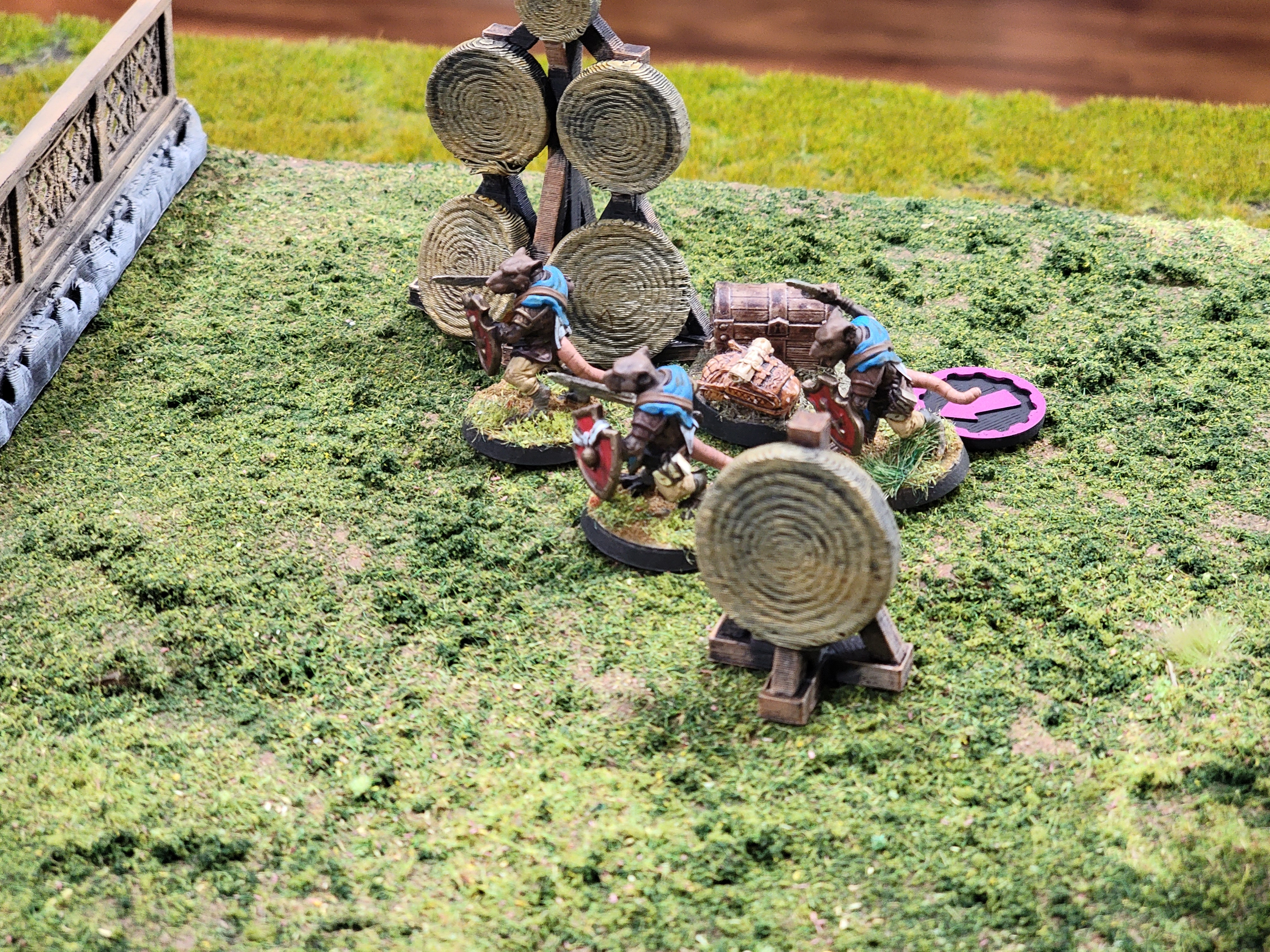
This was mildly disappointing but an interesting point: more actions for each unit is not necessarily a good thing. They need to be worthwhile, useful actions in the flow of gameplay. There’s a game design lesson in there somewhere. Probably.
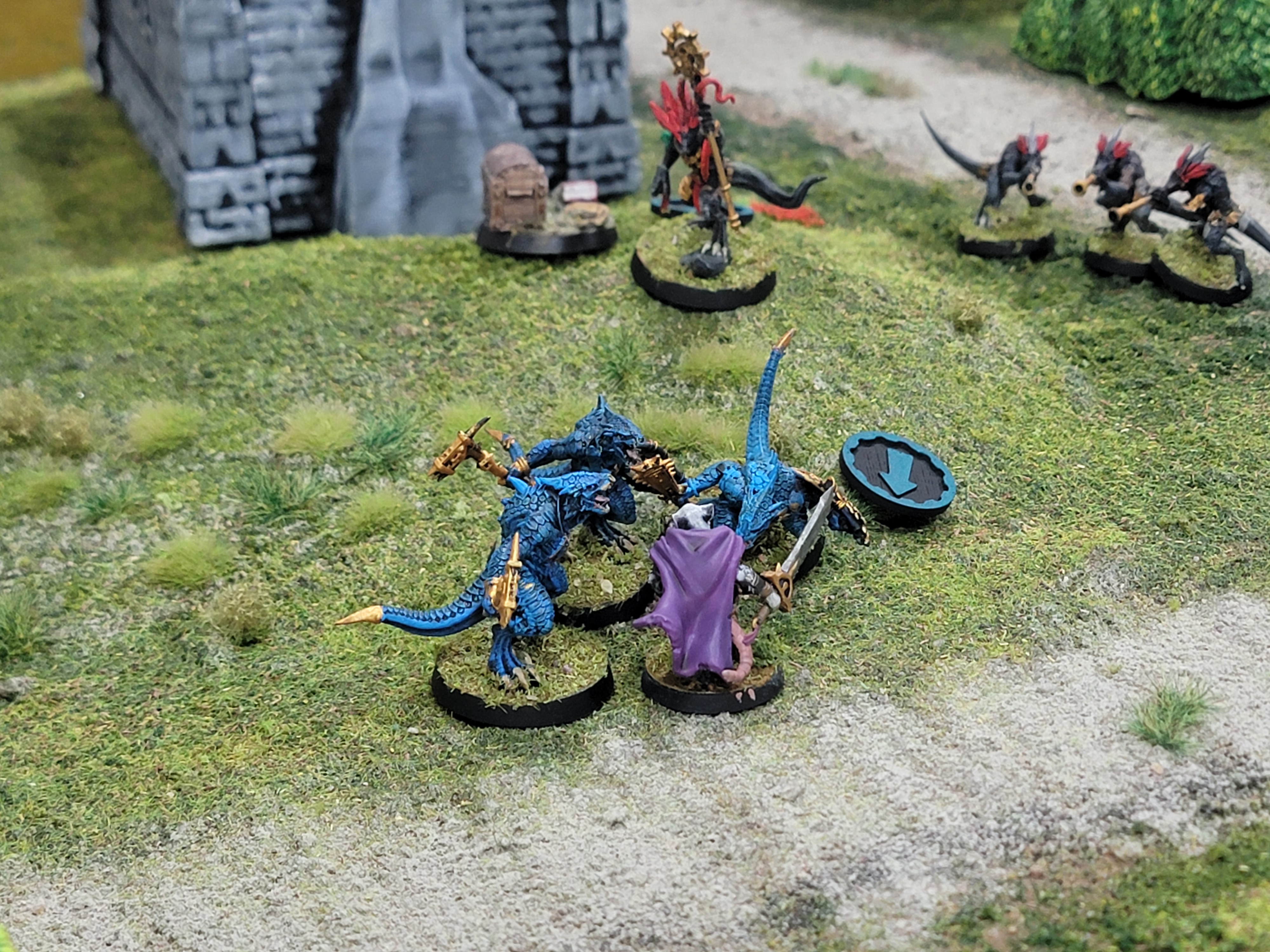
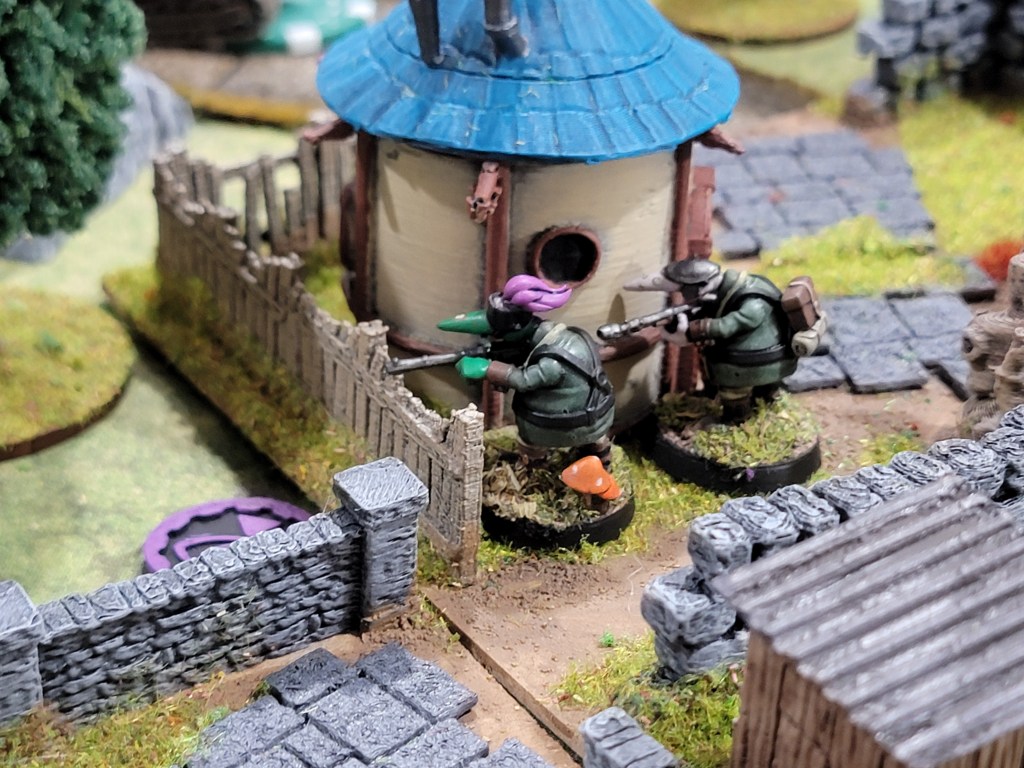
Well, “Game to purpose” as I like to say. My purpose was to play a game that gets my son excited to paint and play and does not bore me to tears. Mission accomplished quite thoroughly. I’ve had fun playing with him and I’ve also enjoyed painting these excellent ratmen sculpts. Let the record show I’m not all hoity-toity “Thou shalt play Chain of Command for all of its glorious complexity.” Sometimes simple is what you need–and when that’s the case, I don’t think OPR’s offerings are a bad choice at all. Especially if you’re aiming to introduce someone new, or a child, to wargaming.


 Small Scale Victory
Leave a comment