I have a friend who has always wanted to play out a Sons of Mars campaign. Guess what? I want to, too! So what the heck is it? Sons of Mars is a game revolving around gladiatorial combat in the Roman arena. It is designed to be simple but still reflect the realities of gladiatorial combat, which I’ve come to discover were far more involved and complex than I had initially imagined. There were over twenty classes of gladiators, each with different specialties and weapon sets. Armor was incredibly important and nuanced, with shields, bracers, helmets, and leg bracers being vital to survival.
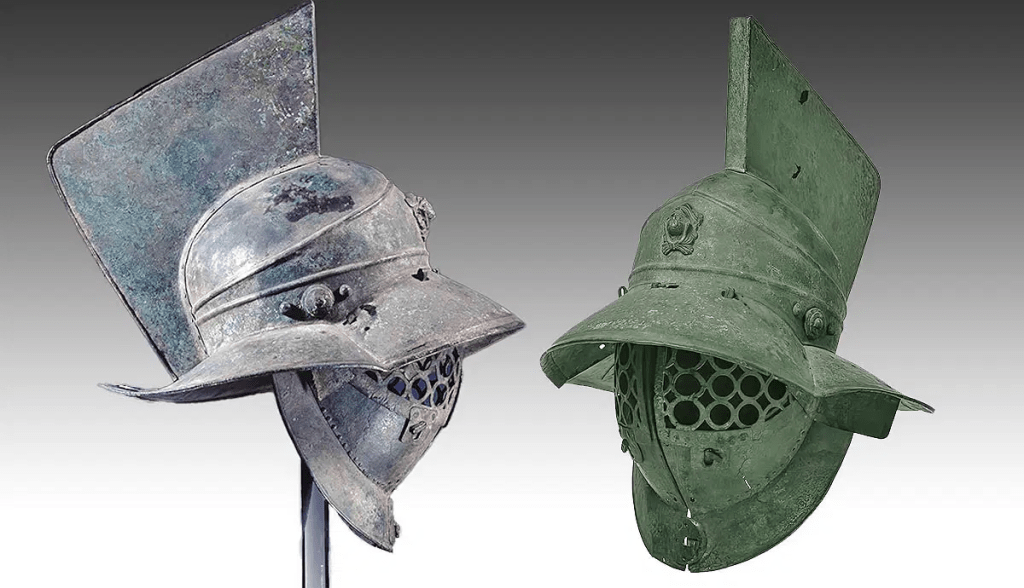
(https://www.thecollector.com/gladiator-helmets-types-characteristics/)
I can’t say the game reflects all of this. It lacks facing, so you can’t truly get at the fact that a large scutum offered a lot of directionally specific protection. It abstracts the importance of armor into an armor value–which does, to its credit, add up across a combat.
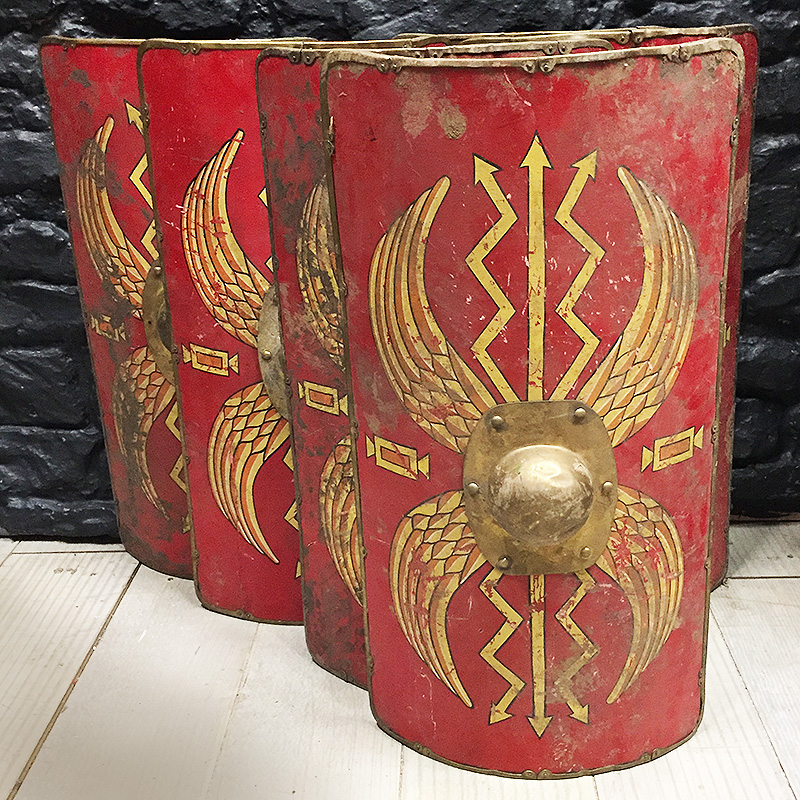
(https://history-making.com/product/1c-ad-roman-scutum-battle-worn-shields/)
The different weapons are reasonably represented and gladiators do successfully divide into a few major styles from more agility focused to full on endurance focused gladiators. This is done with a rather large statline of 10 overall statistics per gladiator, which are added both across the gladiators themselves and their weapons. So, for example: when you charge into combat you add your gladiator’s charge value to their weapon’s charge value to determine how many dice you roll. Once you’re locked in combat, you shift to using your sustainment values. I’m not sure how well this flows in practice–I do like that it creates a difference between charging, sustained combat, and defensive combat. The author does a good job of going over all this in his video about building a gladiator:

Again, while the statline appears a little intimidating, this does seem like it would do just enough to make gladiators feel unique. The top row are stats used for tests or simple functions (movement is distance you travel, vitality is your health points). The bottom row are stats used in combat.
I’ve printed off a complete set of gladiators plus a few custom built extras from Wargames Atlantic–so I look forward to seeing how my Retiarius (net guy) plays differently from my Secutor (shield and gladius guy). In fact, I came to the desire to compare those two organically just by looking at them, which is funny because historically those two types of gladiators were intended to fight each other to provide an entertaining match!
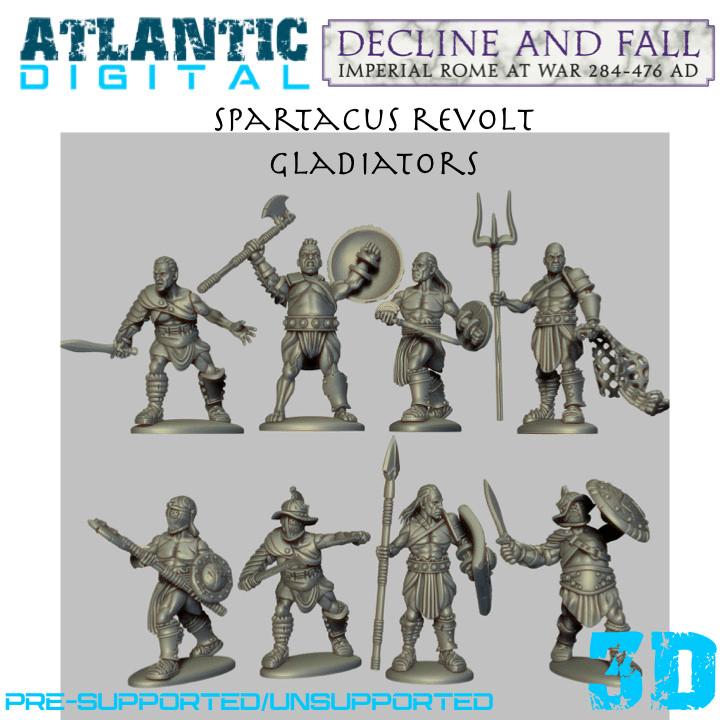
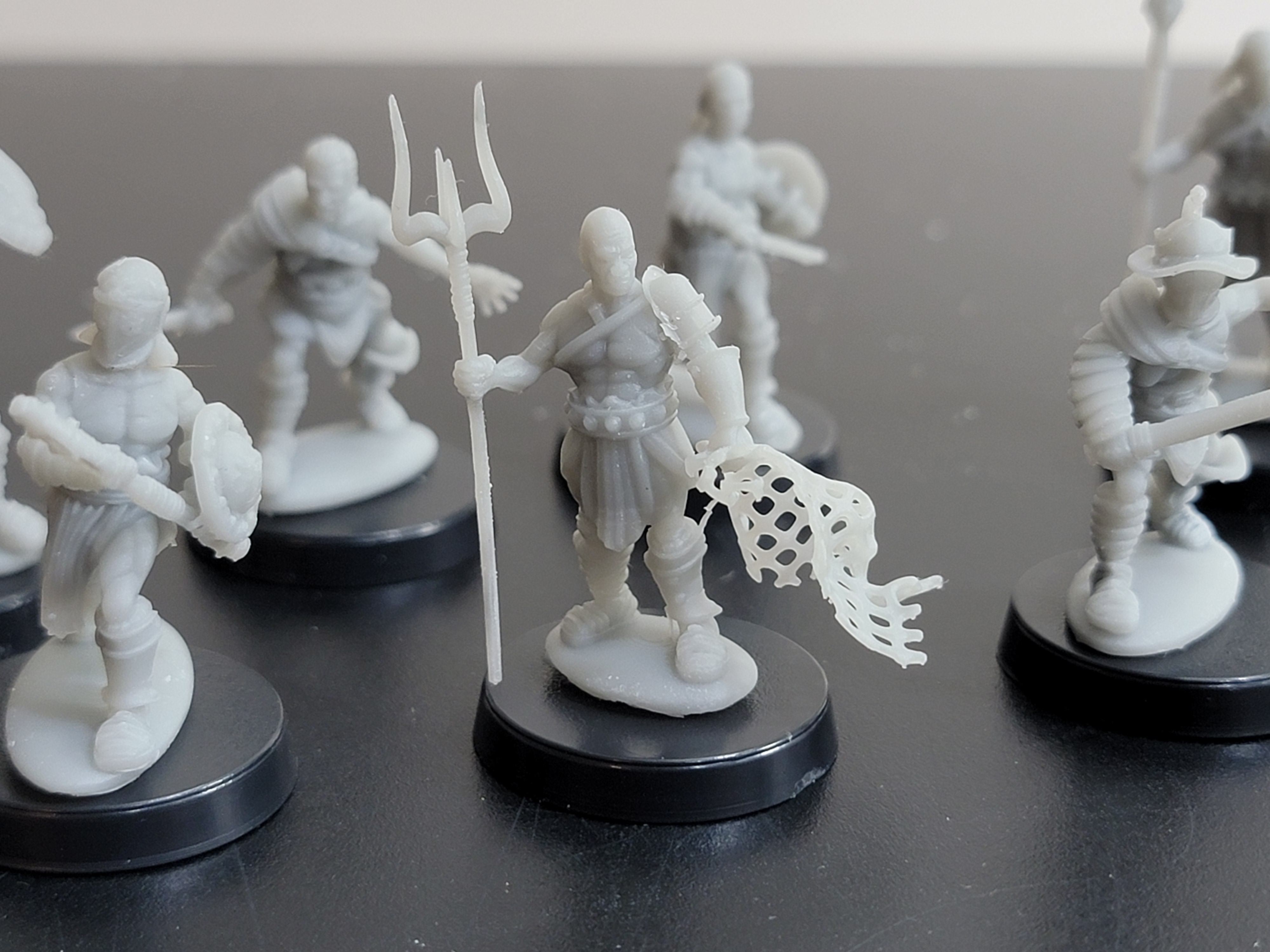
A lot of gladiatorial combat came down to how heavily armored you were versus how quickly you could maneuver. The secutor in heavy armor was slower but more secure–in game he might aim to enter sustained combat or push the opponent against a pillar and hit them while they’re down, whereas the dimachaerus with his two sica (swords) and higher agility will try to dance in and out of combat to take advantage of a higher charge capability.
Don’t get me wrong–this doesn’t sound like a game you chew on for very long. Variety here comes from building out a season of combat and playing out many different mission types. The game has rules for all of the general showings one might see in the colosseum. You can fight lions, elephants, NPC gladiators, or multiple gladiators at once. You can fight atop a bridge or in an arena strewn with traps. There are special seasonal events that occur which shift the nature and style of your next battle.

It’s really quite thoroughly thought out. You run your own ludus (guild) of gladiators and they improve over time. I’ve bought the official card pack you can print off to make tracking this easy–it’s a nice change of pace from making my own cards to do this.
Finally, I’m printing off an arena. The hobby lift here is pretty light–I’ll dry brush the arena walls, paint the traps similarly, then bang out 10 gladiators. Intent is to play a campaign across the back half of this year. We’ll… see if that actually happens but if I get all of this done I could also host a simple tournament for four players where we place bets on outcomes and the overall winner is whoever makes the most money. A simple, ready-to-run event game like that would be handy to have in my arsenal as I try to expand the horizons of folks in my club.
And there we go. Another silly project enabled by 3D printing. I’m a big fan of the flexibility this has given me and I’ve always loved hopping around between small projects. I don’t know how long I can really sustain this but for now I’m quite happy having hopped from cowboys to Stargate to cars to gladiators. I’ve grown warmer on resin printing as I’ve gotten used to it–the startup was painful but now that it’s humming along and I have my processes in place I’m not only readily able to print off a new project, I’m actually printing multiple projects for friends just fine.
Heck, the turnaround on this project was somewhat crazy. Friday night my buddy and I decide to run a campaign and by the next Friday I’d printed the 10 miniatures and an entire arena. Those ten miniatures could have easily been 40-50 and I’d still have made the same time table. Remarkable.
Anyway–gladiators! I’ll leave off with some interesting videos on gladiatorial weapons I found. Again, this topic turned out to be more interesting and in depth than I’d expected. Well worth a few background videos while you do your yard work this weekend.


 Small Scale Victory
Leave a comment