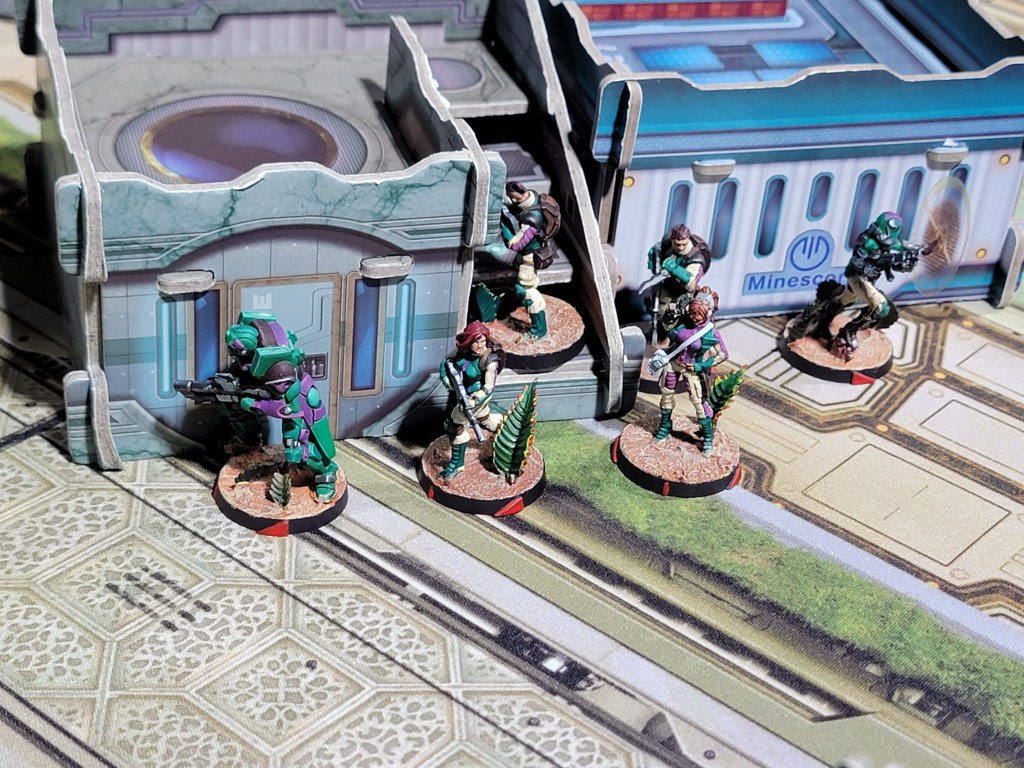
Sometimes while I do… well, anything at all, I start to think of a wargame I’d like to write and the mechanics I’d like to build it off of. A game concept I always like is a lethal cyberpunk dystopia with tons of maneuverability and options. There’s something about a skirmish game where you can leap up buildings and jump off walls while nailing a headshot that just appeals to me.
Now, I usually daydream about this system and build it off what I’ll call a “Dice allocation” system. You roll D6s, D8s, and D10s. Each turn you get a pair of each—2D6, 2D8, and 2D10. Sometimes I tie this to your skill (a great shooter gets 2D10 when shooting) and sometimes I think to be more creative: you have to roll for everything you do and assign the dice to the respective roll, consuming them.
In this specific instance, let’s say my idea is as follows:
- You get the three 2DX pools each turn. If you’re good at something, it gives you a flat bonus on the roll.
- You get a free movement and then two dice actions each turn. These include further movement, shooting, hacking, etc.
- Movement is super freeflowing. Run up walls, jump off stuff, burst through windows—have fun!
- The unused dice gets put into your off-turn reserve, which can be used for defense or for an always active overwatch, similar to Infinity.
- You succeed on 7s.
I like to think that’s a neat idea. You play with maybe 5 models per side on a 3×3’ board, objective focused. It’s a lot of decisions packed into a small space and a lot of freedom to go with it. The other interesting part is that bonus: with, lets say, +2 to the roll, you might risk using 2D6 for your extra good shooting capability, then have the 2D10 in reserve for overwatch or defense.
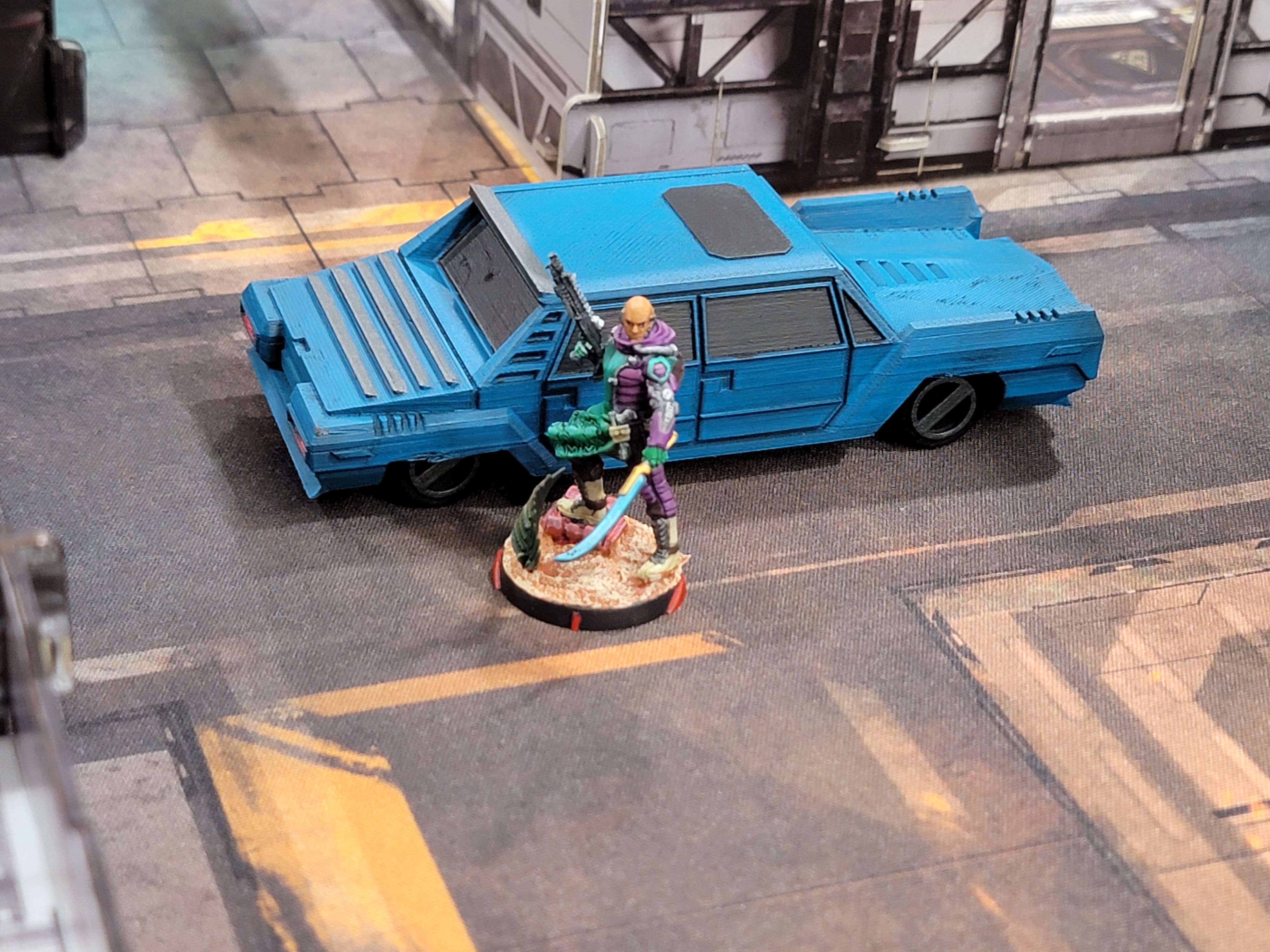
But… does that actually work? Something I often wonder is if authors of rulesets actually bother to calculate out their dice math. Sometimes you look at a ruleset and wonder what the point of the bonus to shooting even is. “+1 on 1D20? Does that even do anything?”
In function, I assume players don’t feel bonuses below around 15%, which is very roughly what +1 on 1D6 nets you. If it’s a 5% difference, I tend to dismiss it. So what DOES the above system look like in practice? Well, thankfully, we have Excel—the best and worst program ever invented.
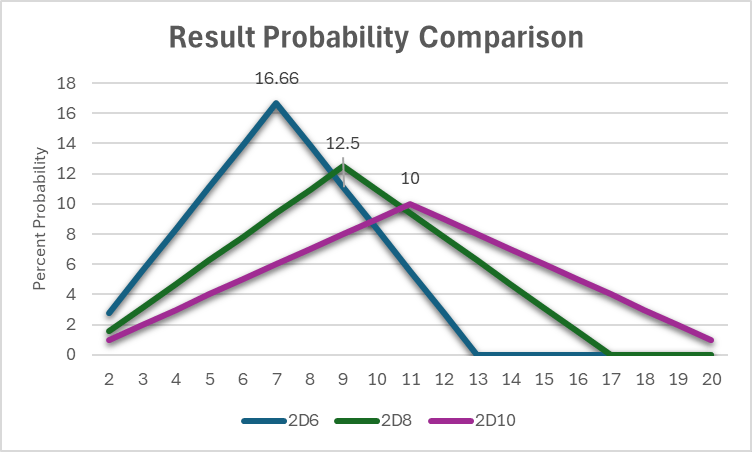
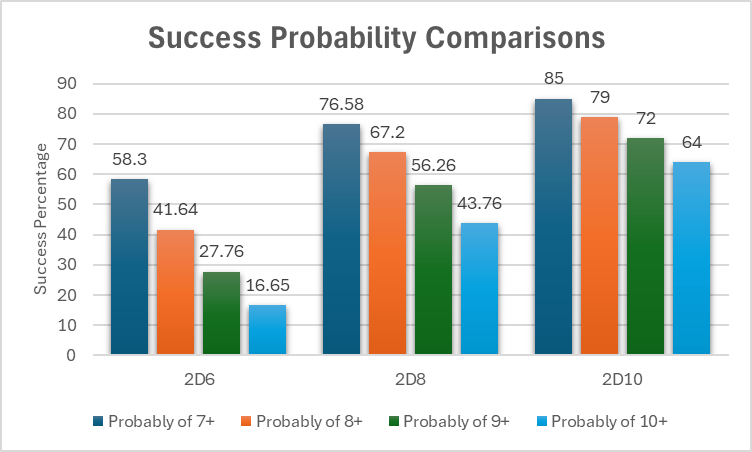
The above two graphs show the probability curve comparison between 2D6, 2D8, and 2D10. It then shows the odds of roll a 7+, 8+, 9+, and 10+ on those dice. I considered expanding that to 5+ and 6+ but it got cluttered, so hopefully the above makes the point clear enough.
A few things leap out: 2D10 and 2D8 are triangular, not curves. 2D6 creates the classic bell curve. This means bonuses and penalties on the 2D6 add up faster. Notice how a (-2) would drop success from 58% to 27%–a 21% difference. With 2D8 it’s another 20% drop, whereas with 2D10 that would only drop it from 85% to 72%–a 13% difference. The reverse is also true: when revolving around 7+ success, bonuses benefit the 2D6 far more.
Well that worked out quite nicely—I would actually want to put my bonuses on my lesser dice, which will even them out with my best dice. The 2D10 remains on top no matter what, but skill allows you to dedicate worse dice (or narratively, less time) to your most skillful actions. I think this makes for some interesting decision space. Neat!
Now to tear it apart.
For one, players wouldn’t find this very intuitive. I’d have to just about drop the graphs into the rulebook or walk through a comparison. That may be conquerable. Now two, this is an inherently slow system. You’re making small decisions about how to allocate time that will bog things down. Will that really build an interesting game at the end or just a game where you spend all your time making tiny decisions that affect your results minimally?
I’m actually not sure! I still like the idea on the surface. I do think it’s likely slow. The natural prioritization of action, combined with how much free movement there is and the constant threat of enemy overwatch, means you’ll really have to think about each turn. I’m obviously inspired by Infinity. It’s a very thinky, slow game, which I enjoyed. Shrinking it down to 5-8 models per side and reducing the special rules bloat, as well as the swing of the D20s, might very well be an idea worth exploring.
I’ll say this much: writing this out has me wanting to try it. Time will tell. I’d need some poor soul to be willing to give it a shot. I suspect that once you roll in all of the expected modifiers (range, cover) it might very well become enough for most players that they don’t even consider the decision. “I want to shoot you: 2D10 every time. Extra moves? 2D8. Defense? 2D6 unless I’m on an objective, then 2D10.” I’d like to think not, but it’s hard to tell without playing.
Well, I hope you enjoyed this bit of mechanic experimentation. I enjoy these thought experiments, which is probably why I have so many rulesets in various states of incompletion. Ah well, a boy can dream… er… of dice.
I have boring dreams, don’t I?


 Small Scale Victory
Leave a comment