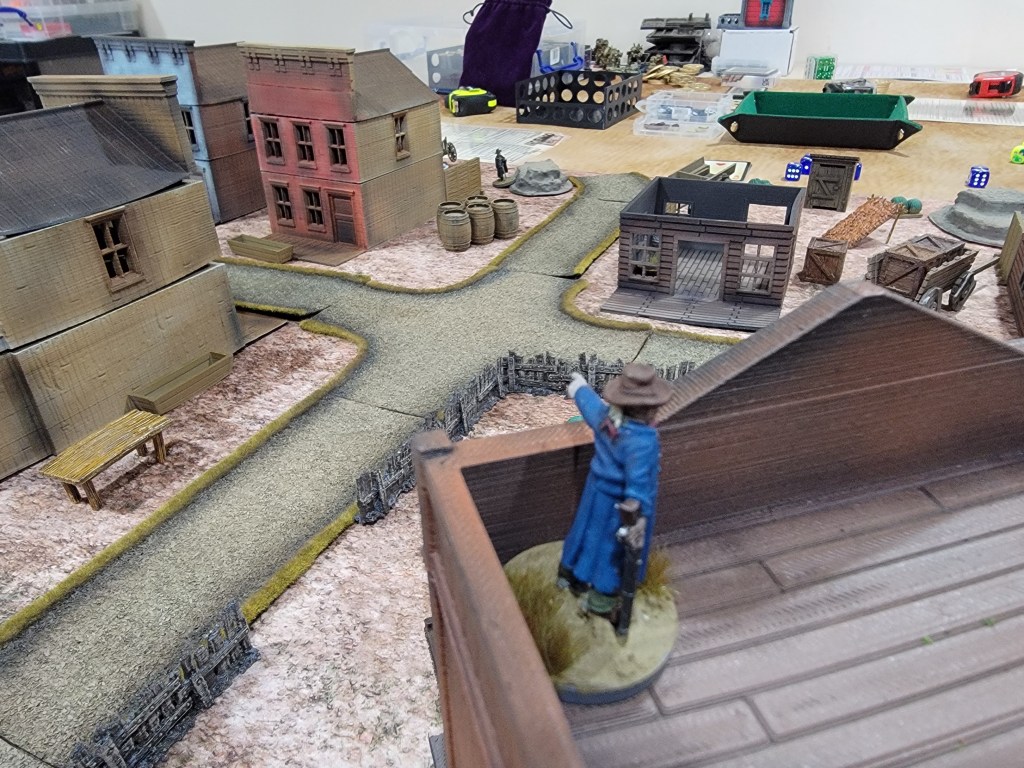
After Dead Man’s Hand I had a strong taste for cowboying, so I decided to try out the TooFatLardies version of the Wild West: What a Cowboy. I’ll tell you two things at the front: first, I tend to like TooFatLardies games, and second I definitely enjoyed What a Cowboy. This impression is based on four games played–three with my nine-year-old son and one with a regular wargaming partner.
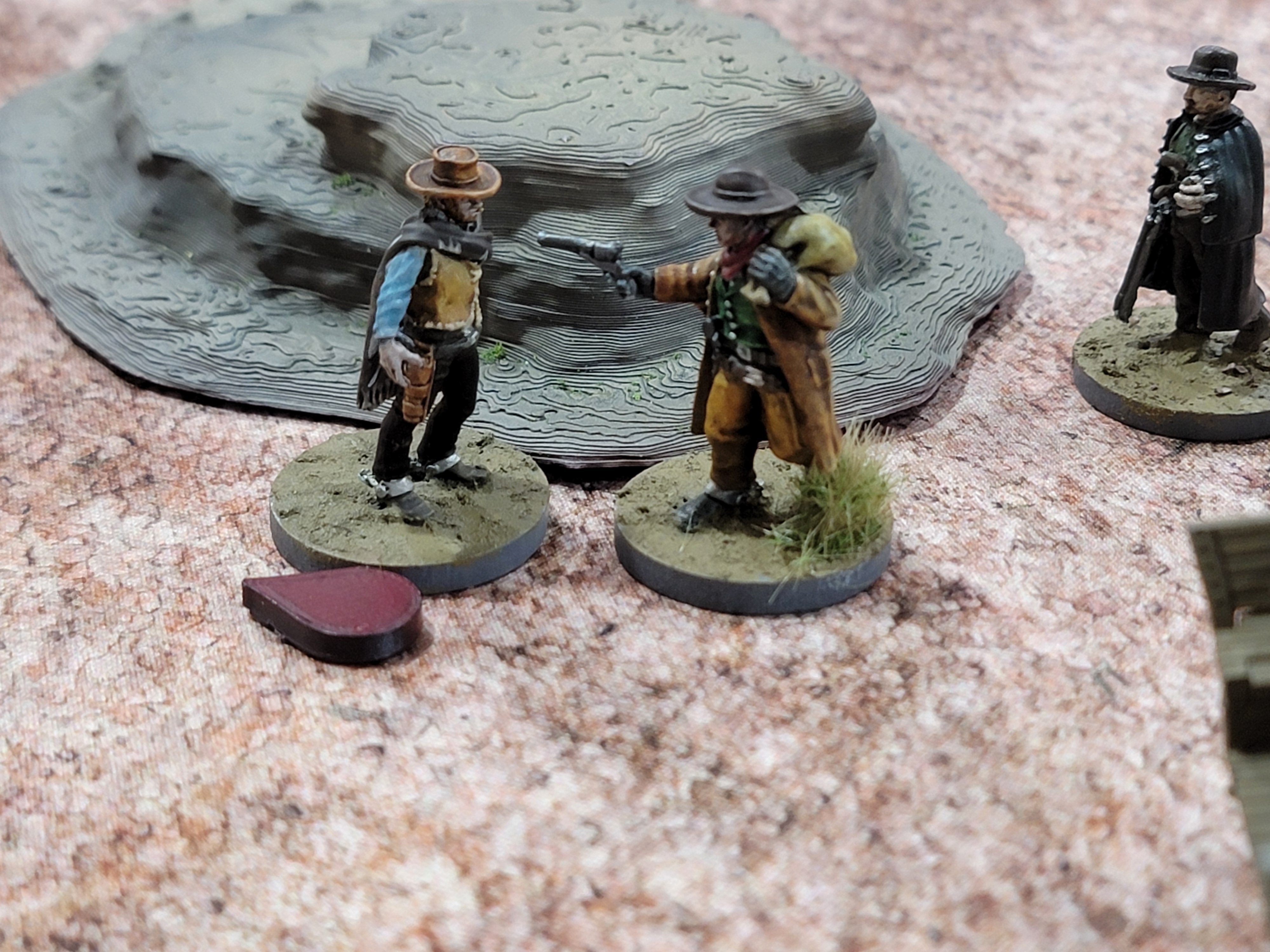
What a Cowboy is a strange system in a way. It’s a derivative of Chain of Command, via What a Tanker. What a Tanker asked “What if we take the activation system from Chain of Command and apply it to a tank crew?” The end result is a system where you roll a handful of dice each time you activate your tank and those dice tell you what you can do. This somewhat makes sense in a tank as you have a crew of people. A one on the dice controls the driver, a two allows you to spot an enemy, a three lets you aim, and so on. It’s a fun, silly game.
What a Cowboy applies that idea to… a single cowboy. I was genuinely skeptical that I’d enjoy this. My fear is obvious: I rolled a bunch of ones in a shoot out and I have no way to shoot my enemy. My cowboy can run away or I can forfeit that activation and move on. That sucks. It feels wrong. It also has not occurred once in my four games so far. There’s a reason for this: they’ve put in a lot of controls on that randomness. Let’s break down the system and then break down the mitigations.
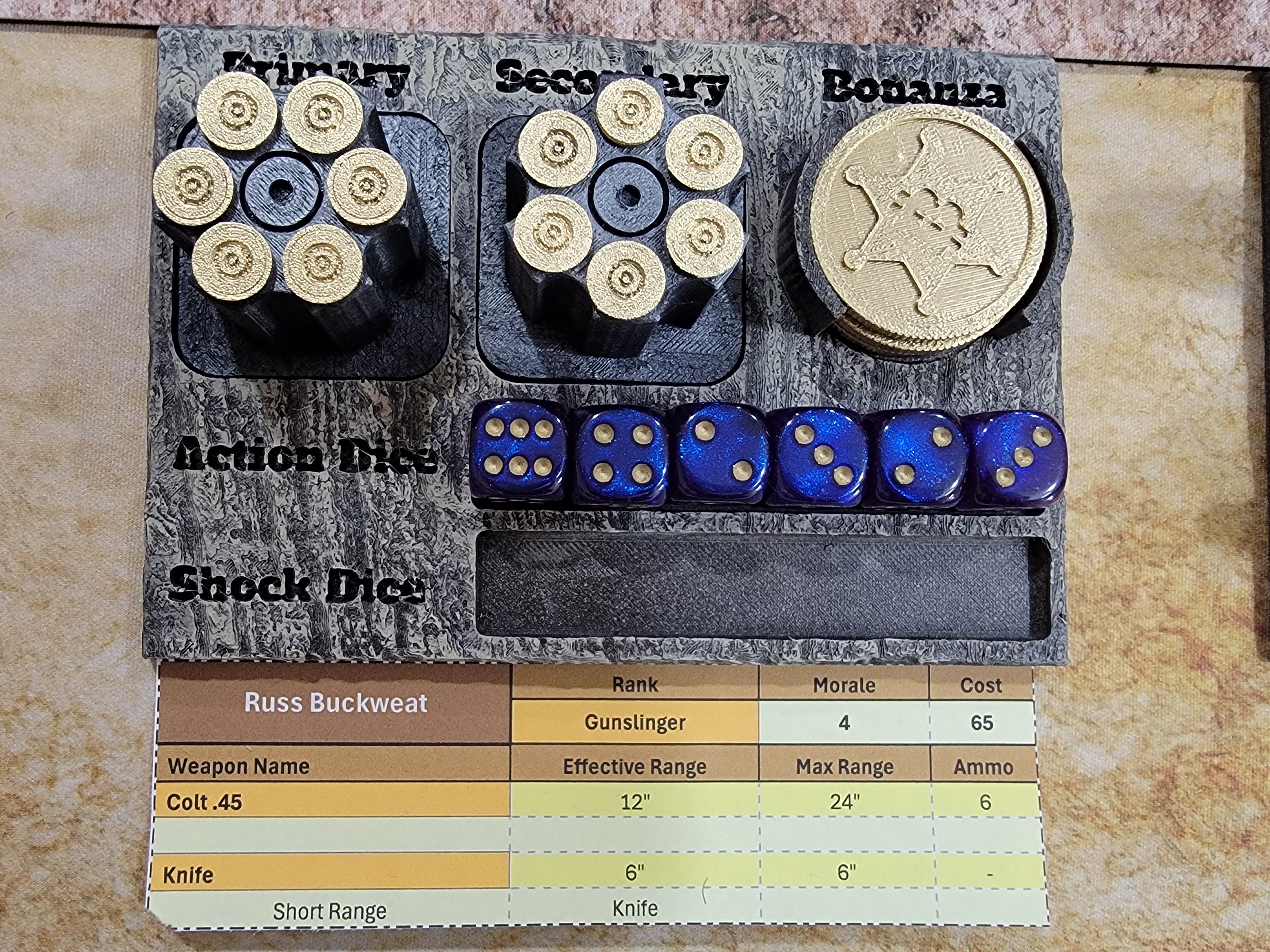
Each turn you roll six dice and the results allow you to do as follows:
- 1: Movement. The system allows you to move in just about any way you can think of–climb, run, jump, etc.
- 2: Spotting. Very important–you have to Spot someone before you can shoot them! And you often need multiple spotting dice just to do so.
- 3: Aiming. Simple enough–you get a +1 on your subsequent shooting roll.
- 4/5: Shooting and Reloading. Both 4 and 5 allow you to shoot or reload. You track ammo so reloading matters.
- 6: Aces High/Wild. Can be used for any other result or can be used to cure shock or trigger fancy stuff.
So again, you immediately see the potential problem: I roll a bunch of 4s and 5s when I can’t see any enemies. I guess I reload and pass the turn? Thankfully, there’s a few mitigations:
- Cowboys have four skill levels. The top two (Gunslinger and Legend) can freely change one dice per turn.
- 6s are wild, meaning if you NEED a specific dice result, you have a 1/3rd chance to get it on each of your dice.
- Bonanza Coins exist! Each character starts with some and can use them to reroll ANY dice rolled, including your activation dice. In the case of activation dice, you can reroll JUST the ones you want to.
- Desperado Cards. You get a hand of cards at the start of the game and many of them manipulate your dice.
I may very well be forgetting something, but you get the idea. There’s a lot of potential dice manipulation in the game to help control the randomness and ensure you can do what you want, when you want, but perhaps not to the effectiveness you want. I had a shot with three aim dice on it which let me peg a critical wound when I needed it. I also had another shot I barely managed to make with no aiming which whiffed hard. This is part of the system–no moment is totally in your control and you have to be willing to accept that going in.
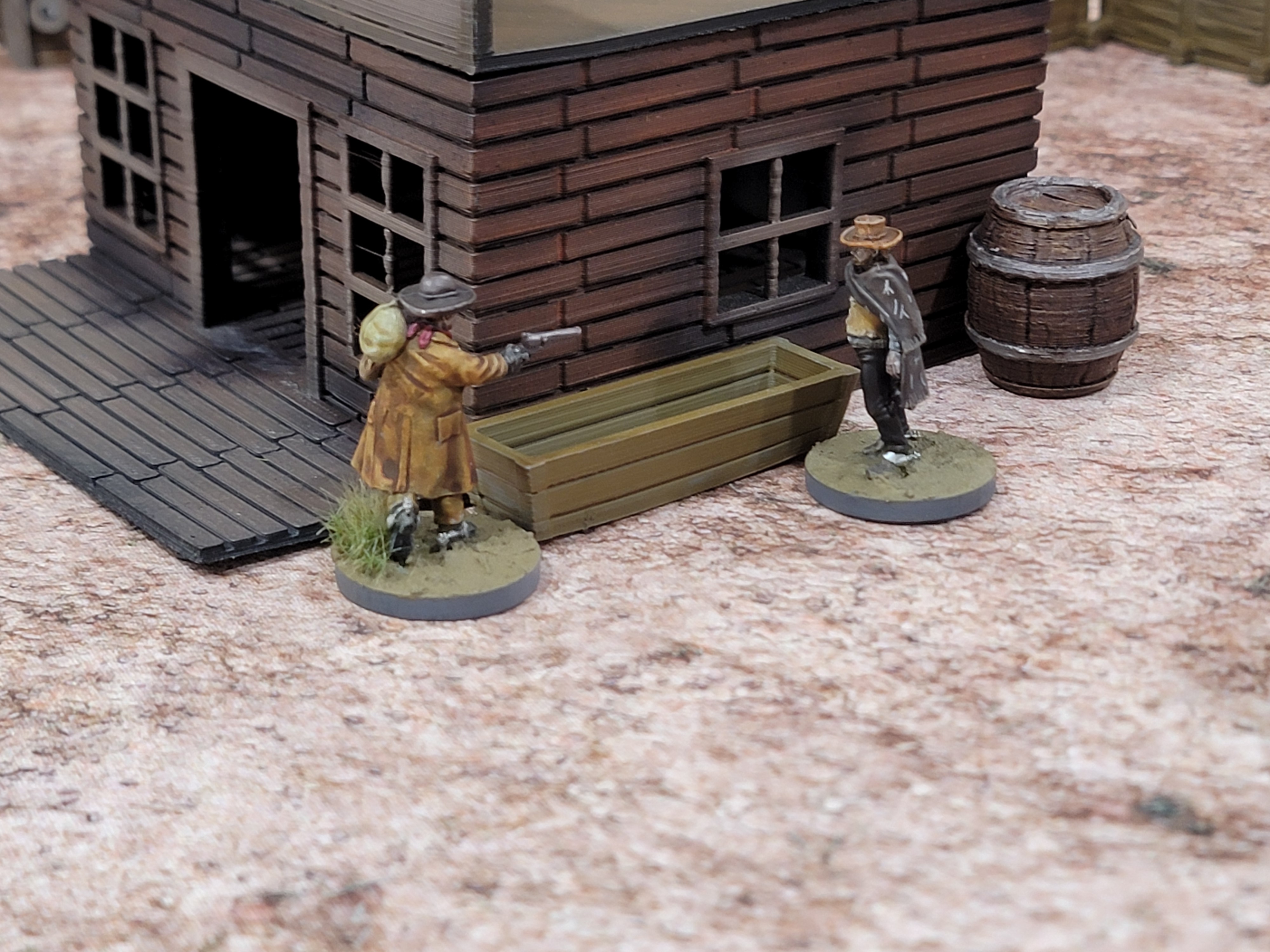
That said, the irony here for me is the system felt so much less random than Dead Man’s Hand, which had a clearer system of activation (follow the cards, give three actions to the model). Here, you deal with a chit draw system (a deck of cards where each card is a specific model) and then roll six dice to see what you can do. That’s a lot of randomness and indeed it doesn’t give you total control, but it didn’t feel as swingy and random as the D20 and hand of dramatic cards did in Dead Man’s Hand.
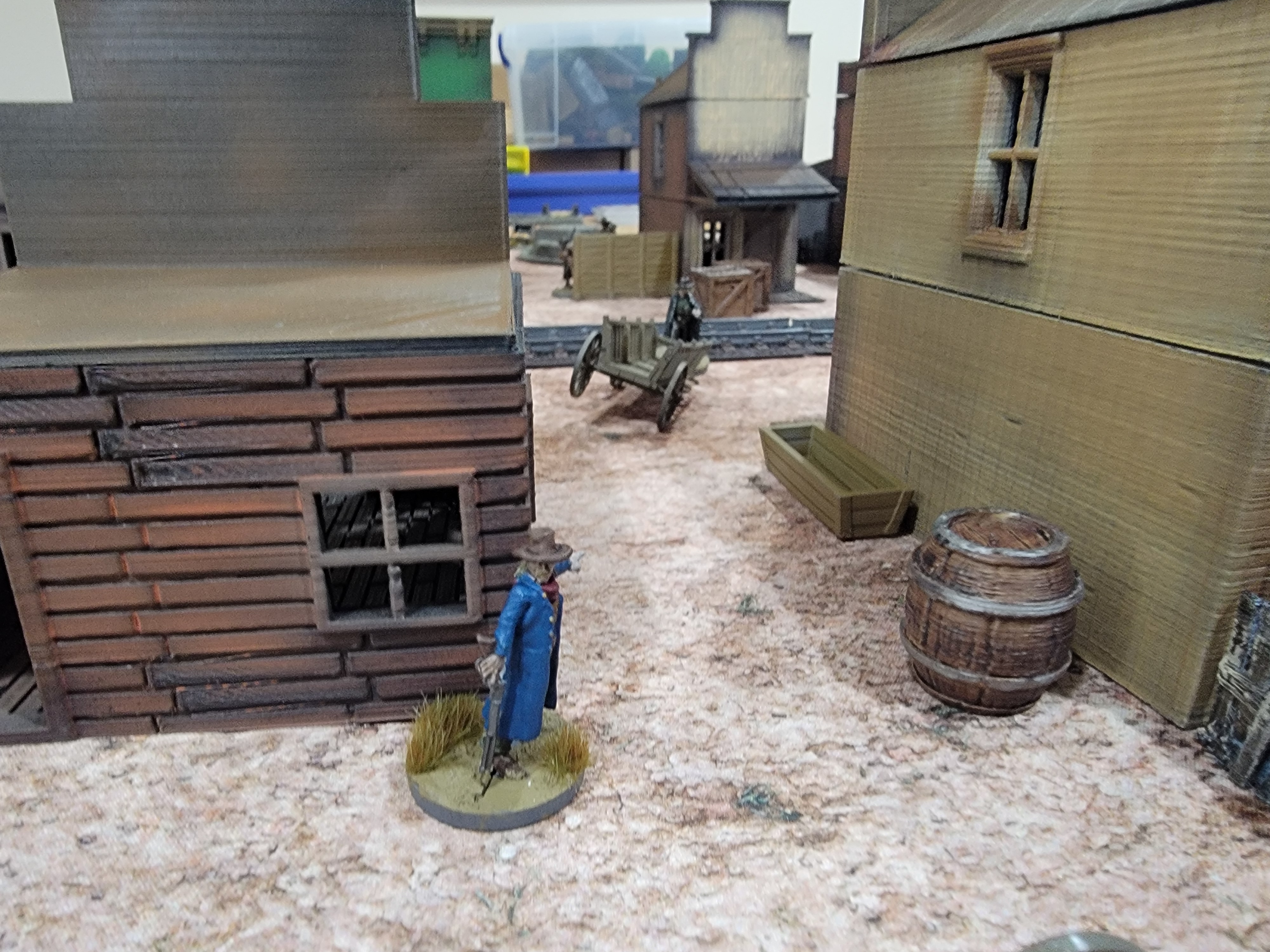
The gunfights here feel like gunfights, with real back and forth and men degrading over time. Wounds come directly from your activation dice, so as your men take wounds they get less actions in a very organic way. Shock takes dice temporarily, which you can restore by spending a 6, which then eats more of your actions! It all flows so well. And sometimes, just sometimes… a bastard pops up onto a roof and head shots you (requiring a 7 with modifiers, followed by a 6) before scrambling back down to safety.
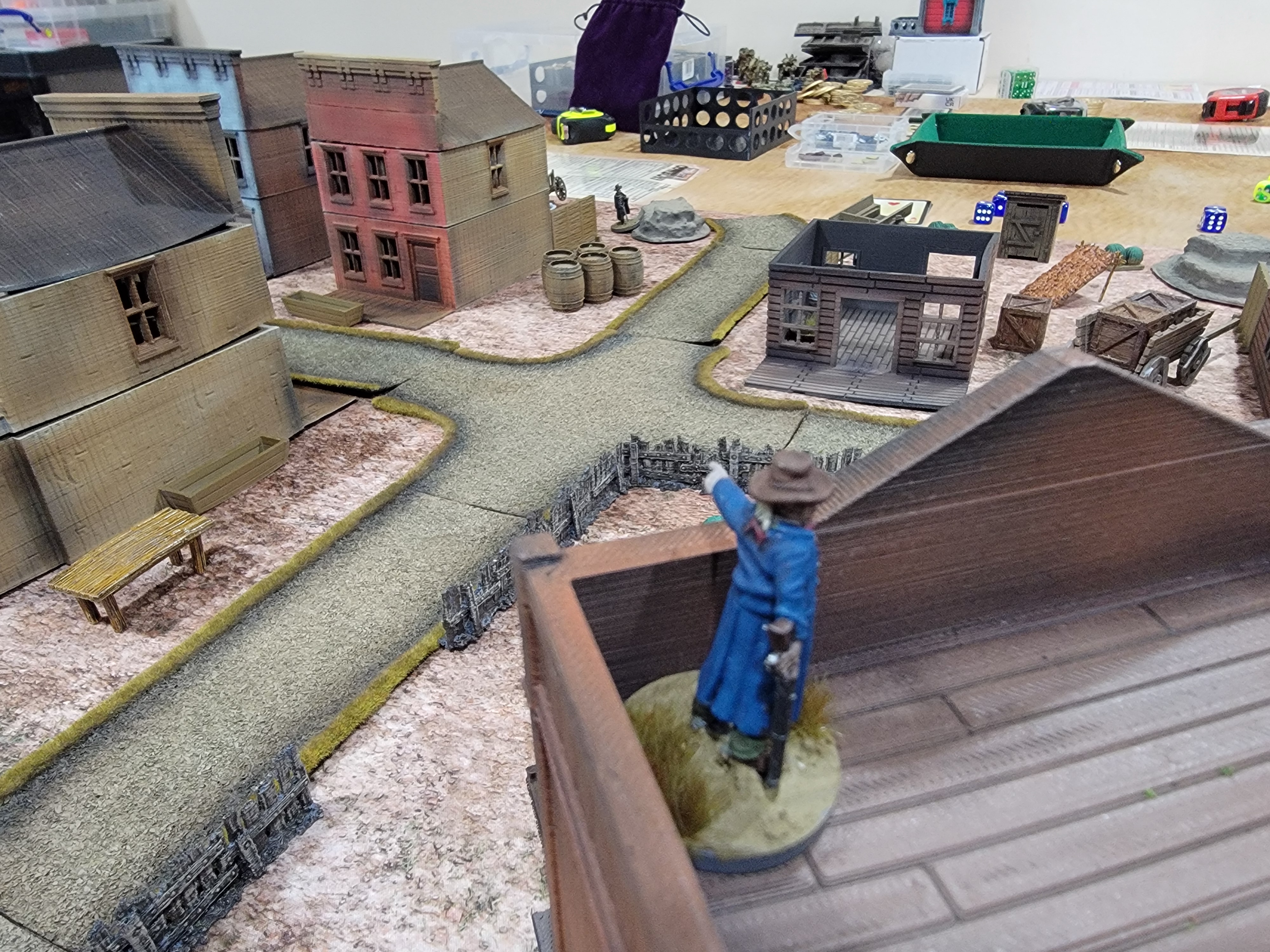
So what didn’t I like? Well, the rules are a nuisance to read. The activation deck is literally not explained in the book, but referenced repeatedly. You have to combine three pieces of information, including from the up front glossary of terms, in order to understand how it works. It’s not even hard–each fighter gets a card. Make a deck of those cards. Shuffle it. Deal a card, activate that model. When he’s done, do the next card. When fully done, shuffle. That’s a turn. A single paragraph explaining this would have been nice. Astounding oversight.
While the rules read clean and make sense, you absolutely need to reread them after playing a single game. You will miss or forget something, though I’d say you’ll only need that single reread. It’s not a hard game, but as you come to grips with the odd activation system and its nuances, you’ll forget that when a model successfully dodges it is also pinned, or that you stumble if you roll a 1 on a dodge roll.
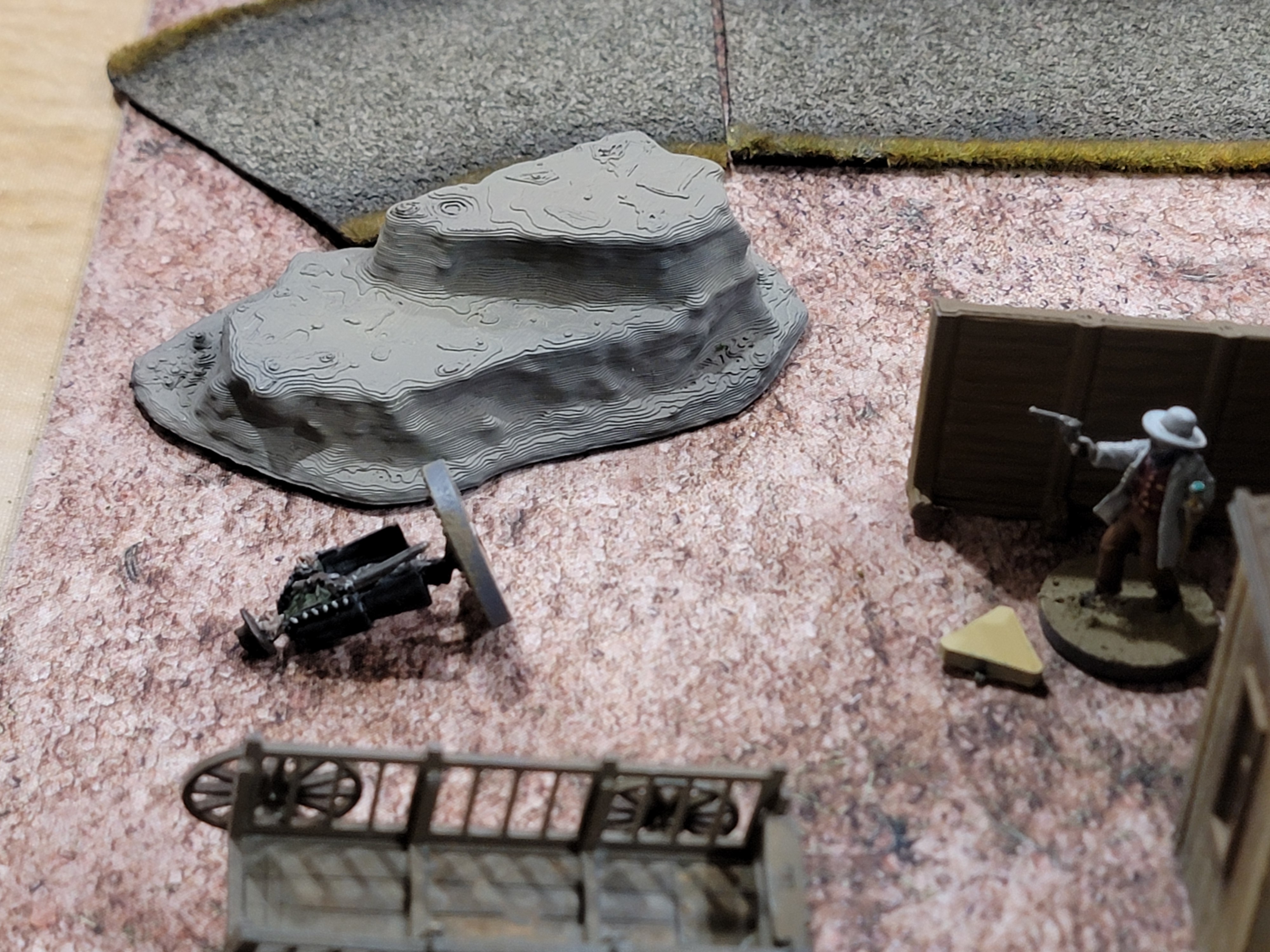
Then there’s Trick Shooting and Hollywood Stunts. These are really cool ideas–genuinely. A Trick Shot lets you shoot anyone within 12″ of you on a gamble–roll 3D6 and see what happens. You might shock or wound your opponent… or yourself! But it doesn’t specify if you have to have Line of Sight, or what the hell the shot even is. I’ve housed ruled that you have to be able to explain how the shot will work to enact it. So you can’t shoot me through a solid stone wall if you can’t explain how the shot will bounce off something to be able to hit me.
Hollywood Stunts allow you to name any two actions and do them in sequence–like crashing through plate glass and then standing up. It’s a neat idea, but again very vague. There’s a bit of tabletop RPG going on here and you have to be ready for it.
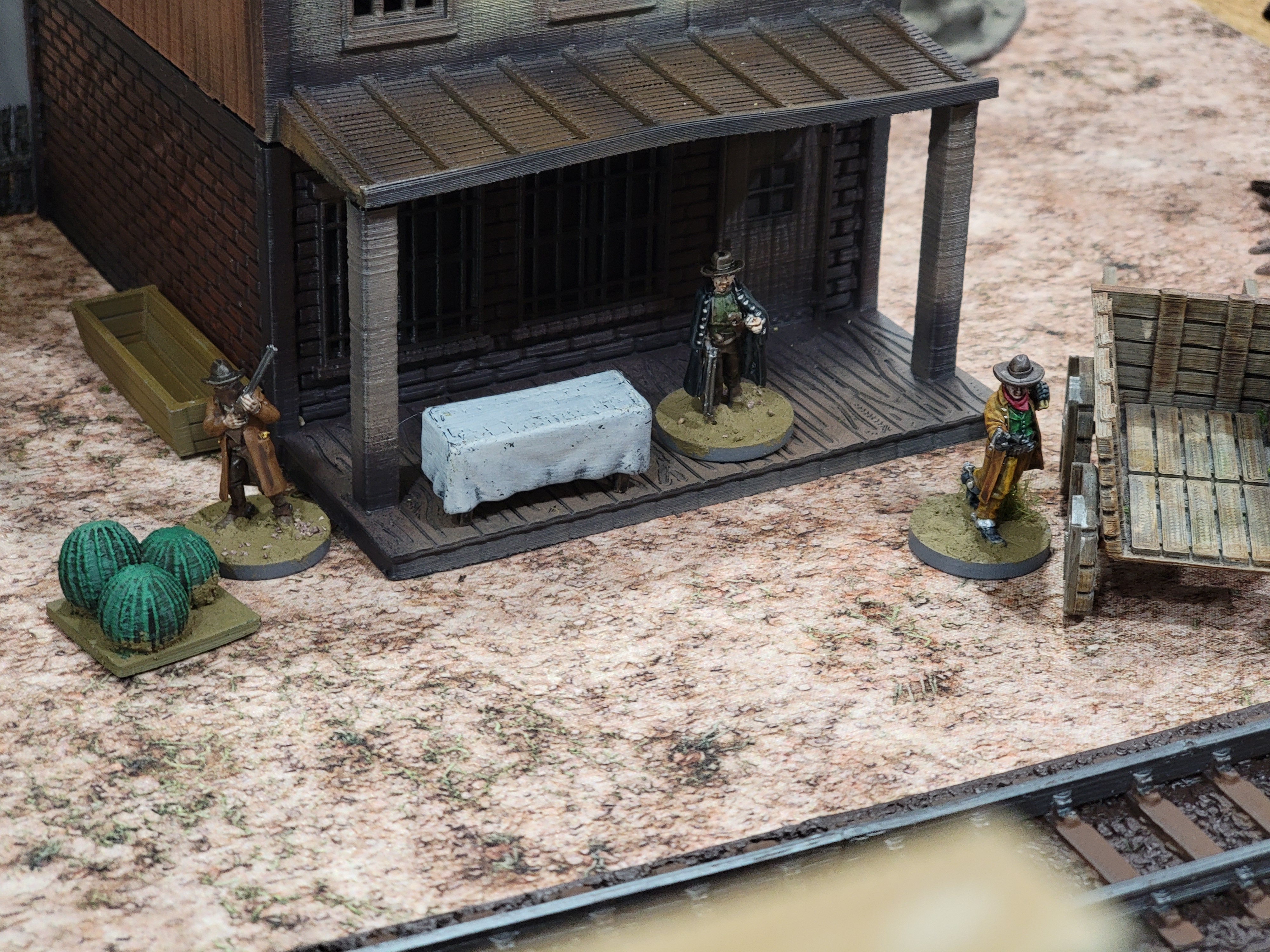
Really, that describes the system broadly. It was not hard to learn–my son is playing it fully. My buddy I played with tends to pick up rulesets at a very methodic pace, but absolutely had it down in that game no problem. It’s just that you have to be willing to role play a little. This is a narrative ruleset in so many ways. It has rules for everything you can think of: townsfolk, wagons, mounted combat, jumping on a moving train (via Hollywood Stunts). Got a cowboy movie moment? This game wants to live it.
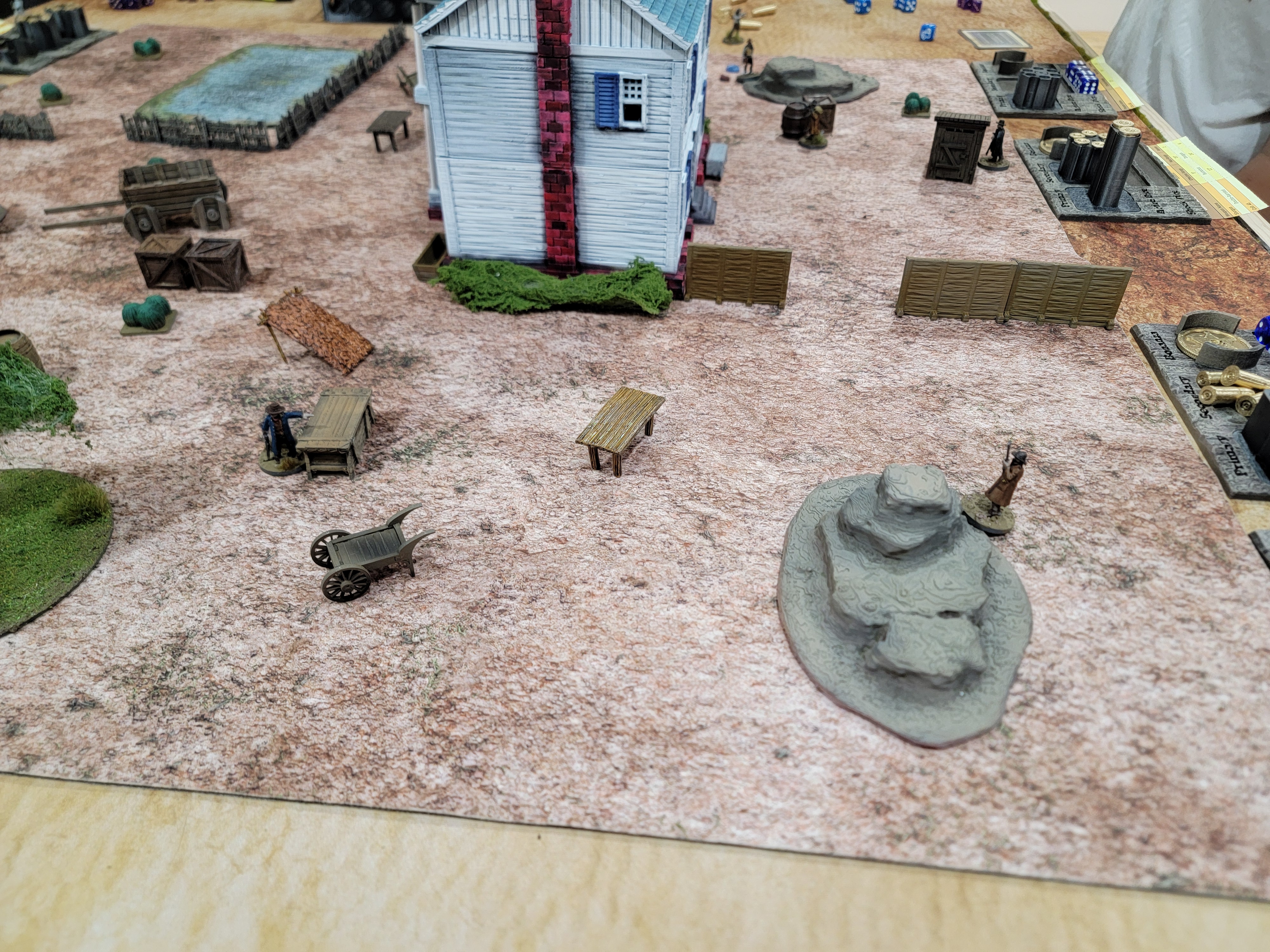
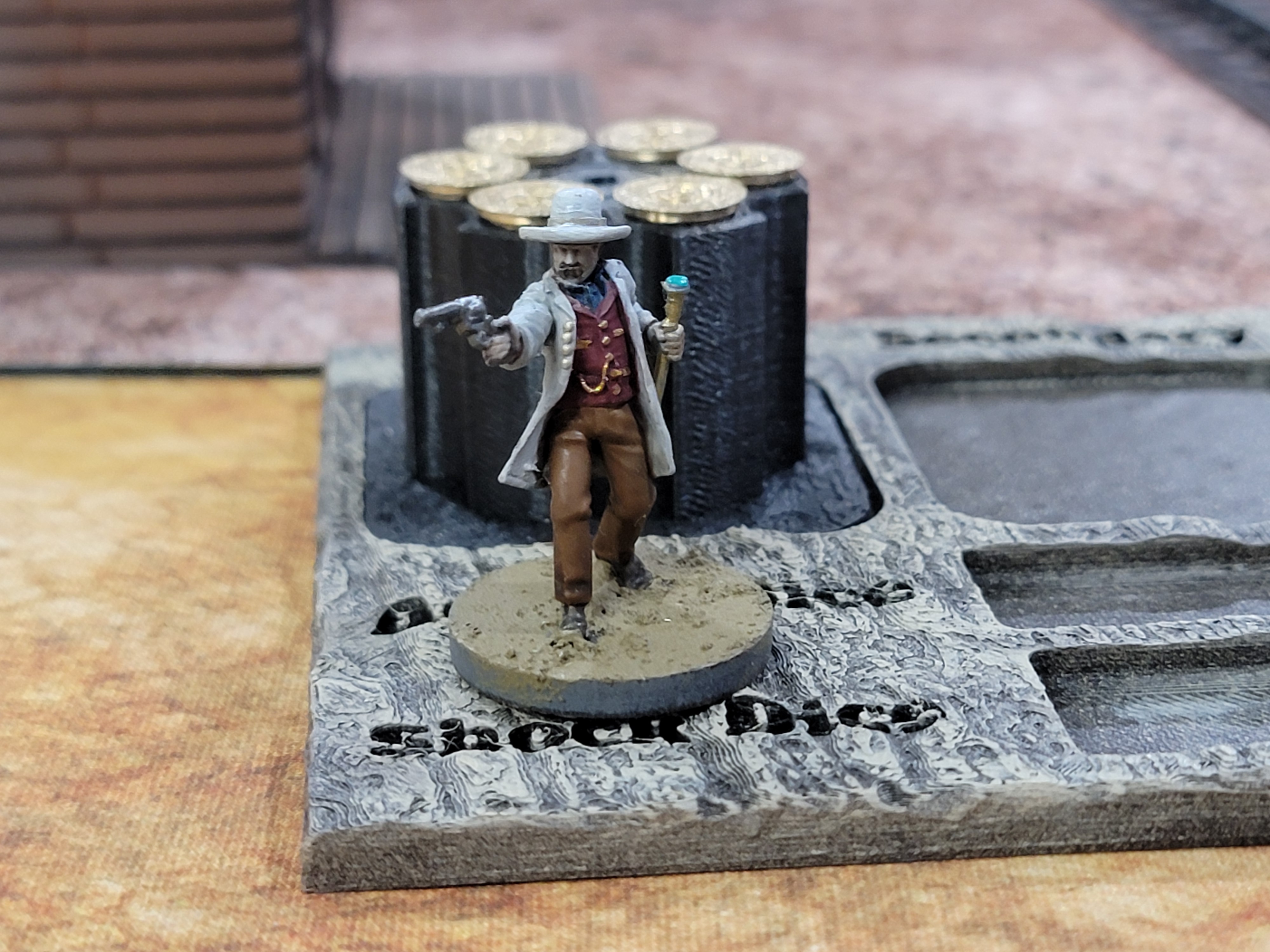
I’m mildly in love here, I admit. I’m gushing. I’ve built out a campaign tracker and list builder in Excel (Coming soon after some testing). I’ve printed the dashboards. I’ve built additional small ‘learning’ QRS sheets for the core weapons and how Trick Shots and Hollywood Stunts work. I’ve made special cards to track wounds! I’m all in.
But I’ll caveat, again, that I’m a very narrative player in game and I love Lardy rulesets. I’ll also caveat that I think the campaign system, while well structured, appears to commit some clear sins. It uses skills you gain for level ups, which adds more to what each cowboy can do but also becomes something I suspect will be hard to track. I’ve made a map and will play a campaign with my son but we won’t use the additional skills you can get. It’s just a step farther than what I like to see in a game. I won’t remember that John can change any dice to a Shoot dice but Larry can change any dice to a Spot dice when it really counts, even if those are relatively simple rules.
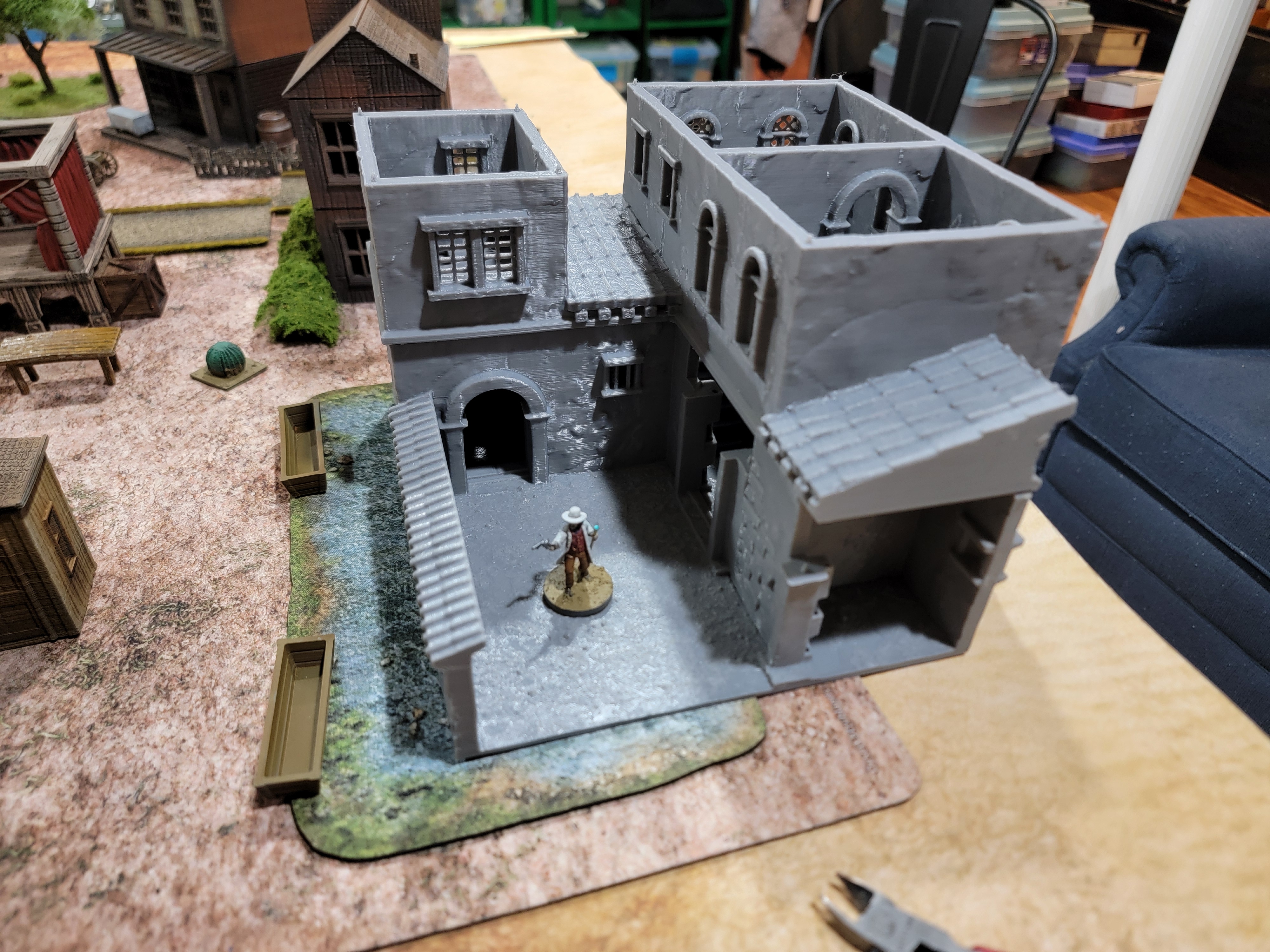
You’ll see more content for What a Cowboy in the coming weeks. I’m printing a Mexican adobe village to start then circling back to improve my standard Wild West town. I love this setting and I adore painting it. I even watched Fistful of Dollars with my son after we played three games in one weekend–this has been a great bonding experience and a great game for us to play.
Plus, as my wife points out, I literally greet people with “Howdy” in real life (and at the start of every email). This was probably destiny. Time to go buy a good cowboy hat, I guess…


 Small Scale Victory
Leave a comment