I’ll get it out of the way early: I probably need a better name for this. Queue the Archer meme, I guess.
Friction is elements in a ruleset or wargame that prevent players from doing exactly what they want. For example: having to roll to see how far your units move when ordered to move. Friendly Friction, as I define it, is friction built into a ruleset with the intent of pulling a ruleset away from being a tournament ruleset and toward being a fun-first ruleset. Perhaps a better way of phrasing it is to refer to this as pulling a ruleset away from Competitive Focus toward Play Focus.
There’s a post for another time somewhere in that sentence.
Examples of Friendly Friction can be found in games like Lion Rampant or Marvel Crisis Protocol. In Lion Rampant you have you have the activation rolls where you roll to make units take actions. Fail a roll, end your turn. The end effect is that you have to consider the possibility of order failure as you operate and often times a whole game can be thrown by single bad rolls. Lion Rampant is, as a direct result, a Play Focus game where you really shouldn’t take things too seriously. Try to get deeply competitive and you’ll find yourself very disappointed.
Note that you still play to win, it’s just that you shouldn’t be so attached to the end result. Overall, I’d say it’s successful. The game aims to be beer and pretzels. Friendly Friction helps it to achieve that aim, among a litany of other design decisions that home in on “Friendly afternoon of making fun of my buddy while we roll dice.”
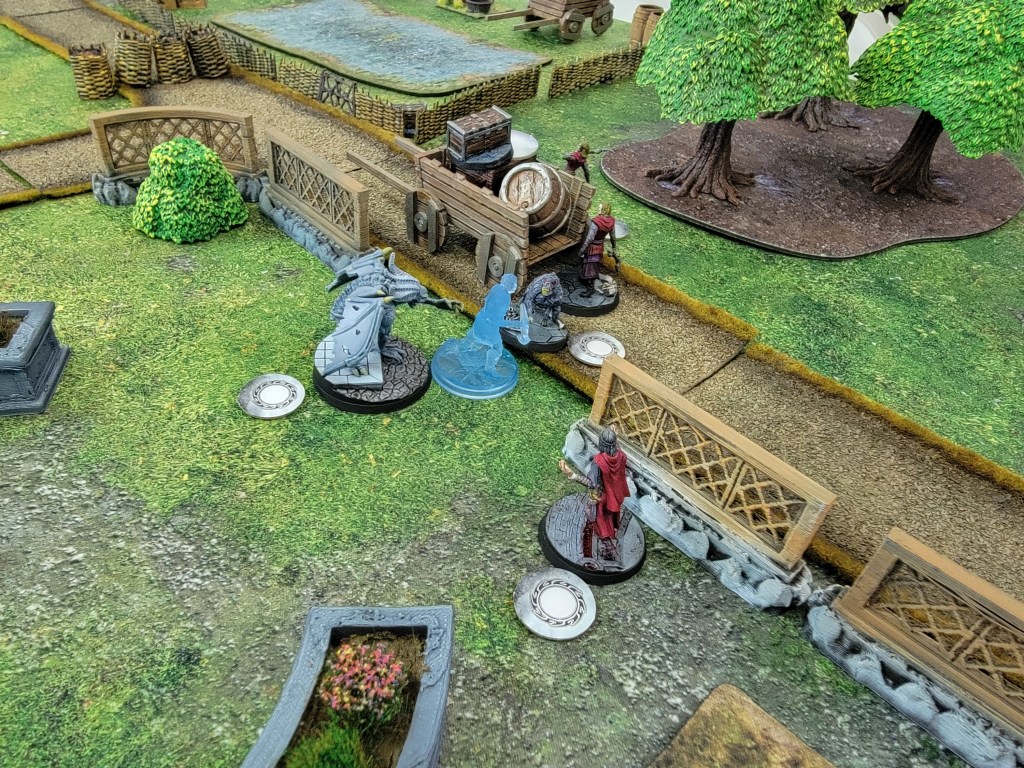
Marvel Crisis Protocol is actually a little more interesting to look at. The game has, as players will often say, “Very swingy dice.” The dice system is designed to produce unpredictable and often erratic results. You really have to stack the odds to get a roll anywhere near reliable. This speaks clearly to a desire to flatten the skill divide between experienced players and inexperienced players and in personal experience did just that. The irony is that the rest of the game shapes into something competitively focused. From the movement to the objective and skill design you can play Marvel Crisis Protocol at a very high competitive level. The kicker? You do so by avoiding attacking. The best players focus on guaranteed results, which generally involves minimizing how often you roll dice.
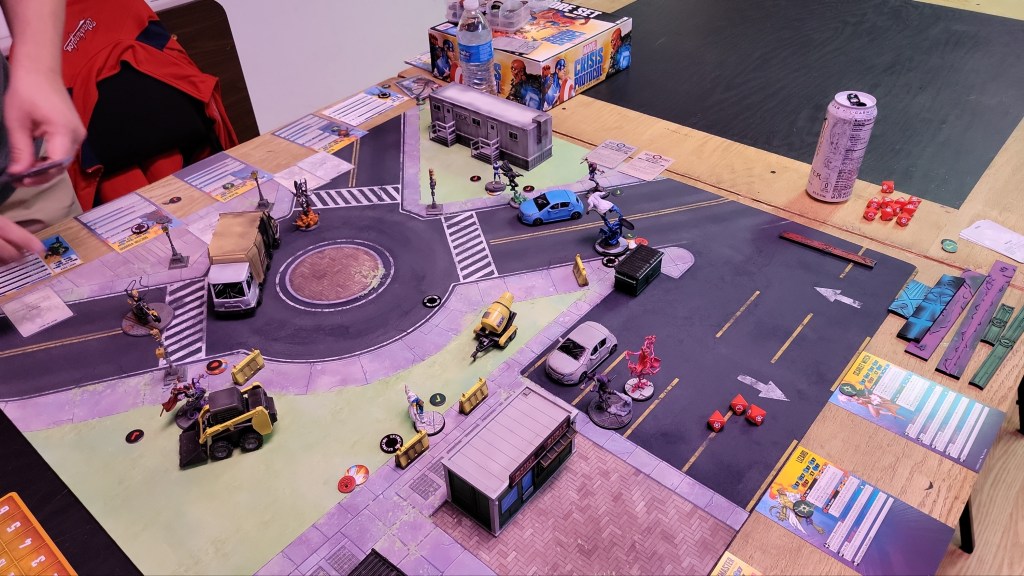
I’d say this is a problem in the design of Marvel Crisis Protocol. It inclines players toward competition but tries to hold back with the Friendly Friction in the dice. It has a mechanic obviously planned for Play Focus, does little to mitigate it, and builds the remainder of its system around Competitive Focus. The result is still a fun, thought provoking game but one that feels at times somewhat confused in its focus. I will say I find Marvel Crisis Protocol very fun and look forward to playing it with my son. We just won’t worry about what the most efficient moves are so much as how rad it is to have Hulk throw a car at Iron Man.
To be clear: not all dice are Friendly Friction. Particularly erratic dice, like those found in Marvel Crisis Protocol or Elder Scrolls: Call to Arms are the clear examples. Their dice mechanics allow for repeated explosions or duds in results at random and keep the games from the level of probable prediction necessary for competitive games. Alternatively, you can look at any number of D6 based systems in which you roll “Buckets of dice.” These games tend toward the mean, which is why you roll so many dice. It helps average things out and makes the game results more predictable. You’re not free of random chance entirely (it wouldn’t be war otherwise) but you have enough predictability to think competitively.
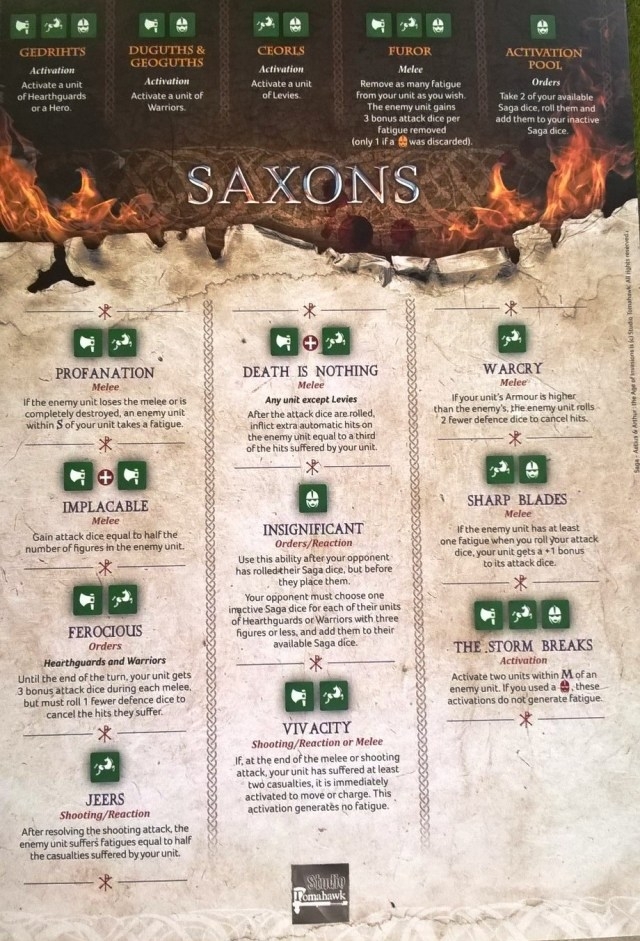
Let’s look at a final example of something that could be Friendly Friction but isn’t: SAGA’s activation system. In SAGA you roll dice which you then assign to a battle board that allows you to both activate your units and buff their activations.
This lends itself, clearly, to randomness. You could just not roll the dice needed to execute your super-special wombo combo. Yet SAGA has a healthy competitive scene (relatively, for a historical). The reason is that the focus of the game is the puzzle of solving how best to use your dice rolls to control your forces. How can you execute the best plan of attack or defense? How do you account for the uncertainty of future conflict? The game focuses on these points and gives you other tools to reduce the friction of the activation roll. Specifically, you can “bank” dice by leaving them on actions. This reduces your overall ability to activate units but allows you to prepare for a future attack.
Need your leader to have bonuses to his attack? Plan that out early and bank the dice on the buff that gives him an attack bonus, then position the attack. It’s a push and pull of risk vs reward and the better player will consistently out-think their opponent while weighing how best to allocate their activation dice. We start with a Friendly Friction element but the other mechanics in the game layer on top of it to give you just enough control to pull back into being a Competitive Focus game.
This is by no means scientific. I’m just building out terminology to help myself better understand what makes games tick. Really, I’m building toward understanding some broad categories of games, as seen with the terms “Play Focus” and “Competitive Focus.” More work to come. As a Wargame Analyst I really should be more worried about Educational vs Analytic Wargames but here I am trying to find similar categories for hobby wargames.
Comes back to a question I like to tease my wife with: is it really fun if you can’t analyze it to death?
 Small Scale Victory
Leave a comment