I’ve been thinking a lot lately about Lion Rampant and Xenos Rampant. I’ve played a fair bit of Lion Rampant and rather enjoy the system for what it is: a 40-50 man beer and pretzels melee era ruleset with friendly friction. It’s meant to be fun and let you play the minis you like while still being interesting enough to warrant occasional play. It’s by no means a ‘main game,’ but just an enjoyable experience.
Narrative Justification is how the rules or the players explain the game mechanics or events of the game. Most players know that they do this when something ‘epic’ happens in a game. You rolled straight sixes and made the impossible shots, killing some grand enemy that was giving you a wallop. Narratively, you’d say something like “Agent Mills nails the shot, popping the head right off your giant red gorilla!” There you go. You narratively justified what happened with the dice.
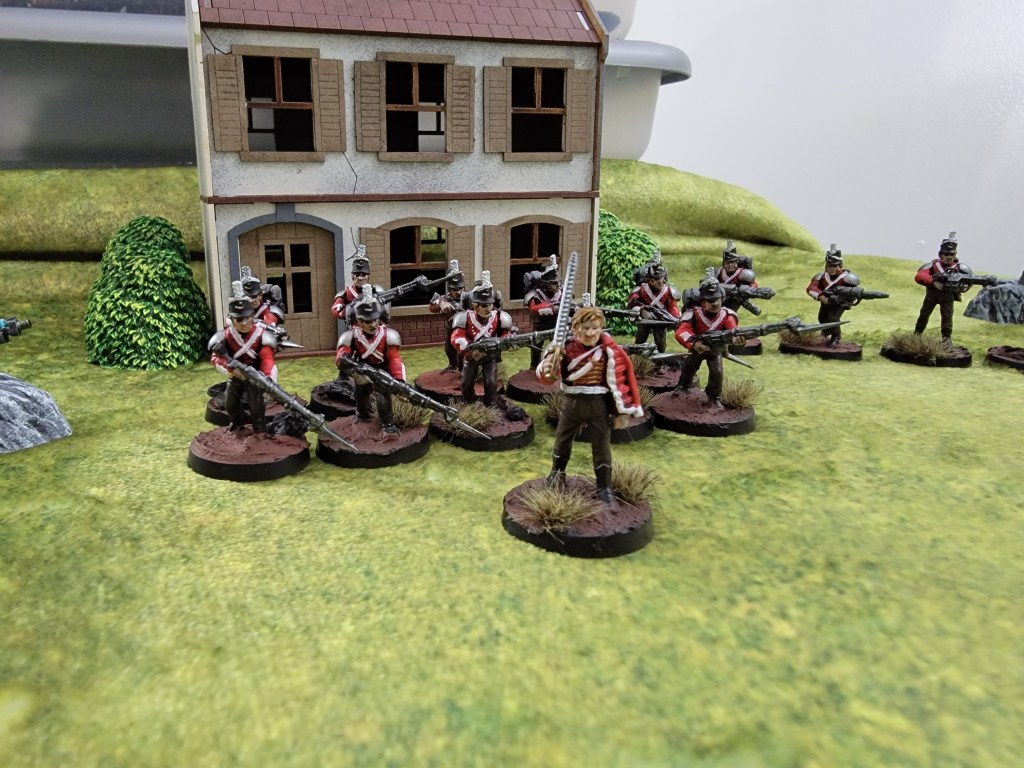
I’d like to explore a specific mechanic and its Narrative Justification. In the Rampant games, when you activate a unit you have to roll to activate it. Units have variable success values for these rolls, with more elite units needing lower numbers and less elite units requiring harder rolls. Further, some units will find certain actions easier. In Xenos Rampant, berserker infantry are able to make an Attack action (essentially charging an enemy and attacking them in melee) for free.
So what does this roll indicate narratively? Well, let’s look at what Xenos Rampant has to say about it:
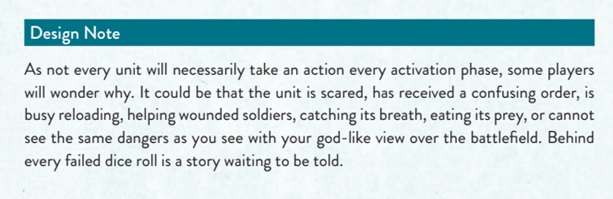
More or less “Come up with a reason, player! It’s your chance to tell a story!” Well, that’s… not a good way to put it.
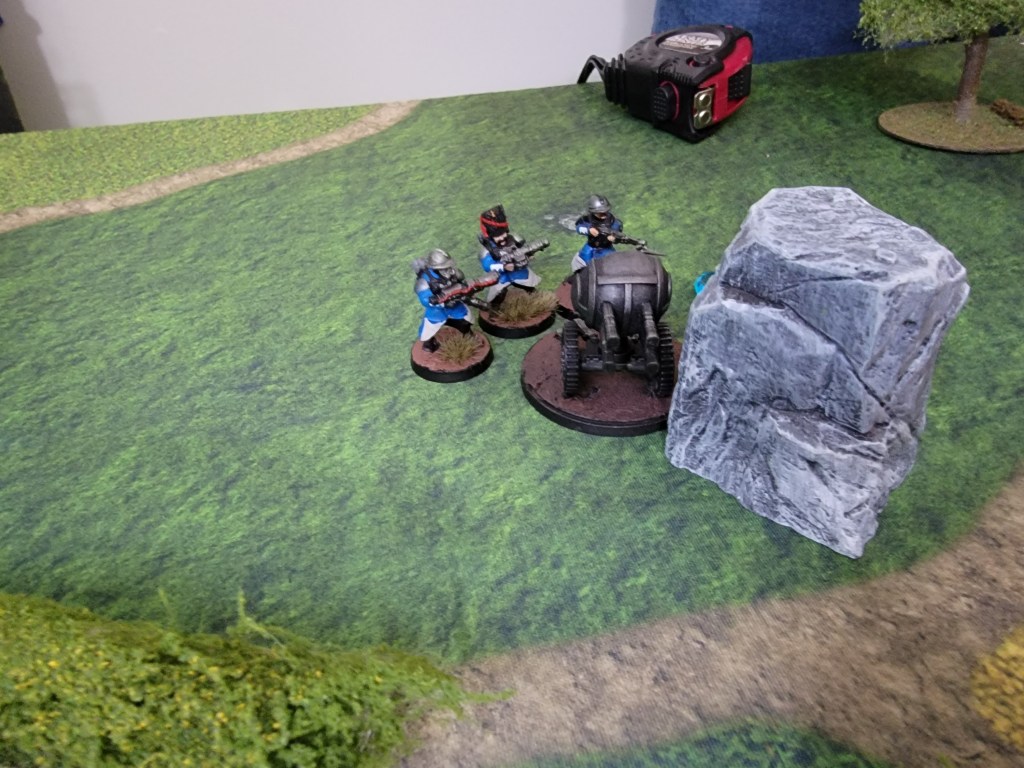
The common complaint I’ve come across for this system is that it’s frustrating, or dumb. It doesn’t really represent the battlefield. Alternatively, it might not make sense for future combat with trained armies. I don’t fully agree with this perspective but I do find the explanation here unsatisfying. At first, this even kept me from liking Xenos Rampant. Why is there any possibility of comms failure without active enemy intervention? That happens, yes, but so little that it seems pointless to model in the game.
Then again, if we just rephrase this a little, I think we come to a much more satisfying answer. See, elite units are easier to activate (even having multiple things they don’t have to roll for in Xenos Rampant). Why? Because they have better tactical battlefield awareness. Less elite units, like militia, are poorly trained and have worse tactical battlefield awareness. An elite unit knows how to setup and lay down fire consistently, or how and when to launch into a close quarters assault. A militia unit is clueless and far more likely to take longer to prepare to shoot or attack due to their inability to control the initiative.
The rest of the statement given by the book is still valid. It could be that your militia is momentarily scared or dealing with wounded inefficiently. All of these things add together into their ability to control the flow of battle around them. My Narrative Justification is just meant to make it ‘feel’ better. You ordered your men to move and failed the roll because they failed to find the right moment or to internally coordinate well enough to get everyone running. This is a real issue we see in conflict between elite units and militia—the real secret behind why the Navy SEALs are able to dominate tactical engagements is that they dominate the initiative of the fight. They know when and how to move or attack.
As a designer your commentary matters. When you offer an explanation for a mechanic, you give the players your reasoning. Friction is especially important to explain. Players don’t generally like to be told they can’t do something—unless they understand it to be a reasonable part of the reality of battle. Give a poor explanation and you end up with a folks rejecting your game because they don’t like how ‘unfair’ or ‘unrealistic’ it is.
And that’s a shame, because a lot of people miss out on great games due to not understanding what the game is trying to do. I’m not 100% convinced I have Rampant pinned down correctly. I’m somewhat disagreeing with the author’s interpretation, or at least saying “Yes, and…” to it. That said, I’m willing to stand up and say the author’s intent may be irrelevant. Your rules tell a story—they carry their own Narrative Justification built into them. I’d argue that the Rampant games show us that quite well. So well in fact that I think that Xenos Rampant actually has a setting—even though it tries to be as generic as possible.
But that’s enough waxing poetical for one evening. I have an army to paint and per usual it’s taking longer than planned. Back to the mini factory…


 Small Scale Victory
Leave a comment