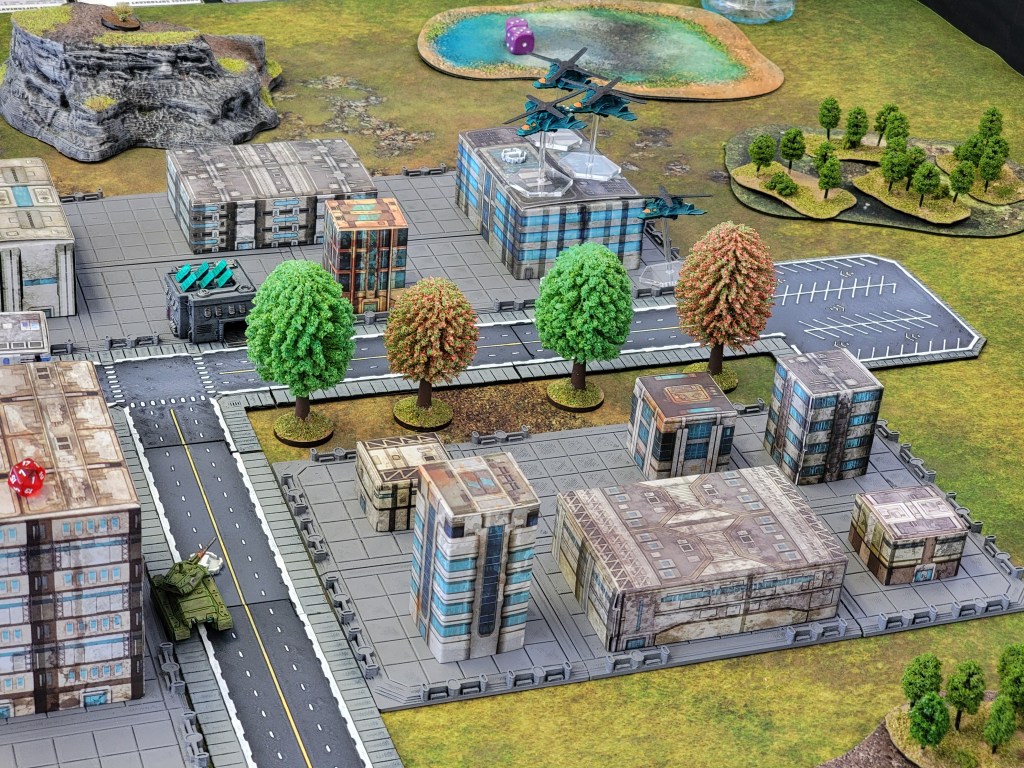
I’ve been enjoying my games of Alpha Strike quite a bit—each game tends to come down to the wire, and the game does a great job of executing combined arms in a way that makes each category feel unique. VTOLs serve a distinct job from tanks and tanks serve a distinct job from mechs.
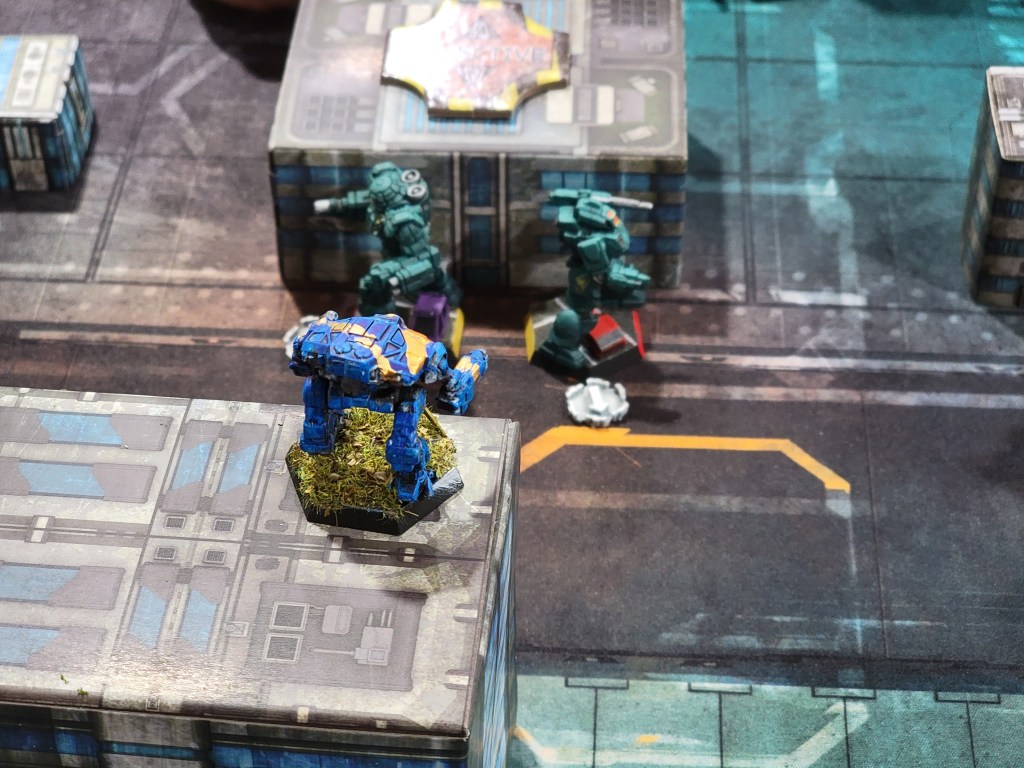
What’s truly interesting to me, though, is how the game abstracts all the various elements of mech on mech combat into simple rolls. In a single mech v mech duel in lore, you’re generally considering:
· The state of your armor
· The usability of your weapons
· Your heat generation relative to your weapons and needs
· The sheer cost of the damage you’re suffering
· What part of your opponent to target
Now, Battletech Classic captures the above perfectly, but Battletech Classic feels like it is truly aimed at lance versus lance combat, meaning each side caps out at 4-6 mechs. Granted, Classic has the rules to do larger games, but you’re volunteering for much longer games as a result due to granularity.
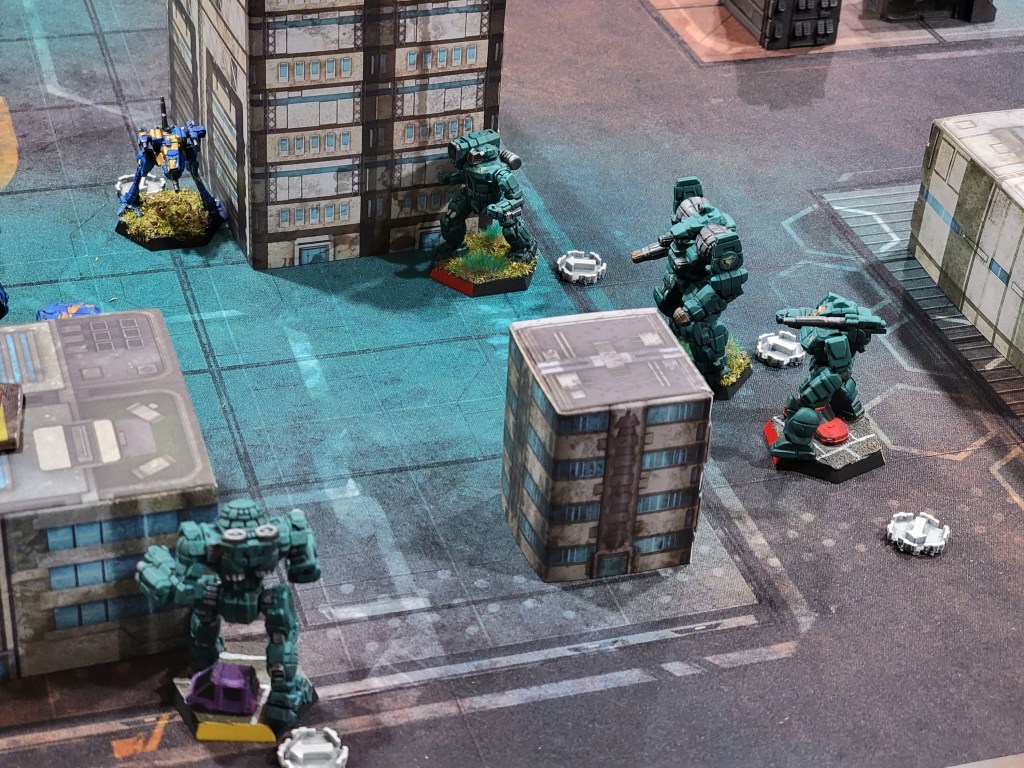
Alpha Strike is oriented toward larger, combined arms battles that finish quickly. As a result, we have to abstract a lot of the above decision making—and we do! In a mech v mech duel in Alpha Strike, you still consider:
· The state of your armor
· The critical damage you’ve taken, which debuffs you (weapons, aim, movement, and heat generation can be affected)
· Your intentional usage of heat
It’s not perfect for the task: heat generation is entirely voluntary in practice. You choose to generate more heat to do more damage. Critical damage isn’t controlled: I don’t shoot at your arm to disable your weapon. I shoot at you generally, then roll on a critical damage chart once I’ve stripped your armor.
At first, I disliked this. I came to Battletech for the big stompy robots, damnit. As I added tanks and VTOLs, I came to accept it quite easily. There’s no time to deal with all of that and track it when I have 20 units on my side of the board.
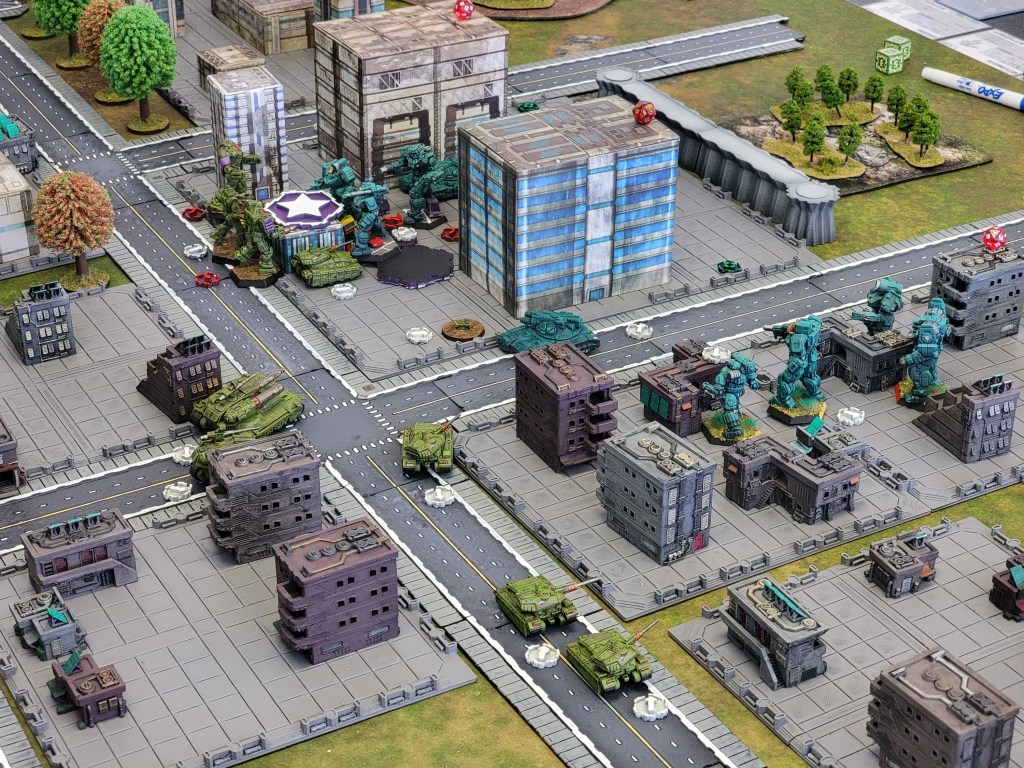
As a result of this abstraction, I can easily factor in tanks—they work similar to mechs, but are more likely to lose mobility based on their charts. Similarly, I can learn VTOLs: you just need to learn how they manage height and measuring. Boom, done.
The simple brilliance here comes down to the 2D6 roll you make for every shot. You factor a whole list of things, but it predominantly comes down to the following:
· Target Movement Modifier: every unit has a TMM value when they move. A slow unit may have a value of 1, meaning it’s 1 point harder to hit them. A VTOL has a value of 4 (+1 for being a VTOL) meaning they’re just hard to hit, despite being fragile.
· Cover
· Range
· Did you jump?
This gives just enough that everything feels distinct. Mechs can find cover behind buildings, but tanks have to actively spend their movement phase rolling to find cover. VTOLs are hard to hit by merit of simply having a high TMM value, but will die if anything connects. You have all the elements in place to easily play out a combined arms game at a level my eight year old can understand.
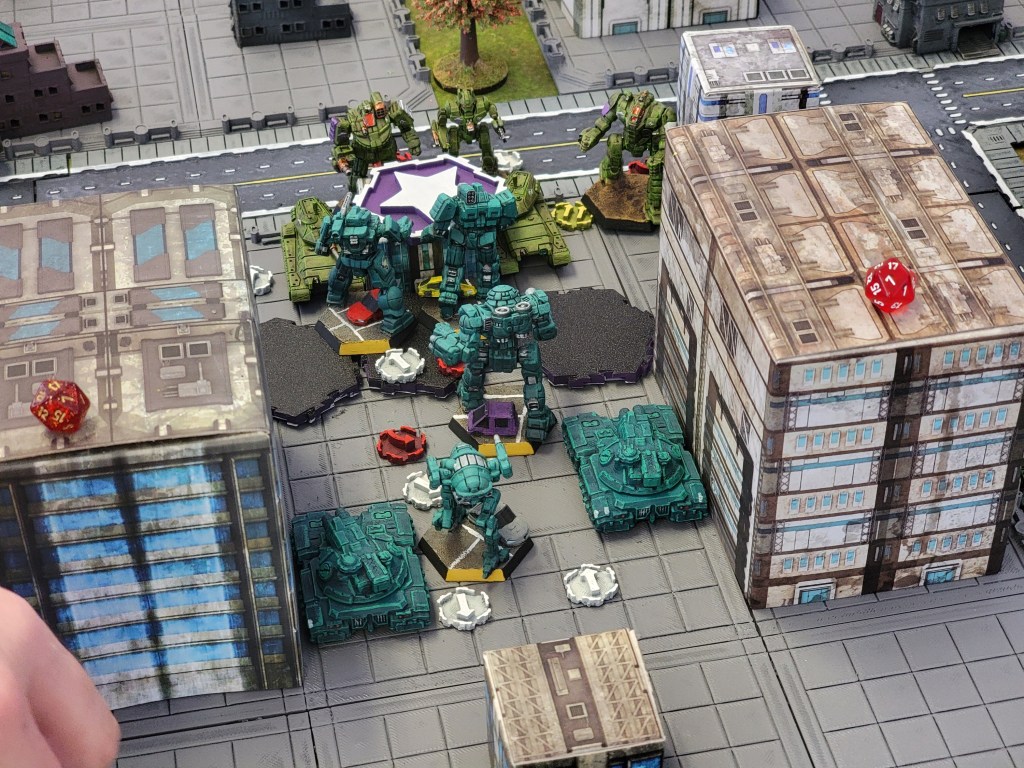
That doesn’t mean the game is simple. It’s just not complicated. The desired complexity comes from the interactions and possible decision space granted by having so many choices in how to approach problems. The flip side here is I think you’re playing Alpha Strike wrong if you’re not doing combined arms. As a pure mech on mech game, it fails to truly capture the full spirit of robo combat. As a combined arms game, it puts you squarely in the seat of a company commander and keeps the decision making at that level, abstracting away all the things it doesn’t want you to touch.
Overall, I think Battletech: Alpha Strike hits the mark on being easy to learn, but still having enough complexity to be interesting.
I still need to consider what this does to my opinions on adjudication. Why do I like this so much, yet I find myself bouncing off Infinity?
Ah well, another time. Battletech: Alpha Strike—it’s neat. I like it.

 Small Scale Victory
Leave a comment