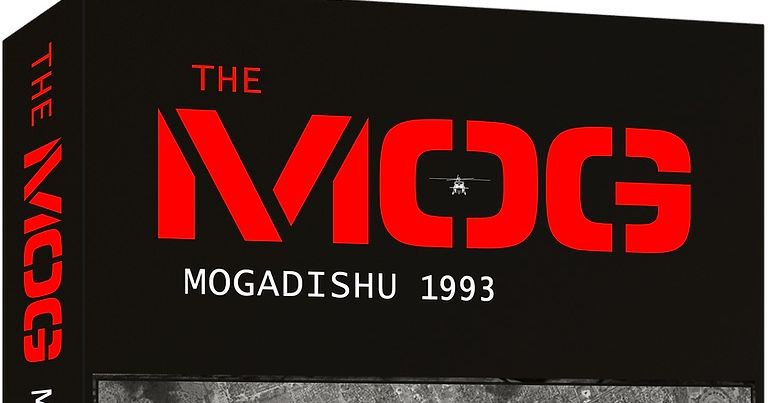
“The Mog” is pronounced with a strong O.
I recently picked up a copy of The Mog, a solo game from White Dog Games about Mogadishu. As a person interested in both solo games and asymmetrical guerilla warfare, it felt like a natural choice.
I’m still waiting on the game to arrive, but I’ve started to research the Battle of Mogadishu (AKA Black Hawk Down) and found it to be a fascinating 48 hours and equally interesting wider conflict. Frankly, I had no idea just how bad off Somalia was and still is.
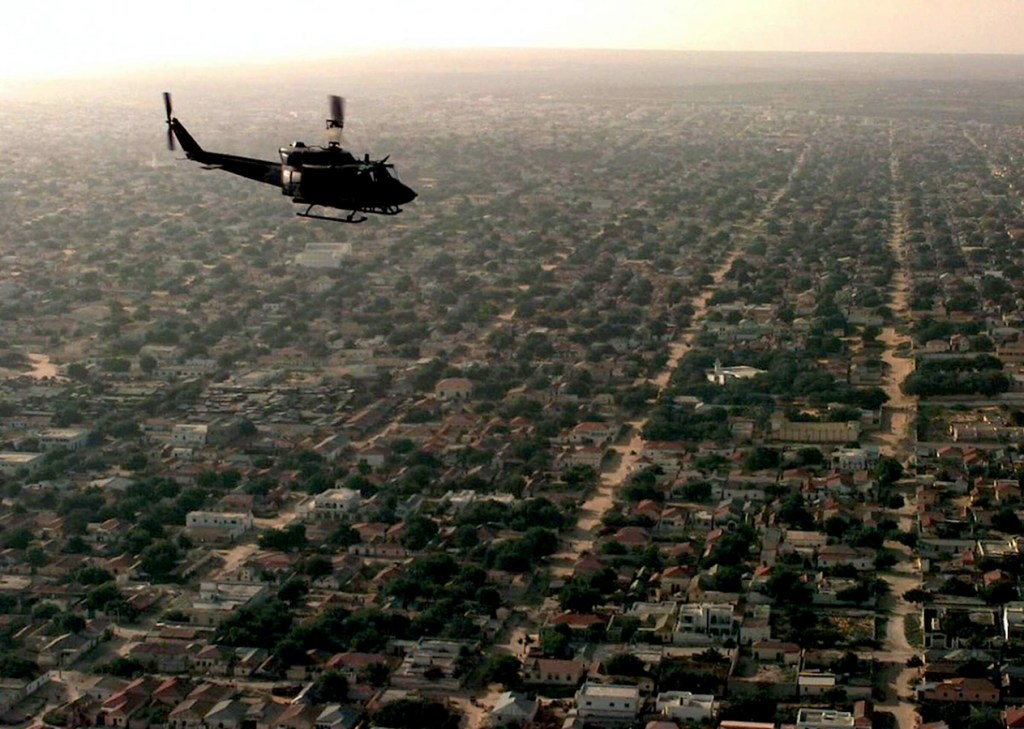
My interest has grown as I study, and I’ve decided I want to stage a series of event games revolving around The Battle of Mogadishu next year. The conflict revolved around small arms fire, with the US being unable to really use artillery or air strikes due to fear of harming civilians. Helicopter strafing runs were a common feature but carried a lot of risk with various anti-tank weapons being fired off to try and sink a Black Hawk.
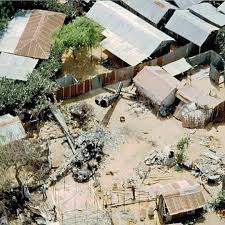
Further, the forces were very different. The Americans, Malaysians, and Pakistanis were elite, well-armed, and well supported. Only 20 Americans and allies died, with around 100 wounded. Between 100-700 Somalians died, with thousands more wounded or killed by second order effects. This creates a situation where one side is playing a game of elites, reliant on satellite imagery, overhead flights and other support to help them identify what is happening around them. The other side has to use subterfuge, guerilla tactics, and surprise to try and win the day. The Somalians couldn’t win an out-and-out battle, but they could kill a few Americans and repulse them out of the city in an effort to show the world how a bunch of guys with AKs could push back the world’s best military.
Adding to the interest is the motivations. The Americans were there on a humanitarian mission—stabilizing the country so food and other aide could be given out to the civilian population and democracy might be restored. The Somali warlords on the other hand had their people convinced the Americans were here to “Stabilize” the country to be able to harvest all its potential oil supply for themselves. There was no charity without a price, and the locals often believed the Americans were yet another case of imperialism, not a genuine attempt at improving Somalia.
The challenge now is many-fold. Here’s a selection of the questions I need to answer:
1) What scale? 28mm is beautiful, and many of the conflicts were rather small in terms of terrain, so it lends well to 28mm. 15mm is much more affordable and allows me to produce more buildings and set our battles in the wider setting of Mogadishu. The boards themselves will be more impressive, but the miniatures won’t.
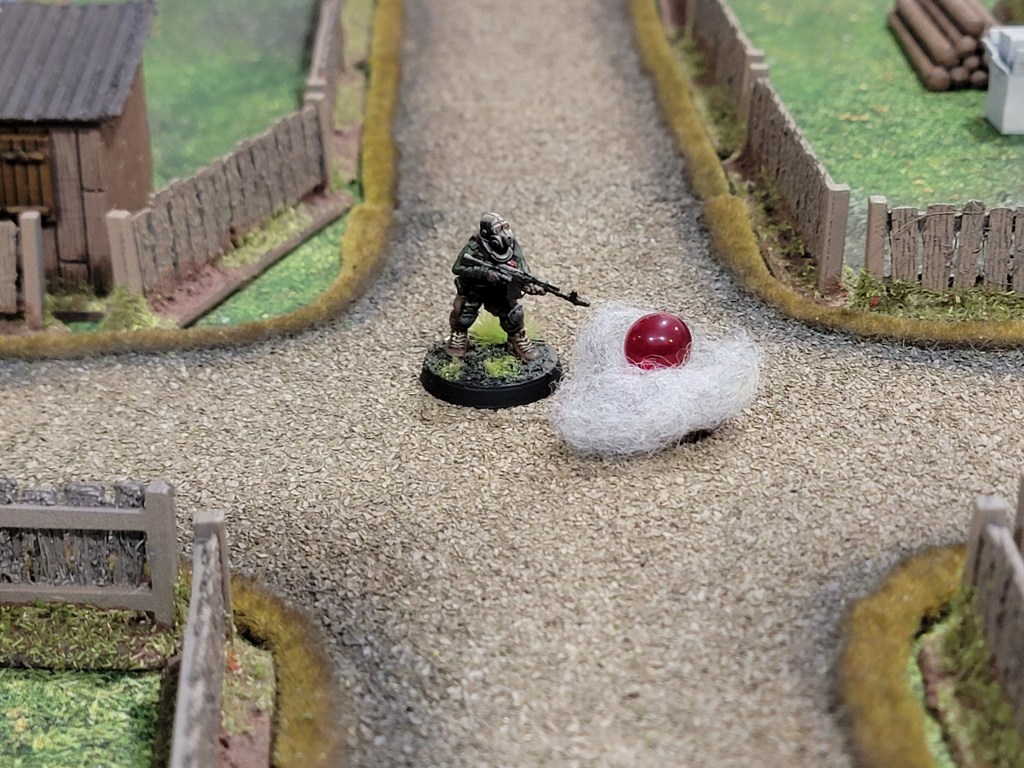
Ultimately, I settled on 15mm due to cost, time, and terrain. I think I can make a more compelling board at 15mm and it will cost me a fraction of the amount to field 100ish Somalians and 80ish Americans. Let alone the cost of the helicopters and other vehicles! Better cost, more grandiose scale. 15mm wins, even if I do love the spectacle of the potential 28mm boards.
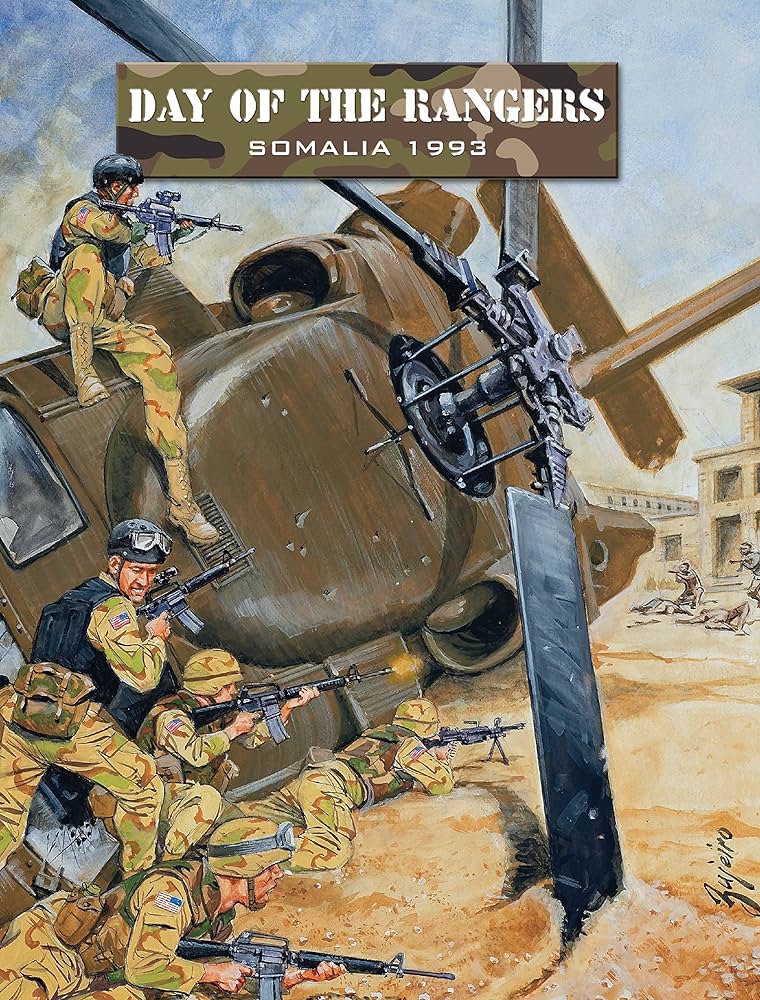
2) What ruleset? This one I haven’t settled. There’s quite a few choices. Force on Force is perhaps the most obvious—it even has an excellent supplement. Asymmetric Warfare just released and looks more digestible and easier to teach. That’s the kicker: as an event game, I have little time to teach and don’t want the players sitting through half an hour on how the game works. It needs to be intuitive and it needs to really replicate the feel of events.
I may very well strip down an existing ruleset or even produce one of my own. I have a lot of ideas on how to handle the differing morale, the Kwat usage, the guerrilla style warfare, the helicopters, and everything else in between. We’ll see how I land on this one, but it will take a lot of thought to really land it right.
One thing keeping me from just using Force on Force is that the scenarios given play out on 2×2’ boards, which is too small for the scale I’d like. Further, Force on Force plays a little slower due to being very granular.
Asymmetric Warfare feels faster, but I’m skeptical that it’s fast enough. I really need players to get to the heart of gameplay quickly. I want the sticking points to be whether you place reveal a unit to attack, not “Okay, so what stat do I use and how do I do the math for this shot again?”
3) What scenarios to play? I give Force on Force a ton of credit—the supplement they made is amazing. While the scenarios are smaller than I’d like, I think I can work off them and produce larger scenarios covering full 4×4’ boards with a lot of terrain while still keeping the game moving quickly.
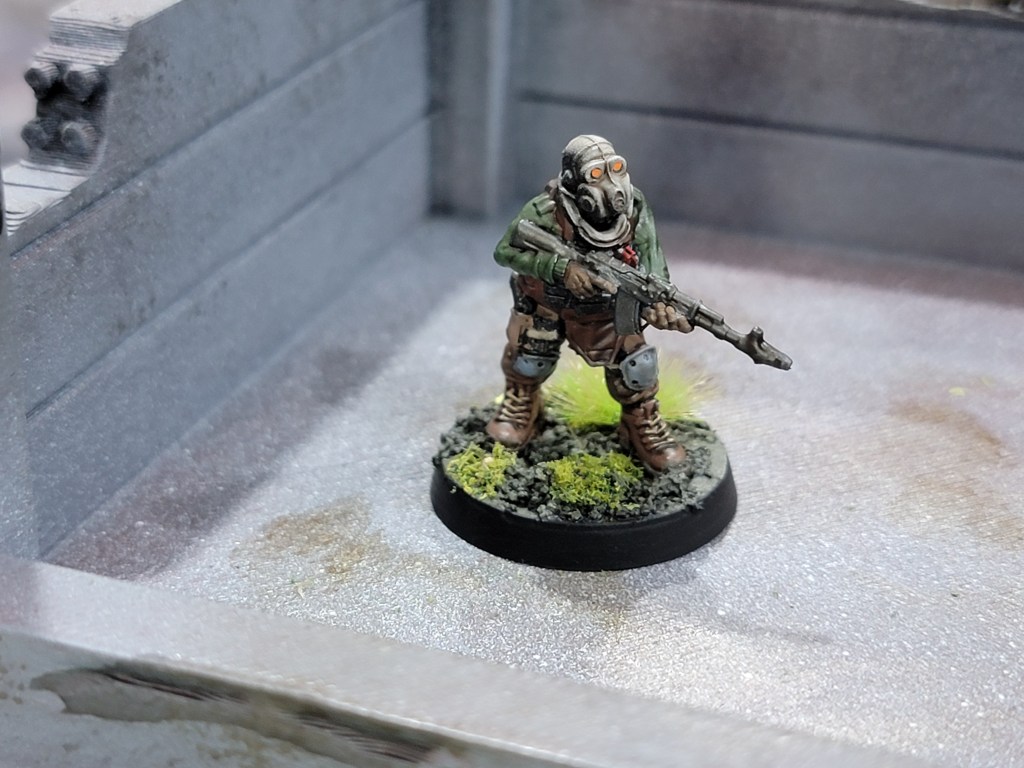
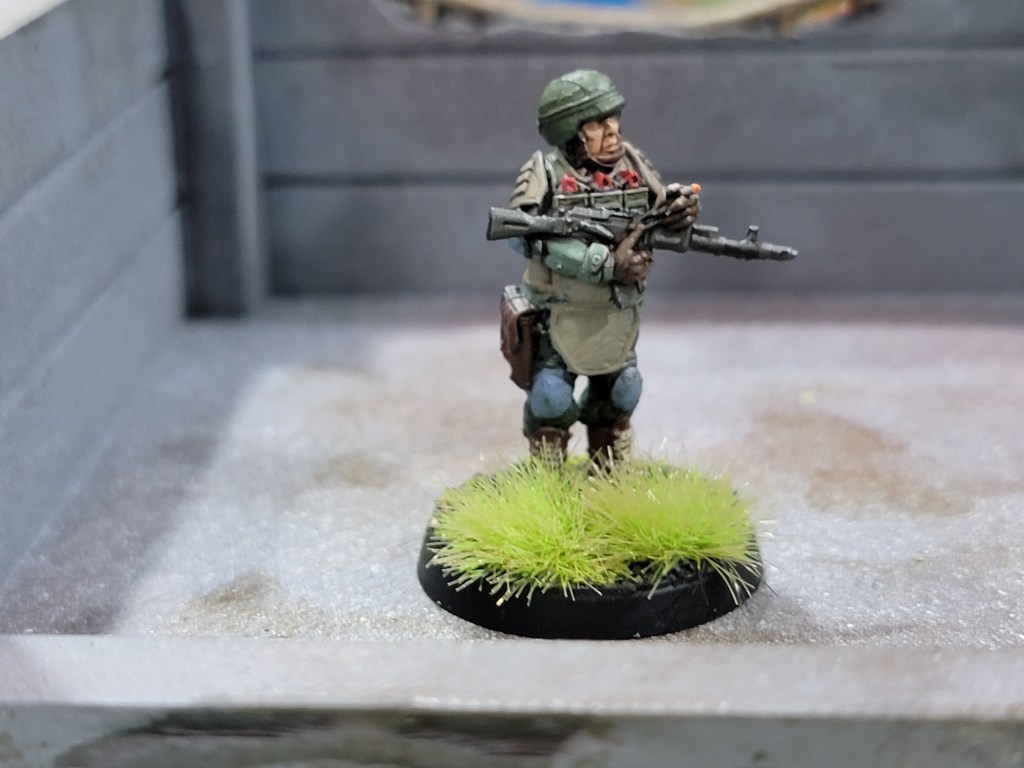
This has shaped up as an interesting challenge. I think I’ve hammered most of the details home. I’ve found miniatures that should work. I’ve found 3D printable buildings that are reasonable approximations of Mogadishu. I just need to settle a system and work from there. I’m on vacation for the next week or so and I will spend a lot of time reading various modern rulesets. Hopefully, I can find one I can easily strip down to speed up play, but worst case I think I can write my own ruleset for these scenarios. It won’t be a complete, packaged product, but I should be able to deliver a fun set of games that help each of my players learn more about a conflict they may not have already known much about.
I’m genuinely excited. This is the reason I got into historical gaming—to learn and recreate moments in history with interesting games and interesting mechanics. From designing the table, to painting the miniatures, to plotting out the scenarios or even writing rules, this is absolutely a project that I am hyped for every step of the way.


 Small Scale Victory
Leave a comment