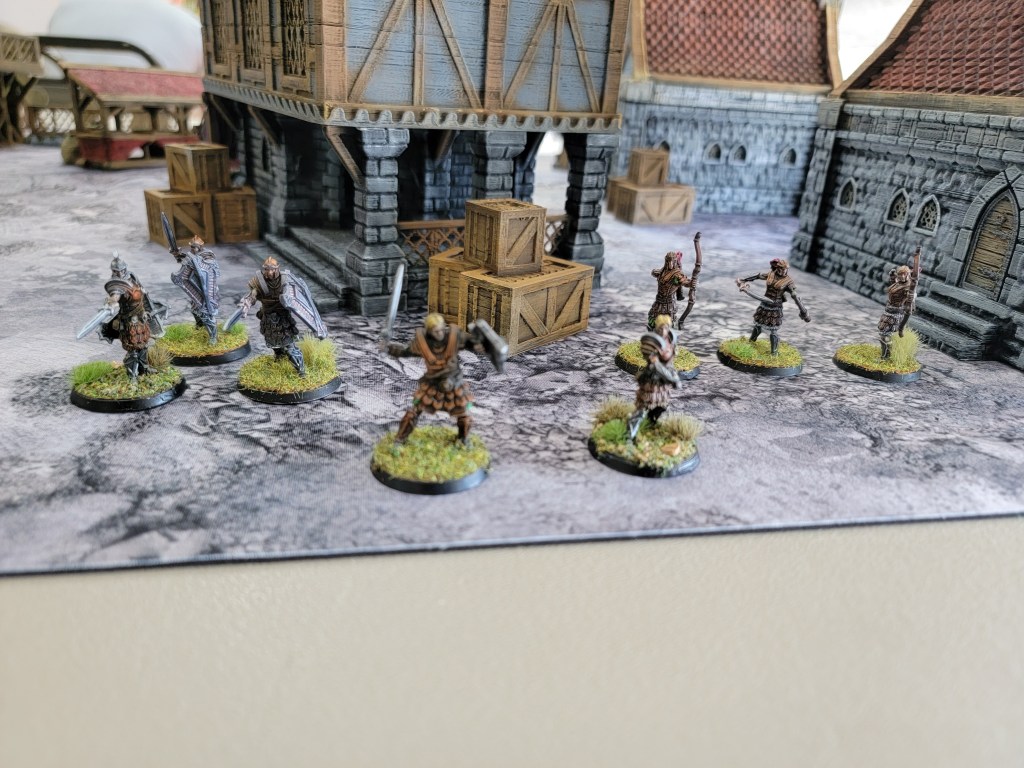
I had my first game of Elder Scrolls in months this past weekend. My thoughts on the game are mixed—I like the moment-to-moment gameplay and what the game is aiming for, but I desperately wish they’d streamline the setup and process of the game.
Think of the game as Player v Player v Environment (PvPvE) like Frostgrave, Mordheim, or any other games in that vein. You fight missions with treasures and NPC enemies on the board. Your mission objectives may be to directly kill your opponent, but they’re more often something to do with the NPC enemies or treasures, leading to indirect conflict.
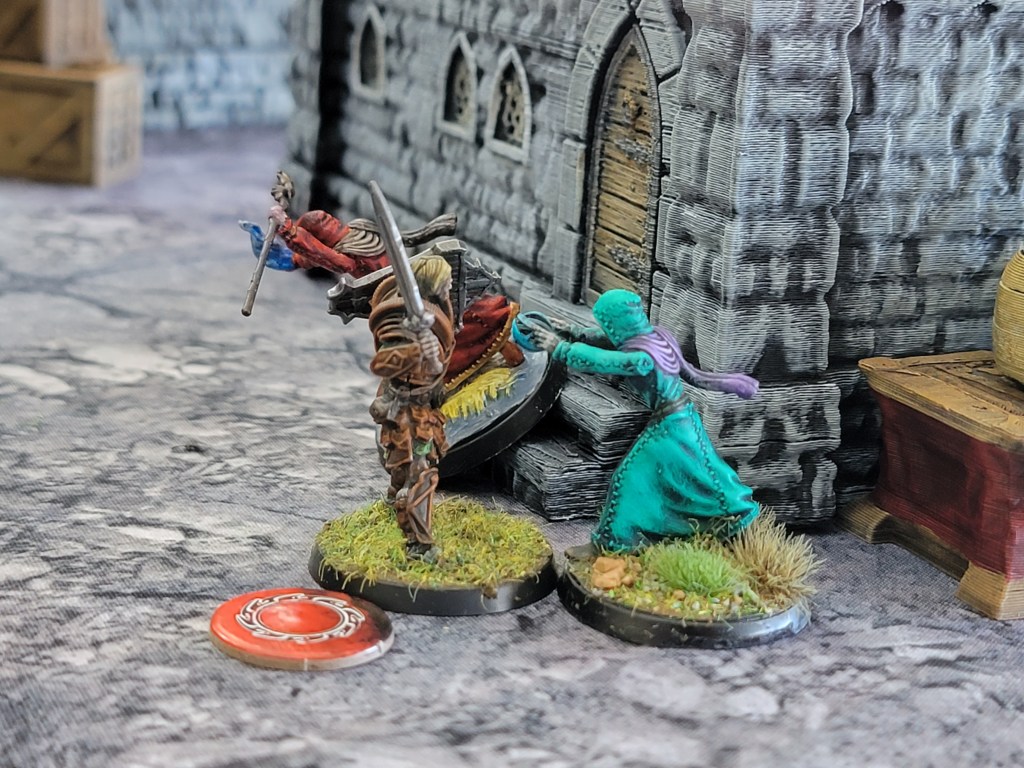
At first, I found this off-putting. I wanted more war in my wargame. As I’ve played, I’ve come to respect the game as more of a competition rather than a conflict. You’re competing to outscore each other on unique objectives. Taken in this light, the game is considerably more interesting than I first gave it credence.
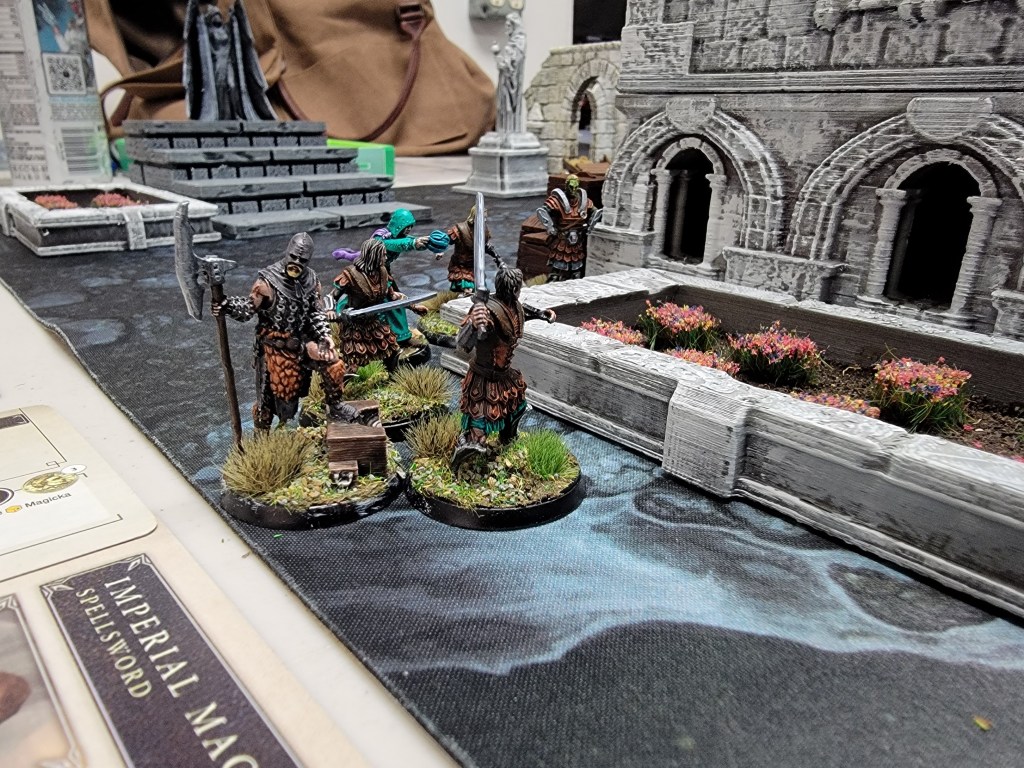
Take, for instance, the game I played this weekend. My opponent’s objectives were to stay alive and kill me, but my objectives were to capture treasures and kill more “enemy” models. I originally started to go after my opponent to deny him points for staying alive and collect on killing enemies, then realized the NPCs were ALSO enemies AND easier to kill.
The driving force here was that I realized killing my opponent was hard and risked him gaining points for killing me. Indeed, he killed five of my eight models, which did make the deciding factor at the end of the game. Had I just stayed focused on my objectives and avoided him, I’d have likely pulled a win. I lost 22-19, so just avoiding an early game archer firefight (where I lost 2 models and killed none) would have likely swung the game in my favor.
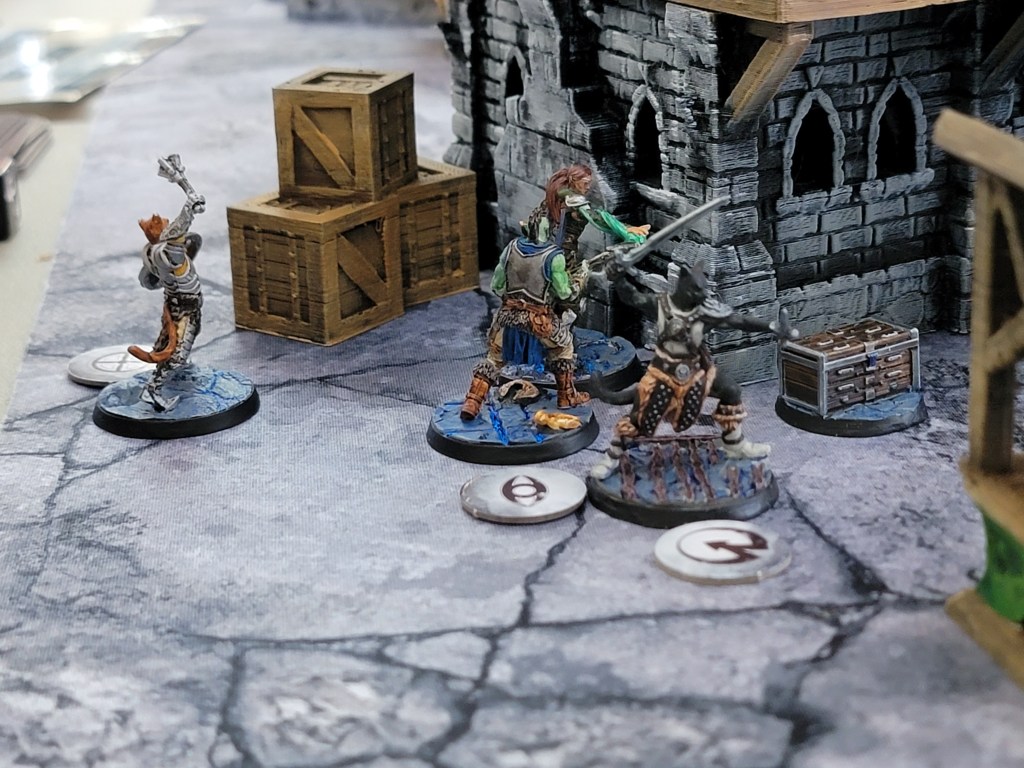
It’s funny—Infinity gave me a better perspective on Elder Scrolls. In Infinity, you’re always focused on the objective and killing your opponent is meant to serve the function of achieving or denying objectives. I was playing Elder Scrolls wanting to just murder my opponent, but that’s the entirely wrong approach.
In fact, I realize that while I enjoy highly lethal tactical games (see: InCountry), they don’t hold your interest quite as long. Objectives make for more interesting puzzles. I respect Elder Scrolls for this and I plan to engage with the system from this new perspective moving forward.
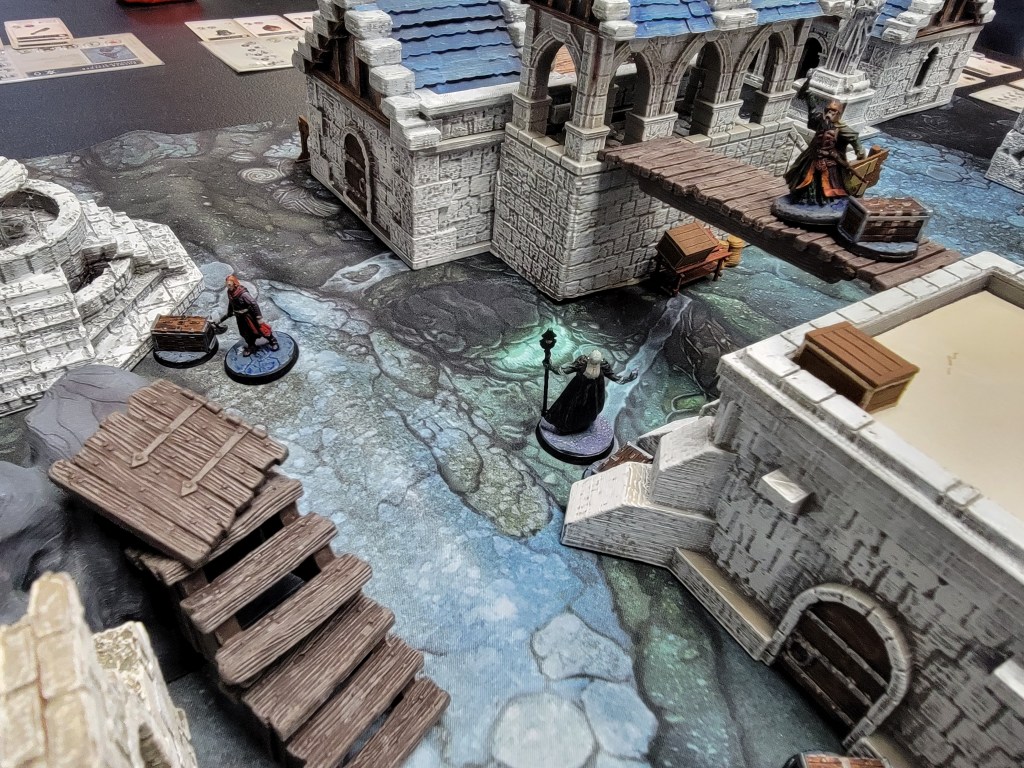
The game I played was fun once we got past setup. There are clunky elements to the game I don’t enjoy. Enemies have response matrixes you have to check to determine their behavior—this does allow for interesting AI. For example: The Ebonheart Pact who were present in our game were very objective focused, so they sat and guarded the treasure chests I needed to acquire. Generic monstrous enemies would have likely charged every model nearby. An AI system similar to Frostgrave wouldn’t permit for this level of detail, which allows the NPCs to be more than speedbumps.
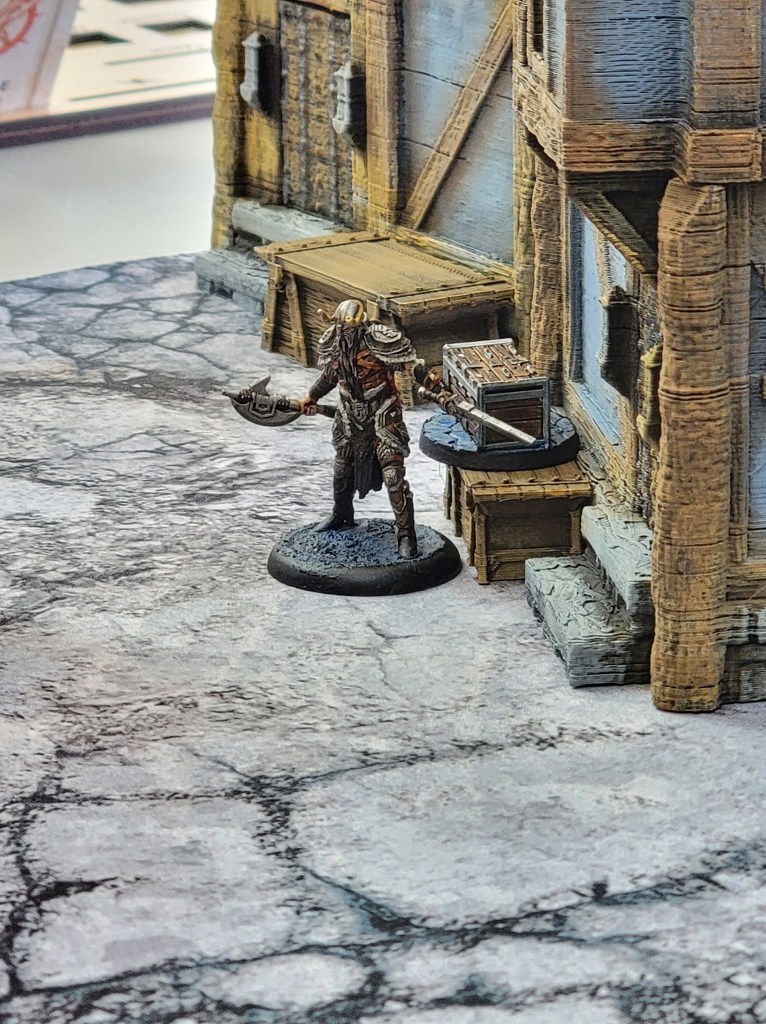
The issue for me is that it takes a while. It’s oddly slow and inefficient, which adds up. You spend a chunk of the game just mechanically doing stuff and I don’t feel the juice is worth the squeeze. I suspect I’d like the game a whole lot more if you stripped down the AI system. I don’t think the loss would harm the game, but rather focus it better on what works well for it.
And what works well here really does work well. The dice mechanics are fun—dice have special markings which trigger abilities or give more dice to your roll. Critical hits are satisfying. The breadth and width of what you can do with your force is rather impressive. Treasures have impact on the battle, with the ability to gain something truly useful mid battle. The objectives are well chosen to force players to consider things other than murder, which makes stealth and non-combat actions equally useful—very true to Elder Scrolls as a source material.
Finally, I love the Oaths you take before battle. Each mission has its own set of Oaths, which are additional objectives you volunteer for at the start of battle. If you achieve them, you get more VP. If you fail, you lose VP. This lets you customize the mission to your skillset, and because they’re different for every mission it adds yet another layer of dimensionality to the mission design. Every battle can feel different and every force can shape their approach.
I really didn’t respect the value of these things when I first started because I enjoy smooth systems. Elder Scrolls is decidedly not smooth in several places. I’d love for it to trim some fat, but I give credit that as I meditate on the game I played, I find myself really rethinking my approach and I look forward to trying a different force next time.
So again, no review coming for this game. I’m not fully engaging with everything it offers—solo, campaign play, etc. But my impression here is: if you like Elder Scrolls and don’t mind either dealing with or streamlining the fat here, I think you’ll genuinely enjoy this game. They set out to make a game dedicated to the idea of small forces engaging each other in the world of Elder Scrolls, and I think in many ways they achieved it. The design would benefit from iterating, but what’s here is fairly good for what it seeks to be.
Just… keep the caveats in mind. This game is for a niche, and if you’re that niche you’ll likely love it. I’m adjacent and I find myself liking it, but absent the passionate friend who absolutely wants to play Elder Scrolls on tabletop, I wouldn’t be playing it.
If Elder Scrolls isn’t your jam, look at Frostgrave and its derivatives, or even the recent player led revival of Mordheim. There’s a lot more in this space, and that’s really the issue. Elder Scrolls fills a niche of a niche of a niche, which just doesn’t make for a very well supported and lively game. Its reliance on a heavy number of cards and tokens doesn’t help, as it’s generally harder to recruit people to games with multiple “Board game” elements scattered around.
If you’re considering the game, consider instead how much you love Elder Scrolls. If the answer isn’t “a whole freaking lot,” then maybe reroute. If your answer is an obscure reference to Daedric Prince, then boy-howdy do I have a game for you.
 Small Scale Victory
Leave a comment