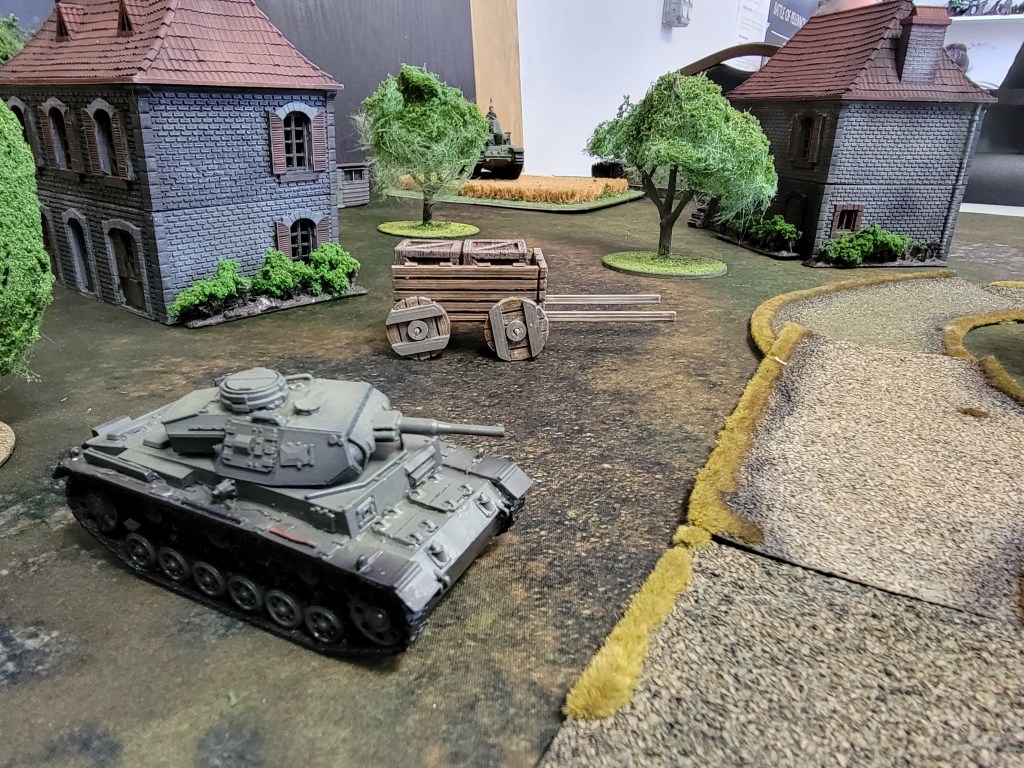
When thinking about a ruleset, I always start with the game’s activation system. Said another way, I always start with the game’s concept of command and control. The activation system in a game is generally the first thing you truly interact with when playing and it tells you a lot about what the developer’s mindset was when they created their game.
For the sake of illustrating this point, I will explore a few activation systems:
1) Warhammer Horus Heresy (IGOUGO, with reactions)
2) Lion Rampant (Impetus activation)
3) Bolt Action (Chit draw)
4) Star Wars Legion (Alternating activation with modified chit draw)
Those who know me will be surprised I’m not including Chain of Command in this. That’s an intentional decision—the system is brilliant, but complex and hard to fit into a simple explanation. See my review of Chain of Command for more on that.
Warhammer Horus Heresy
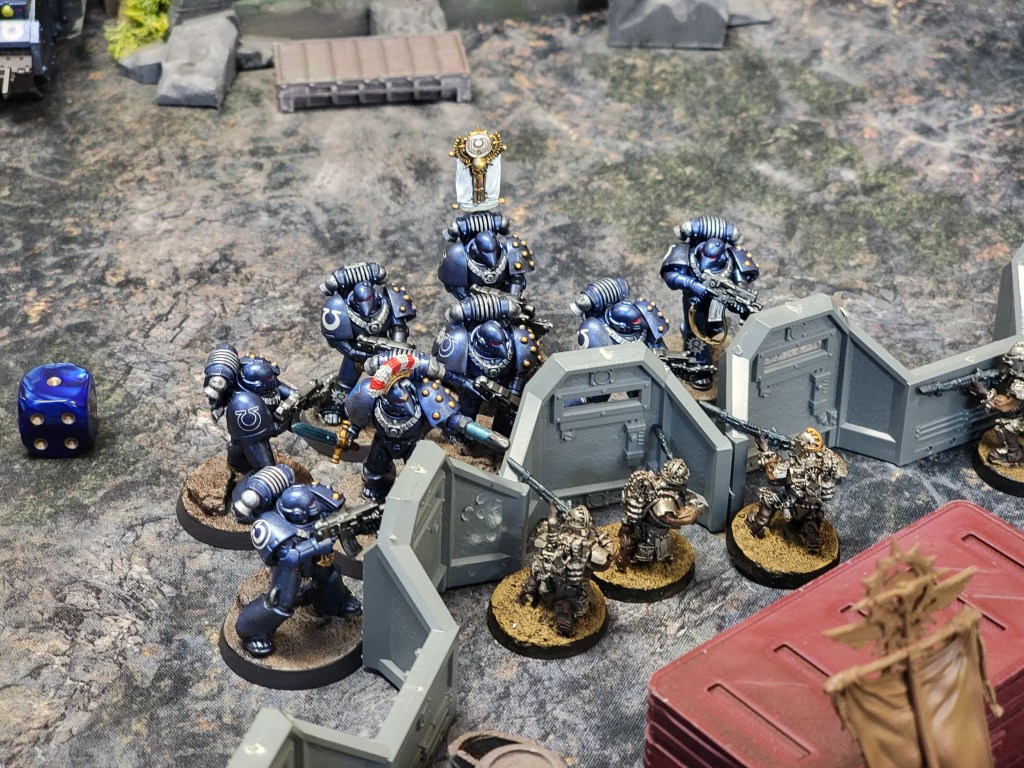
Horus Heresy has a full IGOUGO system, where one player takes their entire turn for their whole army, followed by the other player. Each player has a limited number of reactions during their opponent’s turn, which allows for responses such as moving, shooting, or taking additional cover. Generally, people feel IGOUGO is boring or unrealistic, because why would my men sit there taking fire? Horus Heresy answers this by saying “They won’t!” and letting you respond. It’s a solid fix to a non-existent problem.
See, IGOUGO, aside from being simple, allows for a world where you have full control over your forces and can execute coordinated maneuvers. It permits players to think through a plan of action and execute it in coordinated chunks, then deal with their opponent’s response, then once again coordinate the next part of their plan. In a world of high technology, telepathy, and other forms of communication, this says “We never have any issues with executing a coordinated plan at the platoon to company level in a small engagement area.” We can question the validity of that sentiment, but it’s there and allows the player a certain amount of solid command and control.
Even ignoring the reactions, it’s also not without response. You activate everything, then your opponent activates everything. We’re playing the colliding of two plans as they meet, reform, and pivot to try and out play each other. Things go wrong, and sometimes the feel of “Why didn’t my guys hide?!” feels wrong but taken as an abstraction it makes sense. The goal of this system is to allow you to plan and execute coordinated operations between units fulfilling different parts of the mission. It makes sense at the aggregate level and done right serves its function quite well.
It also opens a lot of avenues to create the “Wombo-combo” problem that plagues many games with full IGOUGO systems. It’s actually a very tough system to build right, but again, I give credit that reactions go a long way toward settling those issues. For the setting of Warhammer, the Horus Heresy activation system and full IGOUGO really does make sense.
Drop the mic. There’s my hot take, I guess.
Lion Rampant
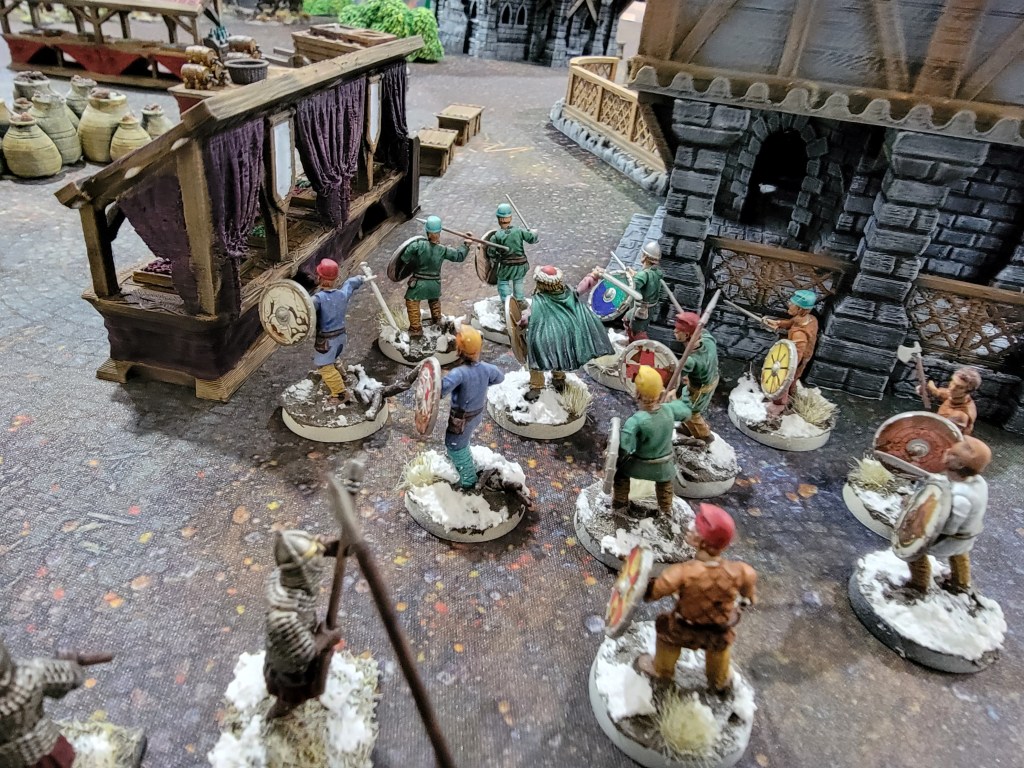
In Lion Rampant, the game follows the familiar flow of IGOUGO, but when you go to activate a unit, you roll to check if it activates. If the check fails, play flips over to your opponent who now does the same. Simple, but not quite IGOUGO. We can call this “Impetus based activation.” In an impetus system, the players take turns controlling portions of their forces until, by some merit of the game system, their turn ends. Usually, this means they don’t activate their whole force.
What’s funny is that Lion Rampant expressly has no desire to be true-to-life but this system works quite well for real melee battle. It allows for coordination and further allows for the commander to influence the battlefield. Leaders give rerolls for failed activation tests but you should also consider how the player applies their focus. If you’re always starting activations on your right flank, that’s because as a leader your right flank is the most important part of the battle for you. You’re focused on it and micromanaging that part of the engagement.
This could be said to show that within the absolute command structure of a roving warband, the leader’s focus of attention and position on the battlefield greatly matter. Here, we have an activation system that’s setting down the rules of the battle and what’s important to the author of the rules. He wanted a system where leaders mattered and helped bring control to the chaos of battle, but still could not fully mitigate said chaos.
There are drawbacks, such as the possibility you fail the first or second roll, but the intent of the system is clear and it sets the tone for a fairly compelling game despite its simplicity. Don’t call it “Elegant,” but maybe “Clever in a drunken way.”
Bolt Action
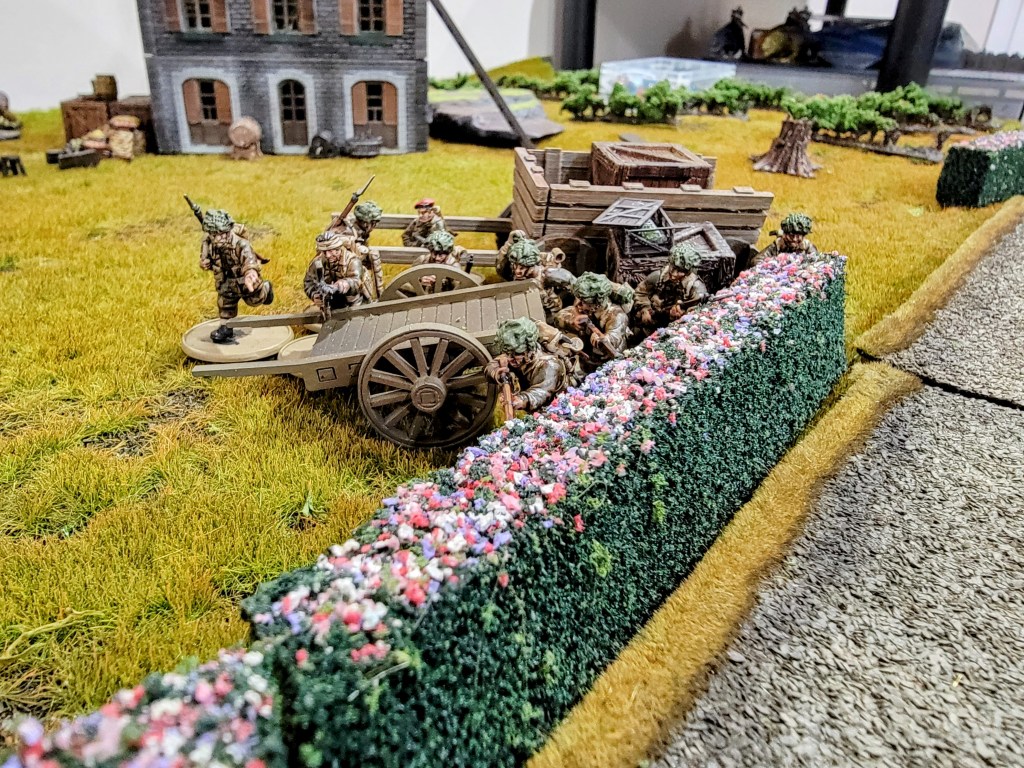
In Bolt Action, both players put a dice in a bag for each of their units still living on the field at the start of a turn. Players then draw a single dice at a time and hand it to whoever owns it, who then activates one of their units. This can allow one side to get multiple activations in a row or can occasionally lead to back and forth activations.
Planning is still possible within this system but limited by the chaos of war. Players often find themselves constantly reacting to the situation, which naturally causes plans to subside as the nature of battle takes hold.
I’ll come out and say it: I strongly dislike this system. I don’t think it represents battle at all, simply because it doesn’t give credence to the capability of your leaders to control the chaos of battle. We train, build plans, and put leaders on the field to try and impose order on chaos, but none of that shows in Bolt Action’s system. It’s just utter chaos and you have to deal with it. There’s something to be said for this, but in the context of World War 2 I’d argue it’s misplaced.
I will say it’s close and I do like that it can create an ebb and flow to battle in a way you can somewhat plan for. It’s not without merits and try as I might to put down Bolt Action at every turn, I appreciate the attempt. Better to get it wrong than to be boring without cause.
Let’s look at a better take on this system.
Star Wars: Legion
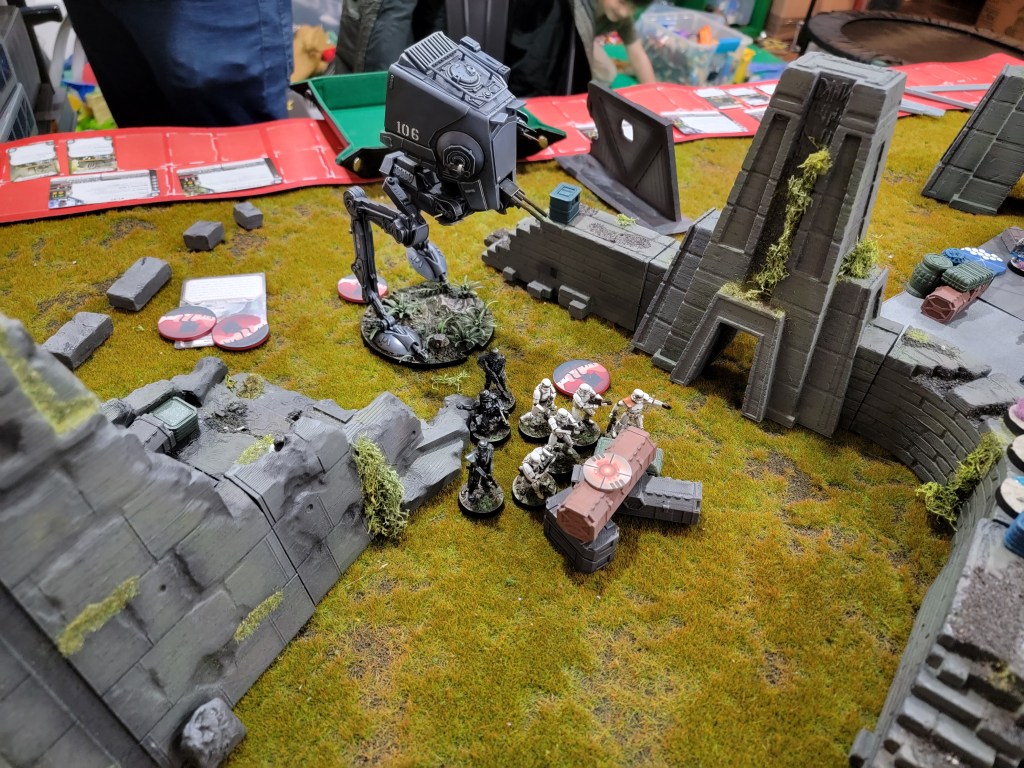
Legion is a well-designed game—I’ll die on this hill.
In Legion you have a hand of cards. You play one card at the start of the turn, which then dictates which of your units on the field get activation tokens placed beside them on the board. The cards can have differing effects depending on the leader you activate, with each leader coming with their own personal set of command cards. Vader may have a series of cards focused on buffing himself, but someone like Iden Versio has cards that allow her to coordinate with her special forces.
The remaining activation tokens not placed on the field get placed into your own bag. Both you and your opponent have separate activation bags. When it’s your turn to activate, you may either activate a unit on the field who has a token or pull a token from your bag at random. The tokens denote the class of unit you can choose (Core, specialist, heavy, etc).
So here we have an alternating activation system with the random chit draw of Bolt Action. It avoids the problems of Bolt Action by giving your leader some direct control and by giving each player their own bag, permitting predictable alternation. Because leaders place tokens down on the board at the start of the turn, you know when those specific units will activate. This play out your leader’s focus and attention. Their direct command helps to control the chaos of battle and execute a plan. Layer on their special effects and you further represent the dramatic importance of leadership in the Star Wars universe. Battles are won by great leaders in Star Wars, and the game shows that beautifully.
Here, the system tells us what the designers were focused on: bringing Star Wars battles to life on tabletop, with the same emphasis on heroes. Luke isn’t solely important because of his ability with a lightsaber. He’s important because he can act as a great leader. Leia may not be able to go toe-to-toe with Vader, but she can rally the troops and engage them in the fight, using command and control to overcome the odds.
Ravaged Stars (Currently on Kickstarter)
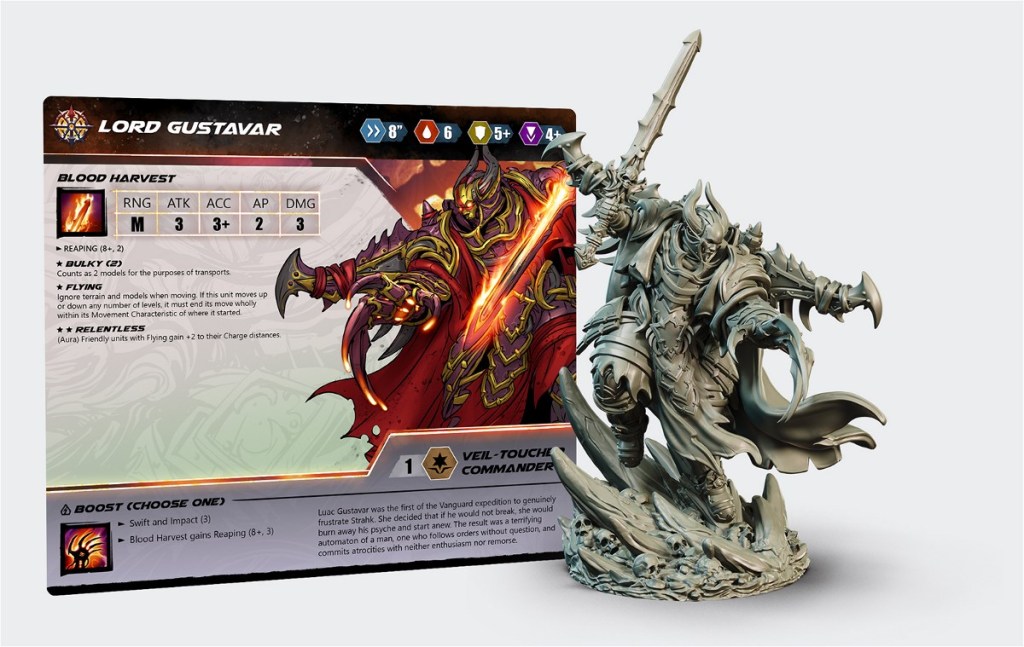
Alright, here goes: my first truly negative rant on this blog.
Ravaged Stars started out as a set of totally-not-Warhammer miniatures that many people feel are overengineered. I’ll stay out of this part beyond saying I like some of their miniatures and dislike others.
Their Kickstarter running presently mentions their activation system. It’s a joint chit draw system like Bolt Action, but the chits have unit class markings on them. If you draw a Red Trooper, you activate a Red Trooper. You can draw the same side multiple times in a row or end up with alternating activations a single unit at a time.
They took the Bolt Action system and tried to… improve it? They actually made it significantly worse. At least in Bolt Action you always choose what you’re activating, so you can still simulate your leader’s focus by keeping your activations to one specific operation. Now in Ravaged Stars, you have to deal with not only the randomness of the draw, but the randomness of what you can even activate after drawing.
It makes for more interesting list building and reeks of a decision made for the sake of mechanics rather than an attempt to bring a world to your tabletop. It’s frustrating to see, because this Kickstarter is getting a lot of attention, and all of the focus is on the miniatures’ divisive nature. People are entirely missing that this game is just trying to improve on Warhammer without understanding what does and doesn’t make Warhammer work. It’s amateur hour and painful to see.
Alright, okay. Done with the rant. I have to give credit that there’s at least one example of a leader breaking this system in the Kickstarter post (by giving a unit a second, free activation in a turn). It’s possible to use leaders to pull this back and make it interesting. I hope they do.
Activating the Conclusion
I wanted to call attention to how important activation can be as well as highlight how simple systems can work quite well. I don’t consider Lion Rampant to be revolutionary, or Horus Heresy to be particularly brilliant, but both systems serve their worlds well. When we talk about having a core vision for what your game seeks to be, activation is one of the most important parts in achieving it. It shouldn’t be an afterthought, or a place where we settle for mechanics for mechanics’ sake. It’s not enough to be “interesting.” You should be accomplishing something. War is all about command and control, so leaving it to over-or-under-engineered nonsense is a critical failure.
I’ll note that I left many systems out of this. That’s intentional—I can spend all day giving examples of interesting activation systems. I can even point out a good setting for the Bolt Action activation system (elite scifi skirmish). I didn’t touch on Sam Mustafa’s general zany brilliance or venture into the world of interesting board wargame activation systems. There’s so much here I’m sure it’s not the last time I write about it. Hell, Infinity deserves an article about how its systems reinforce its vision of anime inspired elite operations. Again, a post for another day.
Wargame mechanics tell a story on your tabletop—never settle for games that don’t understand this. It’s deeply disappointing to see the constant stream of games that fail to make the right choices right out of the gate. The only saving grace is at least it saves me money.

 Small Scale Victory
Leave a comment