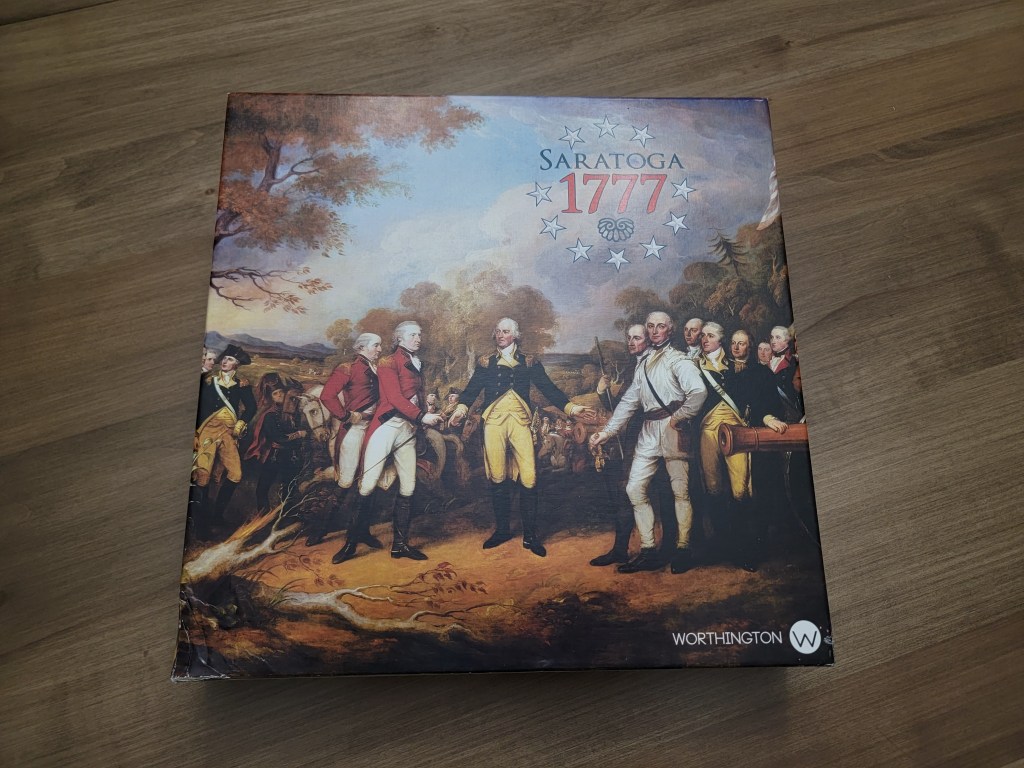
I finally got to play my copy of Saratoga 1777 tonight. I’ve sat on it for nearly a year.
It’s not a super well reviewed game–just a lighter block wargame with a setting I like. I assumed it would make for a good game to play with my lighter wargaming friend. For what it’s worth, I was right. I actually really enjoyed our first game despite blundering pretty badly and losing early.
Mechanics
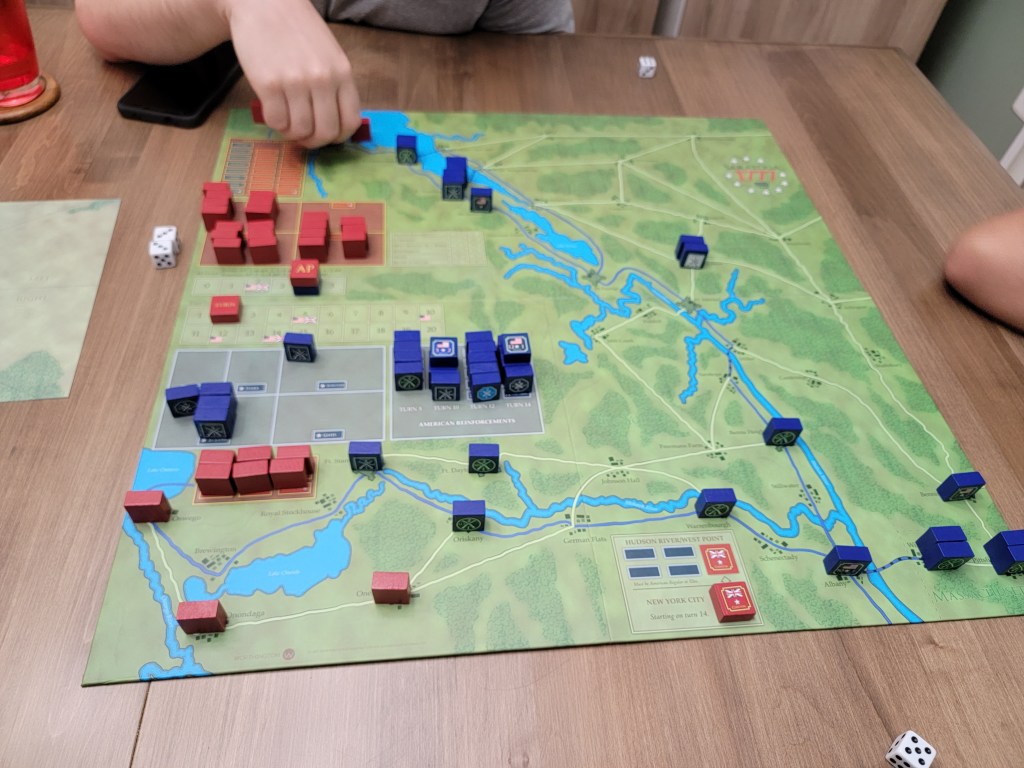
It’s graciously pretty simple. You move units around on the operational map. Leaders have boxes where you store any units attached to them. It’s easier to move units as groups with leaders.
Roads matter. Dirt roads allow fewer troops to travel through them per turn. You need to be able to trace a line back to a supply point or your army is out of supply, incurring negative effects.
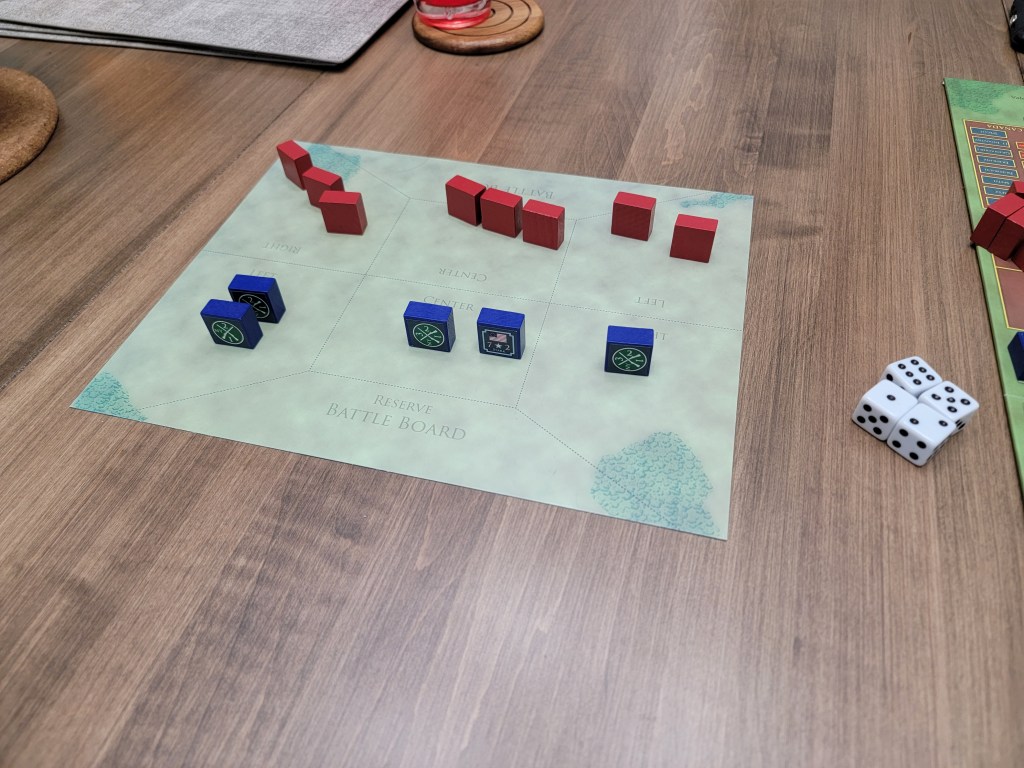
When you overlap an enemy, you battle, which is executed on a seperate tactical map. Battles are simple affairs where you first assign troops to one of three flanks or reserves. Then you reveal them. Each unit rolls dice based on how many Strength Points (health) they have left. First to lose a flank loses the battle and is pushed back on the operational map.
The British seek to win by owning Fort Ticonderoga to the North and Albany to the South. The Americans need to hold off the British for twenty turns. The Americans start weak and gain strength as the game goes, so they’re playing a delaying action trying to buy time and wear down the British until significant reinforcements arrive.
The Game
Early on I won a decisive battle to the North, beating back and destroying a large British force as the Americans. Very satisfying.
Unfortunately, I got overconfident and went seeking a fight with some Native Americans to the South.
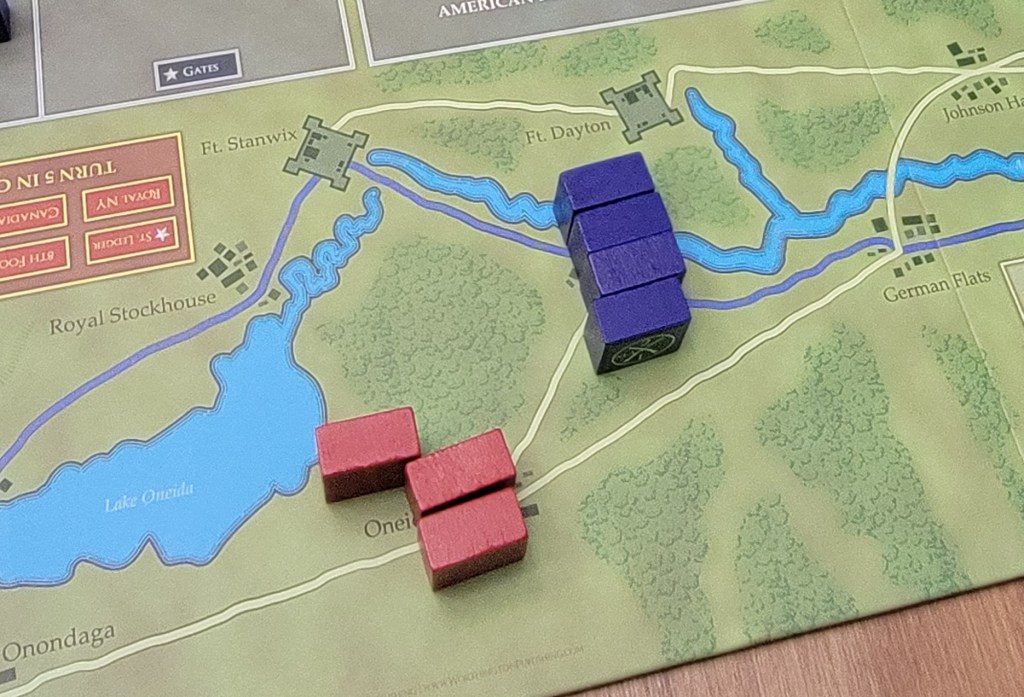
I barely harmed the Natives before they ran away, but they managed to scare off half my militia. This seperated my army in two at the end of my turn. This is, ironically, exactly what the Natives are meant to do. I wielded my opponent’s forces beautifully on his behalf.
He attacked my divided force the next turn and all but cleared a path to Albany for victory.
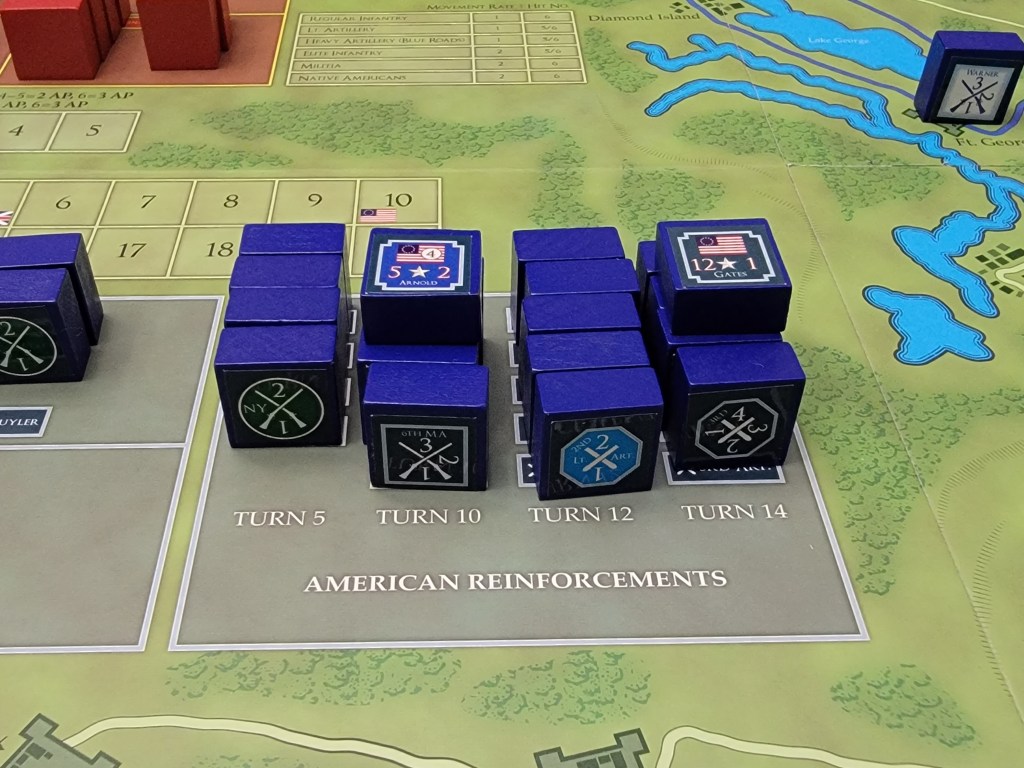
Most painfully, I realized I should have never had that army there in the first place.
See, to own Albany my opponent needed an army there at the end of my turn… but the army needed to be in supply. This means it had to be able to trace a direct line to a supply point without my forces interrupting. I could have scattered my militia around and fought small delaying actions, denying him supply. The game ended in turn 9, but with this tweak I would have made it to turn 10 and Benedict Arnold would have arrived to save Albany.
It was our learner game so I was being a little bold unnecessarily, but I’m glad it blew up in my face that badly. It showed some reasonable meat to the game.
Impressions
I liked it!
The fog of war mechanics served quite well. I consistently had an inkling of what was where and was never fully surprised, but I couldn’t be sure. Part of the reason my opponent lost a battle so badly in the North was that he didn’t realize I had such a large force waiting for him.
The tactical battles are fun and speedy. For now, that’s enough.
The units vary greatly in their use. Natives and Militia serve different purposes from regulars and artillery.
I feel like the game will reward a few more plays. I got it for cheap, so I’m happy enough with it. It’s perhaps not a stunner of a game, and certainly not overly original, but thus far it’s fun and very well executed. It’s a game with tight scope, speedy play, and a great theme.
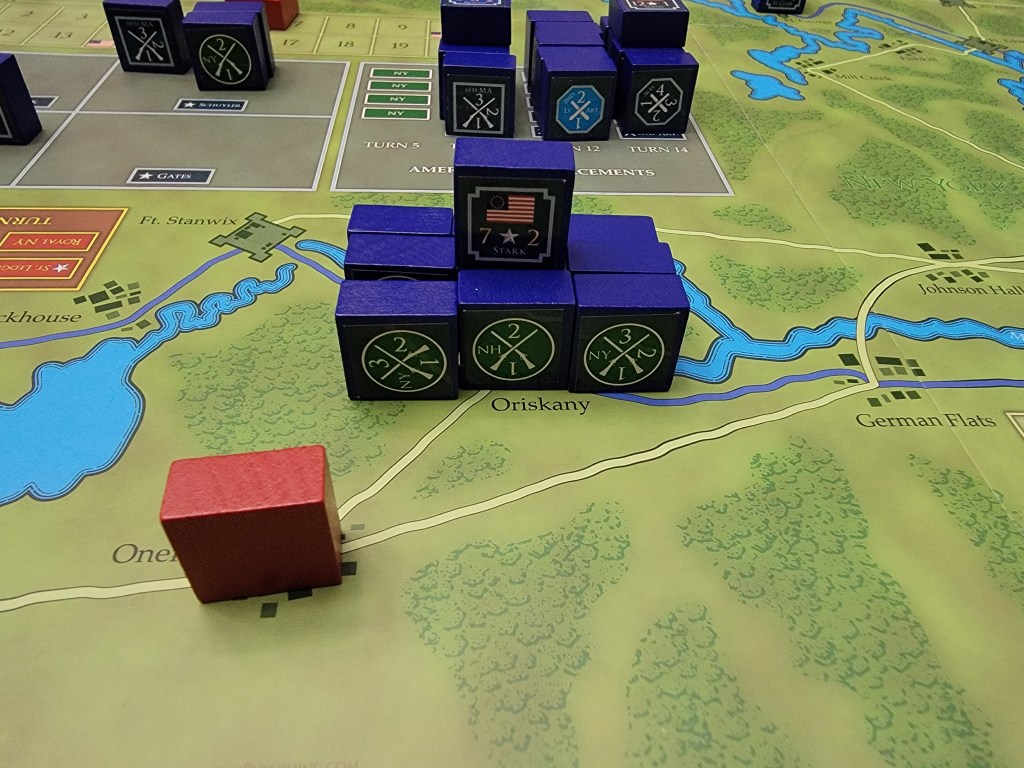
Plus, who doesn’t love stacking blocks?
 Small Scale Victory
Leave a comment