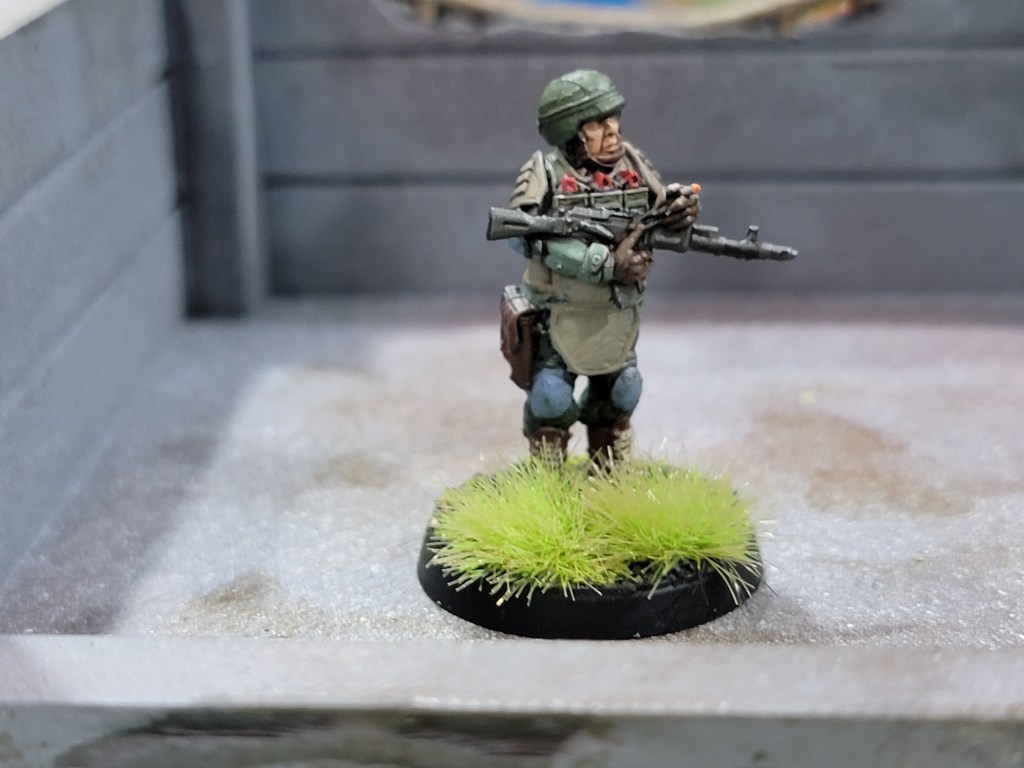
DISCLAIMER: This is NOT a review, but an impression after reading both rulesets. Unlike my usual read-throughs, I have played both Zona Alfa and Kontraband prior to writing this.
Today we sit down to look at a combined ruleset: Zona Alfa with its expansion Kontraband. Zona Alfa is a game inspired directly by the S.T.A.L.K.E.R. and Metro 2033 video games, which were themselves inspired by Roadside Picnic and Metro 2033.
Okay, I think I’ve got my bases covered on linking the source material now. It’s a fascinating rabbit hole I highly recommend. I recently finished a reread of Roadside Picnic and I’m starting on my first reading of Metro 2033.
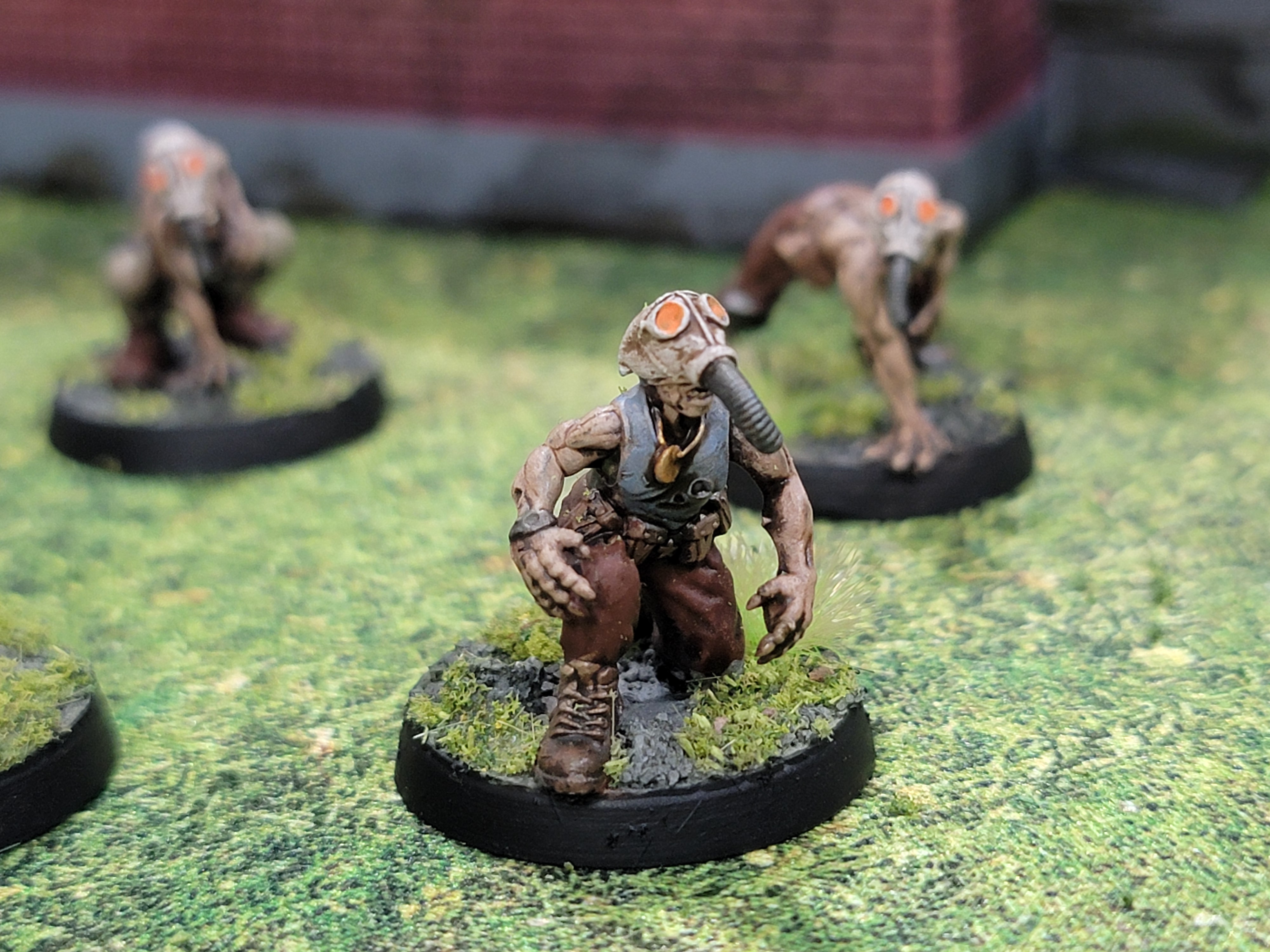
In laymen’s terms: Zona Alfa is an adventure wargame where you send bands of stalkers–explorers, criminals, military, scientists–into the “Zone,” an area created by an alien/nuclear catastrophe in which the laws of reality start to bend and various extremely valuable artifacts have appeared. You seek to capture these artifacts and extricate from The Zone so you can sell them. Along the way, you fight opposing warbands competing for the same prizes as well as monsters (zombies, mutants, wildlife) now resident in The Zone.
Kontraband modifies the game to be a coop focused game, where you play out a campaign in which you go through a preset batch of scenarios ideally outlining a story and ending with you and your boys coming back alive and rich.
To approach this overview and my impression of this ruleset, we’ll go through three stages:
- The Bottom Line Up Front
- Zona Alfa Overview: what is it and why might you play it?
- Kontraband Overview: how does it change Zona Alfa and why might you play it?
- All Together Now: we conclude what the combined ruleset accomplishes and who it might appeal to.
Let’s begin.
BLUF
Combined, these two rulesets make for a great toolkit for cooperative journeys in The Zone. You’ll need to put on your GM hat, though. In some places, the rules are unclear or fuzzy and will require your personal interpretation. In others, they flatly need improvement or expansion: weapon accessories, for example, could stand to have a few more options to make them more relevant. The rules benefit from expansion: both by adding Kontraband and adding your own ideas on top.
The target audience for the combined ruleset is a solo player or a duo of coop players wanting to craft a campaign and characters to play through it in an RPG-lite environment. Expect to do a bit of work and treat this ruleset combo more as a toolkit than a rigid Kriegsspiel. If you fit this audience and want to play an adventure in The Zone, this ruleset appears to be the right toolkit for you.
Zona Alfa
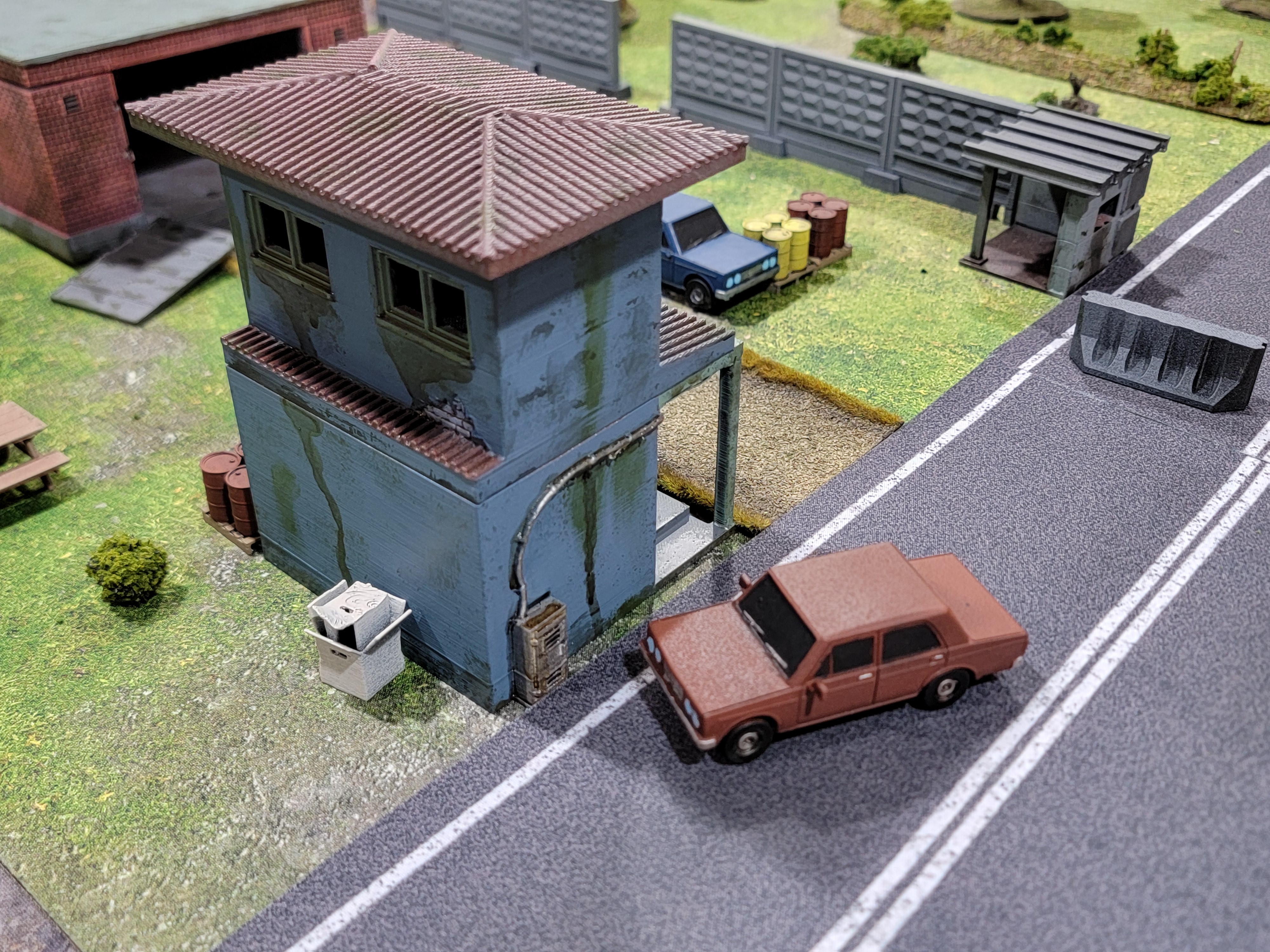
The author here is kind enough to outline what the game is aiming to do. In short, Zona Alfa wishes to be a simple, story focused, and reliable ruleset. He compares it to an AK-47. The objective is not to be complicated, but to allow you to put together your band of characters and get underway in a set of rules that do just enough to cover the bases without bloating into a million tiny rules.
For the most part, I think he succeeds.
Mechanically, this is a roll-low D10 based system where models have varying skill levels represented by a number of individual activations. So your rookie gets one action and your veteran gets three. Shooting is straightforward enough you could predict it: establish a target number after modifiers, roll at or below that number, then roll armor check. If the model survives its armor check it takes a pin, which must be removed by spending an action. Melee is a little more interesting: both sides roll their dice to attack, but the attacker can dedicate attack dice to parrying hits, giving them an edge in winning the melee. For the most part, everything dies quickly with only one wound. It’s a very lethal game.
I’d say mechanically moment-to-moment, the game achieves its objective of being simple while evoking a narrative. Good stuff.
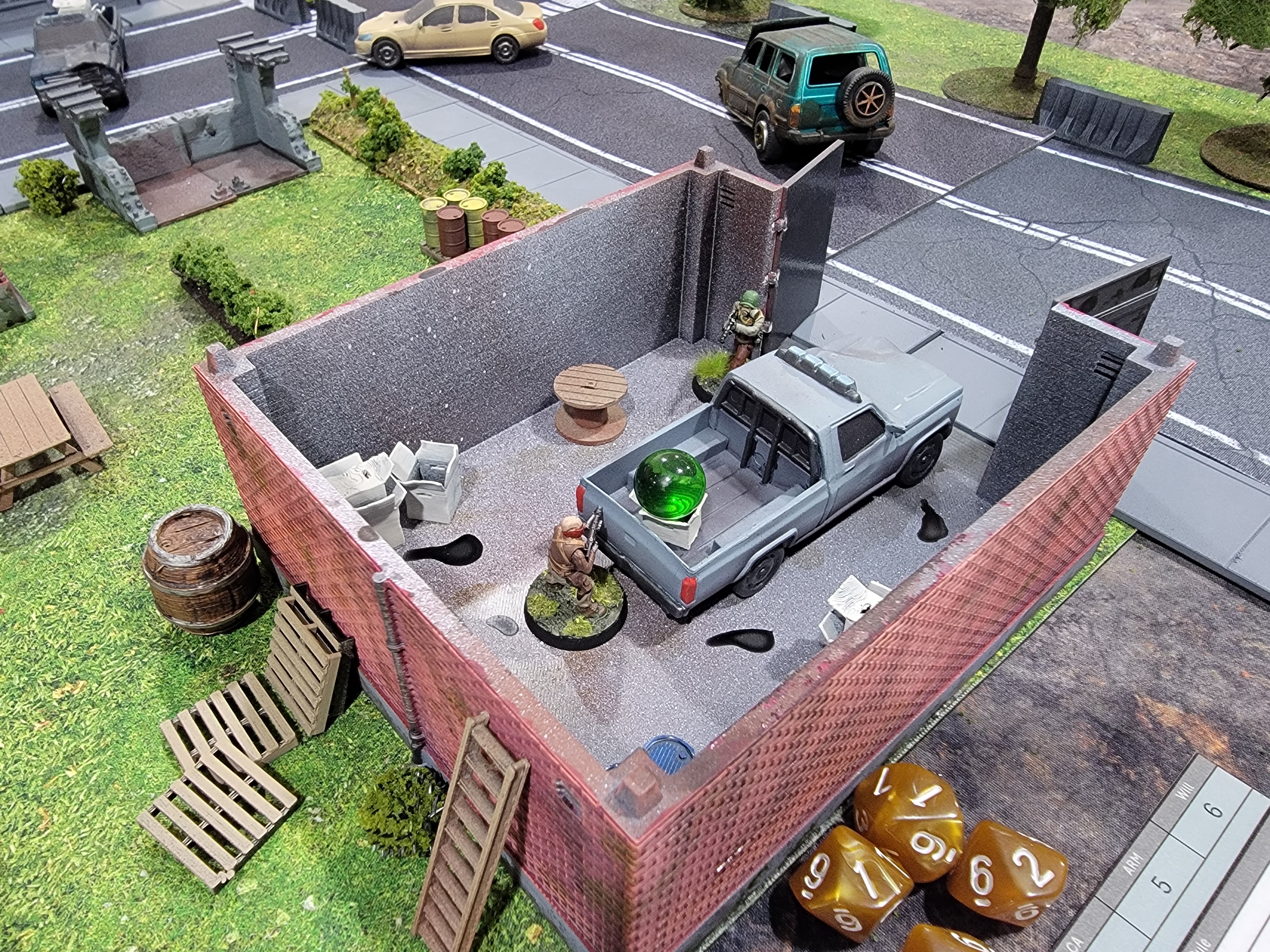
The meat is in the exploration, campaign, and character building mechanics. We’ll start with exploration.
The Zone itself may as well be a character. Each battle will have a threat level. The higher your threat level, the more dangerous everything is (surprise!). At higher threats, the monsters do get more dangerous and so does the environment. Monsters are simple: they get stronger but follow the same basic “attack nearest thing while staying near your objective” AI. The environment is composed of a series of points of interest (POIs) on the board. Each one has a chance to produce salvage, anomalies, and/or enemies depending on how you roll. It’s a system that keeps you uncertain of what is going to happen in each battle and makes exploring rather fun.
Notably, in Zona Alfa, anomalies don’t do anything special. They just carry a chance for high value artifacts and might kill your character. This works well, but feels very abstract and is disappointing given the source material and how creative both the books and the games get with the idea of anomalies. Kontraband, notably, fixes this (see below). I will say that once again, we’ve achieved our mission statement in being simple and story oriented. There’s just enough here to feel like you’re The Zone and fighting for your life against both your opponent and the monsters.
Campaign play is a clear focus for the system and it carries streamlined versions of all the usual suspects. Your characters gain experience for what they accomplish in their missions, which is spent to upgrade their veterancy, stat lines, equipment slots, and skills. There’s a shop (“The Stalls”) you get to visit between missions to buy gear and additional party members. You might take wounds that result in battle scars. You go mission to mission aiming to make enough money to retire (or whatever other objective you choose to set).
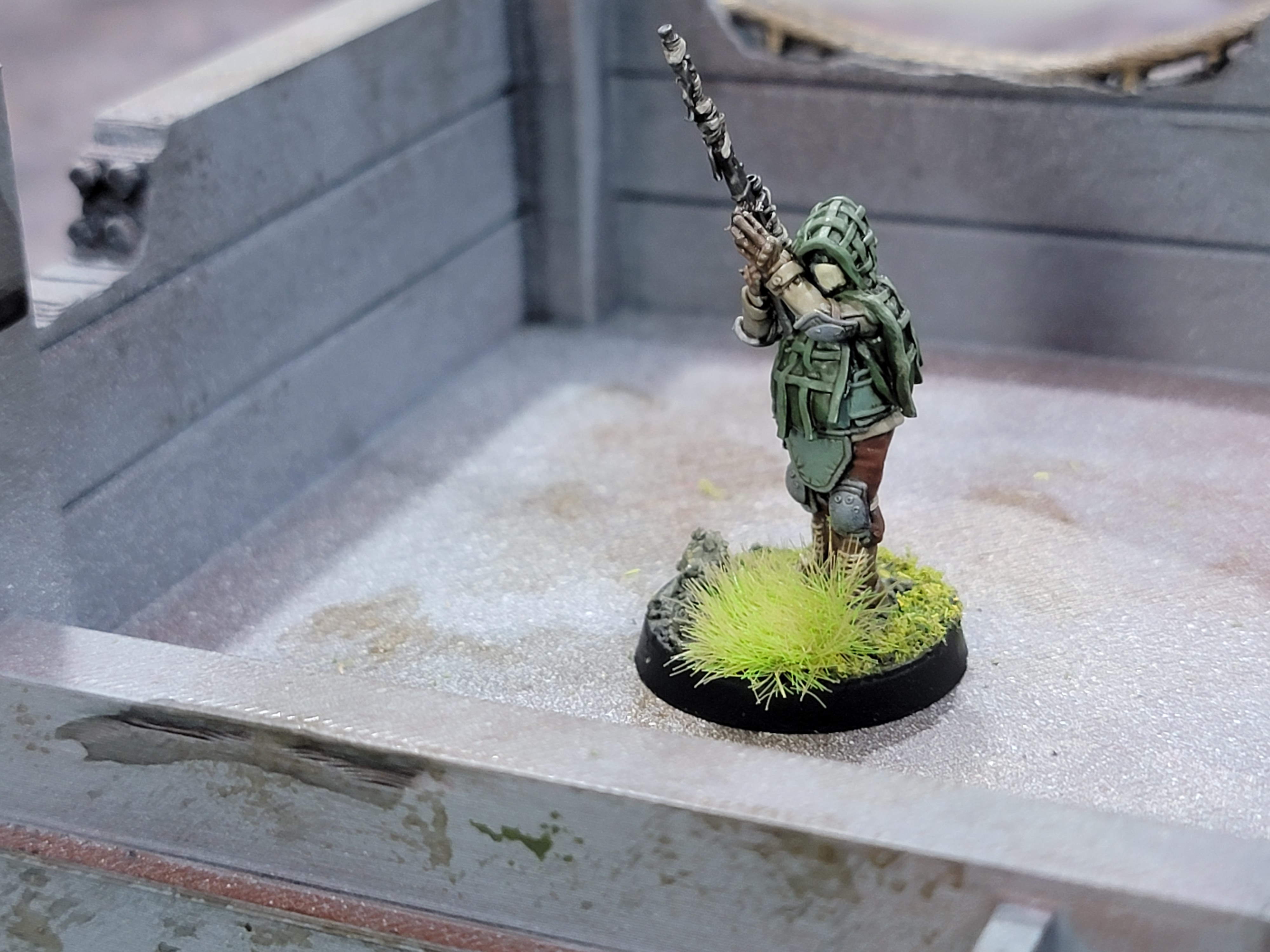
You also assign a faction to your party, which confers benefits and creates a series of allegiances you check at the start of the battle. You can be allied, neutral, or hostile toward your opponent’s faction. Notably, the extremes shift how the game works. Allies don’t kill each other. Enemies do. If you’re facing an enemy faction, nothing on the board matters to victory except killing them. In a multiplayer campaign with 3+ players, I could see this being neat. In a two player campaign, it’s a rule you should absolutely ignore.
It’s a touch more than I would like: I’m not generally a fan of tracking experience and leveling up. If you believe a campaign should do all of the above, I’ll say it does each one simply and effectively. It’s in alignment, again, with the game’s scope and purpose. Good stuff.
Finally, we have character development. Characters have the following on their sheets:
- Four stats
- Skills (up to 3 is a reasonable expectation)
- Armor with rules
- Three item slots
- Three weapon slots: ranged, melee, grenade
- Faction rules
I want to say “efficient,” but it’s really only “efficient” for an RPG. Here’s the example character sheet from the book:
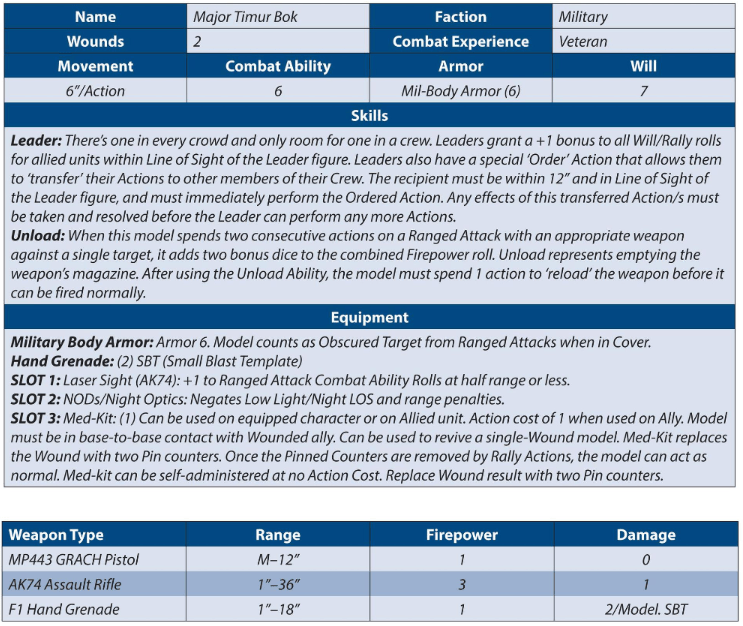
In practice, this could be shortened. I built my own character creator (below). I’ll contend that nothing here is complicated, it’s just a lot. It’s also part of the storytelling experience from the perspective of the author–that much is clear. I’m back and forth on whether or not this is “Too much.” As I recall, I had no issues with this level of customization when I played years ago. It just looks like a lot. If I were to strip anything out, it would be the item slots–but those are used for carrying artifacts and med kits, which I think add to the game.
I guess this is the firing mechanism of the AK-47: it just has to be a bit more complicated than the rest of the gun.
On balance, I think Zona Alfa appears to be a good, simple, and focused ruleset. If it appeals to you, it’s probably worth a try. When I played it, my opponent and I often devolved into just killing each other. I’m not sure if that was the intent of the author but it does take away a bit from the value of the environment. For that reason alone, I think it’s worth taking a look at playing this coop, which finally takes us to…
Kontraband
Kontraband is a self published expansion that adds a surprising amount to the game while also stripping a lot out. It is not an Osprey Blue Book and its production value drops considerably. This can be a bit jarring coming from the well produced blue book of Zona Alfa. It’s also jarring because it changes a lot and it can be challenging to keep it all straight in your head.
The focus here is clearly on expanding the game, streamlining some elements, and building everything around playing a multi-game coop campaign.
Here’s a quick list of modifications:
- Game is now fully solo/coop
- Only two factions now: scientists and stalkers, and they aren’t enemies
- Added classes for those two factions, six in total
- Additional skills and gear
- Weapon accessories
- Points of Interest greatly expanded
- Anomalies now have unique effects (four varieties)
- Zone Events added
- Better mission structure
- Dog Companion
- Everyone’s a veteran now with 3 actions and 3 wounds
- Wounds remove an action and give -1 to stats
- Terror
- Stamina added: get 3-4 dice at game start you can roll for extra actions
- Leveling up changed: now simpler (thank you–I prefer this streamlined system)
- Obsessions (character really wants to do X)
- Removed the Stalls
I lied when I said “Quick.”
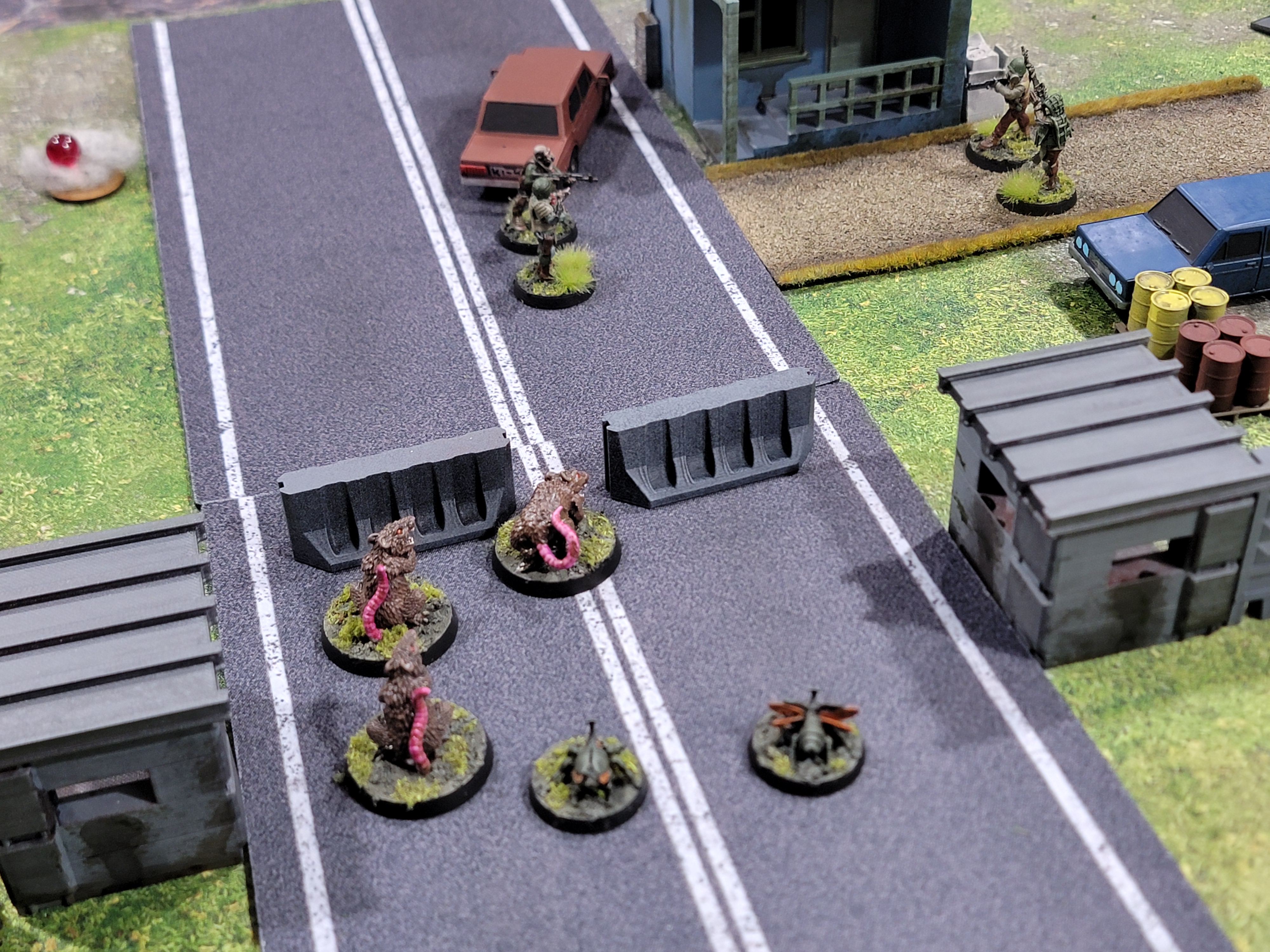
I won’t go through all of these, but I will detail three of them to outline what I think really changes here. Let’s start with anomalies, my favorite. There’s now four varieties of anomalies. We’ll look at one: gravity. A gravity anomaly will suck everyone in the area to it, then hold them there until they resolve a will check, which allows them to collect the loot. It’s still pretty simple (remember the AK-47) but it’s also effective. You roll, discover it’s a gravity type, and now you deal with this unique little problem. Also, it damages you. Of course it does.
Next, weapon attachments. You can attach stuff to your weapons, modifying them. Functionally, this means you add special rules to your equipment that might, for example, add some “To hit” chance. It’s another thing to track on the sheet and another small choice to make that… I’m not convinced does much for the game. Here’s an example character sheet from my character generator Excel to serve as an example of what I mean:
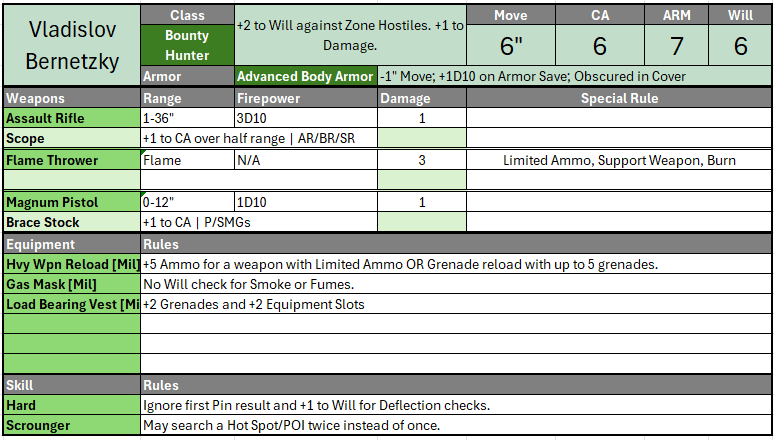
The Assault Rifle has a Scope, which gives me +1 Combat Ability (to-hit) at over half range. Neat! That could have… been a better gun, I guess. It’s fine. It’s certainly not complicated and it adds to the storytelling. You can imagine being a stalker and wanting to customize your precious weaponry. That gun is your lifeline–attaching a scope to it feels very in-character. My bigger issue is the lack of options for attachments. Often times you’ll look at the list for your guns and just go “I guess I’ll grab the obvious three.” For example: a battle rifle has three possible upgrades: under-barrel grenade launcher, scope, and bayonet. Well, you have a melee weapon as well, so the bayonet isn’t particularly useful. There’s no trade off for the other two, so you take them. Let’s say your melee weapon is an SMG, giving you the options of a brace stock (+1 combat ability), a red dot (+1 CA under half distance [9″]), or a suppressor (a wonky rule). Well, you’ve got one slot left so you’ll pick the obviously best option: brace stock.
There’s places where the decisions get interesting, still. Had I picked a shotgun as a melee weapon, it has a mod that changes it into a template weapon. On the other hand, pick a flamethrower and you’ve got no options for it at all. I’d like to see these expanded considerably to offer more choice and significance—but personally, I did just that. I expanded the options for my games with a few more choices. Sticking to the theme of “Game tool box,” it’s worthwhile to note that you can just expand it yourself.
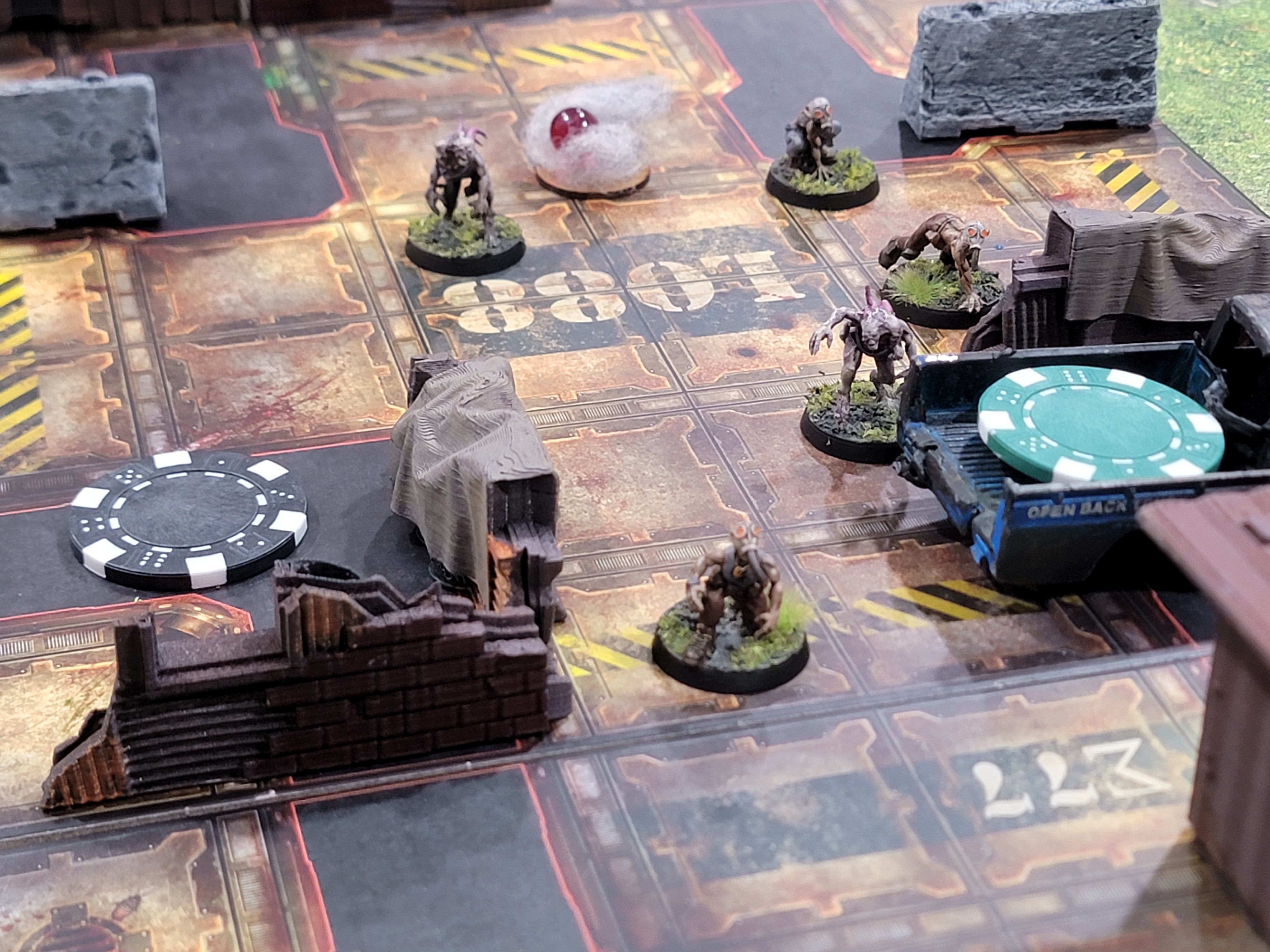
Finally, removing the Stalls and streamlined leveling (I cheated; this is four things in total). In Kontraband, you’re a group sent in on a mission deep into The Zone. You don’t have time to come back out and buy stuff between missions. I’m glad to see this: I don’t like the post-game shopping experience in wargames. It eats time and generally just results in incremental improvements. Instead, here, you find things by scavenging in the missions. This helps to reinforce this sense that you’re in deep and have no true support, while minimizing campaign overhead.
Leveling is also streamlined. You no longer count up things you did. No need to track that Pietre kill three rats so he gets an advancement point. Instead, you track the number of missions completed and everyone gets a benefit accordingly. Every mission gives each character one reroll. Every three missions gives them an additional point of will. After your fourth mission, you get one additional skill. This gives you the storyline character growth but none of the fiddliness of standard wargame leveling systems. It also encourages you to run shorter campaigns of 5-8 games, which I think is the true sweet spot for campaign play. Go much longer and you’ll really need to up the difficulty.
All Together Now
Putting Kontraband on top of Zona Alfa creates a different game. Zona Alfa’s player versus player elements make it more intense in the moment to moment and shifts focus away from the environment. That’s fine: it tells a certain kind of story. Layer Kontraband on top and now you have a bit more of a campaign focused RPG-lite experience. This is a game that clearly benefits from giving your characters a touch of backstory before you build them.
What kind of man is Ivan? Would he bring a scoped rifle or a shotgun? Does he value life or would he prefer to risk it all for the joyous glory of a flamethrower? Is he a scientist, carrying an SMG and tools to enable his study of The Zone?
It also clearly benefits from coming up with a story for your campaign. To the author’s credit, he has a few campaigns published. Coming up with your own is likely not all that hard. The ruleset even includes guidance and mission types. I think he did a great job setting you for success.
Combined, this is a more exploration, story focused toolkit of a game rather than your traditional wargame. For a cooperative game, that’s great to see. In the hands of someone who is willing to dedicate time up front, I could see this being a great experience–especially if you’re willing to ignore things you dislike or add more onto the ruleset itself.
This flexible attitude toward the rules proves necessary, though, as he packs a lot into a small space and it can be easy to overlook or forget things. There’s an FAQ as well as a community FAQ (based on the author’s answers) I recommend perusing–in particular, it clarifies what “Drift” is, which can be easy to miss when you read through both rulesets in tandem. They’ll also give a pretty clear idea of what was not covered very well in the rules. Use that to guide your tolerance toward the rules’ fuzziness. It’s not a hard ruleset by any stretch, but when it comes to coop rules I think a bit of flexibility goes a long way.
I find myself wanting to read more of Todoroff’s work. He has other cooperative games set in fantasy and cyberpunk settings. Perhaps I’ll get to those in future “Off the Shelfs.” As I’ve recently detailed, I’ll be playing a campaign with my son. More is likely to come on that, including a full and proper ruleset review in the future.
For now, I can say that if the setting appeals to you and you’re willing to put in the work to both sort through the two rulesets and craft your own campaign, Kontraband and Zona Alfa seem like a worthwhile combo. Just know it’ll take a bit of RPG-lite-like work on your end up front. From my impression, I think you’ll be well rewarded.
Good luck, stalker. You’ll need it.
 Small Scale Victory
Leave a comment